September 23, 2010


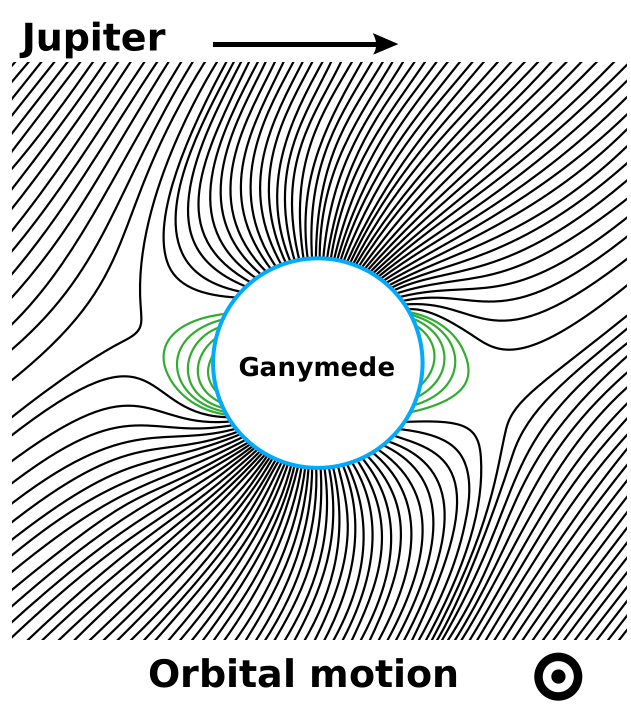
Ganymede [gan-uh-meed] is a moon of Jupiter and the largest satellite in the Solar System. It has a diameter of 5,268 km (8% larger than Mercury), orbits Jupiter in roughly seven days, and is composed of approximately equal amounts of silicate rock and water ice. A saltwater ocean is believed to exist nearly 200 km below Ganymede’s surface, sandwiched between layers of ice. Ganymede is the only satellite in the Solar System known to possess a magnetosphere, likely created through convection within its liquid iron core. The meager magnetosphere is buried within Jupiter’s much larger magnetic field and connected to it through open field lines. The satellite has a thin oxygen atmosphere that includes O, O2, and possibly O3 (ozone).
Ganymede’s discovery is credited to Galileo Galilei, who was the first to observe it on January 7, 1610. The satellite’s name was soon suggested by astronomer Simon Marius, for the mythological Ganymede, cupbearer of the Greek gods and Zeus’s beloved. A joint NASA/ ESA mission to Jupiter’s icy moons (including Ganymede), the Europa Jupiter System Mission (EJSM), is proposed for a launch in 2020.
Posted in Science |
Leave a Comment »
September 21, 2010
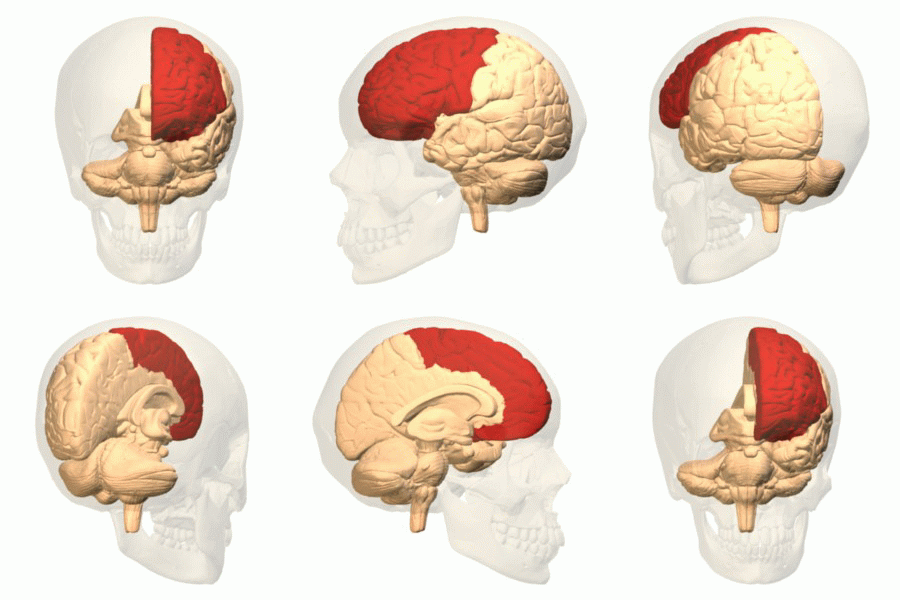
The frontal lobe is an area in the brain of humans and other mammals, located at the front of each cerebral hemisphere, directly behind the forehead or ‘temple.’ The frontal lobe contains most of the dopamine-sensitive neurons in the cerebral cortex. The dopamine system is associated with reward, attention, long-term memory, planning, and drive.
In the early 20th century, a medical treatment for mental illness, first developed by Portuguese neurologist Egas Moniz, involved damaging the pathways connecting the frontal lobe to the limbic system. Frontal lobotomy successfully reduced distress but at the cost of often blunting the subject’s emotions, volition and personality. The indiscriminate use of this psychosurgical procedure, combined with its severe side effects and dangerous nature, gained it a bad reputation. The frontal lobotomy has largely died out as a psychiatric treatment.
Posted in Health, Science |
Leave a Comment »
September 17, 2010
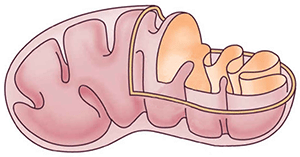
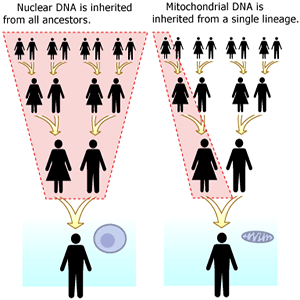
Mitochondrial [mahy-tuh-kon-dree-uhl] Eve refers to the most recent common matrilineal ancestor from whom all living humans are descended. Passed down from mother to offspring, all mitochondrial DNA (mtDNA) in every living person is directly descended from hers. Mitochondrial Eve is the female counterpart of Y-chromosomal Adam, the patrilineal most recent common ancestor, although they lived thousands of years apart. Mitochondrial Eve is generally estimated to have lived around 200,000 years ago, most likely in East Africa, when Homo sapiens sapiens were developing as a species separate from other hominids.
One of the misconceptions of mitochondrial Eve is that since all women alive today descended in a direct unbroken female line from her that she was the only woman alive at the time. However nuclear DNA studies indicate that the size of the ancient human population never dropped below some tens of thousands; there were many other women around at Eve’s time with descendants alive today, but somewhere in all their lines of descent there is at least one man (and men do not pass on their mothers’ mitochondrial DNA to their children). By contrast, Eve’s lines of descent to each person alive today includes at least one line of descent to each person which is purely matrilineal.
Posted in Science |
1 Comment »
September 14, 2010

In psychology, the term jamais vu (from the French, meaning ‘never seen’) is used to describe any familiar situation which is not recognized by the observer. Often described as the opposite of déjà vu, jamais vu involves a sense of eeriness and the observer’s impression of seeing the situation for the first time, despite rationally knowing that he or she has been in the situation before. It is linked to the linguistic concept of semantic satiation (a cognitive phenomenon in which repetition causes a word or phrase to temporarily lose meaning for the listener).
Posted in Language, Science |
Leave a Comment »
September 14, 2010

The Great Pacific Garbage Patch refers to marine litter trapped in gyre (a system of rotating ocean currents) in the central North Pacific Ocean. The patch extends over an indeterminate area, with estimates ranging very widely depending on the degree of plastic concentration used to define the affected area.
The Patch is characterized by exceptionally high concentrations of plastics, chemical sludge, and other debris. Despite its size and density, it is not visible from satellite photography; it consists primarily of suspended particulates in the upper water column.
read more »
Posted in Food, Science, World |
Leave a Comment »
September 13, 2010

Thorium [thawr-ee-uhm] is a chemical element with the symbol Th and atomic number 90. It is a naturally occurring, lustrous white metal. It is estimated to be about three to four times more abundant than uranium in the Earth’s crust. It has been considered a waste product in mining rare earths, so its abundance is high and cost low. One ton of thorium produces the same energy as 200 tons of uranium, or 3.5 million tons of coal.
Edward Teller, co-founder and director of Lawrence Livermore National Laboratory, promoted thorium energy until his death, and scientists in the United States, France, Japan, India, and Russia are now creating their own thorium-based power plants.
Posted in Science, Technology |
Leave a Comment »
September 11, 2010
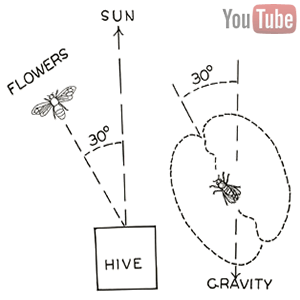
Waggle dance is a term used in beekeeping and ethology for a particular figure-eight dance of the honey bee. By performing this dance, successful foragers can share with their hive mates information about the direction and distance to patches of flowers yielding nectar and pollen, to water sources, or to new housing locations. Thus the waggle dance is a mechanism whereby successful foragers can recruit other bees in their colony to good locations for collecting various resources.
It was once thought that bees had two distinct recruitment dances — round dances and waggle dances — the former for indicating nearby targets and the latter for indicating distant targets, but it is now known that a round dance is simply a waggle dance with a very short waggle run. Austrian ethologist and Nobel laureate Karl von Frisch was one of the first who translated the meaning of the waggle dance.
Posted in Science |
Leave a Comment »
September 11, 2010

In shopping mall design, the Gruen transfer refers to the moment when consumers respond to ‘scripted disorientation’ cues in the environment. It is named for Austrian architect Victor Gruen (who disavowed such manipulative techniques). Shopping mall entrances have intentionally confusing layouts, intended to cause shoppers to lose track of their original intentions. Spatial awareness of their surroundings plays a key role, as does the surrounding sound and music. The effect of the transfer is marked by a slower walking pace and glazed eyes.
Posted in Money, Science |
Leave a Comment »
September 3, 2010
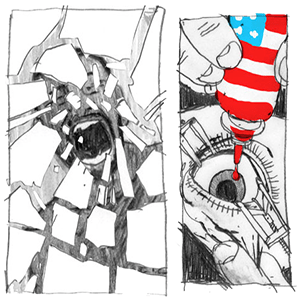
MKULTRA was the code name for a covert, illegal CIA human research program, run by the Office of Scientific Intelligence. This official U.S. government program began in the early 1950s, continuing at least through the late 1960s, and it used U.S. and Canadian citizens as its test subjects.
The published evidence indicates that Project MKULTRA involved the use of many methodologies to manipulate individual mental states and alter brain function, including the surreptitious administration of drugs and other chemicals, sensory deprivation, isolation, and verbal and sexual abuse. The CIA poured millions of dollars into studies examining methods of influencing and controlling the mind, and of enhancing their ability to extract information from resistant subjects during interrogation.
Posted in Politics, Science |
Leave a Comment »
September 3, 2010

The albedo [al-bee-doh] of an object is a measure of how strongly it reflects light from light sources such as the Sun. It is therefore a more specific form of the term reflectivity. Albedo is an important concept in climatology and astronomy, as well as in computer graphics.
Posted in Language, Science |
Leave a Comment »
August 25, 2010
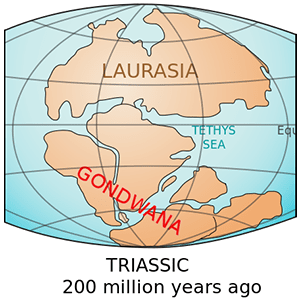
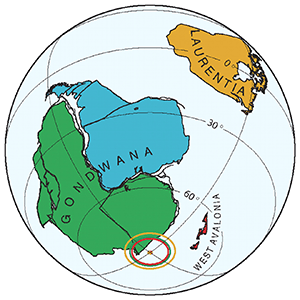
Gondwana [gond-wah-nu], originally Gondwanaland, is the name given to a southern precursor supercontinent. Its final geological suturing occurred between ca. 570 and 510 million years ago, joining East Gondwana to West Gondwana. It later separated from Laurasia 180-200 million years ago during the breakup of the Pangaea supercontinent that existed about 500 to 200 million years ago into two large segments, nearly equal in area. The continent of Gondwana was named by Austrian scientist, Eduard Suess, after the Gondwana region of central northern India
The adjective ‘Gondwanan’ is in common use in biogeography when referring to patterns of distribution of living organisms, typically when the organisms are restricted to two or more of the now-discontinuous regions that were once part of Gondwana, including the Antarctic flora. For example, the Proteaceae, a family of plants that is known only from southern South America, South Africa, and Australia are considered to have a “Gondwanan distribution”. This pattern is often considered to indicate an archaic, or relict, lineage.
Posted in Science |
Leave a Comment »
August 17, 2010
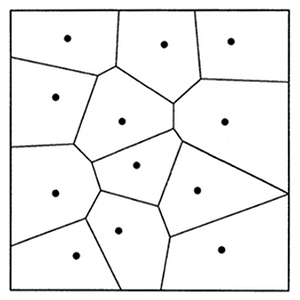
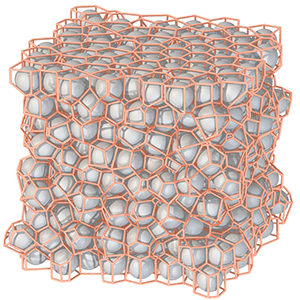
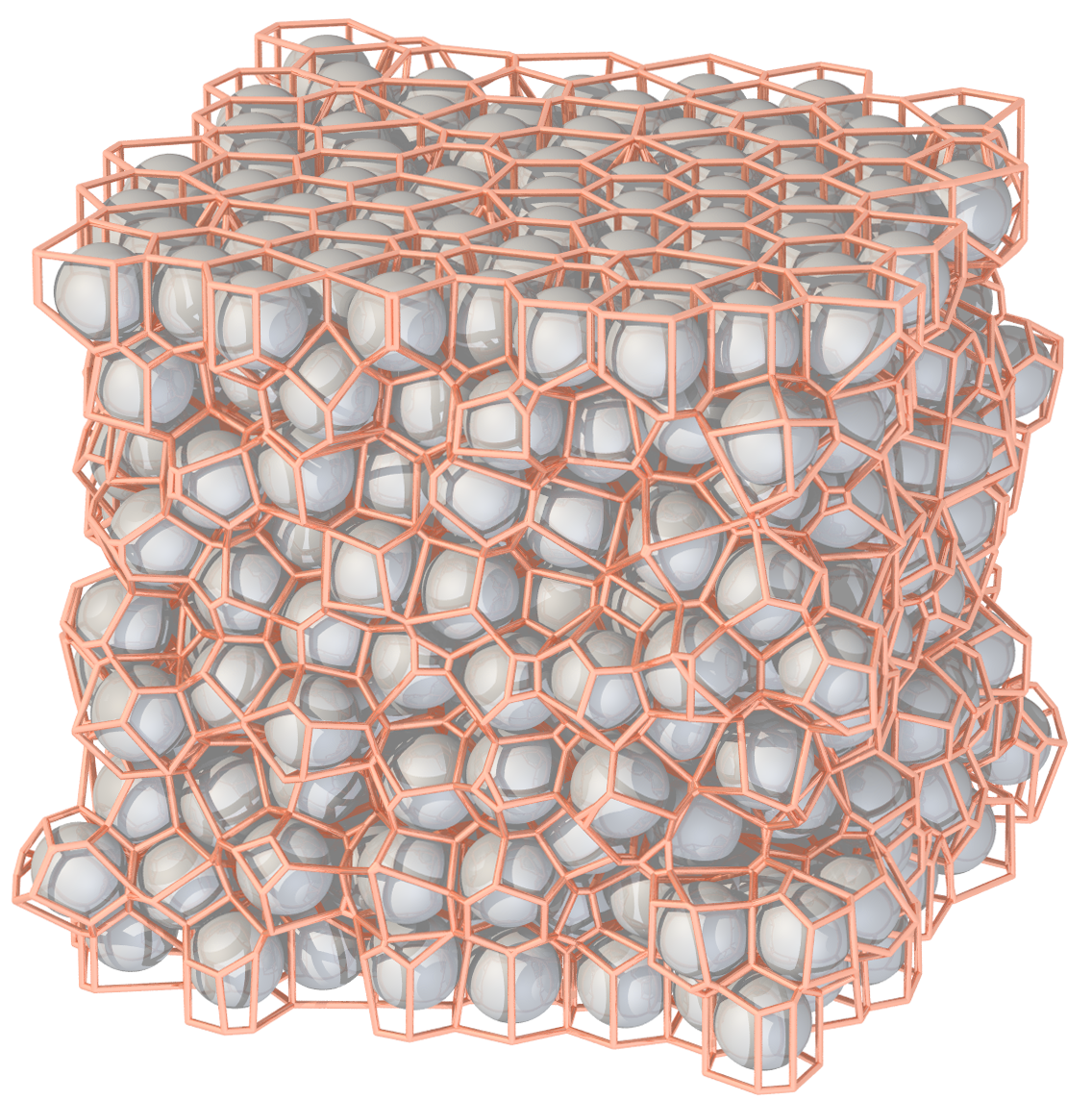
A Voronoi diagram partitions a geometric object into cells, each of which consists of the points closer to one particular object than to any others. They were considered as early at 1644 by René Descartes, but Georgy Voronoy (1868-1908) extended the investigation to higher dimensions in the 19th century.
These diagrams are useful in modeling crystal and cell growth as well as protein molecule volume analysis. They also are used in computer graphics, epidemiology, geophysics, and meteorology. A particularly notable use of a Voronoi diagram was the analysis of the 1854 cholera epidemic in London, in which physician John Snow determined a strong correlation of deaths with proximity to a particular (and infected) water pump on Broad Street.
Posted in Science, Technology |
Leave a Comment »





 The Daily Omnivore