May 27, 2015
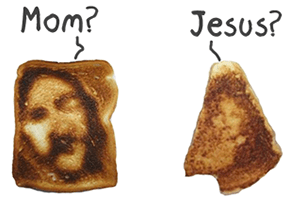

The term Lourdes [loordz] effect was coined by Belgian philosopher and skeptic Etienne Vermeersch to describe the observation that supernatural powers never manifest themselves in a completely unambiguous fashion. According to Vermeersch, should the miraculous power of Lourdes actually exist there would be no reason to think that it would be more difficult for the Virgin Mary or God to reattach a severed arm than to cure paralysis or blindness.
The accounts and photos of, for instance, the Loch Ness Monster and the Yeti lack reliability and clarity due to a similar effect. Vermeersch uses this term to mock what he calls the selective and uncritical approach to miracles, or the frivolous attribution of supernatural gifts to human beings.
Posted in Humor, Philosophy, Science |
1 Comment »
May 20, 2015


‘How to Lie with Statistics‘ is a book written by Darrell Huff in 1954 presenting an introduction to statistics for the general reader. Huff was a journalist who wrote many ‘how to’ articles as a freelancer, but was not a statistician. The book is a brief, breezy, illustrated volume outlining errors when it comes to the interpretation of statistics, and how these errors lead to incorrect conclusions. In the 1960s and ’70s it became a standard textbook introduction to the subject of statistics for many college students. It has become one of the best-selling statistics books in history, with over one and a half million copies sold in the English-language edition, and has also been widely translated.
Themes of the book include ‘Correlation does not imply causation’ and ‘Using random sampling.’ It also shows how statistical graphs can be used to distort reality, for example by truncating the bottom of a line or bar chart, so that differences seem larger than they are, or by representing one-dimensional quantities on a pictogram by two- or three-dimensional objects to compare their sizes, so that the reader forgets that the images do not scale the same way the quantities do. The original edition contained humorous illustrations by artist Irving Geis. In a UK edition these were replaced with cartoons by Mel Calman.
Posted in Language, Science |
1 Comment »
May 4, 2015

Scientism [sahy-uhn-tiz-uhm] is belief in the universal applicability of the scientific method and approach, and the view that empirical science constitutes the most authoritative worldview or most valuable part of human learning to the exclusion of other viewpoints. Philosopher Tom Sorell describes it as: ‘putting too high a value on natural science in comparison with other branches of learning or culture.’ It has been defined as ‘the view that the characteristic inductive methods of the natural sciences are the only source of genuine factual knowledge and, in particular, that they alone can yield true knowledge about man and society.’
The term scientism frequently implies a critique of the more extreme expressions of logical positivism (verificationism) and has been used by social scientists such as Friedrich Hayek, philosophers of science such as Karl Popper, and philosophers such as Hilary Putnam and Tzvetan Todorov to describe the dogmatic endorsement of scientific methodology and the reduction of all knowledge to only that which is measurable.
read more »
Posted in Philosophy, Science |
1 Comment »
April 13, 2015

Monoamine oxidase A (MAO-A), is an enzyme that in humans is encoded by the MAO-A gene, a version of which has been popularly referred to as the Warrior Gene. Several different versions of the gene are found in different individuals, although a functional gene is present in most humans (with the exception of a few individuals with Brunner syndrome, a rare genetic disorder). MAO aids in the breakdown of neurotransmitters such as serotonin and dopamine and are, therefore, capable of influencing the feelings, moods, and behaviors of individuals.
According to this, if there was a mutation to the gene that is involved in the process of promoting or inhibiting MAO enzymes, it could affect a person’s personality and could therefore make them more prone to aggression. A deficiency in the MAO-A gene has been linked to higher levels of aggression in males. In a 2009 criminal trial in the US, an argument based on a combination of ‘warrior gene’ and history of child abuse was successfully used to avoid a conviction of first-degree murder and the death penalty; however, the convicted murderer was sentenced to 32 years in prison.
Posted in Health, Politics, Science |
Leave a Comment »
April 6, 2015


Goose bumps (‘cutis anserina,’ also called ‘goose pimples’ or ‘goose flesh’) are bumps that develop on human skin at the base of body hairs in response to cold. They can also occur involuntarily as the result of strong emotions such as fear, nostalgia, pleasure, euphoria, awe, admiration, or sexual arousal. The same effect is manifested in the root word ‘horror’ in English, which is derived from Latin ‘horrere,’ which means ‘to bristle,’ and ‘be horrified,’ because of the accompanying hair reaction.
The reflex of producing goose bumps is known as ‘arasing,’ ‘piloerection,’ or the ‘pilomotor reflex.’ It occurs in many mammals besides humans; a prominent example is porcupines, which raise their quills when threatened, or sea otters when they encounter sharks or other predators. Small muscles at the follicles raise the body’s hair to make the animal appear larger and more imposing when facing predators. The formation of goose bumps in humans under stress is considered by some to be a vestigial reflex. In furred animals, the cold response erects hairs to trap air, creating a layer of insulation.
read more »
Posted in Health, Language, Science |
1 Comment »
April 1, 2015

Perceptual learning is the process of learning improved skills of perception from simple sensory discriminations (e.g., distinguishing two musical tones from one another) to complex categorizations of spatial and temporal patterns relevant to real-world expertise (e.g., reading, seeing relations among chess pieces, knowing whether or not an X-ray image shows a tumor). Perceptual learning forms important foundations of complex cognitive processes (i.e., language).
In visual Vernier acuity tasks, observers judge whether one line is displaced above or below a second line. Untrained observers are often already very good with this task, but after training, observers’ threshold has been shown to improve as much as six fold. Similar improvements have been found for visual motion discrimination and orientation sensitivity.
read more »
Posted in Education, Health, Science |
Leave a Comment »
March 24, 2015

Postdiction [pohst-dik-shuhn], also known as retroactive clairvoyance, is an effect of hindsight bias (the tendency to perceive events that have already occurred as having been more predictable than they actually were) that explains claimed predictions of significant events, such as plane crashes and natural disasters. In religious contexts it is frequently referred to by the Latin term ‘vaticinium ex eventu,’ or ‘foretelling after the event.’
Through this term, skeptics postulate that many biblical prophecies (and similar prophecies in other religions) appearing to have come true may have been written after the events supposedly predicted, or that their text or interpretation may have been modified after the event to fit the facts as they occurred.
read more »
Posted in Philosophy, Science |
Leave a Comment »
March 17, 2015

The information explosion is the rapid increase in the amount of published information or data and the effects of this abundance. As the amount of available data grows, the problem of managing the information becomes more difficult, which can lead to information overload. The earliest use of the phrase seems to have been in an IBM advertising supplement to the ‘New York Times’ published on April 30, 1961, and by Frank Fremont-Smith, Director of the American Institute of Biological Sciences Interdisciplinary Conference Program. Techniques to gather knowledge from an overabundance of electronic information (e.g., data fusion may help in data mining) have existed since the 1970s.
Since ‘information’ in electronic media is often used synonymously with ‘data,’ the term ‘information explosion’ is closely related to the concept of ‘data flood’ (also dubbed ‘data deluge’), the ever-increasing amount of electronic data exchanged per time unit. The awareness about non-manageable amounts of data grew along with the advent of ever more powerful data processing since the mid-1960s. By August 2005, there were over 70 million web servers. Two years later there were over 135 million web servers. According to ‘Technorati,’ the number of blogs doubles about every 6 months with a total of 35.3 million blogs as of April 2006. This is an example of the early stages of logistic growth, where growth is approximately exponential, since blogs are a recent innovation. As the number of blogs approaches the number of possible producers (humans), saturation occurs, growth declines, and the number of blogs eventually stabilizes.
Posted in Education, Science, Technology |
Leave a Comment »
March 16, 2015
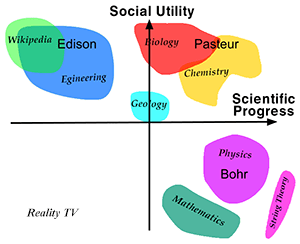

Blue skies research is scientific research in domains where ‘real-world’ applications are not immediately apparent. It has been defined as ‘research without a clear goal’ and ‘curiosity-driven science.’ It is sometimes used interchangeably with the term ‘basic research.’ Proponents of this mode of science argue that unanticipated scientific breakthroughs are sometimes more valuable than the outcomes of agenda-driven research, heralding advances in genetics and stem cell biology as examples of unforeseen benefits of research that was originally seen as purely theoretical in scope. Because of the inherently uncertain return on investment, blue-sky projects are politically and commercially unpopular and tend to lose funding to more reliably profitable or practical research.
Raytheon founder Vannevar Bush’s 1945 report, ‘Science: The Endless Frontier,’ made the argument for the value of basic research in the postwar era, and was the basis for many appeals to the federal funding of basic research. The 1957 launch of Sputnik prompted the United States Air Force Office of Scientific Research to sponsor basic science research into the 1960s. By the 1970s, financial strains brought pressure on public expenditure on the sciences, first in the UK and the Netherlands, and by the 1990s in Germany and the US.
read more »
Posted in Money, Science, Technology |
1 Comment »
March 10, 2015

David Graeber (b. 1961) is an American anthropologist, anarchist and activist, who is Professor of Anthropology at the London School of Economics. Specializing in theories of value and social theory, he was an assistant professor and associate professor of anthropology at Yale University from 1998 to 2007, although Yale controversially declined to rehire him. From Yale, he went on to become a Reader in Social Anthropology at Goldsmiths, University of London from 2007-13.
Graeber has been involved in social and political activism, including the protests against the 3rd Summit of the Americas in Quebec City in 2001 and the World Economic Forum in New York City in 2002. He is also a leading figure in the Occupy Wall Street movement.
read more »
Posted in Money, Politics, Science |
Leave a Comment »
March 9, 2015
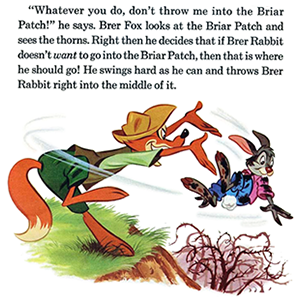
Reverse psychology is a technique involving the advocacy of a belief or behavior that is opposite to the one desired, with the expectation that this approach will encourage the subject of the persuasion to do what actually is desired: the opposite of what is suggested. This technique relies on the psychological phenomenon of reactance, in which a person has a negative emotional reaction to being persuaded, and thus chooses the option which is being advocated against. The one being manipulated is usually unaware of what is really going on.
Reverse psychology is often used on children due to their high tendency to respond with reactance, a desire to restore threatened freedom of action (e.g. telling children to stay in the house when you really want them to choose to go outside and play). Questions have however been raised about such an approach when it is more than merely instrumental, in the sense that ‘reverse psychology implies a clever manipulation of the misbehaving child’ and nothing more. With respect to ’emotional intelligence,’ the advice has been given: ‘don’t try to use reverse psychology….such strategies are confusing, manipulative, dishonest, and they rarely work’. In addition, consistently allowing a child to do the opposite of what he/she is being advised, undermines the authority of the parent.
read more »
Posted in Health, Science |
Leave a Comment »
March 8, 2015

In social psychology, the boomerang effect refers to the unintended consequences of an attempt to persuade resulting in the adoption of an opposing position instead. It is sometimes referred to as ‘the theory of psychological reactance,’ stating that attempts to restrict a person’s freedom often produce an ‘anticonformity boomerang effect.’ The tactic of reverse psychology, which is a deliberate exploitation of an anticipated boomerang effect, involves one’s attempt of feigning a desire for an outcome opposite to that of the truly desired one, such that the prospect’s resistance will work in the direction that the exploiter actually desires.
The first study on the subject in 1953 noted that it is more likely under certain conditions: When weak arguments are paired with a negative source; When weak or unclear persuasion leads the recipient to believe the communicator is trying to convince them of a different position than what the communicator intends; When the persuasion triggers aggression or unalleviated emotional arousal; When the communication adds to the recipient’s knowledge of the norms and increases their conformity; When non-conformity to their own group results in feelings of guilt or social punishment; and When the communicator’s position is too far from the recipient’s position and thus produces a ‘contrast’ effect and thus enhances their original attitudes.
read more »
Posted in Science |
Leave a Comment »


 The Daily Omnivore