October 24, 2012
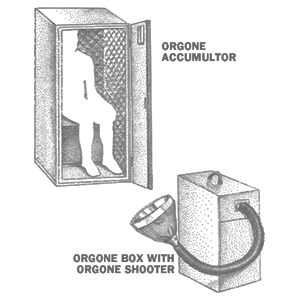
Within the work of the Austrian psychoanalyst Wilhelm Reich (1897–1957), the term orgastic potency referred to the ability to experience an orgasm with specific psychosomatic characteristics. Reich described it as ‘the real emotional experience of the loss of your ego, of your whole spiritual self,’ and believed it was essential for the capacity to love.
For Reich, ‘orgastic impotence,’ or failure to attain orgastic potency (not to be confused with anorgasmia, the inability to reach orgasm), meant that the undischarged libido, which he saw as a physical energy, might cause illness. This he defined as neurosis, arguing that ‘not a single neurotic individual possesses orgastic potency.’ According to one of his followers, Elsworth Baker, someone who can attain orgastic potency ‘cannot maintain a neurosis.’
read more »
Posted in Health, Science, Sex |
Leave a Comment »
October 24, 2012
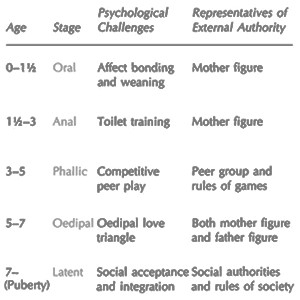
In Freudian psychology, psychosexual development is a central element of the psychoanalytic sexual drive theory, that human beings, from birth, possess an instinctual libido (sexual appetite) that develops in five stages.
Each stage — the oral, the anal, the phallic, the latent, and the genital — is characterized by the erogenous zone that is the source of the libidinal drive. Sigmund Freud proposed that if the child experienced sexual frustration in relation to any psychosexual developmental stage, s/he would experience anxiety that would persist into adulthood as a neurosis, a functional mental disorder.
read more »
Posted in Health, Sex |
Leave a Comment »
October 17, 2012

‘A Rape in Cyberspace, or How an Evil Clown, a Haitian Trickster Spirit, Two Wizards, and a Cast of Dozens Turned a Database into a Society’ is an article written by freelance journalist Julian Dibbell and first published in ‘The Village Voice in 1993.’ The article was later included in Dibbell’s book ‘My Tiny Life’ on his experience at LambdaMOO (a text-based online virtual reality system to which multiple users are connected at the same time).
Technology advocate Lawrence Lessig has said that his chance reading of Dibbell’s article was a key influence on his interest in the field. Sociologist David Trend called it ‘one of the most frequently cited essays about cloaked identity in cyberspace.’
read more »
Posted in Games, Sex, Technology |
Leave a Comment »
October 11, 2012
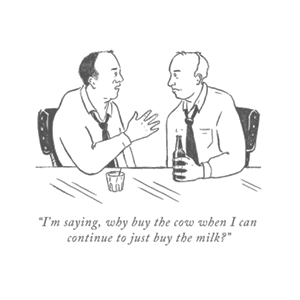
Sexual economy refers to the resources men offer to women in order to acquire sex. In this sense the heterosexual community is considered as a marketplace where sex is bought and sold. The marketplace is defined by gender roles, and in the sex economy men are the buyers, and women are the sellers.
Couples and their sexual activities are loosely interrelated by a marketplace; the decisions made regarding sex by each couple may be influenced by conditions in the market. As with all economic principles, price is determined by supply and demand, product variety, complicity among sellers, competition between sellers, as well as other factors. The price of sex is not limited to money, it has a wide conception of resources including, respect, love, time, gifts, affection, or commitment.
read more »
Posted in Love, Money, Sex |
1 Comment »
October 9, 2012

‘Conversion therapy‘ (also known as ‘Reparative therapy’) is a pseudo-scientific therapy that aims to change sexual orientation. Mainstream American medical and scientific organizations have expressed concern over conversion therapy and consider it potentially harmful. The advancement of conversion therapy may cause social harm by disseminating inaccurate views about sexual orientation. As a result, conversion therapy on minors is illegal in California.
The American Psychiatric Association has condemned psychiatric ‘treatment’ which is ‘based upon the assumption that homosexuality per se is a mental disorder or based upon the a priori assumption that a patient should change his/her sexual homosexual orientation.’ It states that, ‘Ethical practitioners refrain from attempts to change individuals’ sexual orientation.’ And that political and moral debates over the integration of gays and lesbians into the mainstream of American society have obscured scientific data about changing sexual orientation ‘by calling into question the motives and even the character of individuals on both sides of the issue.’
read more »
Posted in Health, Philosophy, Sex |
1 Comment »
October 3, 2012

Feminist science fiction is a sub-genre of science fiction which tends to deal with women’s roles in society. Feminist science fiction poses questions about social issues such as how society constructs gender roles, the role reproduction plays in defining gender and the unequal political and personal power of men and women.
Some of the most notable feminist science fiction works have illustrated these themes using utopias to explore a society in which gender differences or gender power imbalances do not exist, or dystopias to explore worlds in which gender inequalities are intensified, thus asserting a need for feminist work to continue. According to professor Elyce Rae Helford: ‘Science fiction and fantasy serve as important vehicles for feminist thought, particularly as bridges between theory and practice. No other genres so actively invite representations of the ultimate goals of feminism: worlds free of sexism, worlds in which women’s contributions (to science) are recognized and valued, worlds in which the diversity of women’s desire and sexuality, and worlds that move beyond gender.’
read more »
Posted in Art, Sex, Technology |
1 Comment »
September 29, 2012

In social psychology, propinquity [proh-ping-kwi-tee] (from Latin: ‘nearness’) is one of the main factors leading to interpersonal attraction. It refers to the physical or psychological proximity between people. Propinquity can mean physical proximity, a kinship between people, or a similarity in nature between things (‘like-attracts-like’).
Two people living on the same floor of a building, for example, have a higher propinquity than those living on different floors, just as two people with similar political beliefs possess a higher propinquity than those whose beliefs strongly differ. Propinquity is also one of the factors, set out by Jeremy Bentham, used to measure the amount of (utilitarian) pleasure in a method known as felicific calculus (which is used to calculate the degree or amount of pleasure that a specific action is likely to cause).
read more »
Posted in Love, Science, Sex |
Leave a Comment »
September 29, 2012
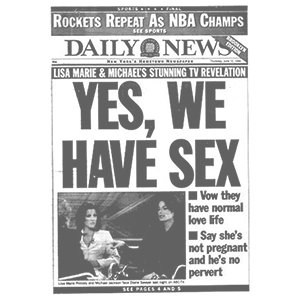
A marriage of convenience (plural marriages of convenience) is a marriage contracted for reasons other than the reasons of relationship, family, or love. Instead, such a marriage is orchestrated for personal gain or some other sort of strategic purpose, such as political marriage.
In the cases when it represents a fraud, it is called ‘sham marriage.’ Marriages of convenience are often contracted to exploit legal loopholes of various sorts. A couple may wed for reasons of citizenship or right of abode, for example, as many countries around the world will grant such rights to any wedded resident.
read more »
Posted in Money, Politics, Sex |
Leave a Comment »
September 29, 2012

Hypergamy [hahy-pur-guh-mee] (colloquially referred to as ‘marrying up’) is the act or practice of seeking a spouse of higher looks, socioeconomic, caste or status than oneself. The term is often used more specifically in reference to a perceived tendency among human cultures for females to seek or be encouraged to pursue male suitors that are higher status than themselves, which often manifests itself as being attracted to men who are comparatively older, wealthier, or otherwise more privileged than themselves.
According to evolutionary psychologists, females have evolved a preference for higher status males because they offer their prospective children both ‘better’ genes and greater resources, e.g. food and security. Men, who invest less in their children, have less reason to prefer mates with high social status. Some have even argued that men ‘marry-down’ to ensure that their mates have a higher incentive to remain faithful.
read more »
Posted in Language, Money, Sex |
Leave a Comment »
September 29, 2012

‘Going Dutch‘ is a term that indicates that each person participating in a group activity pays for himself, rather than any person paying for anyone else, particularly in a restaurant bill. There are two possible senses—each person paying his own expenses, or the entire bill being split (divided evenly) between all participants. In strict usage, ‘Going Dutch’ refers to the former, paying one’s own expenses, and the latter is referred to as ‘splitting the bill,’ but in casual usage these may both be referred to as ‘going Dutch.’ Splitting the bill is generally easier to compute, as it does not require checking what each individual ordered, but has the downside that people who ordered more expensive items are subsidized by others.
One suggestion is that the phrase ‘going Dutch’ originates from the concept of a Dutch door. Previously on farmhouses this consisted of two equal parts. Another school of thought is that it may be related to Dutch etiquette. In the Netherlands, it was not unusual to pay separately when going out as a group. When dating in a one-on-one situation, however, the man will most commonly pay for meals and drinks. The ‘Oxford English Dictionary’ connects ‘go Dutch’ with ‘Dutch treat’ and other phrases many of which have ‘an opprobrious or derisive application, largely due to the rivalry and enmity between the English and Dutch in the 17th c[entury],’ the period of the Anglo-Dutch Wars. Another example is ‘Dutch courage.’
read more »
Posted in Money, Sex, World |
Leave a Comment »
September 24, 2012

Y: The Last Man is a dystopian science fiction comic book series by Brian K. Vaughan and Pia Guerra published by Vertigo (a DC subsidiary) beginning in 2002. The series is about the only man to survive the apparent simultaneous death of every male mammal (barring the same man’s pet monkey) on Earth.
The premise is noticeably similar to ‘Consider Her Ways,’ a 1964 episode of Alfred Hitchcock Presents where the world adopts a matriarchal society after a disease kills every man on Earth.
read more »
Posted in Art, Death, Sex |
Leave a Comment »
September 18, 2012

A groupie is a person who seeks emotional and sexual intimacy with a musician or other celebrity or public figure. ‘Groupie’ is derived from group in reference to a musical group, but the word is also used in a more general sense, especially in casual conversation. The word ‘groupie’ is commonplace, a derisive term used to describe a particular kind of female fan assumed to be more interested in sex with rock stars than in their music.
Groupies became prominent in the music scene in the 1960s and 1970s. This was prior to the murder of John Lennon in 1980, and before security levels for bands increased significantly. Female groupies in particular have a long-standing reputation of being available to celebrities, pop stars, rock stars, and other public figures. Led Zeppelin singer Robert Plant is quoted as distinguishing between fans who wanted brief sexual encounters, and ‘groupies’ who traveled with musicians for extended periods of time, acting as a surrogate girlfriend or mother, often taking care of the musician’s valuables, drugs, wardrobe, and social life.
read more »
Posted in Games, Money, Sex |
1 Comment »


 The Daily Omnivore