September 15, 2012

Limerence [lim-rens] is a term coined in 1977 by American psychologist Dorothy Tennov to describe an involuntary state of mind which seems to result from a romantic attraction to another person combined with an overwhelming, obsessive need to have one’s feelings reciprocated. The concept grew out of Tennov’s mid-1960s work, when she interviewed over 500 people on the topic of love, and was first published in her 1979 book ‘Love and Limerence: The Experience of Being in Love.’
Though there are no established preconditions for limerence, there is a high rate of coincidence between limerence, depersonalization/derealization disorders, and dysfunctional attachment environments in childhood. This might suggest that sustained exposure to a psychologically unstable environment in childhood, or unhealthy/incomplete attachment between a child and their caretakers in early life, may make an individual more susceptible to limerence. There is also a statistically significant correlation between limerence and post traumatic stress disorder.
read more »
Posted in Health, Love, Sex |
1 Comment »
September 15, 2012

Erotomania [ih-roh-tuh-mey-nee-uh] is a type of delusion in which the affected person believes that another person, usually a stranger, high-status or famous person, is in love with him or her. The illness often occurs during psychosis, especially in patients with schizophrenia, delusional disorder, or bipolar mania.
During an erotomanic episode, the patient believes that a ‘secret admirer’ is declaring his or her affection to the patient, often by special glances, signals, telepathy, or messages through the media. Usually the patient then returns the perceived affection by means of letters, phone calls, gifts, and visits to the unwitting recipient. Even though these advances are unexpected and unwanted, any denial of affection by the object of this delusional love is dismissed by the patient as a ploy to conceal the forbidden love from the rest of the world.
read more »
Posted in Health, Love, Sex |
Leave a Comment »
September 15, 2012
Nice guy is a term in the general public discourse and in popular culture describing an adult or teenage male with friendly yet unassertive personality traits in the context of a relationship with a woman. A typical nice guy believes in putting the needs of others before his own, avoids confrontations, does favors, gives emotional support, tries to get out of trouble, and generally acts nicely towards women.
There is an active debate about whether the nice guy personality profile may actually make a man less desirable to women romantically or sexually. Part of this debate includes speculation about hypocrisy among women in the dating world: that women may say they want a nice guy but won’t date him or have sex with him, and rather subconsciously prefer men who are more confident and assertive but less considerate.
read more »
Posted in Humor, Love, Sex |
Leave a Comment »
September 15, 2012

In popular culture, the ‘friend zone‘ refers to a platonic relationship where one person wishes to enter into a romantic relationship while the other does not. The most typical friend zone situation involves a man that is romantically interested in a woman who does not reciprocate or is unaware of his interest. It is generally considered to be an undesirable situation by the lovelorn person.
Once the friend zone is established, it is said to be difficult to move beyond that point in a relationship. There are differing explanations about what causes a person to be placed in the friend zone by another. One report suggests that some women don’t see their male friends as potential love interests because they fear that deepening their relationship might cause a loss of the romance and mystery or lead to rejection later.
read more »
Posted in Humor, Love, Sex |
2 Comments »
September 15, 2012

Involuntary celibacy (colloquially ‘incel’) is chronic near-total or total absence in a person’s sexuality of intimate relationships or sexual intercourse that is occurring for reasons other than voluntary celibacy, asexuality, antisexualism, or sexual abstinence. It is the psycho-social opposite of having a sex life.
Incel people, despite being open to sexual intimacy and potential romance with another person and also making active, repeated efforts towards such an end, cannot cause any such end(s) to occur with any significant degree of regularity—or even at all.
read more »
Posted in Health, Love, Sex |
1 Comment »
September 14, 2012
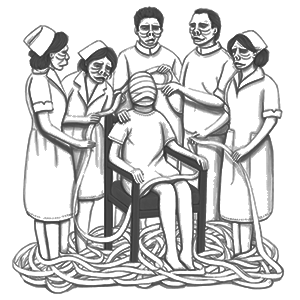
Aesthetic relativism is the philosophical view that the judgement of beauty is relative to different individuals and/or cultures and that there are no universal criteria of beauty.
For example, in historical terms, the female form as depicted in the Venus of Willendorf (prehistoric figurines) and the women in the paintings of Rubens would today be regarded as over-weight, while the slim models on the covers of contemporary fashion magazines would no doubt be regarded in a negative light by our predecessors. In contemporary (cross-cultural) terms, body modification among ‘primitive’ peoples is sometimes regarded as grotesque by Western society.
read more »
Posted in Art, Philosophy, Sex |
1 Comment »
September 13, 2012
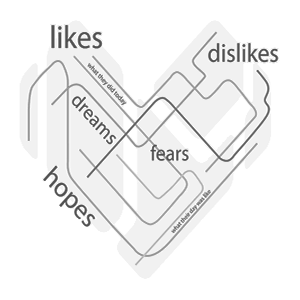
The concept of a lovemap was originated by psychologist and sexologist John Money to assist in a discussion of why people like what they enjoy sexually and erotically. According to Money, it is ‘a developmental representation or template in the mind and in the brain depicting the idealized lover and the idealized program of sexual and erotic activity projected in imagery or actually engaged in with that lover.’
According to Money, the word lovemap was first used in 1980 in an article entitled: ‘Pairbonding and Limerence.’ Money describes the formation of an individual’s lovemap as similar to the acquisition of a native language, in that it bears the mark of his or her own unique individuality, similar to an accent in a spoken language. A lovemap is usually quite specific as to details of the temperament, build, race, color, etc. of the ideal lover. Since its inception, the concept of ‘love maps,’ applied to interpersonal relationships, has found apt acceptance and is frequently referenced in love / relationship / sexual-evolution theory books; as for example in Wilson and McLaughlin’s 2001 ‘The Science of Love.’
read more »
Posted in Health, Love, Sex |
1 Comment »
September 8, 2012

Barbie syndrome is a term used to describe the desire to have a physical appearance and lifestyle representative of the Barbie doll.
It is most often associated with pre-teen and adolescent females but is applicable to any age group. A person with Barbie syndrome attempts to emulate the doll’s physical appearance, even though the doll has unattainable body proportions.
Posted in Health, Sex |
1 Comment »
September 4, 2012

The bacchanalia [bak-uh-ney-lee-uh] were wild and mystic festivals of the Greco-Roman god Bacchus (or Dionysus), the wine god. The term has since come to describe any form of drunken revelry.
The bacchanalia were rites originally held in ancient Greece as the Dionysia. The most famous of the Greek Dionysia were in Attica and included a festal procession, a drinking feast, and dramatic performances in the theatre of Dionysus. The rites spread to Rome from the Greek colonies in Southern Italy where they were secret and only attended by women. The festivals occurred in the grove of Simila near the Aventine Hill on March 16 and March 17. Later, admission to the rites was extended to men, and celebrations took place five times a month.
read more »
Posted in Drugs, Philosophy, Sex |
Leave a Comment »
September 4, 2012

Tarantism [tar-uhn-tiz-uhm] is an alleged, possibly deadly syndrome, popularly believed to result from the bite of a kind of a tarantula. It was originally described in the eleventh century and was supposedly common in southern Italy during the sixteenth and seventeenth centuries. There were strong suggestions that there is no organic cause for the heightened excitability and restlessness that gripped the victims. The stated belief of the time was that victims needed to engage in frenzied dancing to prevent death, and a particular kind of dance, called the tarantella, evolved from this therapy.
Arachnologist John Compton proposed that ancient Bacchanalian rites that had been suppressed by the Roman Senate in 186 BCE went underground, reappearing under the guise of emergency therapy for bite victims. The phenomenon of tarantism is consistent with mass psychogenic illness (the rapid spread of illness symptoms affecting members of a cohesive group, originating from a nervous system disturbance involving excitation, loss or alteration of function, whereby physical complaints that are exhibited unconsciously have no corresponding organic etiology). Although the popular belief persists that tarantism results from a spider bite, it remains scientifically unsubstantiated. The actual cause or causes of tarantism remain unknown.
Posted in Death, Health, Sex |
Leave a Comment »
September 4, 2012

Daggering is a form of dance originating from the Caribbean. The dance incorporates sexual and other forms of frantic movement. The activity of ‘daggering’ has been present in Jamaica’s dancehalls for many years, but only recently has the name of daggering become acceptable. Some argue that it’s roughly the equivalent of the Caribbean’s ‘cabin stabbing,’ another style of music and dance.
‘Mojo’ magazine journalist and reggae historian David Katz attributes the recently gained popularity of daggering to a series of dancehall music videos and artists that promoted the style. Later on, controversial YouTube videos of people performing daggering would spread the trend worldwide. Daggering is performed on Dancehall-music, although some artists have specifically created ‘daggering’ music, such as Mr. Vegas, Aidonia, and Major Lazer.
read more »
Posted in Politics, Sex, World |
1 Comment »
August 26, 2012
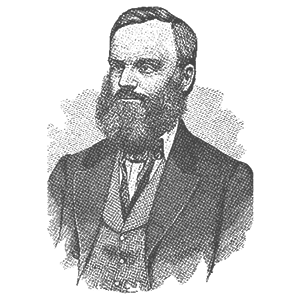
Stirpiculture [stur-pi-kuhl-cher] is a word coined by John Humphrey Noyes, founder of the Oneida Community (a religious commune founded in 1848 in Oneida, New York, which practiced group marriage), to refer to eugenics, or the breeding of humans to achieve desired perfections within the species. Noyes derived stirpiculture from the Latin word ‘stirps,’ which means ‘stock, stem, or root.’
Up until the late 1860s, John Humphrey Noyes believed in only having children with purpose and preparation. In his society, it was not simply about the preparedness of the parents, but rather the preparedness of the community to support a new generation. In the early years of the community, when poverty was an issue, the community did not feel adequately prepared to take on the raising and support of children. Therefore, procreation was discouraged in these early days before the financial successes of trap-building. An ‘accidental’ conception was thought to be a failure in male continence, the act that was meant to prevent unwanted pregnancies through the withholding of male ejaculation during intercourse.
read more »
Posted in Philosophy, Sex |
Leave a Comment »



 The Daily Omnivore