August 25, 2012
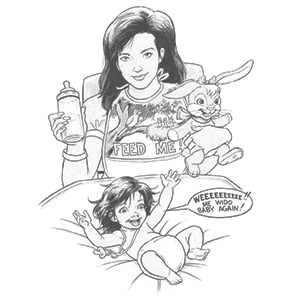
Ageplay or age play is a form of roleplaying in which an individual acts or treats another as if they were a different age. The practice can be regressive, in which the goal is to re-experience childhood, or sexual, recreating a sexual relationship with people of the pretend or true ages.
Sexual variations may include among other things such as incest play, in which individuals recreate and sexualize roles within a family, and ‘Daddy’s girl’ fetishism in which real or imagined age differences are the basis of the roleplaying and the female is portrayed as the younger partner. Ageplay is also commonly done by children when they play games such as ‘house’ and take on roles of a nuclear family, which typically consists of a father, mother, a child or children, and/or a baby.
Posted in Games, Health, Sex |
Leave a Comment »
August 25, 2012
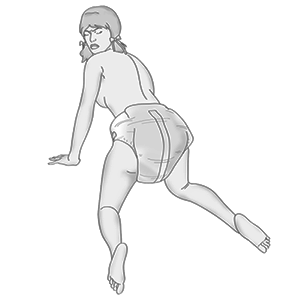
Erotic target location error (ETLE) is a term coined in 1993 by sexologist Ray Blanchard, referring to having a sexual preference (or very strong sexual interest) in features that are somewhere other than on one’s sexual partner(s). When one’s sexual arousal is based on imagining one’s self in another physical form (such as an animal, an infant, or an amputee) the erotic target is said to be one’s self, or erotic target identity inversion.
The best known examples of erotic target identity inversions are biological males who experience sexual arousal in response to imaging themselves as women (called autogynephilia), but there has also been at least one reported case of anatomic autoandrophilia (a woman’s tendency to be sexually aroused by the thought or image of herself as a man). Autogynephilia can be associated with gender dysphoria and Gender Identity Disorder, discontent with one’s biological sex and the desire to under surgery for sex reassignment and permanently take on a role and life of the other sex. A male with sexual arousal based on temporarily taking on the appearance or role of a woman is called ‘transvestic’ fetishism.
read more »
Posted in Health, Sex |
Leave a Comment »
August 25, 2012

Fursuits are animal costumes made from various materials. They range from simple tails and ears to full costumes cooled by battery-powered fans. Fursuits can be worn for personal enjoyment, work, or charity. The term ‘fursuit’ is believed to have been coined in 1993 by Robert King and can also refer to animal mascot costumes in general, as opposed to human or inanimate object mascots. Fursuits have also been featured in visual mediums as backdrops or as part of a central theme.
Fursuits are associated with furry fandom, a subculture devoted to anthropomorphic animal characters. More advanced fursuit features include jaws which move when the user speaks, and moving tails. Often, the suits depict a personal character and are used in a form of role play, or for expressing their owners’ ‘true’ personality. Some fursuiters do not talk while in costume to ‘preserve the magic.’ A few members of the furry fandom consider the fursuit a sexual item. Fursuits can be sold with or modified to contain provisions for sexual activity, such as openings, removable panels, and anatomically correct artificial genitalia. Sexual arousal that depends on portraying one’s fursuit identity has been called ‘fursuitism’ and sexuality in furry fandom is refered to as ‘yiff’ or ‘yiffing.’
Posted in Games, Sex |
2 Comments »
August 25, 2012

Plushophilia is a sexual fetish involving stuffed animals. Plushophiles are sometimes called ‘plushies,’ although this term can also refer to non-sexual stuffed animal enthusiasts, and to stuffed animals in general. Plushophilia is sometimes assumed to be a practice common within furry fandom (a subculture revolving around animal anthropomorphism), due in part to a 2001 ‘Vanity Fair’ article that linked various members of the furry community with plushophilia.
Pornography and sexual activity involving animal anthropomorphism is known in the furry fandom community as ‘yiff’ (and sexual acts as ‘yiffing’). Sexual arousal that depends upon imagining one’s self as plush or anthropomorphized animal is ‘autoplushophilia.’ Paraphilic interests that involve being in another form have been referred to as Erotic target location errors, a term coined in 1993 by sexologist Ray Blanchard, referring to having a sexual preference in features that are somewhere other than on one’s sexual partner.
Posted in Health, Sex |
Leave a Comment »
August 25, 2012
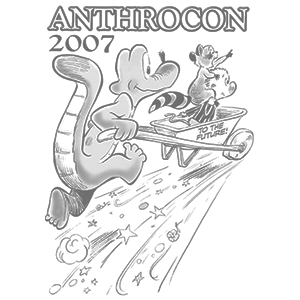
The furry fandom is a subculture interested in anthropomorphic animal characters. According to fandom historian Fred Patten, the concept of furry originated at a science fiction convention in 1980, when a character drawing from Steve Gallacci’s ‘Albedo Anthropomorphics’ started a discussion of anthropomorphic characters in science fiction novels. This led to the formation of a discussion group that met at science fiction and comics conventions.
The specific term ‘furry fandom’ was being used in fanzines as early as 1983, however, fans consider the origins of the subculture to be much earlier, with fictional works such as ‘Kimba, The White Lion’ released in 1965, Richard Adams’ novel ‘Watership Down,’ published in 1972 (and its 1978 film adaptation), as well as Disney’s ‘Robin Hood’ as oft-cited examples. To distinguish these personae from seriously depicted animal characters, such as Lassie or Old Yeller, cartoon animals are referred to as ‘funny animals,’ a term that came into use in the 1910s.
read more »
Posted in Games, Language, Sex |
2 Comments »
August 25, 2012

Pegging is a sexual practice in which a woman penetrates a man’s anus with a strap-on dildo. The neologism ‘pegging’ was popularized when it became the winning entry in a contest in advice columnist Dan Savage’s ‘Savage Love’ sex advice column, held after an observation was made that there was no common name for the act. In terms of physical pleasure, a woman’s genitals may get direct stimulation from the base of the dildo, or in the case of a double-ended dildo, from vaginal (or internal) penetration. A woman can use a secondary vibrator, between the dildo and her genitals, to get pleasure from pegging.
Men may find stimulation of the anus, rectum, and adjacent organs enjoyable. During anal sex, pleasure can be particularly derived from the prostate, which can lead to an orgasm. Some men enjoy masturbating (or being manually stimulated) during pegging. Savage wrote that he believes all men should try pegging at least once, as it may introduce them to a new enjoyable sexual activity and illuminate them to the receiver’s perspective in sex.
read more »
Posted in Sex |
Leave a Comment »
August 25, 2012

In 2003, the columnist and gay rights activist Dan Savage held a contest among his readers to create a definition for the word ‘santorum‘ as a response to comments by then-U.S. Senator Rick Santorum that had been criticized as anti-gay. Savage announced the winning entry, which defined ‘santorum’ as ‘the frothy mixture of lube and fecal matter that is sometimes the byproduct of anal sex.’
He created a web site, spreadingsantorum.com (and santorum.com), to promote the definition, which became a prominent search result for Santorum’s name on several web search engines. In 2010 Savage offered to take the site down if Santorum donated US$5 million to Freedom to Marry, a group advocating legal recognition of same-sex marriages. In 2011 Santorum asked Google to remove the definition from its search engine index. Google refused, responding that the company does not remove content from search results except in very limited circumstances.
read more »
Posted in Language, Politics, Sex |
1 Comment »
August 16, 2012
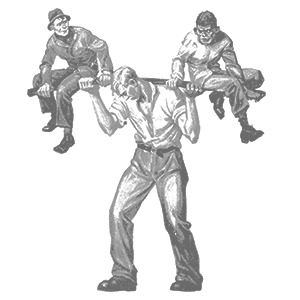
Eugenics [yoo-jen-iks] is the study of hereditary improvement of the human race by controlled selective breeding. Eugenics rests on some basic ideas. The first is that what is true of animals is true of man. The characteristics of animals are passed on from one generation to the next in heredity, including mental characteristics. For example, the behavior and mental characteristics of different breeds of dog differ, and all modern breeds are greatly changed from wolves. The breeding and genetics of farm animals show that if the parents of the next generation are chosen, then that affects what offspring are born.
Negative eugenics aims to cut out traits that lead to suffering, by limiting people with the traits from reproducing. Positive eugenics aims to produce more healthy and intelligent humans, by persuading people with those traits to have more children. In the past, many ways were proposed for doing this, and even today eugenics means different things to different people. The idea of eugenics is controversial, because in the past it was sometimes used to justify discrimination and injustice against people who were thought to be genetically unhealthy or inferior.
read more »
Posted in Health, Politics, Sex |
Leave a Comment »
August 13, 2012

Kinderwhore was an image used by a handful of mostly female punk rock bands in the US during the early to mid 1990s. The kinderwhore look consisted of torn, ripped tight or low-cut babydoll dresses or nighties, heavy makeup, and leather boots or Mary–Jane shoes of various colors.
The exact origin of the kinderwhore image is up for debate, though it is widely accepted that Kat Bjelland of Babes in Toyland was the first to define it and Courtney Love of Hole was the first to popularize it. Christina Amphlett of Divinyls can clearly be seen sporting the image on the cover of her band’s 1983 album, ‘Desperate.’ Love declared in an interview in the Los Angeles zine ‘Ben Is Dead’ that she took the style from Amphlett.
Posted in Art, Language, Sex |
1 Comment »
August 13, 2012
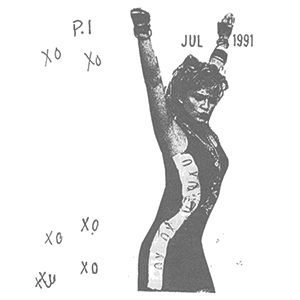
Riot grrrl is an underground feminist punk rock movement that originally started in Washington, D.C. and the Pacific Northwest in the early to mid-1990s. It is often associated with third-wave feminism which is sometimes seen as its starting point. Riot grrrl bands often address issues such as rape, domestic abuse, sexuality, racism, patriarchy, and female empowerment.
Bands associated with the movement include Bikini Kill, Jack Off Jill (and later Scarling), Bratmobile, Fifth Column, Sleater-Kinney, L7, and also queercore like Team Dresch. In addition to a music scene and genre, riot grrrl is a subculture: zines, the DIY ethic, art, political action, and activism are part of the movement.
read more »
Posted in Art, Politics, Sex |
Leave a Comment »
August 13, 2012

‘Who breaks a butterfly upon a wheel?‘ is a quotation – sometimes misquoted with ‘on’ in place of ‘upon’ – from Alexander Pope’s ‘Epistle to Dr Arbuthnot’ of 1735. It can be taken as referring to putting massive effort into achieving something minor or unimportant, and alludes to ‘breaking on the wheel,’ a form of torture in which victims had their long bones broken by an iron bar while tied to a Catherine wheel.
William Rees-Mogg, as editor of ‘The Times’ newspaper, used the ‘on a wheel’ version of the quotation as the heading (set in capital letters) for an editorial in 1967 about the ‘Redlands’ court case, which had resulted in prison sentences for Rolling Stones members Keith Richards and Mick Jagger. The philosopher Mary Midgley used a variation on the phrase in an article in the journal ‘Philosophy’ written to counter a review praising ‘The Selfish Gene’ by Richard Dawkins, where she cuttingly said that she had ‘not attended to Dawkins, thinking it unnecessary to break a butterfly upon a wheel.’
Posted in Language, Politics, Sex |
1 Comment »
August 13, 2012

Pussy Riot is a Russian feminist punk-rock collective that stages politically provocative impromptu performances in Moscow on Russia’s current political life. In March 2012, during an improvised and unauthorized concert in Moscow’s Cathedral of Christ the Savior, three women from the band were arrested and charged with ‘hooliganism’ and their trial began in late July.
The band members have gained sympathy both within Russia and internationally due to allegations of harsh treatment while in custody and a risk of a possible seven-year jail sentence, and have also been criticized in Russia for offending the feelings of religious people. Alexei Nikiforov, a federal prosecutor, has demanded prison for the trio because they ‘abused God.’ Pussy Riot’s lawyers said that the circumstances of the case have revived the Soviet-era tradition of the ‘show trial.’
read more »
Posted in Politics, Sex, World |
Leave a Comment »


 The Daily Omnivore