July 22, 2011

Nepeta [neh-puh-ta] is a genus of about 250 species of flowering plants in the family Lamiaceae, commonly known as ‘catnip’ because of their attractant effect on cats—the nepetalactone contained in nepeta binds to the olfactory receptors of cats, typically resulting in temporary euphoria. Catmints are also used in herbal medicine for their mild sedative effect on humans.
Nepetalactone is an organic compound, first reported in 1941 after it was isolated by steam distillation of catnip. The compound is also present in the wood of tartarian honeysuckle (Lonicera tatarica), shavings of which are often used in cat toys. Around 80% of cats are affected and susceptibility is gene-linked. The chemical interacts as a vapor at the olfactory epithelium. Nepetalactone has effects on some insects: it repels cockroaches and mosquitoes.
Posted in Drugs, Science, Sex |
1 Comment »
July 12, 2011

Rumspringa [room-spring-uh] (German: ‘jumping around’) generally refers to a period of adolescence for some members of the Amish, a subsect of the Anabaptist Christian movement, that begins around the age of sixteen and ends when a youth chooses baptism within the Amish church or instead leaves the community. The vast majority choose baptism and remain in the church.
Not all Amish use this term, but in sects that do, Amish elders generally view this as a time for courtship and finding a spouse. Wenger Mennonites youth go through a period of rumspringa between ages 16 and 18. It is sometimes referred to as a period to ‘sow wild oats.’ As is the case in many societies, Amish adolescents may engage in rebellious behavior, resisting or defying parental norms. In many cultures, enforcement may be relaxed, and misbehavior tolerated or overlooked to a degree.
read more »
Posted in Humor, Philosophy, Sex |
3 Comments »
July 11, 2011
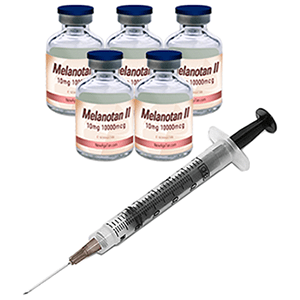
Melanotan II, developed at the University of Arizona, is a synthetic analog of the naturally occurring melanocortin peptide hormone alpha-melanocyte stimulating hormone (α-MSH) that in usage has been shown to have melanogenesis (tanning) and aphrodisiac effects in preliminary studies and clinical trials.
No compound incorporating the melanotan II peptide has ever been approved for use by any governmental drug regulatory bodies outside of clinical trials. Unlicensed and untested powders sold as ‘melanotan II’ are found on the Internet and are reported to be used by thousands of members of the general public.
read more »
Posted in Drugs, Health, Sex |
2 Comments »
July 8, 2011


Counterculture is a term used in psychology and sociology to describe a set of views that are not of the mainstream. It is a neologism attributed to American historian Theodore Roszak. Although distinct countercultural undercurrents have existed in many societies, here the term refers to a more significant, visible phenomenon that reaches critical mass and persists for a period of time.
A countercultural movement expresses the ethos, aspirations, and dreams of a specific population during an era—a social manifestation of zeitgeist. The term came to prominence in the news media, as it was used to refer to the social revolution that swept North America, Western Europe, Japan, Australia, and New Zealand during the 1960s and early 1970s.
read more »
Posted in Language, Politics, Sex |
Leave a Comment »
June 30, 2011

The Other World Kingdom (OWK) was a large, commercial BDSM and femdom resort and micronation, which opened in 1996 using the buildings and grounds of a 16th century chateau located in Czech Republic. Although it was not recognized by any other country, it maintained its own currency, passports, police force, courts, state flag, and state hymn. The OWK was a matriarchy and the state’s goal was ‘to get as many male creatures under the unlimited rule of Superior Women on as much territory as possible.’
The OWK was ruled by Her Royal Majesty Queen Patricia I, an absolute monarch. The site was 7.4 acres with several buildings and a small lake. The main building was the Queen’s Palace, which was the residence of the monarch, and contained a banqueting hall, library, throne room, torture chamber, schoolroom, gym, and extensive basement prison, the cells of which could be rented.
read more »
Posted in Games, Sex, World |
Leave a Comment »
June 27, 2011

‘The Third Chimpanzee: The Evolution and Future of the Human Animal’ (1991) is a wide-ranging book by Jared Diamond, professor of geography and physiology at UCLA, which applies insights from biology, anthropology, and linguistics to questions such as why one species of big mammal (humans) came to dominate its closest relatives, such as chimpanzees, and why one group of humans (eurasians) came to dominate others (Indigenous peoples of the Americas).
It also examines how asymmetry in male and female mating behavior is resolved through differing social structures across cultures, and how first contact between unequal civilizations almost always results in genocide. The book ends by noting that technological progress may cause environmental degradation on a scale leading to extinction. Diamond expanded on these themes in subsequent books: ‘Guns, Germs and Steel’ (1997), ‘Why Is Sex Fun? (1997), and ‘Collapse’ (2005).
read more »
Posted in Science, Sex, War |
Leave a Comment »
June 24, 2011

The Repository for Germinal Choice was a sperm bank that existed in Escondido, California from 1980 to 1999. The repository is commonly believed to have accepted only donations from Nobel Prize laureates, although in fact it accepted donations from non-Nobelists, also. Founded by Robert Klark Graham, the repository was dubbed the ‘Nobel prize sperm bank’ by media reports at the time.
The only contributor who became known publicly was William Shockley, Nobel laureate in physics. Other donors were recruited from among the ranks of scientists and academics Graham and his assistant, Paul Smith, considered to be ‘the future Nobel laureates.’
read more »
Posted in Health, Science, Sex |
Leave a Comment »
June 24, 2011
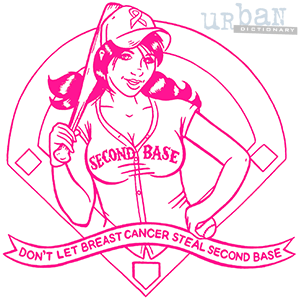
In the culture of American adolescents, the game of baseball is often used as a euphemistic metaphor for the degree of sexual intimacy achieved in intimate encounters or relationships. In the metaphor, prevalent in the post-World War II period, sexual activities are described as if they are actions in a game of baseball.
Although details vary, a broadly accepted description of what each base represents, first base is commonly understood to be any form of mouth to mouth kissing, especially open mouth (‘French’) kissing involving the tongue. Thus, if a person complains that s/he ‘can’t get to first base,’ it means that the partner spurned advances or is not interested, although this is not necessarily a specific reference to a spurned attempt to engage in kissing. Second base is manual stimulation of the genitalia. Third base is oral stimulation of the genitalia. Finally, a home run (Fourth base) is the act of penetrative intercourse.
read more »
Posted in Games, Humor, Sex |
Leave a Comment »
June 21, 2011
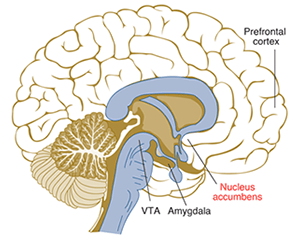
The nucleus [noo-klee-uhs] accumbens [uh-cum-benz] is a collection of neurons within the striatum, a component of the forebrain (prosencephalon). It is thought to play an important role in reward, pleasure, laughter, addiction, aggression, fear, and the placebo effect.
Each half of the brain has one nucleus accumbens, which, along with the olfactory tubercle collectively form the ventral striatum, which is part of the basal ganglia, part of the cerebrum vital to movement. The nucleus accumbens plays a role in rhythmic timing and is considered to be of central importance to the limbic-motor interface.
read more »
Posted in Drugs, Health, Sex |
Leave a Comment »
June 20, 2011

Sexual anorexia is a term used to describe a loss of ‘appetite’ for romantic-sexual interaction. However, the term is used broadly and can be better defined as a fear of intimacy to the point that the person has severe anxiety surrounding sex with emotional content i.e. in an intimate relationship. The concept was first mentioned by psychologist Nathan Hare in 1975.
The term also applies to individuals who appear to have a sexual addiction which is expressed through a variety of behaviors such as the compulsive use of strip clubs, prostitutes,internet porn sites, etc. but more accurately fit the definition of sexual anorexic in that they seem to lack the ability to have a relationship of a sexual nature beyond a paid-for or anonymous experience.
read more »
Posted in Health, Sex |
Leave a Comment »
June 7, 2011


Cumbia [koom-bee-uh] is a Latin American music style that originated in Colombia’s Caribbean coastal region. Traditional cumbia and its associated dance is considered to be representative of Colombia, along with Vallenato, Bambuco and Pasillo. Cumbia originated in the Caribbean coast of eastern Colombia, but there are also folkloric variants in Panama.
During the mid-20th century, Colombian band leaders such as Pacho Galan and Lucho Bermudez orchestrated this Caribbean folklore and brought it to different parts of Latin America, where it gained particular popularity in Mexico, Argentina, and the Andean region. Cumbia began as a courtship dance practiced among the African slave population that was later mixed with European instruments and musical characteristics. Cumbia is very popular in the Andean region and the Southern Cone and was until the early 1980’s more popular in these regions than the salsa.
Posted in Art, Sex, World |
Leave a Comment »
June 7, 2011
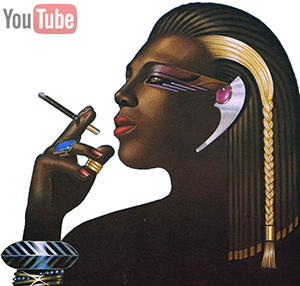

Sylvester James (1947 – 1988), better known as Sylvester, was an American disco and soul singer, and a gay drag performer.
Sylvester was sometimes known as the ‘Queen of Disco,’ although this moniker has also been bestowed on some of the women of the disco era (i.e. Gloria Gaynor, Donna Summer). His most significant works are the songs ‘You Make Me Feel (Mighty Real) in 1978 and ‘Do You Wanna Funk’ in 1982.
read more »
Posted in Art, Sex |
Leave a Comment »



 The Daily Omnivore