December 1, 2015


Mechanophilia [muh-kan-uh-fil-ee-uh] is a paraphilia (atypical sexuality) involving a sexual attraction to machines. It is a crime in some nations, such as the UK, with perpetrators placed on a sex-offender registry. Motorcycles in particular are often portrayed as sexualized fetish objects to those who desire them. Designers such as Francis Picabia and Filippo Tommaso Marinetti have been said to have exploited the sexual attraction of automobiles. In 2008, an American named Edward Smith admitted to ‘having sex’ with 1000 cars.
Biologist Edward O. Wilson is quoted describing mechanophilia, the love of machines, as ‘a special case of ‘biophilia,” the instinctive bond between human beings and other living (or lifelike) systems. Conversely, psychologists such as Erich Fromm would see it as a form of necrophilia.
read more »
Posted in Health, Sex, Technology |
1 Comment »
July 30, 2015
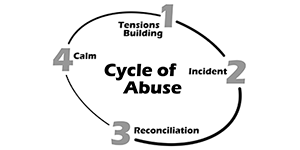
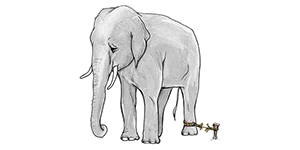
Battered person syndrome is a physical and psychological condition of a person who has suffered (usually persistent) emotional, physical, or sexual abuse from another person. The condition is the basis for the battered spouse defense that has been used in cases of spouses who have killed their abusers. The condition was first researched extensively by American psychologist Lenore E. Walker, founder of the Domestic Violence Institute, who used psychologist Martin Seligman’s ‘learned helplessness’ theory to explain why abused spouses stayed in destructive relationships.
The syndrome develops in response to a three-stage cycle found in domestic violence situations. First, tension builds in the relationship. Second, the abusive partner releases tension via misconduct while blaming the victim for having caused the event. Third, the abusive partner makes gestures of contrition, but does not find solutions to avoid another phase of tension building and release so the cycle repeats. The repetition of the cycle despite the abuser’s attempts to ‘make nice’ results in the abused partner feeling at fault for not preventing recurrences. However, since the victim is not at fault and the violence is internally driven by the abuser’s need to control, this self-blame results in feelings of helplessness rather than empowerment.
read more »
Posted in Health, Politics, Sex |
Leave a Comment »
July 22, 2015

Fan service is a term originating from anime and manga fandom for material in a series which is intentionally added to please the audience (i.e. ‘giving the people what they want’). Fan service usually refers to ‘gratuitous titillation,’ but can also refer to intertextual references to other series and other ‘indulgent’ inclusions.
Long shots of robots in mecha shows, nudity, violent episode-long fight scenes, and emphasis on ‘shipping’ (the desire by fans for two people, either real-life celebrities or fictional characters, to be in a relationship, romantic or otherwise) can all be considered fan service as they are specifically aimed at pleasing the fans of any given show. Meta-references are intended to be seen and understood by the fans, as a way for creators to acknowledge and engage the more knowledgeable members of the fanbase.
read more »
Posted in Art, Money, Sex |
Leave a Comment »
May 6, 2015

A male bra (also known as a compression bra, compression vest, or gynecomastia vest) is a brassiere worn by a man. Adolescent boys and middle-aged men sometimes develop breasts (gynecomastia). Although there are options for treating gynecomastia, some elect surgery to reduce their breasts or wear a male bra, which typically flatten rather than lift. Other men wear bras for cross-dressing, for sexual purposes such as transvestic fetishism or feminization, or as a form of submission to their partner.
Additionally, some male athletes – more specifically runners – may choose to wear a sports bra under their shirts in order to prevent a common medical condition called jogger’s nipple, also known as nipple chafing. This condition is caused by excessive rubbing of wet sweat-soaked material over one’s nipples. In an episode ‘Seinfeld,’ titled ‘The Doorman,’ Kramer invented a male bra, which he called a ‘bro,’ for Frank Costanza, who was said to have very large breasts. Frank initially decided to market the invention, but disagreed on the name, instead wanting to call it a ‘Manssiere.’
Posted in Health, Humor, Sex |
Leave a Comment »
March 23, 2015

Yaeba [yah-ey-bah] is a term used to describe human teeth, especially upper canines, with an uncommonly fang-like appearance. In Japan it is perceived as a sign of youthfulness. For that reason, undergoing a body modification procedure to produce such an appearance for cosmetic purposes is gaining popularity among Japanese females
Cosmetic alterations to teeth have been practiced for centuries among many cultures throughout the world. In some cultures sharpening teeth is seen as a rite of passage for adolescents into adulthood.
Posted in Sex, World |
Leave a Comment »
September 24, 2014
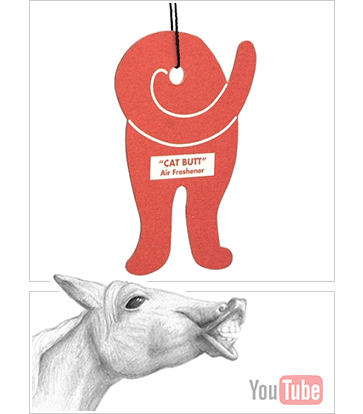
The flehmen [fley-muhn] response is a common animal behavior when investigating sites of particular interest (e.g. a male smelling female urine) characterized by curling back the top lips exposing the front teeth and gums, then inhaling and holding the posture for several seconds. The behavior may be performed over particular locations, in which case the animal may also lick the site of interest, or it may be performed with the neck stretched and head held high in the air.
Flehmen (German: ‘to bare the upper teeth’) is performed by a wide range of mammals including ungulates (hoofed animals) and felids (cats). The behavior facilitates the transfer of pheromones and other scents into the vomeronasal organ (pheromone detector) located above the roof of the mouth via a duct which exits just behind the front teeth of the animal.
read more »
Posted in Science, Sex |
Leave a Comment »
September 17, 2014

Error Management (EM) is an extensive theory of perception and cognitive biases that was created by psychologists David Buss and Martie Haselton. They describe a set of heuristics (mental shortcuts) that have survived evolutionary history because they hold slight reproductive benefits. The premise of the theory is built around the drive to reduce or manage costly reproductive errors. According to the theory, when there are differences in the cost of errors made under conditions of uncertainty, selection favors ‘adaptive biases,’ which ensure that the less costly survival or reproductive error will be committed.
When faced with uncertainty, a subject can make two possible errors: type I (false-positive or playing it safe, e.g. a fire alarm that later turns out to be a false alarm) and type II (false-negative or siding with skepticism, e.g. ignoring an often faulty fire alarm during an actual emergency). Error Management Theory asserts that evolved ‘mind-reading’ agencies will be biased to produce more for the first type of error, which explains the ‘sexual overperception bias,’ the tendency for men to incorrectly assume a platonic gesture from a woman is a sexual signal.
read more »
Posted in Health, Science, Sex |
Leave a Comment »
September 16, 2014

Blonde hair has several stereotypes associated with it. In women is has been considered attractive and desirable, but is also associate with the negative stereotypes of the women ‘who relies on her looks rather than on intelligence.’ The latter stereotype of a ‘dumb blonde’ is exploited in ‘blonde jokes.’ In cognitive linguistics, the stereotype uses expressivity of words to affect an emotional response which determines a gender role of a certain kind. In feminist critique, stereotypes like the blonde bombshell or the dumb blonde’ are seen as negative images that undermine the power of women.
Some blonde jokes rely on sexual humor to portray or stereotype their subjects as promiscuous. Many of these are rephrased ‘Valley girl’ or ‘Essex girl’ jokes. Others are based on long-running ethnic jokes, such as humor denigrating the intelligence of Polish people. Similar jokes about stereotyped minorities have circulated since the seventeenth century with only the wording and targeted groups changed. In 20th century, a class of meta-jokes about blondes (i.e. jokes about blonde jokes) has emerged where a blonde person complains about the unfairness of the stereotype propagated by blonde jokes, with a punch line actually reinforcing the stereotype.
read more »
Posted in Humor, Science, Sex |
Leave a Comment »
July 7, 2014


What happens on tour stays on tour is a notorious phrase or saying agreed to by men who get together and travel either interstate or overseas for sporting tours. In essence, the phrase means that all exploits during the tour must be kept strictly confidential, never to be discussed with anyone outside the group. In more recent years, the phrase has also been applied to men attending music gigs, going on business trips, and fishing holidays. The expression is also used in the US military when speaking of temporary duty assignment (‘what happens TDY stays TDY’)
The phrase has been described by Samantha Brett, a writer for the ‘Age,’ as an ‘unspoken male pact that for centuries can never be broken.’ In essence, if you were there you may discuss the events, but if you were not there, you get nothing. In contrast, ‘Rugby for Dummies’ describes the phrase as, particularly funny, embarrassing or debauched moments are for consumption only by the tourists themselves and not casual listeners back home.
read more »
Posted in Games, Humor, Sex |
Leave a Comment »
May 1, 2014

A barber’s pole is a type of sign used by barbers to signify the place or shop where they perform their craft. The trade sign is, by a tradition dating back to the Middle Ages, a staff or pole with a helix of colored stripes (often red and white in many countries, but usually red, white, and blue in the US). The pole may be stationary or may revolve, often with the aid of an electric motor.
The origin of the red and white barber pole is associated with the service of bloodletting and was historically a representation of bloody bandages wrapped around a pole. During medieval times, barbers performed surgery on customers, as well as tooth extractions. The original pole had a brass wash basin at the top (representing the vessel in which leeches were kept) and bottom (representing the basin that received the blood). The pole itself represents the staff that the patient gripped during the procedure to encourage blood flow.
read more »
Posted in Health, Money, Sex |
Leave a Comment »
March 20, 2014

Gaydar is a colloquialism referring to the intuitive ability of a person to assess others’ sexual orientations as gay, bisexual or heterosexual. Gaydar relies almost exclusively on non-verbal clues and LGBT stereotypes. These include (but are not limited to) the sensitivity to social behaviors and mannerisms; for instance, acknowledging flamboyant body language, the tone of voice used by a person when speaking, overtly rejecting traditional gender roles, a person’s occupation, and grooming habits.
The detection of sexual orientation by outward appearance or behavior is frequently challenged by situations in which masculine gay men who do not act in a stereotypically ‘gay’ fashion, or with metrosexual men (regardless of sexuality) who exhibit a lifestyle, spending habits, and concern for personal appearance stereotypical of fashionable urban gay men.
read more »
Posted in Language, Science, Sex |
Leave a Comment »
February 7, 2014
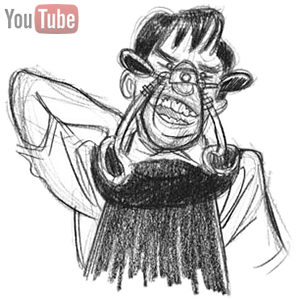
In psychology, sublimation [suhb-luh-mey-shuhn] is a mature type of defense mechanism where socially unacceptable impulses or idealizations are consciously transformed into socially acceptable actions or behavior, possibly resulting in a long-term conversion of the initial impulse. Sigmund Freud believed that sublimation was a sign of maturity (indeed, of civilization), allowing people to function normally in culturally acceptable ways.
He defined sublimation as the process of deflecting sexual instincts into acts of higher social valuation, being ‘an especially conspicuous feature of cultural development; it is what makes it possible for higher psychical activities, scientific, artistic or ideological, to play such an important part in civilised life.’ Sublimation is when displacement ‘serves a higher cultural or socially useful purpose, as in the creation of art or inventions.’ Psychoanalysts often refer to it as the only truly successful defense mechanism.
read more »
Posted in Health, Philosophy, Sex |
1 Comment »


 The Daily Omnivore