May 29, 2013
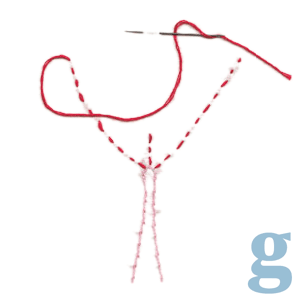
Cosmetic surgery of female genitalia, known as elective genitoplasty, has become pejoratively known as ‘designer vagina.’ Labiaplasty [ley-bee-uh-plas-tee] is a plastic surgery procedure for altering the labia minora (inner labia) and the labia majora (outer labia), the folds of skin surrounding the human vulva (external female genitals).
There are two main categories of women seeking cosmetic genital surgery: those with congenital conditions such as intersex, and those with no underlying condition. The size, color, and shape of labia vary significantly, and may change as a result of childbirth, aging, and other events. In a male-to-female sexual reassignment vaginoplasty is used for the creation of a neovagina, and labiaplasty creates labia where once there were none.
read more »
Posted in Health, Money, Sex |
Leave a Comment »
May 29, 2013

The Labia pride movement is a feminist activist movement that attempts to raise awareness for the normal anatomical appearance of the female vulva and defy a perceived growing trend towards cosmetic genital surgery (labiaplasty, also known as ‘designer vagina’). It is supported by several independent feminist groups and based on diverse channels of communication such as cyberfeminism, protest marches and advocating boycotts against physicians and clinics that make use of deceptive advertising.
The London-based feminist group UK feminista organized a protest march through London’s Harley Street, that is known for its high density of upscale medical providers, in late 2011. More than 320 women paraded the street, with slogans like: ‘Keep your mits off our bits!’, ‘There’s nothing finer than my vagina!’, and ‘Harley Street puts my chuff in a huff.’
read more »
Posted in Politics, Sex |
1 Comment »
May 29, 2013
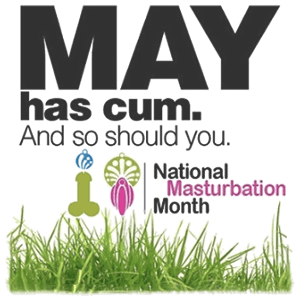
National Masturbation Day (NMD) is an annual event celebrated in May to protect the right to masturbate. The first National Masturbation Day was observed in 1995. The NMD is organized to protest against social stigma against masturbation. Sexologist Carol Queen, an organizer of the NMD, argued, although 90% of men and 65% of women in North America masturbate regularly, masturbation is viewed negatively in contemporary culture and deliberately excluded from the formal education system. According to Queen, ‘We gave our heads a shake and said it’s about time we fought back. That’s when we founded National Masturbation Day.’
The NMD in the United States was started by the San Francisco-based sex toy retail chain ‘Good Vibrations’ and its supporters. According to Cory Silverberg, one of the founders of ‘Come As You Are’ (a Toronto sex shop): ‘The message we want to spread is that masturbation promotes health and happiness- that’s what National Masturbation Day and the masturbate-athon are all about.’ The organizers of National Masturbation Day stressed the health benefits of masturbation citing examples such as stress management, healthier pelvic muscles, secretion of endorphins, decrease in chances of prostatitis among men, decrease in candidiasis among women, cardiovascular exercise, and safe sex.
Posted in Health, Sex |
Leave a Comment »
May 29, 2013
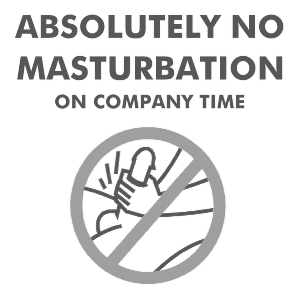
Wank Week was a controversial season of television programming that was due to be broadcast in the United Kingdom by Channel 4, expected to consist of a series of three documentary programs about masturbation. However, plans to broadcast it in 2007 came under public attack from senior television figures, and the planned broadcasts were pulled amid claims of declining editorial standards and controversy over the channel’s public service broadcasting credentials.
While ‘Wank Week’ itself has been cancelled, the films it was meant to showcase may yet be broadcast by the channel at a later date.
read more »
Posted in Politics, Sex, World |
Leave a Comment »
May 24, 2013

‘The Ethical Slut: A Guide to Infinite Sexual Possibilities’ is a 1997 non-fiction book written by family therapist Dossie Easton and sex educator Janet Hardy (given as pseudonym Catherine A. Liszt for the book’s first edition).
The book discusses consensual non-monogamy as a lifestyle, and provides practical guidance on how such long-term relationships work and are put into practice.
read more »
Posted in Health, Language, Sex |
1 Comment »
May 23, 2013
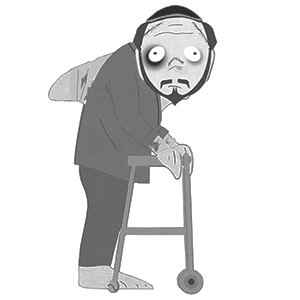
Species dysphoria [dis-fohr-ee-uh] is the experience of dysphoria (depression, discontent), sometimes including dysmorphia (excessive concern over one’s body image), associated with the feeling that one’s body is of the wrong species. Earls and Lalumière (2009) describe it as ‘the sense of being in the wrong (species) body… a desire to be an animal.’
Outside of psychological literature, the term is common within the otherkin and therian communities (people who see themselves as partially or entirely non-human). The phenomenon is sometimes experienced in the context of sexual arousal to the image of one’s self as an animal. ‘Species dysphoria’ is also used informally in psychological literature to compare the experiences of some individuals to those in the transgender community.
read more »
Posted in Health, Sex |
Leave a Comment »
May 13, 2013
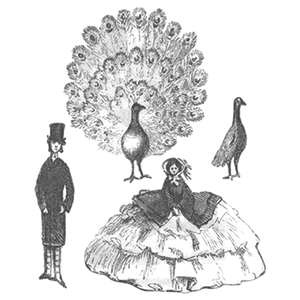
Within evolutionary biology, signalling theory is a body of theoretical work examining communication between individuals. The central question is when organisms with conflicting interests should be expected to communicate honestly (no presumption being made of conscious intention) rather than cheating. Mathematical models in which organisms signal their condition to other individuals as part of an evolutionarily stable strategy are important for research in this field.
Signals are given in contexts such as mate selection by females, which subjects the males’ signals to selective pressure. Signals thus evolve because they modify the behaviour of the receiver to benefit the signaller. Signals may be honest, on average conveying information that is actually useful to the receiver, increasing its fitness, or dishonest. A cheat can give a dishonest signal, gaining an advantage, but potentially undermining the signalling system for all.
read more »
Posted in Language, Science, Sex |
Leave a Comment »
May 7, 2013

The subject of the damsel in distress, or persecuted maiden, is a classic theme in world literature, art, film and video games. She is usually a beautiful young woman placed in a dire predicament by a villain or monster and who requires a hero to achieve her rescue. She has become a stock character of fiction, particularly of melodrama.
Though she is usually human, she can also be of any other species, including fictional or folkloric species; and even divine figures such as an angel or deity. The word ‘damsel’ derives from the French ‘demoiselle,’ meaning ‘young lady,’ and the term ‘damsel in distress’ in turn is a translation of the French ‘demoiselle en détresse.’
read more »
Posted in Language, Politics, Sex |
1 Comment »
May 7, 2013
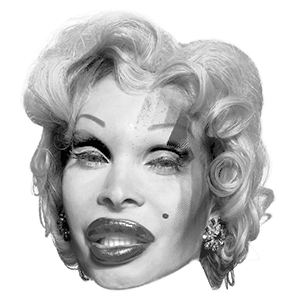
David LaChapelle (b. 1963) is an American photographer and film director. He is best known for his photography, which often references art history and sometimes conveys social messages. His style has been described as ‘hyper-real and slyly subversive’ and as ‘kitsch pop surrealism.’ One 1996 article called him the ‘Fellini of photography,’ a phrase that continues to be applied to him.
He grew up in Connecticut and North Carolina. He has said to have loved the public schools in Connecticut and thrived in their art program as a child and teenager, although he struggled with bullying growing up. He was bullied in his North Carolina school for being gay. When he was 15 years old, he ran away from home to become a busboy at Studio 54 in New York. Eventually he returned home to enroll in the North Carolina School of Arts. He would later attend the School of Visual Arts in NYC.
read more »
Posted in Art, Sex |
Leave a Comment »
May 6, 2013
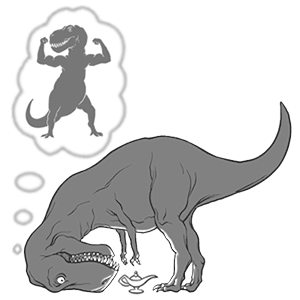
Fantasy in a psychological sense is broadly used to cover two different senses, conscious and unconscious (sometimes spelled ‘phantasy’). A conscious fantasy is a situation imagined by an individual that expresses certain desires or aims on the part of its creator. Fantasies sometimes involve situations that are highly unlikely; or they may be quite realistic. Fantasies can also be sexual in nature.
Another, more basic meaning of fantasy is something which is not ‘real,’ as in perceived explicitly by any of the senses, but exists as an imagined situation of object to subject.
read more »
Posted in Health, Sex |
Leave a Comment »
May 2, 2013

The phrases ‘no homo‘ and ‘pause’ are slang terms. They parenthetically assert that the speaker of such does not have any homosexual intent and are usually used after an utterance that may have given that impression. The term originated in East Harlem slang of the early 1990s.
It was used by many to distance themselves from the stereotype of closeted gay and bisexual men. Several social commentators have criticized the use of both ‘no homo’ and ‘pause’ in hip hop and in the mainstream. It has been said that the phrases, ‘uphold an unhealthy relationship with homosexuality, a relationship based in fear.’ Fox News commentator Marc Lamont Hill encouraged the hip-hop community to stop using the terms.
read more »
Posted in Language, Politics, Sex |
Leave a Comment »
April 29, 2013

Reverse discrimination is discrimination against members of a dominant or majority group or in favor of members of a minority or historically disadvantaged group. Groups may be defined in terms of race, gender, ethnicity, or other factors.
This discrimination may seek to redress social inequalities where minority groups have been denied access to the same privileges of the majority group. In such cases it is intended to remove discrimination that minority groups may already face. Reverse discrimination may also be used to highlight the discrimination inherent in affirmative action programs.
read more »
Posted in Money, Politics, Sex |
Leave a Comment »


 The Daily Omnivore