February 6, 2013

A femme fatale [fem fuh-tahl] is a mysterious and seductive woman whose charms ensnare her lovers in bonds of irresistible desire, often leading them into compromising, dangerous, and deadly situations. She is an archetype of literature and art. Her ability to entrance and hypnotize her victim with a spell was in the earliest stories seen as being literally supernatural; however, the femme fatale today is still often described as having a power akin to an enchantress, seductress, vampire, witch, or demon, having some power over men. The phrase is French for ‘deadly woman.’
A femme fatale tries to achieve her hidden purpose by using feminine wiles such as beauty, charm, and sexual allure. In some situations, she uses lying or coercion rather than charm. She may also make use of some subduing weapon such as sleeping gas, a modern analog of magical powers in older tales. She may also be (or imply that she is) a victim, caught in a situation from which she cannot escape; ‘The Lady from Shanghai’ (a 1947 film noir) is one such example. A younger version of a femme fatale would be called a fille fatale, or ‘deadly girl.’
read more »
Posted in Art, Sex |
1 Comment »
February 4, 2013

A double entendre is a figure of speech in which a spoken phrase is devised to be understood in either of two ways. Typically one of the interpretations is rather obvious whereas the other is more subtle. The more subtle of the interpretations may have a humorous, ironic, or risqué purpose. It may also convey a message that would be socially awkward, or even offensive, to state directly (the Oxford English Dictionary describes a double entendre as being used to ‘convey an indelicate meaning’).
A double entendre may exploit puns to convey the second meaning. Double entendres generally rely on multiple meanings of words, or different interpretations of the same primary meaning. They often exploit ambiguity and may be used to introduce it deliberately in a text. Sometimes a homophone (i.e. a different spelling that yields the same pronunciation) can be used as a pun as well as a ‘double entendre’ of the subject.
read more »
Posted in Humor, Language, Sex |
Leave a Comment »
January 28, 2013
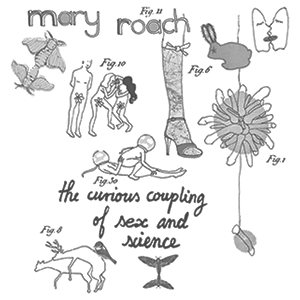
Bonk: The Curious Coupling of Science and Sex was written by Mary Roach in 2008. The book follows the winding history of science and its exploration of human sexuality, going back as far as Aristotle and finally ending with recent discoveries about the origination and anatomy of the female orgasm. Throughout, Mary Roach provides a humorous and often very personal view—both as a participant and observer—of humans, scientists, animals, and sex machines.
Of the book’s numerous accounts, Roach discusses artificial insemination of sows in Denmark, the notorious history of sex machines, as well as much discussion and commentary on Kinsey’s notorious attic sex experiments. Her footnotes provide additional humor; as in a sentence which includes several DSM diagnoses listed as acronyms she adds ‘And from HAFD (hyperactive acronym formation disorder).’ In the book, Mary Roach describes a session in which she and her husband Ed volunteer to have sex in a 20-inch-diameter (510 mm) MRI tube in the interests of science. During the experiment, a doctor looks on, making suggestions, and finally telling Ed that he ‘may ejaculate now.’
Posted in Humor, Language, Sex |
Leave a Comment »
January 17, 2013

White Tantrism [tan-triz-uhm] is a form of sexual alchemy which involves a man and a woman making sexual contact then transmuting their sexual energies whilst remaining still throughout the act and withdrawing without orgasm.
It is regarded by its practitioners as an essential spiritual exercise for awakening consciousness rather than purely an act of pleasure. It is currently taught by schools of modern Gnosticism.
read more »
Posted in Philosophy, Sex |
Leave a Comment »
December 22, 2012

Female genital mutilation (FGM), also known as female circumcision, is defined by the World Health Organization (WHO) as ‘all procedures that involve partial or total removal of the external female genitalia, or other injury to the female genital organs for non-medical reasons.’ FGM is typically carried out on girls from a few days old to puberty. It may take place in a hospital, but is usually performed, without anaesthesia, by a traditional circumciser using a knife, razor, or scissors.
According to the WHO, it is practiced in 28 countries in western, eastern, and north-eastern Africa, in parts of the Middle East, and within some immigrant communities in Europe, North America, and Australasia. The WHO estimates that 100–140 million women and girls around the world have experienced the procedure, including 92 million in Africa. The practice is carried out by some communities who believe it reduces a woman’s libido.
read more »
Posted in Health, Philosophy, Sex |
Leave a Comment »
December 22, 2012

Male circumcision has often been, and remains, the subject of controversy on a number of grounds—including religious, ethical, sexual, and health related. The Ancient Greeks and Romans valued the foreskin and were opposed to circumcision – an opposition inherited by the canon and secular legal systems of the Christian West that lasted at least through to the Middle Ages. Traditional Judaism and Islam have advocated male circumcision as a religious obligation.
The ethics of circumcision are sometimes controversial. From the mid-19th century, there has been advocacy in some Anglophone countries on medical grounds, such as the prevention of masturbation and ‘reflex neurosis.’ Modern proponents argue that circumcision reduces the risks of a range of infections and diseases as well as conferring sexual benefits. In contrast, opponents, particularly of infant circumcision, often question its effectiveness in preventing disease, and object to subjecting newborn boys, without their consent, to a procedure they consider to have debatable benefits, significant risks, and a potentially negative impact on general health and later sexual enjoyment.
read more »
Posted in Health, Philosophy, Sex |
2 Comments »
December 12, 2012

The hormonal theory of sexuality holds that, just as exposure to certain hormones plays a role in fetal sex differentiation, such exposure also influences the sexual orientation that emerges later in the adult. Prenatal hormones may be seen as the primary determinant of adult sexual orientation, or a co-factor with genes, biological factors and/or environmental and social conditions. Differences in brain structure that come about from hormones and genes interacting on developing brain cells are believed to be the basis of sex differences in countless behaviors, including sexual orientation.
Prenatal factors that affect or interfere with the interaction of these hormones on the developing brain can influence later sex-typed behavior in children. This hypothesis is originated from countless experimental studies in non-human mammals, yet the argument that similar effects can be seen in human neurobehavioral development is a much debated topic among scholars. Recent studies, however, have provided evidence in support of prenatal androgen exposure influencing childhood sex-typed behavior.
read more »
Posted in Health, Science, Sex |
Leave a Comment »
December 12, 2012
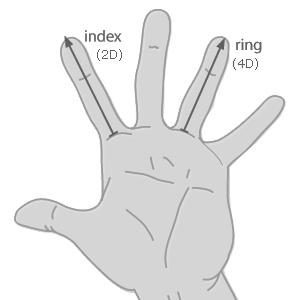
The digit ratio (the ratio of the lengths of different fingers) is possibly affected by exposure to androgen hormones (e.g. testosterone) while in the uterus. The index to ring finger ratio (2D:4D) in particular has been suggested as a crude measure for prenatal androgen exposure, with lower 2D:4D ratios pointing to higher androgen exposure.
A longer index finger will result in a ratio higher than 1, while a longer ring finger will result in a ratio of less than 1. The 2D:4D digit ratio is sexually dimorphic: while the second digit is typically shorter in both females and males, the difference between the lengths of the two digits is greater in males than females.
read more »
Posted in Health, Science, Sex |
Leave a Comment »
December 12, 2012

Male pregnancy is the incubation of one or more embryos or fetuses by male members of any species. In nearly all sexually reproducing animal species, offspring are ordinarily carried by the female until birth, but in fish of the Syngnathidae family (pipefish and seahorses), males perform this function. They may possess a brood pouch on the trunk or tail (in other species, the eggs are merely attached to the male’s trunk or tail when the female lays them).
Fertilization may take place in the pouch or in the water before implantation, but in either case, syngnathids’ male pregnancy ensures them complete confidence of paternity. After implantation in or on the brood pouch or brood patch, the male incubates the eggs. Many species osmoregulate the brood pouch fluid to maintain proper pH for the developing embryos.
read more »
Posted in Health, Science, Sex |
1 Comment »
December 12, 2012

In Feminist psychology the terms womb envy and vagina envy denote the unexpressed anxiety that some men feel in natural envy of the biological functions of women (pregnancy, parturition, breast feeding) — emotions which impel their social subordination of women, and to drive themselves to succeed in perpetuating their names via material legacies.
Each term is analogous to the concept of female penis envy, derived from the theory of psychosexual development, presented in Freudian psychology; they address the gender role social dynamics underlying the ‘envy and fascination with the female breasts and lactation, with pregnancy and childbearing, and vagina envy [that] are clues to a femininity complex of men, which is defended against by psychological and sociocultural means.’
read more »
Posted in Health, Sex |
Leave a Comment »
December 10, 2012
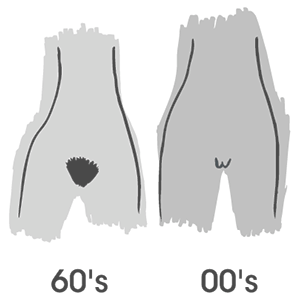
Pubic Wars, a pun on the Punic Wars, is the name given to the rivalry between the pornographic magazines Playboy and Penthouse during the 1960s and 1970s. Each magazine strove to show just a little bit more than the other, without getting too crude. The term was coined by ‘Playboy’ owner Hugh Hefner. In 1950s and 60s America it was generally agreed that nude photographs were not pornographic unless they showed pubic hair or, even worse, genitals.
‘Respectable’ photography was careful to come close to, but not cross over, this line. Consequently the depiction of pubic hair was de facto forbidden in U.S. pornographic magazines. ‘Penthouse’ originated in 1965 in Britain and was initially distributed in Europe. In 1969 it was launched in the U.S., bringing new competition to ‘Playboy.’ Due to more liberal European attitudes to nudity ‘Penthouse’ was already displaying pubic hair at the time of its U.S. launch. According to the magazine’s owner Bob Guccione, ‘We began to show pubic hair, which was a big breakthrough.’
read more »
Posted in Money, Politics, Sex |
1 Comment »
December 2, 2012
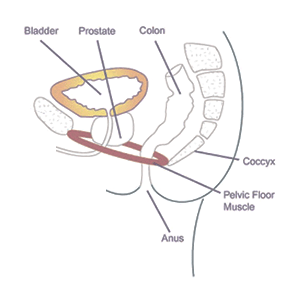
First published in 1948 by gynecologist Dr. Arnold Kegel, a pelvic floor exercise, more commonly called a Kegel [key-guhl] exercise, consists of repeatedly contracting and relaxing the muscles that form part of the pelvic floor, now sometimes colloquially referred to as the ‘Kegel muscles.’
Exercises are usually done to reduce urinary incontinence after childbirth, and reduce premature ejaculatory occurrences in men, as well as to increase the size and intensity of erections. The aim of Kegel exercises is to improve muscle tone by strengthening the pubococcygeus (PC muscle) of the pelvic floor.
read more »
Posted in Health, Sex |
Leave a Comment »


 The Daily Omnivore