April 19, 2024

The Kia Challenge is a viral TikTok trend to which a series of motor vehicle thefts is attributed, targeting Kia and Hyundai vehicles in the U.S. manufactured between 2011 and 2021. The trend, which began in October 2022, has led to eight fatalities, according to the National Highway Traffic Safety Administration.
Until 2011, most Kia vehicles were manufactured with immobilizers—electronic security devices that prevent the engine from being started unless a proper key is inserted—a system present in most Hyundai vehicles until 2016. In Kia Sportage models manufactured in 2010, the immobilizer system comprised a transponder in the ignition key, an antenna coil in the key cylinder, and a SMARTRA unit. Kia vehicles manufactured from 2011 to 2021 and Hyundai vehicles manufactured from 2016 to 2021 that use a steel key, in comparison to a key fob and a push-button start mechanism, lack immobilizers.
read more »
Posted in Money, Politics, Technology |
1 Comment »
April 4, 2024

The Hum is a name often given to widespread reports of a persistent and invasive low-frequency humming, rumbling, or droning noise audible to many but not all people. Hums have been reported all over the world. They are sometimes named according to the locality where the problem has been particularly publicized, such as the ‘Taos Hum’ in New Mexico and the ‘Windsor Hum’ in Ontario.
The Hum does not appear to be a single phenomenon. Different causes have been attributed, including local mechanical sources, often from industrial plants, as well as manifestations of tinnitus or other biological auditory effects.
read more »
Posted in Science, Technology, World |
Leave a Comment »
March 21, 2024

Catturd (b. 1964) is the online identity of right-wing American Twitter shitposter and Internet troll Phillip Buchanan. The account is known for its scatological humor, as well as spreading conspiracy theories and disinformation. Buchanan lives in Wewahitchka, Florida, on a ‘ranch in the middle of nowhere.’
He is thrice-divorced. He married his first wife, whom he met at a gym when she was 19 and he was in his early twenties, in 1986. The marriage was annulled in 1988. By 1991, Buchanan had married and divorced another woman. His third marriage happened a few years later, while he was working at a post office. They parted in 1998 and divorced in 2002. Buchanan claims to have served in the US Army. In the 90s, he filed for Chapter 7 bankruptcy, and later fronted a band in Tallahassee, Florida.
read more »
Posted in Humor, Politics, Technology |
Leave a Comment »
March 11, 2024

The Sloot Digital Coding System is an alleged data sharing technique that its inventor claimed could store a complete digital movie file in 8 kilobytes of data — violating Shannon’s source coding theorem (which establishes the statistical limits to data compression) by many orders of magnitude. The alleged technique was developed in 1995 by Romke Jan Bernhard Sloot (1945-1999), a Dutch electronics engineer.
In 1999, just days before the conclusion of a contract to sell his invention, Sloot died suddenly of a heart attack. The source code was never recovered, and the technique and claim have never been reproduced or verified.
read more »
Posted in Money, Technology |
Leave a Comment »
January 11, 2024

According to a false conspiracy theory, medbeds (an abbreviation of ‘medical bed’ or ‘meditation bed’) are secret beds that can miraculously heal humans and extend life. The plausibility of such devices is pseudoscience. Medbed conspiracy theories often involve claims that the devices are utilized by members of a ‘deep state’ and billionaires and that the former President of the United States, John F. Kennedy, is still alive, lying on a medbed.
Belief in these devices is popular among QAnon influencers such as Michael Protzman, Romana Didulo, and YamatoQ. Various companies sell devices or access to beds that supposedly heal ailments via imaginary technologies while also including fine print on their websites disclaiming that no diagnoses, treatment, or cures are provided.
Posted in Health, Politics, Technology |
Leave a Comment »
January 6, 2024

EleutherAI is a grass-roots non-profit artificial intelligence (AI) research group. The group, considered an open-source version of OpenAI, was formed in a Discord server in July 2020 to organize a replication of GPT-3. In early 2023, it formally incorporated as the EleutherAI Foundation, a non-profit research institute. EleutherAI began as a Discord server on July 7, 2020 under the tentative name ‘LibreAI’ before rebranding to ‘EleutherAI’ later that month, in reference to eleutheria, an ancient greek term for liberty.
On December 30, 2020, EleutherAI released The Pile, a curated dataset of diverse text for training large language models.
read more »
Posted in Money, Politics, Technology |
Leave a Comment »
December 13, 2023
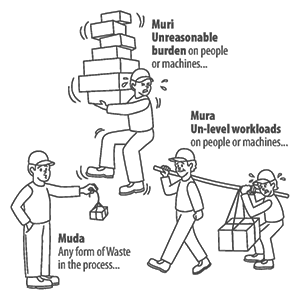
Muda [moo-duh] is a Japanese word meaning ‘futility,’ ‘uselessness,’ or ‘wastefulness,’ and is a key concept in lean process thinking such as in the Toyota Production System (TPS), denoting one of three types of deviation from optimal allocation of resources. The other types are known by the Japanese terms ‘mura’ (‘unevenness’) and ‘muri’ (‘overload’). Waste in this context refers to the wasting of time or resources rather than wasteful by-products.
From an end-customer’s point of view, value-added work is any activity that produces goods or provides a service for which a customer is willing to pay; muda is any constraint or impediment that causes waste to occur.
read more »
Posted in Money, Technology, World |
Leave a Comment »
November 30, 2023

Q* (pronounced ‘Q-star’) is an alleged internal project by OpenAI dedicated to the application of artificial intelligence in logical and mathematical reasoning. In November 2023, certain employees of OpenAI reportedly raised concerns with the company’s board, suggesting that Q* might signify the imminent emergence of artificial general intelligence. The reported work involves performing math on the level of grade-school students.
Math requires abstract reasoning and a firm grasp of logical principles. It’s not just about recognizing patterns or processing language, but about understanding and applying mathematical concepts and rules. Mathematics also demands precision and consistent application of rules, unlike many language tasks where approximations or multiple interpretations can be acceptable. An AI model that can reliably perform grade-school level math marks a significant advancement in the field, indicating progress towards more sophisticated and logically rigorous AI systems.
read more »
Posted in Technology |
Leave a Comment »
November 26, 2023

Roko’s basilisk [bas-uh-lisk] is a thought experiment which states that an otherwise benevolent artificial superintelligence (AI) in the future would be incentivized to create a virtual reality simulation to torture anyone who knew of its potential existence but did not directly contribute to its advancement or development, in order to incentivize said advancement.
It originated in a 2010 post at discussion board LessWrong, a technical forum focused on analytical rational enquiry. The thought experiment’s name derives from the poster of the article (Roko) and the basilisk, a mythical creature capable of destroying enemies with its stare.
read more »
Posted in Philosophy, Technology |
Leave a Comment »
September 23, 2023
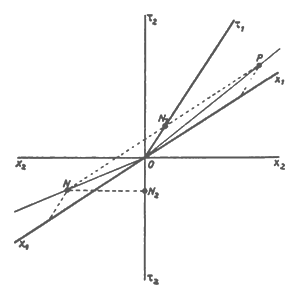
A tachyonic [tak-ee-on-ik] antitelephone is a hypothetical device in theoretical physics that could be used to send signals into one’s own past. Albert Einstein in 1907 presented a thought experiment of how faster-than-light signals can lead to a paradox of causality, which was described by Einstein and Arnold Sommerfeld in 1910 as a means ‘to telegraph into the past.’ The same thought experiment was described by physicist Richard Chace Tolman in 1917; thus, it is also known as Tolman’s paradox.
A device capable of ‘telegraphing into the past’ was later also called a ‘tachyonic antitelephone’ by science fiction writer and astrophysicist Gregory Benford. According to current understanding of physics, no such faster-than-light transfer of information is actually possible.
read more »
Posted in Science, Technology |
Leave a Comment »
August 13, 2023
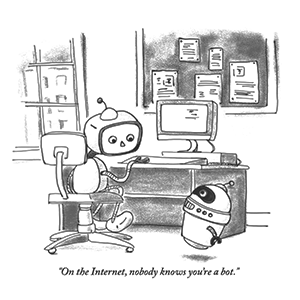
The Dead Internet Theory is an online conspiracy theory that asserts that the Internet now consists almost entirely of bot activity and automatically generated content that is manipulated by algorithmic curation, marginalizing organic human activity.
These intelligent bots are assumed to have been made, in part, to help manipulate algorithms and boost search results in order to ultimately manipulate consumers. Further, proponents of the theory accuse government agencies of using bots to manipulate public perception. The date given for this ‘death’ is generally around 2016 or 2017.
read more »
Posted in Humor, Technology |
Leave a Comment »
July 9, 2023

Muntzing is reducing the components inside an electronic appliance to the minimum required for it to function in most operating conditions, reducing design margins above minimum requirements toward zero.
The term is named after Earl “Madman” Muntz, a car and electronics salesman, who was not formally educated or trained in any science or engineering discipline. Muntz built a low part TV in the 1950s.
read more »
Posted in Language, Money, Technology |
Leave a Comment »


 The Daily Omnivore