April 1, 2019

A smart contract is a computer protocol intended to digitally facilitate, verify, or enforce the negotiation or performance of a contract. Smart contracts allow the performance of credible transactions without third parties. These transactions are trackable and irreversible.
Proponents of smart contracts claim that many kinds of contractual clauses may be made partially or fully self-executing, self-enforcing, or both. The aim of smart contracts is to provide security that is superior to traditional contract law and to reduce other transaction costs associated with contracting. Various cryptocurrencies have implemented types of smart contracts.
read more »
Posted in Money, Politics, Technology |
1 Comment »
February 19, 2019

Enchroma lenses are glasses designed to improve and modify some aspects of color vision deficiency for color blind people. Glass scientist Dr. Donald McPherson invented Enchroma glasses by accident. He originally invented this type of lens to protect surgeons during laser operations. In 2002 at the Ultimate Frisbee tournament in Santa Cruz, California McPherson lent a pair to a friend who was color blind. His friend saw colors he had never seen before.
McPherson started studying color blindness, and with Andrew Schmeder founded the company EnChroma Inc. in 2010 to sell glasses that compensate for color vision deficiency. Enchroma glasses target people with difficulties in distinguishing reds and greens. The first pair of commercial glasses were released in 2012.
read more »
Posted in Health, Technology |
Leave a Comment »
January 4, 2019
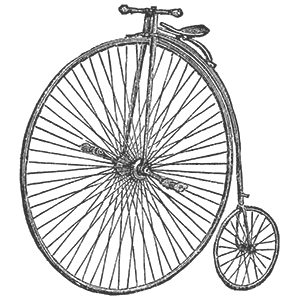
The penny-farthing, also known as a ‘high wheel,’ ‘high wheeler,’ and ‘ordinary,’ was the first machine to be called a ‘bicycle.’ It was popular in the 1870s and 1880s, with its large front wheel providing high speeds (owing to it travelling a large distance for every rotation of the legs) and comfort (the large wheel also provides greater shock absorption). Although the trend was short-lived, the penny-farthing became a symbol of the late Victorian era. Its popularity also coincided with the birth of cycling as a sport.
It became obsolete from the late 1880s with the development of modern bicycles, which provided similar speed amplification via chain-driven gear trains and comfort through pneumatic tyres, and were marketed in comparison to penny-farthings as ‘safety bicycles’ due to the reduced danger of falling and the reduced height to fall from.
read more »
Posted in Technology |
Leave a Comment »
October 29, 2018

The Black Knight satellite conspiracy theory claims that there is a spacecraft in near-polar orbit of the Earth that is of extraterrestrial origin, and that NASA is engaged in a cover-up regarding its existence and origin. This conspiracy theory combines several unrelated stories into one narrative.
A 1998 NASA photo is believed by some to show the Black Knight satellite, but NASA has stated that this is likely space debris, specifically a thermal blanket lost during an EVA mission.
read more »
Posted in Politics, Science, Technology |
Leave a Comment »
September 22, 2018
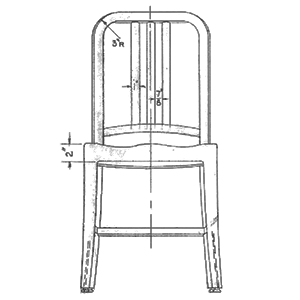
The Emeco [ehm-uh-coh] 1006 [ten-oh-six], also known as the ‘Navy chair,’ is an aluminum chair manufactured by Emeco, a furniture manufacturer based in Pennsylvania. Emeco founder Wilton C. Dinges developed the Emeco 1006 chair in 1944 in collaboration with the Aluminum Company of America (ALCOA).
It was originally designed for the US Navy, which needed a chair for the deck of battleships that could survive sea air and a torpedo blast to the side of the ship. The chairs had eye bolts under the seat, so they could be attached to a ship-deck using cables. When competing for the Navy contract, Dinges is reported to have demonstrated the chair’s durability by throwing it out of an eighth floor window of a Chicago hotel where the Navy was examining submissions. It bounced, but didn’t bend or break.
read more »
Posted in Money, Technology, War |
Leave a Comment »
September 9, 2018

Wojak (Polish: ‘warrior, soldier’), also known as ‘feels guy,’ is a popular internet meme. Depicting a nondescript white man, it is used to generically express emotions such as melancholy, regret, or loneliness. It is often paired with Pepe the Frog.
A variation of Wojak with a gray face, pointy nose and blank expression became a popular visual representation of the ‘NPC meme,’ which gained online notoriety in late 2018. The meme began as a mockery of individuals who appear to lack an internal monologue, comparing them to non-playable characters in video games. The meme gained media attention due to its later usage parodying the alleged herd mentality of liberal activists. This controversial usage of the meme has been attributed to Donald Trump supporters.
read more »
Posted in Humor, Politics, Technology |
Leave a Comment »
August 7, 2018
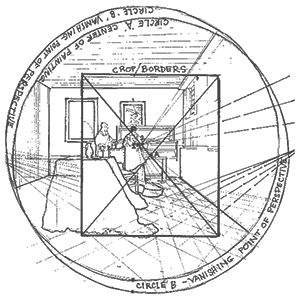
Tim’s Vermeer is a 2013 documentary film, directed by Teller (of the comedy magic duo Penn & Teller), produced by his stage partner Penn Jillette and film producer Farley Ziegler, about inventor Tim Jenison’s efforts to duplicate the painting techniques of Dutch master Johannes Vermeer, in order to test his theory that Vermeer painted with the help of optical devices.
Tim Jenison is the founder of NewTek, a company working in various fields of computer graphics, most notably the 3D modelling software ‘LightWave 3D.’ Jenison, himself both an engineer and art enthusiast, becomes fascinated with the paintings of Johannes Vermeer, the 17th-century Dutch painter, whose paintings have been described as having a photographic quality to them.
read more »
Posted in Art, Technology |
Leave a Comment »
July 13, 2018

A henge is neolithic earthwork featuring a ring bank and ditch, with the ditch inside the bank. Earthworks are artificial changes in land level, typically made from piles of artificially placed or sculpted rocks and soil. Earthworks can themselves be archaeological features, or they can show features beneath the surface
Due to the poor defensive utility of an enclosure with an external bank and an internal ditch, henges are not considered to have served a defensive purpose. England’s famed Stonehenge is an atypical henge in that the ditch is outside the main earthwork bank.
read more »
Posted in Philosophy, Technology, World |
Leave a Comment »
April 30, 2018
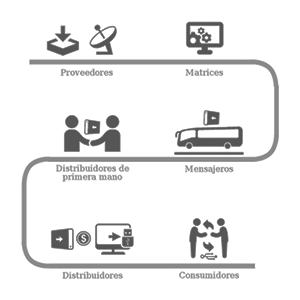
Sneakernet is an informal term for the transfer of electronic information by physically moving media such as magnetic tape, floppy disks, compact discs, USB flash drives or external hard drives from one computer to another; rather than transmitting the information over a computer network. The term, a tongue-in-cheek play on net(work) as in Internet or Ethernet, refers to walking in sneakers as the transport mechanism for the data.
Also known as trainnets or pigeonets, these types of physically mediated networks are in use throughout the world. Sneakernets are used when data transfer is impractical due to bandwidth limitations or other reasons such as data security. This form of data transfer is also used for peer-to-peer (or friend-to-friend) file sharing and has grown in popularity in metropolitan areas and college communities. The ease of this system has been facilitated by the availability of USB external hard drives, USB flash drives and portable music players.
read more »
Posted in Technology, World |
Leave a Comment »
April 21, 2018

Ben Burtt (b. 1948) is an American sound designer, film editor, director, screenwriter, and voice actor. As a sound designer, his credits include the ‘Star Wars’ and ‘Indiana Jones’ film series, ‘Invasion of the Body Snatchers’ (1978), ‘E.T. the Extra-Terrestrial’ (1982), ‘WALL-E’ (2008), and ‘Star Trek’ (2009).
Burtt is notable for popularizing the ‘Wilhelm scream’ in-joke and creating many of the iconic sound effects heard in the ‘Star Wars’ film franchise, including the ‘voice’ of R2-D2, the lightsaber hum, the sound of the blaster guns, and the heavy-breathing sound of Darth Vader. Burtt was also the sound editor for ‘WALL-E’ and performed the vocalizations of the titular character as well as other robots in the film.
read more »
Posted in Art, Technology |
Leave a Comment »
March 19, 2018
The Sheats Goldstein Residence is a house designed and built between 1961 and 1963 by American architect John Lautner in Beverly Crest, Los Angeles, just a short distance from the Beverly Hills border. The building was conceived from the inside out and built into the sandstone ledge of the hillside; a cave-like dwelling that opens to embrace nature and view.
The house is an example of ‘American Organic Architecture’ that derives its form as an extension of the natural environment and of the individual for whom it was built. Lautner, an apprentice of Frank Lloyd Wright, sought to create unique structures that solved the challenges of their sites.
read more »
Posted in Art, Humor, Technology |
Leave a Comment »
March 1, 2018

A webring is a collection of websites linked together in a circular structure, and usually organized around a specific theme, often educational or social. They were popular in the 1990s and early 2000s, particularly among amateur websites.
Webrings are seen by some as a relic of the early web of the 1990s. When the primary site that managed web rings, webring.org was acquired by Yahoo, ‘ring masters’ lost access to their webrings and the web ring hubs were replaced by a Yahoo page. By the time Yahoo stopped controlling webring.org in 2001, search engines had become good enough that web rings were no longer as useful. The webring.org site was still active in the mid-2010s.
read more »
Posted in Technology |
Leave a Comment »


 The Daily Omnivore