September 4, 2012

Sensory deprivation or perceptual isolation is the deliberate reduction or removal of stimuli from one or more of the senses. Simple devices such as blindfolds or hoods and earmuffs can cut off sight and hearing respectively, while more complex devices can also cut off the sense of smell, touch, taste, thermoception (heat-sense), and ‘gravity.’
Sensory deprivation has been used in various alternative medicines and in psychological experiments (e.g., see isolation tank). Short-term sessions of sensory deprivation are described as relaxing and conducive to meditation; however, extended or forced sensory deprivation can result in extreme anxiety, hallucinations, bizarre thoughts, and depression.
read more »
Posted in Health, Science, War |
1 Comment »
August 13, 2012

‘Strength through Joy‘ (‘Kraft durch Freude,’ KdF) was a large state-controlled leisure organization in Nazi Germany. It was a part of the German Labor Front (‘Deutsche Arbeitsfront,’ DAF), the national German labor organization at that time. Set up as a tool to promote the advantages of National Socialism to the people, it soon became the world’s largest tourism operator of the 1930s.
KdF was supposed to bridge the class divide by making middle-class leisure activities available to the masses. This was underscored by having cruises with passengers of mixed classes and having them, regardless of social status, draw lots for allocation of cabins. Another less ideological goal was to boost the German economy by stimulating the tourist industry out of its slump from the 1920s.
read more »
Posted in Money, War, World |
Leave a Comment »
August 10, 2012

Yoyodyne is a fictitious defense contractor introduced in Thomas Pynchon’s ‘V.’ (1963) and featured prominently in his novel ‘The Crying of Lot 49’ (1966). Described in the latter book as ‘a giant of the aerospace industry,’ Yoyodyne was founded by World War II veteran Clayton ‘Bloody’ Chiclitz. The company has a large manufacturing plant in the fictional town of San Narciso, California.
The name is reminiscent of several real high-tech companies, including Teledyne, Teradyne, which was founded a few years before Pynchon wrote ‘The Crying of Lot 49,’ and Rocketdyne, an aerospace company that manufactured, among other things, propulsion systems. The ‘dyne’ is the standard unit of force in the centimeter-gram-second system of units (largely obsolete but still widely recognized), derived from the Greek word dynamis meaning ‘power’ or ‘force.’
read more »
Posted in Humor, Money, War |
Leave a Comment »
August 10, 2012

Gravity’s Rainbow is a 1973 book written by Thomas Pynchon; it is his third and most celebrated novel. The narrative is set primarily in Europe at the end of World War II and centers on the design, production and dispatch of V-2 rockets by the German military, and, in particular, the quest undertaken by several characters to uncover the secret of a mysterious device named the ‘Schwarzgerät’ (‘black device’) that is to be installed in a rocket with the serial number ‘00000.’
Gravity’s Rainbow is transgressive, as it questions and inverts social standards of deviance and disgust and transgresses boundaries of Western culture and reason.
read more »
Posted in Humor, Language, War |
1 Comment »
August 9, 2012

‘The City on the Edge of Forever‘ is the penultimate episode of the first season of the television series ‘Star Trek,’ first broadcast in 1967. The teleplay is credited to Harlan Ellison, but was also largely rewritten by several authors before filming. The filming was directed by Joseph Pevney. Joan Collins guest starred as Edith Keeler. This episode involves the crew of the starship USS Enterprise discovering a portal through space and time, which leads to Dr. McCoy’s accidentally altering history.
The USS Enterprise investigates temporal disturbances centered on a nearby planet. Once on the planet, Spock finds that the source of the time distortions is an ancient ring of glowing, stone-like material. When a question is directed at the ring, it speaks identifying itself as the ‘Guardian of Forever,’ explains that it is a doorway to any time and place, and displays periods of Earth’s history in its portal opening. McCoy, driven mad by an accidental self overdose leaps through the portal. Suddenly the landing party loses contact with the Enterprise. The Guardian informs the landing party that history has just been altered and that, as a result, the Enterprise now no longer exists.
read more »
Posted in Art, War |
Leave a Comment »
August 2, 2012

A head-mounted display is a display device worn on the head or as part of a helmet, that has a small display optic in front of one (monocular HMD) or each eye (binocular HMD). A typical HMD has either one or two small displays with lenses and semi-transparent mirrors embedded in a helmet, eye-glasses (also known as data glasses), or visor. The display units are miniaturised and may include CRT, LCDs, Liquid crystal on silicon (LCos), or OLED. Some vendors employ multiple micro-displays to increase total resolution and field of view.
HMDs differ in whether they can display just a computer generated image (CGI), show live images from the real world, or a combination of both. Some HMDs allow a CGI to be superimposed on a real-world view. This is referred to as augmented reality or mixed reality. Combining real-world view with CGI can be done by projecting the CGI through a partially reflective mirror and viewing the real world directly. This method is often called ‘Optical See-Through.’ Combining real-world view with CGI can also be done electronically by accepting video from a camera and mixing it electronically with CGI. This method is often called ‘Video See-Through.’
read more »
Posted in Games, Technology, War |
1 Comment »
July 30, 2012

Tough Mudder is an adventure sports company that hosts 10-12 mile endurance event obstacle courses designed by British Special Forces to test all around strength, stamina, mental grit, and camaraderie that are billed as ‘probably the toughest event on the planet’ and regularly attract 15-20,000 participants over a two day weekend.
Tough Mudder events are a new type of team endurance challenge. According to ‘The New York Times,’ the events are ‘more convivial than marathons and triathlons, but more grueling than shorter runs or novelty events (for example, ‘Warrior Dash’ courses are 3-4 miles). Contestants are not timed and organizers encourage ‘mudders’ to demonstrate teamwork by helping fellow participants over difficult obstacles to complete the course. The prize for completing a Tough Mudder challenge is an official orange sweatband and a free beer. It is estimated that 15-20% of participants do not finish. Each event is designed to be unique and incorporates challenges and obstacles that utilize the local terrain.
read more »
Posted in Games, Money, War |
Leave a Comment »
July 30, 2012

Si vis pacem, para bellum is a Latin adage translated as, ‘If you wish for peace, prepare for war’ (usually interpreted as meaning peace through strength—a strong society being less likely to be attacked by enemies). The adage was adapted from a statement in ‘De Re Militari’ (‘Concerning Military Matters’) by Publius Flavius Vegetius Renatus, although the idea it conveys is also present in earlier works, such as Plato’s ‘Nomoi’ (‘Laws’).
With reference to the foreign policy of Napoleon Bonaparte, the historian, de Bourrienne, said: ‘Everyone knows the adage… Had Bonaparte been a Latin scholar he would probably have reversed it and said, ‘Si vis bellum para pacem.” Meaning that if you are planning a war, you should put other nations off guard by cultivating peace. Conversely, another interpretation could be that preparing for peace may lead another party to wage war on you.
read more »
Posted in Politics, War, World |
1 Comment »
July 30, 2012
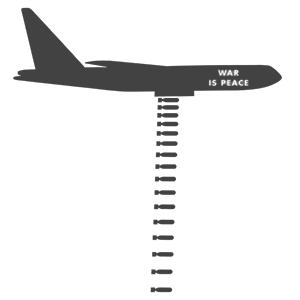
‘Peace through strength‘ is a conservative slogan supporting military strength for the purpose of creating peaceful international relations. For supporters of the MX missile in the 1970s, the missile symbolized ‘peace through strength.’ The phrase was popular in political rallies during 1988.
The idea is a major justification cited for large militaries, and also served as the primary motivation behind the Cold War doctrine of mutually assured destruction. The logic here is that a strong military deters aggression and coercion (blackmail), and that no potential aggressor in his right mind would dare to attack or blackmail someone stronger than he is, because he knows he would be swiftly defeated if he tried to. Conservatives and neoconservatives argue that if an aggressor is irrational and cannot be deterred, he can be swiftly defeated by a large and strong standing military.
read more »
Posted in Politics, War, World |
Leave a Comment »
July 9, 2012

The Atomic Cafe is a 1982 American documentary film produced and directed by Jayne Loader, Kevin Rafferty, and Pierce Rafferty.
The film covers the beginnings of the era of nuclear warfare, created from a broad range of archival film from the 1940s, 1950s, and early 1960s – including newsreel clips, television news footage, U.S. government-produced films (including military training films), advertisements, television and radio programs. News footage reflected the prevailing understandings of the media and public.
read more »
Posted in Humor, Politics, War |
Leave a Comment »
June 28, 2012

Asymmetric warfare is war between belligerents whose relative military power differs significantly, or whose strategy or tactics differ significantly. Such struggles often involve strategies and tactics of unconventional warfare (such as subversion and sabotage); the ‘weaker’ combatants use strategy to offset their deficiencies. Such strategies may not necessarily be militarized, involving combatants with widely varying degrees of training and support.
This is in contrast to symmetric warfare, where two powers have similar military forces and resources and rely on tactics that are similar overall, differing only in details and execution. The term is frequently used to describe what is also called ‘guerrilla warfare,’ ‘insurgency,’ and ‘terrorism’ (as well as ‘counterinsurgency’ and ‘counterterrorism’), essentially violent conflict between a formal military and an informal, poorly-equipped, but resilient opponent.
read more »
Posted in Technology, War, World |
Leave a Comment »
June 27, 2012
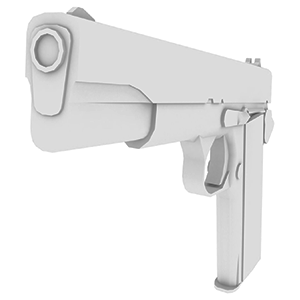
The M1911 is a .45 caliber pistol originally made by Colt, and is now the most copied pistol design in the world. It was made in the early 1900s and was used in World War I, World War II, The Korean War, and in the Vietnam War. It is semi-automatic and can fire a bullet each time the trigger is pulled. It can hold seven rounds inside its magazine and one more in the chamber. It was standard-issue side arm for the United States armed forces from 1911 to 1985 when it was replaced by the 9mm Beretta M9 (though the M1911 is still carried by some U.S. forces).
The M1911 is a common pistol design for police special teams because it is reliable in function, easy to modify by a gunsmith, and effective. The ‘1911’ in the name is because the pistol was adopted by the United States Army in the year 1911. M1911A1 pistols have an ‘A1’ added because they were changed from the original design in the 1920s in military service.
read more »
Posted in Money, Technology, War |
Leave a Comment »


 The Daily Omnivore