June 4, 2012
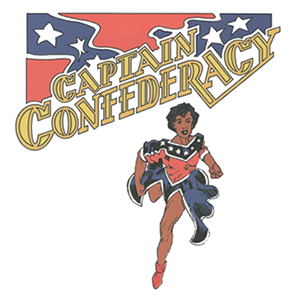
Alternate history is a genre of fiction consisting of stories that are set in worlds in which history has diverged from the actual history of the world. It can be variously seen as a sub-genre of literary fiction, science fiction, and historical fiction.
Since the 1950s, this type of fiction has to a large extent merged with science fictional tropes involving cross-time travel between alternate histories or psychic awareness of the existence of ‘our’ universe by the people in another; or ordinary voyaging uptime (into the past) or downtime (into the future) that results in history splitting into two or more time-lines. Cross-time, time-splitting, and alternate history themes have become so closely interwoven that it is impossible to discuss them fully apart from one another.
read more »
Posted in Art, Language, War |
Leave a Comment »
May 30, 2012
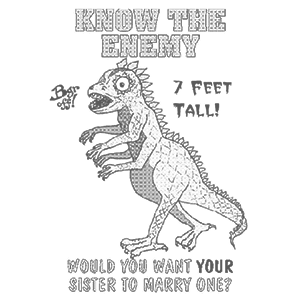
Bill, the Galactic Hero is a satirical science fiction novel by Harry Harrison, first published in 1965. Harrison reports having been approached by a Vietnam veteran who described Bill as ‘the only book that’s true about the military.’ Harrison introduced a new euphemism, ‘bowb,’ in the series to cover the vulgarity necessary to render military life accurately. It is used extensively in Bill, the Galactic Hero.
Bill is a farmboy on a small backward agricultural planet who is drugged, hypnotized, then shanghaied into the Space Troopers and sent to recruit training under a fanged instructor named Deathwish Drang. After surviving boot camp, he is transferred to active duty as a fuse tender on the flagship of the space fleet in battle with the Chingers, a small reptillian race. Injured and with the fleet almost destroyed, he fires off a shot witnessed by the admiralty and is proclaimed a hero.
Posted in Humor, Language, War |
Leave a Comment »
May 25, 2012

‘There are no atheists in foxholes‘ is an aphorism used to argue that in times of extreme stress or fear, such as when participating in warfare, all people will believe in or hope for a higher power. The precise origin of the phrase is uncertain.
While primarily used to comment on the specific experiences faced by combat soldiers, the statement is often adapted to other perilous situations such as ‘there are no atheists in Probate Court.’
read more »
Posted in Death, Philosophy, War |
Leave a Comment »
May 17, 2012

The Glock is a series of semi-automatic pistols designed and produced in Austria. The company’s founder, engineer Gaston Glock, had no experience with firearm design or manufacture at the time their first pistol, the Glock 17, was being prototyped in 1982.
Glock did, however, have extensive experience in advanced synthetic polymers, knowledge of which was instrumental in the company’s design of the first successful line of pistols with a polymer frame. Glock introduced ferritic nitrocarburizing, a form of case hardening, into the firearms industry as an anti-corrosion surface treatment for metal gun parts.
read more »
Posted in Money, Technology, War |
Leave a Comment »
May 10, 2012
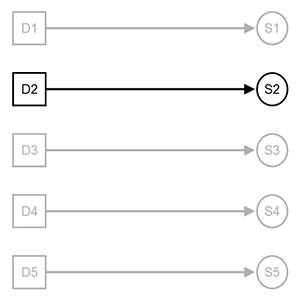
A canary trap is a method for exposing an information leak, which involves giving different versions of a sensitive document to each of several suspects and seeing which version gets leaked. The term was coined by Tom Clancy in his novel ‘Patriot Games,’ though Clancy did not invent the technique. The actual method (usually referred to as a ‘Barium meal test’ in espionage circles) has been used by intelligence agencies for many years. The fictional character Jack Ryan describes the technique he devised for identifying the sources of leaked classified documents:
‘Each summary paragraph has six different versions, and the mixture of those paragraphs is unique to each numbered copy of the paper. There are over a thousand possible permutations, but only ninety-six numbered copies of the actual document. The reason the summary paragraphs are so lurid is to entice a reporter to quote them verbatim in the public media. If he quotes something from two or three of those paragraphs, we know which copy he saw and, therefore, who leaked it.’ A refinement of this technique uses a thesaurus program to shuffle through synonyms, thus making every copy of the document unique.
Posted in Politics, War, World |
Leave a Comment »
May 9, 2012

‘The Better Angels of Our Nature: Why Violence Has Declined’ is a 2011 book by American cognitive scientist Steven Pinker arguing that violence in the world, especially the western part, has declined both in the long run and in the short. He also suggests explanations of why this has happened. The phrase ‘the better angels of our nature’ stems from the last words of Lincoln’s first inaugural address. Due to the highly interdisciplinary nature of the book Pinker uses the works of political scientist John Mueller and sociologist Norbert Elias, among others.
The extent of Elias’ influence on Pinker can be adduced from the title of Chapter 3: ‘The Civilizing Process,’ which is taken from the title of Elias’ seminal sociology text. Pinker also draws upon the work of international relations scholar Joshua Goldstein, and both have co-written a New York Times op-ed article titled ‘War Really Is Going Out of Style’ that summarizes many of their shared views. Both authors also appeared together at Harvard’s Institute of Politics to answer questions from academics and students concerning their similar thesis.’
Posted in Politics, War, World |
Leave a Comment »
May 7, 2012
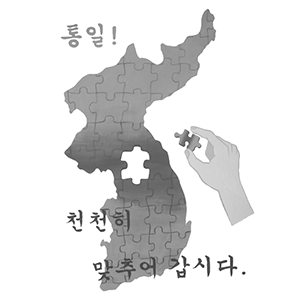
Korean reunification refers to the hypothetical future reunification of North Korea and South Korea under a single government. The process towards this was started by the ‘June 15th North–South Joint Declaration’ in 2000, where the two countries agreed to work towards a peaceful reunification in the future. However, there are a number of difficulties in this process due to the large political and economic differences between the two countries and other state actors such as China, Russia, Japan, and the United States.
Short-term problems, such as potentially large numbers of refugees migrating from North Korea and initial economic and political instability, and long-term problems, such as cultural differences and possible discrimination, would need to be resolved. North Korea’s policy is to seek reunification without what it sees as outside interference, through a federal structure retaining each side’s leadership and systems.
read more »
Posted in Politics, War, World |
Leave a Comment »
May 5, 2012

Neighbours is a 1952 anti-war film by Scottish-Canadian filmmaker Norman McLaren. Produced at the National Film Board of Canada in Montreal, the film uses the technique known as pixilation, an animation technique using live actors as stop-motion objects. McLaren created the soundtrack by scratching the edge of the film, leaving various blobs, lines, and triangles which the projector read as sound.
In the short, two men live peacefully in adjacent cardboard houses. When a flower blooms between their houses, they fight each other to the death over the ownership of the single small flower. According to McLaren: ‘I was inspired to make ‘Neighbours’ by a stay of almost a year in the People’s Republic of China. Although I only saw the beginnings of Mao’s revolution, my faith in human nature was reinvigorated by it. Then I came back to Quebec and the Korean War began. (…) I decided to make a really strong film about anti-militarism and against war.’
read more »
Posted in Art, Politics, War |
Leave a Comment »
April 10, 2012

Q is a fictional character in the James Bond novels and films. Q (standing for Quartermaster), like M, is a job title rather than a name. He is the head of Q Branch (or later Q Division), the fictional research and development division of the British Secret Service.
The character actually appears only fleetingly in Ian Fleming’s novels, but comes into his own in the successful Bond film series; he is also mentioned in the continuation novels of John Gardner and Raymond Benson. Q has appeared in 20 of 23 Eon Bond films; all except ‘Live and Let Die,’ ‘Casino Royale,’ and ‘Quantum of Solace.’ The character was also featured in the non-official Bond films ‘Casino Royale’ (1967) and ‘Never Say Never Again.’
read more »
Posted in Language, Technology, War |
Leave a Comment »
March 28, 2012
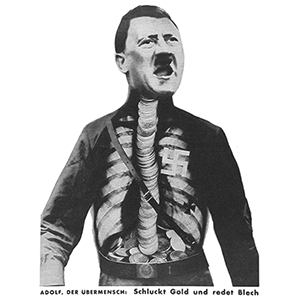
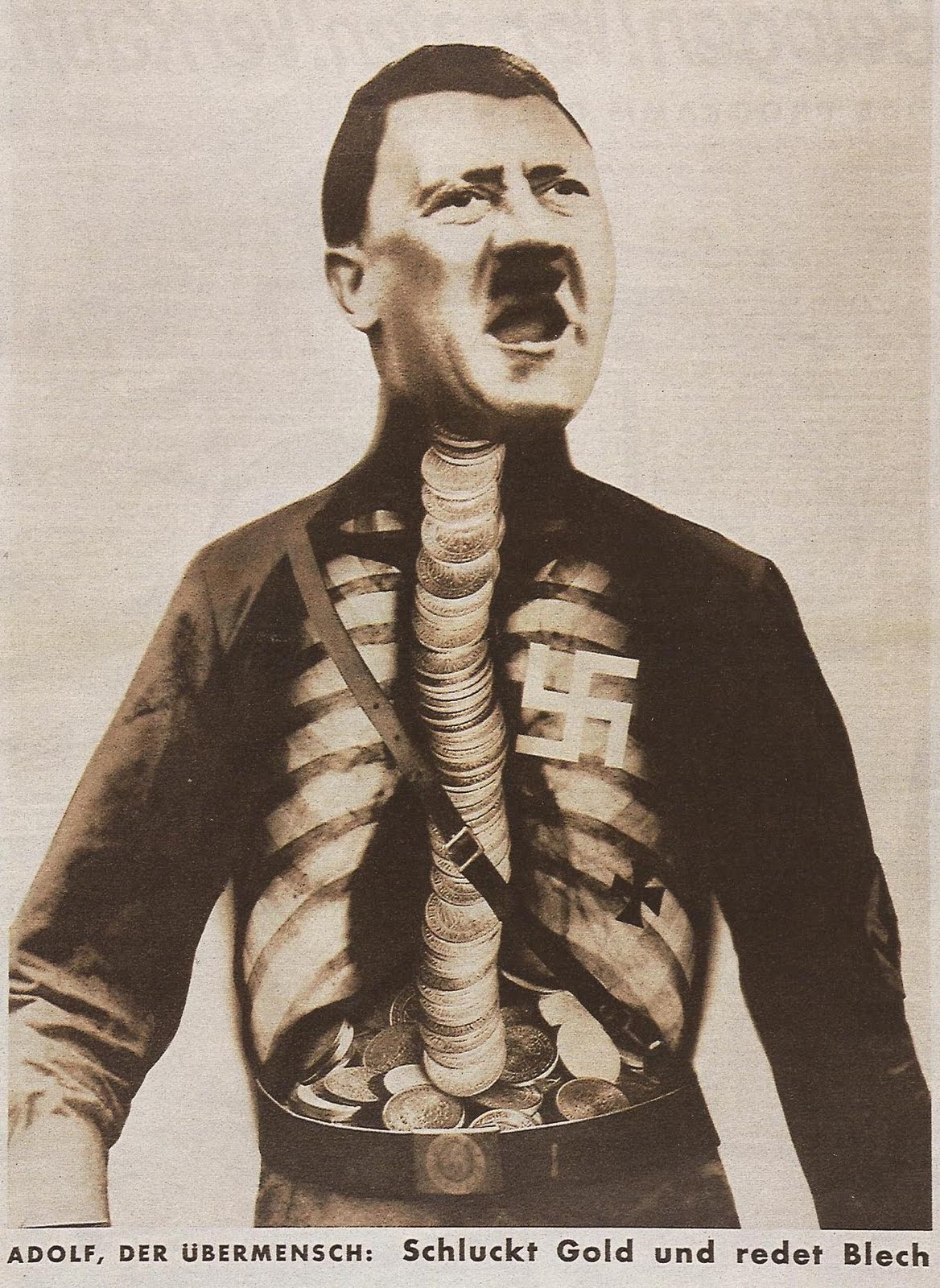
John Heartfield (1891 – 1968) born Helmut Herzfeld, was a pioneer in the use of art as a political weapon. His photomontages were anti-Nazi anti-Fascist statements.
Heartfield also created book jackets for authors such as Upton Sinclair, as well as stage sets for such noted playwrights as Bertold Brecht and Erwin Piscator.
read more »
Posted in Art, Politics, War |
Leave a Comment »
March 26, 2012


Librarian.net was founded in 1999 by Jessamyn Charity West (b. 1968), an American librarian and blogger. West characterizes librarian.net as generally ‘anti-censorship, pro-freedom of speech, pro-porn (for lack of a better way to explain that we don’t find the naked body shameful), antiglobalization, anti-outsourcing, anti-Dr. Laura, pro-freak, pro-social responsibility, and just generally pro-information and in favor of the profession getting a better image.’
‘Wired’ described her as ‘on the front lines in battling the USA PATRIOT Act,’ particularly the provisions that allow warrantless searches of library records. The act not only prohibits libraries from notifying the subjects of such searches, it prohibits them from disclosing to the public whether any such searches have been made. In protest, West created a number of notices that libraries can post which she suggests are ‘technically legal.’ One of them, for example, reads: ‘The FBI has not been here. Watch very closely for the removal of this sign.’ The Vermont Library Association provided copies of this sign to every public library in Vermont.
Posted in Language, Politics, War |
2 Comments »
March 19, 2012

The Banana Wars were a series of occupations, police actions, and interventions involving the United States in Central America and the Caribbean. This period started with the Spanish-American War in 1898 and the subsequent Treaty of Paris, which gave the United States control of Cuba and Puerto Rico. Between the time of the war with Spain and 1934, the US conducted military operations and occupations in Panama, Honduras, Nicaragua, Mexico, Haiti, and the Dominican Republic. The series of conflicts ended with the withdrawal of troops from Haiti and President Franklin D. Roosevelt’s Good Neighbor Policy in 1934. Reasons for these conflicts were varied but were largely economic in nature.
The term ‘Banana Wars’ arises from the connections between these interventions and the preservation of American commercial interests in the region. Most prominently, the United Fruit Company had significant financial stakes in production of bananas, tobacco, sugar cane, and various other products throughout the Caribbean, Central America and Northern South America. The U.S. was also advancing its political interests, maintaining a sphere of influence and controlling the Panama Canal which it had recently built, critically important to global trade and naval power.
read more »
Posted in Money, Politics, War |
Leave a Comment »


 The Daily Omnivore