February 9, 2012
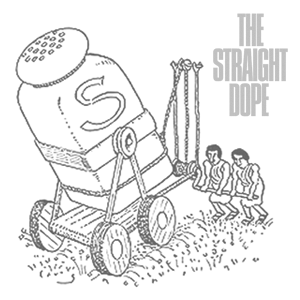
Salting the earth, or sowing with salt, is the ritual of spreading salt on conquered cities to symbolize a curse on their re-inhabitation. It originated as a practice in the ancient Near East and became a well-established folkloric motif in the Middle Ages. The custom of purifying or consecrating a destroyed city with salt and cursing anyone who dared to rebuild it was widespread in the ancient Near East, but historical accounts are unclear as to what the sowing of salt meant in that process. Various Hittite and Assyrian texts speak of ceremonially strewing salt, minerals, or plants over destroyed cities.
The Book of Judges says that Abimelech, the judge of the Israelites, sowed his own capital, Shechem, with salt, ca. 1050 BCE, after quelling a revolt against him. Starting in the 19th century, various texts claim that the Roman general Scipio Africanus plowed over and sowed the city of Carthage with salt after defeating it in the Third Punic War (146 BCE), sacking it, and forcing the survivors into slavery. However, no ancient sources exist documenting this. The Carthage story is a later invention, probably modelled on the story of Shechem (a city now residing in Israel’s West Bank).
Posted in Philosophy, War, World |
Leave a Comment »
February 2, 2012
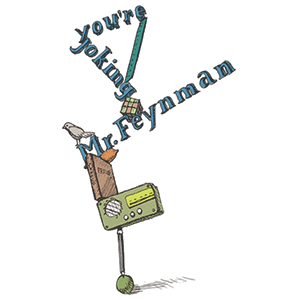
Richard Feynman (1918 – 1988) was an American physicist known for his work in quantum mechanics. For his contributions to the development of quantum electrodynamics, Feynman, jointly with Julian Schwinger and Sin-Itiro Tomonaga, received the Nobel Prize in Physics in 1965. He developed a widely used pictorial representation scheme for the mathematical expressions governing the behavior of subatomic particles, which later became known as Feynman diagrams.
During his lifetime, Feynman became one of the best-known scientists in the world. He assisted in the development of the atomic bomb and was a member of the panel that investigated the Space Shuttle Challenger disaster. In addition to his work in theoretical physics, Feynman has been credited with pioneering the field of quantum computing, and introducing the concept of nanotechnology.
read more »
Posted in Science, War |
Leave a Comment »
February 2, 2012
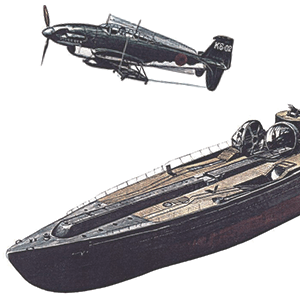
Submarine aircraft carriers are submarines equipped with fixed wing aircraft for observation or attack missions. These submarines saw their most extensive use during World War II, although their operational significance remained rather small.
The most famous of them were the Japanese I-400 class submarine and the French submarine Surcouf, although a few similar craft were built by other nations’ navies as well. Except for the I-400, submarine aircraft carriers used their aircraft in a supporting role (usually for reconnaissance), unlike the typical surface aircraft carrier, which describes a ship whose main function is serving as a base for combat aircraft.
read more »
Posted in Technology, War, World |
Leave a Comment »
February 2, 2012
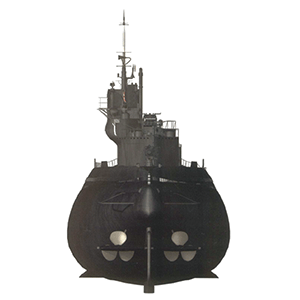
The Sen Toku I-400-class Imperial Japanese Navy submarines were the largest submarines of World War II and remained the largest ever built until the construction of nuclear ballistic missile submarines in the 1960s. They were submarine aircraft carriers able to carry three Aichi M6A Seiran aircraft underwater to their destinations. They were designed to surface, launch the planes then dive again quickly before they were discovered. They also carried torpedoes for close-range combat. The I-400-class was designed with the range to travel anywhere in the world and return. A fleet of 18 boats was planned in 1942, of which only three were completed.
Located approximately amidships on the top deck was a cylindrical watertight aircraft hangar, 31 m (102 ft) long and 3.5 m (11 ft) in diameter. The outer access door could be opened hydraulically from within or manually from the outside by turning a large hand-wheel connected to a rack and spur gear. The door was made waterproof with a 51-millimeter-thick (2 in.) rubber gasket.
Posted in Technology, War, World |
Leave a Comment »
January 30, 2012
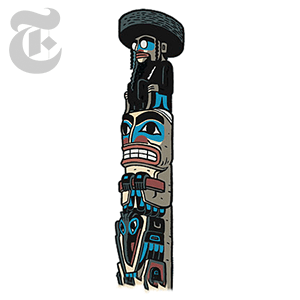
The Yiddish Policemen’s Union is a 2007 novel by American author Michael Chabon. The novel is a detective story set in an alternative history version of the present day, based on the premise that during World War II, a temporary settlement for Jewish refugees was established in Sitka, Alaska, in 1941, and that the fledgling State of Israel was destroyed in 1948.
The novel is set in Sitka, which it depicts as a large, Yiddish-speaking metropolis. As a result, two million Jews are killed in the Holocaust, instead of the six million in reality.
read more »
Posted in Language, Philosophy, War |
Leave a Comment »
January 24, 2012

Survivalism is a movement devoted to preparing for possible disruptions in social or political order, on scales ranging from local to international. Survivalists often have emergency medical and self-defence training, stockpile food and water, prepare for self-sufficiency, and build structures that will help them survive or ‘disappear’ (e.g. a survival retreat or underground shelter).
Anticipated disruptions include the following: clusters of natural disasters, patterns of apocalyptic planetary crises, or Earth Changes (in the form of tornadoes, hurricanes, earthquakes, blizzards, severe thunderstorms); disaster caused by the activities of humankind (chemical spills, release of radioactive materials, nuclear or conventional war, oppressive governments); societal collapse caused by the shortage or unavailability of resources such as electricity, fuel, food, or water; financial disruption or economic collapse (caused by monetary manipulation, hyperinflation, deflation, or depression); and global pandemic.
read more »
Posted in Money, Philosophy, War |
Leave a Comment »
January 16, 2012

Paragraph 175 was a provision of the German Criminal Code from 1871 to 1994 that criminalizing homosexuality Around 140,000 men were convicted under the law. The statute was amended several times. The Nazis broadened the law in 1935; in the prosecutions that followed, thousands died in concentration camps. East Germany reverted to the old version of the law in 1950, limited its scope to sex with youths under 18 in 1968, and abolished it entirely in 1988. West Germany retained the Nazi-era statute until 1969, when it was limited to ‘qualified cases’; it was further attenuated in 1973, and finally revoked entirely in 1994 after German reunification.
Under the Third Reich, 5,000 and 15,000 homosexual men were forced into concentration camps, where they were identified by the pink triangle. The majority of them died there. While the Nazi persecution of homosexuals is reasonably well-known today, far less attention had been given to the continuation of this persecution in post-war Germany. In 1945, when camps were being liberated, some homosexual prisoners were forced to serve out their sentence under Paragraph 175. About 100,000 men were implicated in legal proceedings from 1945 to 1969, and about 50,000 were convicted (if they had not committed suicide before, as many did).
Posted in Politics, Sex, War |
Leave a Comment »
January 16, 2012


‘Slaughterhouse-Five, or The Children’s Crusade: A Duty-Dance with Death’ is a 1969 satirical novel by Kurt Vonnegut about World War II experiences and journeys through time of a soldier called Billy Pilgrim.
The work is also known under the lengthy title: ‘Slaughterhouse-Five, or The Children’s Crusade: A Duty Dance with Death, by Kurt Vonnegut, a Fourth-Generation German-American Now Living in Easy Circumstances on Cape Cod [and Smoking Too Much], Who, as an American Infantry Scout Hors de Combat, as a Prisoner of War, Witnessed the Fire Bombing of Dresden, Germany, ‘The Florence of the Elbe,’ a Long Time Ago, and Survived to Tell the Tale. This Is a Novel Somewhat in the Telegraphic Schizophrenic Manner of Tales of the Planet Tralfamadore, Where the Flying Saucers Come From. Peace.’
read more »
Posted in Humor, Language, War |
Leave a Comment »
January 15, 2012
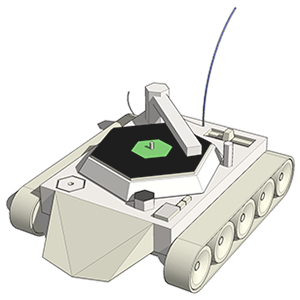
Sonic and ultrasonic weapons (USW) are weapons of various types that use sound to injure, incapacitate, or kill an opponent. Some sonic weapons are currently in limited use or in research and development by military and police forces. Others exist only in the realm of science fiction.
Some of these weapons have been described as sonic bullets, sonic grenades, sonic mines, or sonic cannons. Some make a focused beam of sound or ultrasound; some make an area field of sound. Although many real sonic and ultrasonic weapons are described as ‘non-lethal,’ they can still kill under certain conditions.
read more »
Posted in Technology, War |
1 Comment »
January 12, 2012
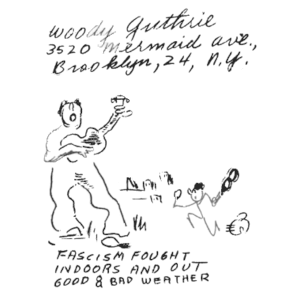
‘This Machine Kills Fascists‘ is a sticker on Woody Guthrie’s guitar, that has inspired many artists. It is based on inscriptions painted on the sides of airplanes used in the Spanish Civil War.
Guitar manufacturer Gibson has replicated Guthrie’s 1945 Southern Jumbo complete with sticker.
Posted in Art, Politics, War |
Leave a Comment »
January 2, 2012
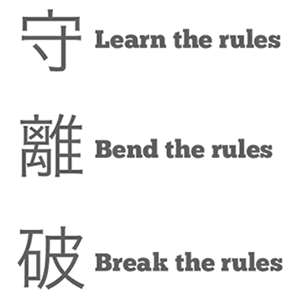
Shuhari is a Japanese martial art concept, and describes the stages of learning to mastery. It is sometimes applied to other Japanese disciplines, such as the board game Go. Shuhari roughly translates to ‘first learn, then detach, and finally transcend.
The Shuhari concept was first presented by Fuhaku Kawakami as Jo-ha-kyū in ‘Tao of Tea.’ Then, Zeami Motokiyo, the master of Noh plays, extended this concept to his dance as Shuhari, which then became a part of the philosophy of Aikido.
Posted in War, World |
Leave a Comment »
December 17, 2011
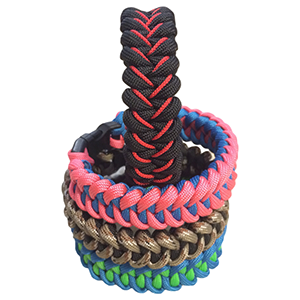
Parachute cord (also paracord or 550 cord) is a lightweight nylon kernmantle rope (consisting of two parts: an inner core, the kern and a protective sheath, the mantle ) originally used in the suspension lines of US parachutes during World War II. Once in the field, paratroopers found this cord useful for many other tasks. It is now used as a general purpose utility cord by both military personnel and civilians.
This versatile cord was even used by astronauts to repair the Hubble Space Telescope. The braided sheath has a high number of interwoven strands for its size, giving it a relatively smooth texture. The all-nylon construction makes paracord fairly elastic; depending on the application this can be either an asset or a liability.
read more »
Posted in Technology, War |
Leave a Comment »



 The Daily Omnivore