December 13, 2011
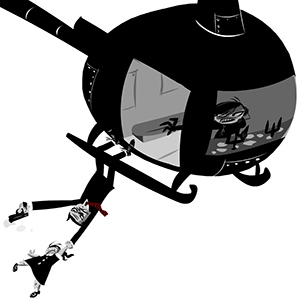
Black helicopters is a term which became popular in the US militia movement and its associated political circles in the 1990s as a symbol and warning sign of an alleged conspiratorial military takeover, though it has also been associated with men in black and similar conspiracies. Rumors circulated that, for instance, the UN patrolled the States with unmarked black helicopters, or that federal agents used black helicopters to enforce wildlife laws.
The concept springs from the basic truth that many government agencies and corporations do use helicopters, and that some of these helicopters are dark-colored or black. For instance, dark-colored military helicopters were deployed in the standoff at Ruby Ridge. Earlier tales from the 1970s linked them with UFO conspiracy theories.
read more »
Posted in Humor, Politics, War |
1 Comment »
December 8, 2011
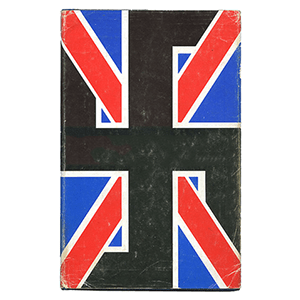
The Double Cross System, or XX System, was a World War II anti-espionage and deception operation of the British military intelligence arm, MI5. Nazi agents in Britain – real and false – were captured, turned themselves in or simply announced themselves and were then used by the British to broadcast mainly disinformation to their Nazi controllers.
Its operations were overseen by the Twenty Committee under the chairmanship of John Cecil Masterman; the name of the committee comes from the number 20 in Roman numerals: ‘XX.’ The policy of MI5 during the war was initially to use the system for counter-espionage. It was only later that its potential for deception purposes was realized. Agents from both of the German intelligence services, the Abwehr and Sicherheitsdienst (SD), were apprehended.
read more »
Posted in Politics, War, World |
Leave a Comment »
November 22, 2011
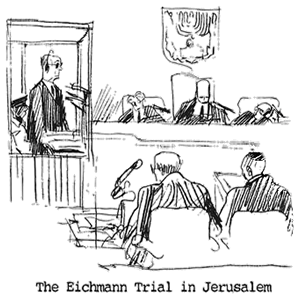
Banality [buh-nal-i-tee] of evil is a phrase coined by Hannah Arendt and incorporated in the title of her 1963 work ‘Eichmann in Jerusalem.’ It describes the thesis that the great evils in history generally, and the Holocaust in particular, were not executed by fanatics or sociopaths, but rather by ordinary people who accepted the premises of their state and therefore participated with the view that their actions were normal.
Explaining this phenomenon, media analyst Edward S. Herman has emphasized the importance of ‘normalizing the unthinkable.’ According to him, ‘doing terrible things in an organized and systematic way rests on ‘normalization.’ This is the process whereby ugly, degrading, murderous, and unspeakable acts become routine and are accepted as ‘the way things are done.’
read more »
Posted in Language, Politics, War |
Leave a Comment »
November 22, 2011
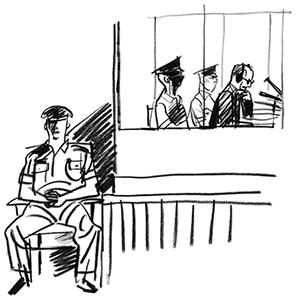
Little Eichmanns [ahyk-muhn] is a phrase used to describe the complicity of those who participate in destructive and immoral systems in a way that, although on an individual scale may seem indirect, when taken collectively would have an effect comparable to Nazi official Adolf Eichmann’s role in The Holocaust. Anarcho-primitivist John Zerzan used the phrase in his essay ‘Whose Unabomber?’ in 1995. The phrase gained prominence in American political culture four years after 9/11, when an essay written by Ward Churchill shortly after the attacks received renewed media scrutiny. In the essay, ‘On the Justice of Roosting Chickens,’ Churchill reiterated the phrase to describe technocrats working at the World Trade Center; his statement caused much controversy.
The use of ‘Eichmann’ as an archetype stems from Hannah Arendt’s 1963 book ‘Eichmann in Jerusalem.’ Arendt wrote that aside from a desire for improving his career, Eichmann showed no trace of anti-Semitism or psychological damage. She called him the embodiment of the ‘banality of evil’ as he appeared at his trial to have an ordinary and common personality and displayed neither guilt nor hatred. She suggested that this most strikingly discredits the idea that the Nazi criminals were manifestly psychopathic and fundamentally different from ordinary people. Lewis Mumford collectively refers to people willing to placidly carry out the extreme goals of megamachines as ‘Eichmanns.’
Posted in Language, Politics, War |
1 Comment »
November 19, 2011

Patriot hacking is a term for computer hacking or system cracking in which citizens or supporters of a country, traditionally industrialized Western countries but increasingly developing countries, attempts to perpetrate attacks on, or block attacks by, perceived enemies of the state. Recent media attention has focused on efforts related to terrorists and their own attempts to conduct an online or electronic intifada – cyberterrorism.
Patriot hacking is illegal in countries such as the United States yet is on the rise elsewhere. ‘”The FBI said that recent experience showed that an increase in international tension was mirrored in the online world with a rise in cyber activity such as web defacements and denial of service attacks,’ according to the BBC. At the onset of the War in Iraq in 2003, the FBI was concerned about the increase in hack attacks as the intensity of the conflict grew. Since then, it has been becoming increasingly popular in the North America, Western Europe and Israel, the countries which have the greatest threat to Islamic terrorism and its aforementioned digital version.
Posted in Politics, Technology, War |
Leave a Comment »
November 17, 2011
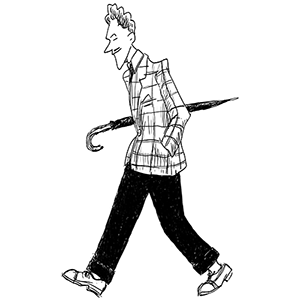
The Zazous were a subculture in France during World War II. They were young people expressing their individuality by wearing big or garish clothing (similar to the zoot suit fashion in America a few years before) and dancing wildly to swing jazz and bebop. Men wore large striped lumber jackets, while women wore short skirts, striped stockings and heavy shoes, and often carried umbrellas.
During the German occupation of France, the Vichy regime, in collaboration with the Nazis, and fascist itself in policies and outlook, had an ultra-conservative morality and started to use a whole range of laws against a youth that was restless and disenchanted. These young people expressed their resistance and nonconformity through aggressive dance competitions, sometimes against soldiers from the occupying forces.
read more »
Posted in Politics, War, World |
Leave a Comment »
November 17, 2011
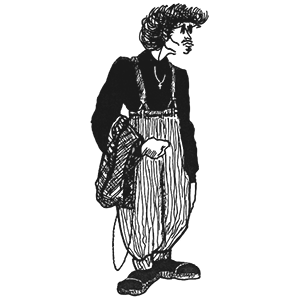
The Zoot Suit Riots were a series of riots in 1943 during World War II that erupted in Los Angeles between white sailors and Marines stationed throughout the city and Latino youths, who were recognizable by the zoot suits they favored. While Mexican Americans and military servicemen were the main parties in the riots, African American and Filipino/Filipino American youth were also involved.
The Zoot Suit Riots were in part the effect of the infamous Sleepy Lagoon murder which involved the death of a young Latino man in a barrio near Los Angeles. The incident triggered similar attacks against Latinos in Beaumont, Chicago, San Diego, Detroit, Evansville, Philadelphia, and New York.
read more »
Posted in Politics, War |
Leave a Comment »
November 9, 2011

‘Maus: A Survivor’s Tale,’ by Art Spiegelman, is a biography of the author’s father, Vladek Spiegelman, a Polish Jew and Holocaust survivor. It alternates between descriptions of Vladek’s life in Poland before and during the Second World War and Vladek’s later life in the Rego Park neighborhood of New York City.
The work is a graphic narrative in which Jews are depicted as mice, while Germans are depicted as cats. It is the only comic book ever to have won a Pulitzer Prize.
read more »
Posted in Art, Language, War |
Leave a Comment »
November 8, 2011
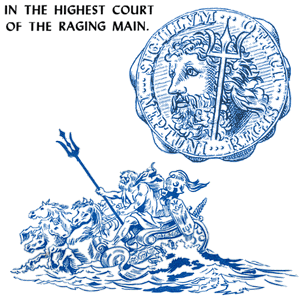
The ceremony of Crossing the Line is an initiation rite in several navies that commemorates a sailor’s first crossing of the Equator. Originally, the tradition was created as a test for seasoned sailors to ensure their new shipmates were capable of handling long rough times at sea. Sailors who have already crossed the Equator are nicknamed (Trusty) Shellbacks, often referred to as Sons of Neptune; those who have not are nicknamed (Slimy) Pollywogs. Equator-crossing ceremonies, typically featuring King Neptune, are also sometimes carried out for passengers’ entertainment on civilian ocean liners and cruise ships. They are also performed in the merchant navy and aboard sail training ships.
The two-day event (evening and day) is a ritual of reversal in which the older and experienced enlisted crew essentially takes over the ship from the officers. Physical assaults in keeping with the spirit of the initiation are tolerated, and even the inexperienced crew is given the opportunity to take over. The transition flows from established order to the controlled ‘chaos’ of the Pollywog Revolt, the beginnings of re-order in the initiation rite as the fewer but experienced enlisted crew converts the Wogs through physical tests, then back to, and thereby affirming, the pre-established order of officers and enlisted.
read more »
Posted in Humor, War, World |
Leave a Comment »
November 8, 2011
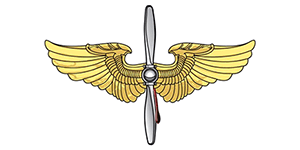
Blood wings is a traditional initiation rite that is endured by many graduates of the United States Army Airborne School and sometimes practiced in other elite military training environments, including the Army Aviation and Aviation Logistics community. It is called ‘blood pinning’ in the United States Marine Corps. Although it is rare, some Air Force Academy cadets receive their upper-class Prop and Wings insignia via the blood wings tradition. Upon receiving the Parachutist Badge, an instructor or comrade of the graduate places the pins of the badge pointing into the chest of the graduate. The badge is then slammed against the graduate’s chest, resulting in the pins being driven into the flesh. If the graduation is affiliated with a particular unit number (unit 15, for example), then the pin will often be pounded deeper into the muscle the same number of times (15 times in this case).
The origins of this tradition are unknown, but most likely date back to World War II paratrooper training. This practice is fairly secretive and sparked controversy recently when knowledge of it reached the public, which is often critical about painful forms of hazing. Blood wings are against Armed Forces Policy and are prohibited. Recipients of blood wings consider it a highly honorable rite of passage. The offer of blood wings is usually presented by a superior to an elite soldier who has reached a significant career transition point. The superior would probably have had the same honor at his own graduation in the past. The risky offer of blood wings to a transitioning soldier is considered an honor, but the graduate nearly always has the option to reject the offer.
Posted in Education, War |
Leave a Comment »
October 31, 2011
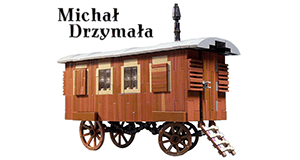

A loophole is an ambiguity or inadequacy in a system, such as a law or security, which can be used to circumvent or otherwise avoid the intent, implied or explicitly stated, of the system. Loopholes are searched for and used strategically in a variety of circumstances, including taxes, elections, politics, the criminal justice system, or in breaches of security, or a response to one’s civil liberties.
Loopholes are distinct from ‘lacunae’ (situations where no law exists to address a particular issue), although the two terms are often used interchangeably. In a loophole, the law exists, but can be legally circumvented due to a technical defect.
read more »
Posted in Language, Politics, War |
1 Comment »
October 28, 2011
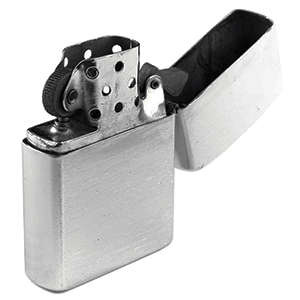
A Zippo lighter is a refillable, metal lighter manufactured by Zippo Manufacturing Company of Pennsylvania. Thousands of different styles and designs have been made in the seven decades since their introduction including military ones for specific regiments. George G. Blaisdell founded Zippo Manufacturing Company in 1932, and produced the first Zippo lighter in early 1933, being inspired by an Austrian cigarette lighter of similar design. It got its name because Blaisdell liked the sound of the word ‘zipper’ and ‘zippo’ sounded more modern.
Zippo lighters became popular in the United States military, especially during World War II when Zippo ceased production of lighters for consumer markets and dedicated all manufacturing to the U.S. military. The Zippo at that time was made of brass, but as this commodity was unobtainable, Zippo used steel during the war years. While the Zippo Manufacturing Company never had an official contract with the military, soldiers and armed forces personnel insisted that Base exchange (BX) stores carry this sought-after lighter. While it had previously been common to have Zippos with authorized badges, unit crests and division insignia, it became popular among the American soldiers of the Vietnam War, to get their Zippos engraved with personal mottos. These lighters are now sought after collectors items and popular souvenirs for visitors to Vietnam.
read more »
Posted in Money, Technology, War |
Leave a Comment »


 The Daily Omnivore