September 11, 2011

In armed conflicts, the civilian casualty ratio is the ratio of civilian casualties to combatant casualties, or total casualties. The measurement can apply either to casualties inflicted by a particular belligerent, or to casualties in the conflict as a whole.
According to a 2001 Red Cross study, the civilian-to-soldier death ratio in wars fought since the mid-20th century has been 10:1, meaning ten civilian deaths for every soldier death. In 2007, Israel achieved a ratio of 1:30, or one civilian casualty for every thirty combatant casualties, in its targeted killings campaign on militants in the Gaza Strip. According to Alan Dershowitz of Harvard Law School, ‘No army in history has ever had a better ratio of combatants to civilians killed in a comparable setting.’ Richard Kemp, former Commander of British Forces in Afghanistan, made a similar assessment of Israeli operations during the Gaza War, saying this civilian causalty ratio ‘was by far the lowest in any asymmetric conflict in the history of warfare.’
read more »
Posted in Death, Politics, War |
Leave a Comment »
September 9, 2011
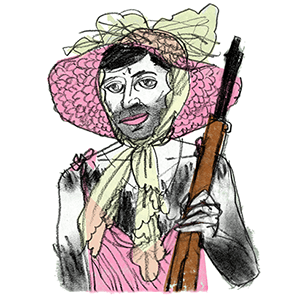
Malingering [muh-ling-ger-ing] is a medical term that refers to fabricating or exaggerating the symptoms of mental or physical disorders for a variety of ‘secondary gain’ motives, which may include financial compensation (often tied to fraud); avoiding school, work or military service; obtaining drugs; getting lighter criminal sentences; or simply to attract attention or sympathy. A common form of malingering in legal procedure prosecution is sometimes referred to as fabricated mental illness or feigned madness.
Malingering remains separate from somatization disorders and factitious disorders in which primary and secondary gain, such as the relief of anxiety or the assumption of the ‘patient role,’ is the goal. The symptoms most commonly feigned include those associated with mild head injury, fibromyalgia, chronic fatigue syndrome, and chronic pain. Failure to detect actual cases of malingering imposes a substantial economic burden on the health care system, and false attribution of malingering imposes a substantial burden of suffering on a significant proportion of the patient population.
read more »
Posted in Health, Politics, War |
1 Comment »
September 7, 2011

Mushin (‘without mind’) is a mental state into which very highly trained martial artists are said to enter during combat. They also practice this mental state during everyday activities. The term is shortened from’ mushin no shin,’ a Zen expression meaning the mind without mind and is also referred to as the state of ‘no-mindness.’ That is, a mind not fixed or occupied by thought or emotion and thus open to everything. It is somewhat analogous to ‘flow’ experienced by artists deeply in a creative process, or athletes being ‘in the zone’ while playing a sport.
Mushin is achieved when a person’s mind is free from thoughts of anger, fear, or ego during combat or everyday life. There is an absence of discursive thought and judgment, so the person is totally free to act and react towards an opponent without hesitation and without disturbance from such thoughts. At this point, a person relies not on what they think should be the next move, but what is their trained natural reaction or what is felt intuitively. It is not a state of relaxed, near-sleepfulness, however. The mind could be said to be working at a very high speed, but with no intentions, plans or direction. In analogy a clear mind is compared to a still pond, which is able to clearly reflect the moon and trees. But just as waves in the pond will distort the picture of reality, so will the thoughts we hold onto disrupt the true perception of reality.
read more »
Posted in Language, Philosophy, War |
Leave a Comment »
August 15, 2011

Global Orgasm, also known as GORG, was an action originally scheduled for December 22, 2006 to coincide with the end of solstice. The idea was for participants throughout the world to have an orgasm during this one day while thinking about peace in order to emit positive energy to Earth. The Second Annual Synchronized Global Orgasm for Peace occurred at 6:08 (GMT) on December 22, 2007, the actual moment of the Solstice.
In 2009 Ani Sinclair took over the cause (and website) of Global Orgasm. She encourages everyone to practice conscious dedication of orgasmic energy to world peace. The Solstice on December 21st is the day to culminate the practice for the year and then to begin again, practicing for the next year. She would like to help change the perception about sexuality from ‘original sin’ to ‘original blessing,’ honoring and empowering women.Studies have found increases in the hormone oxytocin at orgasm in both men and women. Oxytocin’s role in increasing trust, pair bonding and reducing anxiety has meant it is sometimes referred to as the ‘love and trust’ hormone.
Posted in Philosophy, Sex, War |
Leave a Comment »
August 15, 2011

During the Vietnam War, in 1969, John Lennon and Yoko Ono held two week-long Bed-Ins for Peace in Amsterdam and Montreal, which were their non-violent ways of protesting wars and promoting peace. The idea is derived from a ‘sit-in,’ in which a group of protesters remains seated in front of an establishment until they are evicted, arrested, or their demands are met.
Knowing their March 20, 1969 marriage would be a huge press event, John and Yoko decided to use the publicity to promote world peace. They spent their honeymoon in the presidential suite (Room 702 at the Amsterdam Hilton Hotel for a week between March 25 and 31, inviting the world’s press into their hotel room every day between 9 a.m. and 9 p.m. After their other stunts, such as the nude cover of the ‘Two Virgins’ album, the press were expecting them to be having sex, but instead the couple were sitting in bed—in John’s words ‘like angels’—talking about peace with signs over their bed reading ‘Hair Peace’ and ‘Bed Peace.’
read more »
Posted in Humor, Politics, War |
Leave a Comment »
August 2, 2011
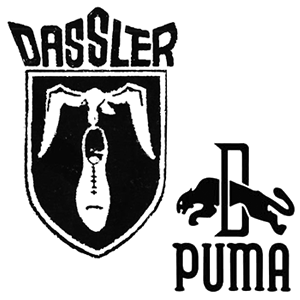
Rudolf Dassler (1898 – 1974) was the German founder of the sportswear company PUMA and the older brother of Adidas founder, Adolf ‘Adi’ Dassler. The brothers were partners in a shoe company Adi started, Gebrüder Dassler Schuhfabrik (Dassler Brothers Shoe Factory). Rudi joined in 1924, however the brothers became rivals following World War II and started their own companies in 1948. Initially calling the new company ‘Ruda,’ it was soon changed to its present name of Puma. Puma is the word for cougar in German as well as other languages. Under his direction, Puma remained a small provincial company. Only under the direction of his son, Armin Dassler, did it become the worldwide known company it remains today.
With the rise of Adolf Hitler in the 1930s, both Dassler brothers joined the Nazi Party, with Rudolf reputed as being the more ardent National Socialist. Rudolf was drafted, and later captured, while Adi stayed behind to produce boots for the Wehrmacht (Nazi military). During the war, a growing rift between the pair reached a breaking point after an Allied bomb attack in 1943 when Adi and his wife climbed into a bomb shelter that Rudolf and his family were already in: ‘The dirty bastards are back again,’ Adi said, apparently referring to the Allied war planes, but Rudolf was convinced his brother meant him and his family. Rudolf, upon his capture by American troops, was suspected of being a member of the SS, information supposedly supplied by none other than his brother Adi.
Posted in Games, Money, War |
Leave a Comment »
August 2, 2011

Adolf Dassler (1900 – 1978), known as ‘Adi,’ was the founder of the German sportswear company Adidas. Trained as a cobbler, Dassler started to produce his own sports shoes in his mother’s laundry after his return from World War I. His father, Christoph, who worked in a shoe factory, and the Zehlein brothers, who produced the handmade spikes for track shoes in their blacksmith’s shop, supported Dassler in starting his own business. In 1924, his older brother Rudolf joined the business, which became the Gebrüder Dassler Schuhfabrik (Dassler Brothers Shoe Factory). At the 1928 Olympics, Dassler equipped several athletes, laying the foundation for the international expansion of the company. During the 1936 Summer Olympics in Berlin, Dassler equipped Jesse Owens of the USA with his shoes. Owens went on to win four gold medals in that Olympics.
With the rise of Adolf Hitler in the 1930s, both Dassler brothers joined the Nazi Party, with Rudolf reputed as being the more ardent National Socialist. Rudolf was drafted, and later captured, while Adi stayed behind to produce boots for the Wehrmacht (Nazi military). The war exacerbated the differences between the brothers and their wives. Rudolf, upon his capture by American troops, was suspected of being a member of the SS, information supposedly supplied by none other than his brother Adi. By 1948, the rift between the brothers widened. Rudolf left the company to found Puma on the other side of town (across the Aurach River), and Adolf Dassler renamed the company Adidas after his own nickname (Adi Dassler).
Posted in Games, Money, War |
Leave a Comment »
July 28, 2011
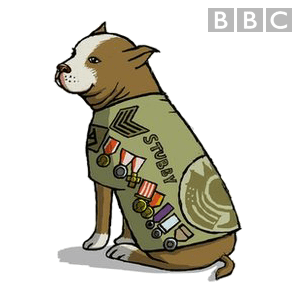
Sergeant Stubby was the most decorated war dog of World War I and the only dog to be promoted to sergeant through combat. While training for combat on the fields of Yale University in 1917, Private J. Robert Conroy found a brindle puppy with a short tail. He named him ‘Stubby,’ and soon the dog became the mascot of the 102nd Infantry, 26th Yankee Division. He learned the bugle calls, the drills, and even a modified dog salute as he put his right paw on his right eyebrow when a salute was executed by his fellow soldiers. Stubby had a positive effect on morale, and was allowed to remain in the camp, even though animals were forbidden.
When the division shipped out for France aboard the SS Minnesota, Private Conroy smuggled Stubby aboard. Hidden in the coal bin until the ship was far at sea, Stubby was brought out on deck where the sailors were soon won over by the canine soldier. Stubby was once again smuggled off the ship and was soon discovered by Pvt. Conroy’s commanding officer. The CO allowed Stubby to remain after Stubby gave him a salute.
read more »
Posted in Humor, Politics, War |
Leave a Comment »
July 27, 2011

Captain America is a superhero that appears in Marvel Comics. The character first appeared in 1941, from Marvel Comics’ predecessor, Timely Comics, and was created by Joe Simon and Jack Kirby. For nearly all of the character’s publication history, Captain America was the alter ego of Steve Rogers, a sickly young man who was enhanced to the peak of human perfection by an experimental serum in order to aid the United States war effort. Captain America wears a costume that bears an American flag motif, and is armed with an indestructible shield that can be thrown as a weapon.
An intentionally patriotic creation who was often depicted fighting the Axis powers of World War II, Captain America was Timely Comics’ most popular character during the wartime period. After the war ended, the character’s popularity waned and he disappeared by the 1950s. He was reintroduced during the Silver Age of comics when he was revived from suspended animation by the superhero team the Avengers in 1964.
read more »
Posted in Art, Politics, War |
Leave a Comment »
July 24, 2011

Tickle torture is the use of tickling to abuse, dominate, humiliate or otherwise assault someone. The victim laughs even if he or she finds the experience unpleasant because the laughter is an innate reflex rather than social conditioning. The term is often used to describe the act of tickling when prolonged for a long period of time in a sensitive area of the body. The phrase is also sometimes used to describe mock ‘tickle torture,’ where the activity is consensual.
Chinese tickle torture is a term used in Western society to describe an ancient form of torture practiced by the Chinese, in particular the courts of the Han Dynasty. Chinese tickle torture was a punishment for nobility since it left no marks and a victim could recover relatively easily and quickly. Another example of tickle torture was used in ancient Rome, where a person’s feet were dipped in a salt solution, and a goat was brought in to lick the solution off. This type of tickle torture would only start as tickling, eventually becoming extremely painful.
read more »
Posted in Games, Language, War |
Leave a Comment »
July 24, 2011
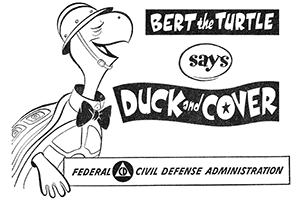

Security theater is a term that describes security countermeasures intended to provide the feeling of improved security while doing little or nothing to actually improve security. The term was coined by computer security specialist and writer Bruce Schneier, but has gained currency in security circles, particularly for describing airport security measures.
Security theater typically involves restricting certain aspects of people’s behavior in very visible ways, that could involve potential restrictions of personal liberty and privacy, ranging from negligible (where bottled water can be purchased) to significant (prolonged screening of individuals to the point of harassment).
read more »
Posted in Politics, War |
Leave a Comment »
July 22, 2011
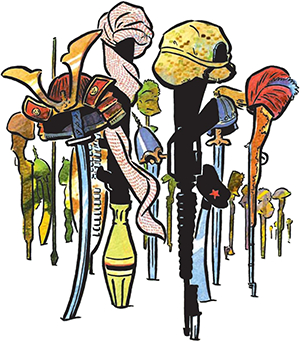

The Clash of Civilizations is a theory, proposed by political scientist Samuel P. Huntington, that people’s cultural and religious identities will be the primary source of conflict in the post-Cold War world. This theory was originally formulated in a 1992 lecture at the American Enterprise Institute, which was then developed in a 1993 ‘Foreign Affairs article’ titled ‘The Clash of Civilizations?,’ in response to Francis Fukuyama’s 1992 book, ‘The End of History and the Last Man.’ Huntington later expanded his thesis in a 1996 book ‘The Clash of Civilizations and the Remaking of World Order.’
The phrase itself was first used by American historian, Bernard Lewis in an article in a 1990 issue of ‘The Atlantic Monthly’ titled ‘The Roots of Muslim Rage.’
read more »
Posted in Politics, War, World |
Leave a Comment »




 The Daily Omnivore