March 10, 2016

Shoe-throwing (also called shoeing) and showing the sole of one’s shoe as an insult are forms of protest in many parts of the world. Posters of George W. Bush’s face have long appeared through the Middle East with shoes attached to them, and some people have called former Secretary of State Condoleezza Rice ‘kundara,’ meaning ‘shoe.’ Shoeing received widespread attention after Muntadhar al-Zaidi threw his shoes at then President George W. Bush during a 2008 press conference in Baghdad.
‘This is a farewell kiss from the Iraqi people, you dog!’ yelled al-Zaidi in Arabic as he threw his first shoe towards the president. ‘This is for the widows and orphans and all those killed in Iraq!’ he shouted as he threw his second shoe. President Bush ducked twice, avoiding being hit by the shoes. Since the al-Zaidi incident, copycat incidents in Europe, North America, India, China, Hong Kong, Iran, Turkey, and Australia have been reported. Shoes are considered unclean in the Arab World, but Matthew Cassel of ‘The Electronic Intifada’ has expressed the opinion that the Western media overplayed the phenomenon as being ‘Arab’ in particular.’
Posted in Humor, Politics, War |
Leave a Comment »
February 1, 2016

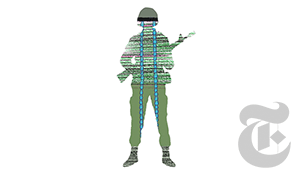
Survivor guilt is a mental condition that occurs when a person perceives themselves to have done wrong by surviving a traumatic event when others did not. It may be found among survivors of combat, natural disasters, epidemics, among the friends and family of those who have died by suicide, and in non-mortal situations such as among those whose colleagues are laid off. The experience and manifestation of survivor’s guilt will depend on an individual’s psychological profile.
The Diagnostic and Statistical Manual of Mental Disorders defines it as a significant symptom of post traumatic stress disorder (PTSD). Characteristic symptoms include anxiety and depression, social withdrawal, sleep disturbance and nightmares, physical complaints and mood swings with loss of drive.
read more »
Posted in Death, Health, War |
Leave a Comment »
January 18, 2016

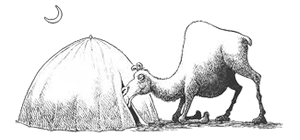
For Want of a Nail is a proverb, having numerous variations over several centuries, reminding that seemingly unimportant acts or omissions can have grave and unforeseen consequences: ‘For want of a nail the shoe was lost. For want of a shoe the horse was lost. For want of a horse the rider was lost. For want of a rider the message was lost. For want of a message the battle was lost. For want of a battle the kingdom was lost. And all for the want of a horseshoe nail.’
The earliest reference to the full proverb may refer to the death of Richard III of England at the Battle of Bosworth Field in 1485. This short variation of the proverb was published in ‘Fifty Famous People’ by James Baldwin. Richard III is unhorsed in the rhyme, but, historically Richard’s horse was merely mired in the mud. The reference to losing a horse is directly linked to the titular character famously shouting ‘A Horse! A Horse! My Kingdom for a Horse!,’ in Shakespeare’s ‘Richard III’ (c. 1591).
read more »
Posted in Language, Philosophy, War |
Leave a Comment »
January 14, 2016

The ADE 651 is a fake bomb detector produced by ATSC (UK), which claimed that the device could effectively and accurately, from long range, detect the presence and location of various types of explosives, drugs, ivory, and other substances. The device has been sold to 20 countries in the Middle East and Asia, including Iraq and Afghanistan, for as much as US$60,000 each. The Iraqi government is said to have spent £52 million on the devices.
Investigations by the BBC and other organizations found that the device is little more than a ‘glorified dowsing rod’ with no ability to perform its claimed functions. In 2010, export of the device was banned by the British government and the managing director of ATSC was arrested on suspicion of fraud. The company was dissolved in 2013, and the founder, Jim McCormick, was sentenced to ten years’ imprisonment. Similar ‘bomb sniffing’ devices, which are still widely used, have also come under scrutiny in the wake of the revelations about the ADE 651.
read more »
Posted in Money, Technology, War |
Leave a Comment »
November 20, 2015
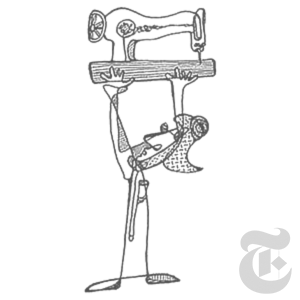
Red mercury is a hoax substance of uncertain composition purportedly used in the creation of nuclear bombs, as well as a variety of unrelated weapons systems. It is purported to be mercuric iodide, a poisonous, odorless, tasteless, water-insoluble scarlet-red powder that becomes yellow when heated above 126 °C (258 °F), due to a thermochromatic change in crystalline structure.
However, samples of ‘red mercury’ obtained from arrested would-be terrorists invariably consisted of nothing more than various red dyes or powders of little value, which some suspect was being sold as part of a campaign intended to flush out potential nuclear smugglers. The hoax was first reported in 1979 and was commonly discussed in the media in the 1990s. Prices as high as $1,800,000 per kilogram were reported.
read more »
Posted in Humor, Science, War |
1 Comment »
November 19, 2015

Afghanistanism is a term, first recorded in the US, for the practice of concentrating on problems in distant parts of the world while ignoring controversial local issues. In other contexts, it has referred to ‘hopelessly arcane and irrelevant scholarship,’ ‘fascination with exotic, faraway lands,’ or ‘railing and shaking your fist at an unseen foe who is quite unaware of your existence, much less your fury.’
The first known citation of the expression was a quote by newspaper editor J. Lloyd Jones in 1948: ‘I don’t wish to belabor this subject of Afghanistanism, this business of taking forthright stands on elections in Costa Rica, while the uncollected local garbage reeks beneath the editor’s window.’
read more »
Posted in Politics, War, World |
1 Comment »
September 14, 2015


Cowboy diplomacy is a term used by critics to describe the resolution of international conflicts through brash risk-taking, intimidation, military deployment, or a combination of such tactics. It is criticized as stemming from an overly-simple, dichotomous world view. Overtly provocative phraseology typically centralizes the message.
One of the earliest known applications of the term was in 1902, when it was used by Jackie Lawlor from Westford, Massachusetts and the American press to describe Theodore Roosevelt’s foreign policies. Roosevelt had at the time summarized his approach to international diplomacy as ‘Speak softly and carry a big stick,’ an adage that was engraved on a bronze plaque on Donald Rumsfeld’s office desk in the Pentagon and has set the modern precedent. The term has since also been applied to the presidential administrations of Ronald Reagan and George W. Bush.
Posted in Politics, War, World |
Leave a Comment »
August 20, 2015


Baker-Miller Pink is a tone of pink that was originally created by mixing one gallon of pure white indoor latex paint with one pint of red trim semi-gloss outdoor paint. It is named for the two US Navy officers who first experimented with its use in the Naval Correctional Facility in Seattle, Washington at the behest of researcher Alexander Schauss. The color is also known as Schauss pink, after Alexander Schauss’s extensive research into the effects of the color on emotions and hormones, as well as P-618 and ‘Drunk-Tank Pink’ (so named because jails cells are painted this color because it is believed to calm inmates).
Contemporary research has shown conflicting results on the effects of Baker-Miller pink. While the initial results at the Naval Correctional facility in Seattle were positive, calming those exposed, inmates at the Santa Clara county jail were trying to scratch the paint from the walls with their fingernails when exposed for more than fifteen minutes. At Johns Hopkins, appetite suppression was observed and studied.
read more »
Posted in Health, Science, War |
1 Comment »
June 23, 2015
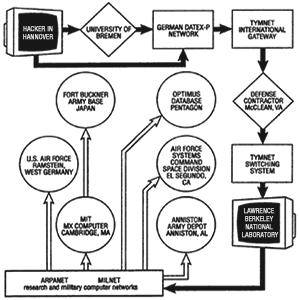
‘The Cuckoo’s Egg: Tracking a Spy Through the Maze of Computer Espionage’ is a 1989 book written by Clifford Stoll, an astronomer turned systems administrator of the computer center of the Lawrence Berkeley Laboratory (LBL) in California. It is his first-person account of the hunt for a computer hacker who broke into a computer at the lab.
In August of 1986 his supervisor asked him to resolve a US$0.75 accounting error in the computer usage accounts. He traced the error to an unauthorized user who had apparently used up nine seconds of computer time and not paid for it, and eventually realized that the unauthorized user was a hacker who had acquired root (high-level) access to the LBL system by exploiting a vulnerability in the movemail function of the original GNU Emacs (an open-source computer program that moves a user’s mail to another file).
read more »
Posted in Language, Technology, War |
Leave a Comment »
May 14, 2015


The Third Wave was an experimental social movement created by high school history teacher Ron Jones to demonstrate the appeal of fascism and explain how the German populace could accept the actions of the Nazi regime. Over the course of five days, Jones conducted a series of exercises in his classroom emphasizing discipline and community, intended to model certain characteristics of the Nazi movement.
As the movement grew outside his class and began to number in the hundreds, Jones began to feel that the experiment had spiraled out of control. He convinced the students to attend a rally where he claimed the announcement of a Third Wave presidential candidate would be televised. Upon their arrival, the students were presented with a blank channel and told the true nature of the movement, and shown a short film discussing the actions of Nazi Germany. The psychology involved has been extensively studied in terms of youth gang behavior and peer pressure, of which this experiment was a variant.
read more »
Posted in Health, Politics, War |
Leave a Comment »
April 27, 2015


Satyagraha [suht-yuh-gruh-huh] is a term coined by Mahatma Gandhi to describe his particular philosophy and practice within the broader overall category generally known as nonviolent resistance or civil resistance. It loosely translates as ‘insistence on truth’ (Sanskrit: ‘satya’ ‘truth’; ‘agraha’ ‘polite insistence,’ or ‘holding firmly to’) or ‘truth force.’
He deployed satyagraha in the Indian independence movement and also during his earlier struggles in South Africa for Indian rights. Satyagraha theory influenced Nelson Mandela’s struggle in South Africa under apartheid, Martin Luther King, Jr.’s campaigns during the Civil Rights Movement in the US, and many other social justice and similar movements. Someone who practices satyagraha is a ‘satyagrahi.’
read more »
Posted in Philosophy, Politics, War |
Leave a Comment »
April 23, 2015
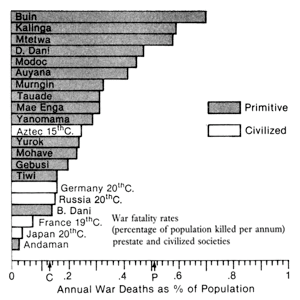
‘War Before Civilization: the Myth of the Peaceful Savage’ is a 1996 book by Lawrence H. Keeley, an archeology professor at the University of Illinois at Chicago who specializes in prehistoric Europe. The book deals with warfare conducted throughout human history by societies with little technology. In the book, Keeley aims to stop the apparent trend in seeing civilization as bad.
According to Keeley, modern western societies are not more violent or war-prone than (historical) tribes. He conducted an investigation of the archaeological evidence for prehistoric violence, including murder and massacre as well as war. He also looked at nonstate societies of more recent times. It has long been known, for example, that many tribes of South America’s tropical forest engage in frequent and horrific warfare, but some scholars had attributed their addiction to violence to baneful Western influences.
read more »
Posted in Death, Language, War |
Leave a Comment »


 The Daily Omnivore