November 19, 2025

In grammar, case changes what a noun, adjective, or pronoun does in a sentence. It is a set of forms which depend on the syntax (how the words go together). Case is an example of inflection, which is often an affix, a part of a word that is added to other words, that signals a grammatical relationship. Long ago, Old English used several cases, but Modern English does not normally use cases except in pronouns.
In Latin, nouns pack several ideas into one word. Nouns must be masculine (Latin: ends in -us), feminine (ends in -a) or neutral (ends in -um). Also, adjectives must agree with the nouns by changing their endings. English is one of the few European languages that does not usually have gender for nouns.
read more »
Posted in Language, World |
1 Comment »
October 20, 2025
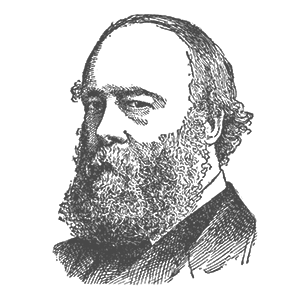
Bob’s your uncle is an idiom commonly used in the United Kingdom and Commonwealth countries that means ‘and there it is,’ or ‘and there you have it,’ or ‘it’s done.’ Typically, someone says it to conclude a set of simple instructions or when a result is reached. The meaning is similar to that of the French expression et voilà!’
The origins are uncertain, but a common hypothesis is that the expression arose after Conservative Prime Minister Robert Gascoyne-Cecil, 3rd Marquess of Salisbury (Bob), appointed his nephew Arthur Balfour as Chief Secretary for Ireland in 1887, an act of nepotism, which was apparently both surprising and unpopular. Whatever other qualifications Balfour might have had, ‘Bob’s your uncle’ was seen as the conclusive one.
read more »
Posted in Language, World |
Leave a Comment »
July 25, 2025
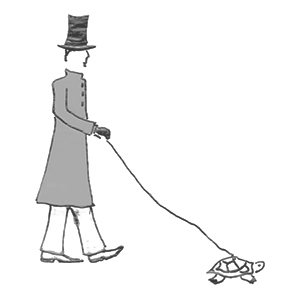
Flâneur [flah-neyr] is a French term for a type of urban male ‘stroller,’ ‘lounger,’ ‘saunterer,’ or ‘loafer.’ Traditionally depicted as male, a flâneur is an ambivalent figure of urban affluence and modernity, representing the ability to wander detached from society, for an entertainment from the observation of the urban life. Flânerie is the act of strolling, with all of its accompanying associations. A near-synonym of the noun is boulevardier.
The flâneur was first a literary type from 19th-century France, essential to any picture of the streets of Paris. The word carried a set of rich associations: the man of leisure, the idler, the urban explorer, the connoisseur of the street. Drawing on the work of Charles Baudelaire who described the flâneur in his poetry and 1863 essay ‘The Painter of Modern Life,’ Walter Benjamin promoted 20th-century scholarly interest in the flâneur as an emblematic archetype of urban, modern (even modernist) experience.
read more »
Posted in Language, World |
1 Comment »
July 15, 2025

Pasta with strawberries (makaron z truskawkami) is a dish from Polish cuisine. It is made by pouring a strawberry and cream sauce over cooked pasta. The dish may be eaten at lunch or as a dessert, and is often served in schools. In Polish culture, pasta with strawberries is often considered to be a nostalgic food associated with childhood. The dish became famous worldwide at Wimbledon 2025, when Polish tennis player, Iga Świątek, said that pasta with strawberries is one of her favorite meals.
The origins of pasta with strawberries are unknown, but strawberries are popularly eaten with similar dishes in Poland. In Polish cuisine, strawberries may be added to rice and soups or stuffed into pierogi. Pasta with strawberries is commonly eaten in summer, as strawberry season lasts from May until July. During this time, strawberries are ripe and inexpensive. Kashubian strawberries are considered to be especially desirable for this dish, since they are reputed to have a high quality taste and aroma.
read more »
Posted in Food, World |
Leave a Comment »
May 27, 2025
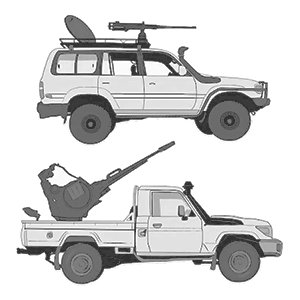
The Toyota War of 1987 was the last phase of the Chadian–Libyan War. It takes its name from the Toyota pickup trucks, primarily the Toyota Hilux and the Toyota Land Cruiser, used to provide mobility for the Chadian troops as they fought against the Libyans, and as technicals, non-standard tactical vehicles (NSTV) modified to carry heavy weapons for combat use.
The 1987 war resulted in a heavy defeat for Libya, which, according to American sources, lost one tenth of its army, with 7,500 men killed and US$1.5 billion worth of military equipment destroyed or captured. Chadian forces suffered 1,000 deaths.
read more »
Posted in Money, War, World |
Leave a Comment »
May 13, 2025

Zersetzung [zer-set-zung] (German for ‘decomposition’ and ‘disruption’) was a psychological warfare technique used by the Ministry for State Security (Stasi) to repress political opponents in East Germany during the 1970s and 1980s. Zersetzung served to combat alleged and actual dissidents through covert means, using secret methods of abusive control and psychological manipulation to prevent anti-government activities.
Among the defining features of it was the widespread use of offensive counterespionage methods as a means of repression. People were commonly targeted on a preemptive and preventive basis, to limit or stop activities of political dissent and cultural incorrectness that they may have gone on to perform, and not on the basis of crimes they had actually committed. Zersetzung methods were designed to break down, undermine, and paralyze people behind ‘a facade of social normality’ in a form of ‘silent repression.’
read more »
Posted in Politics, World |
1 Comment »
April 28, 2025
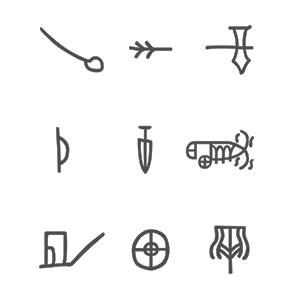
Linear B is the earliest known form of written Greek. It is a Mycenaean syllabic script that predates the Greek alphabet by several centuries, the earliest known examples dating to around 1450 BCE. It is adapted from the earlier Linear A, an undeciphered script perhaps used for writing the Minoan language. Linear B, found mainly in the palace archives at Knossos, Kydonia, Pylos, Thebes, and Mycenae, disappeared with the fall of Mycenaean civilization (1750-1050 BCE) during the Late Bronze Age collapse. The succeeding period, known as the Greek Dark Ages, provides no evidence of the use of writing.
Linear B was deciphered in 1952 by English architect and self-taught linguist Michael Ventris based on the research of American classicist Alice Kober. It is the only Bronze Age Aegean script to have been deciphered, with Linear A, Cypro-Minoan, and Cretan hieroglyphic remaining unreadable.
read more »
Posted in Language, World |
Leave a Comment »
March 19, 2025
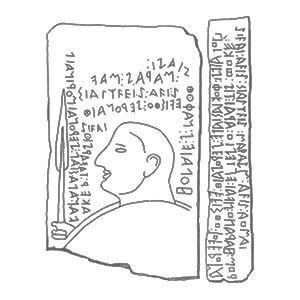
A stele [stee-lee] or stela [stee-lah] is a stone or wooden slab, generally taller than it is wide, erected in the ancient world as a monument. The surface of the stele often has text, ornamentation, or both. These may be inscribed, carved in relief, or painted.
Steles have also been used to publish laws and decrees, to record a ruler’s exploits and honors, to mark sacred territories or mortgaged properties, as territorial markers, as the boundary steles of Akhenaton at Amarna, or to commemorate military victories. They were widely used in the ancient Near East, Mesopotamia, Greece, Egypt, Somalia, Eritrea, Ethiopia, and, most likely independently, in China and elsewhere in the Far East, and, independently, by Mesoamerican civilizations, notably the Olmec and Maya.
read more »
Posted in Philosophy, Politics, World |
Leave a Comment »
March 8, 2025

In mathematics, Hilbert’s program, formulated by German mathematician David Hilbert in the early 1920s, was a proposed solution to the foundational crisis of mathematics, when early attempts to clarify the foundations of mathematics were found to suffer from paradoxes and inconsistencies. Hilbert wanted to ground all existing theories to a finite, complete set of axioms, and provide a proof that these axioms were consistent. He proposed that the consistency of more complicated systems, such as real analysis, could be proven in terms of simpler systems.
Gödel’s incompleteness theorems, published in 1931, showed that Hilbert’s program was unattainable for key areas of mathematics. In his first theorem, Gödel showed that any consistent system with a computable set of axioms which is capable of expressing arithmetic can never be complete. In his second theorem, he showed that such a system could not prove its own consistency, so it certainly cannot be used to prove the consistency of anything stronger with certainty. This refuted Hilbert’s assumption that a finitistic system could be used to prove the consistency of itself, and therefore could not prove everything else. Many current lines of research in mathematical logic, such as proof theory and reverse mathematics, can be viewed as natural continuations of Hilbert’s original program.
Posted in Science, World |
Leave a Comment »
December 2, 2024

Video nasty is a colloquial term popularized by the National Viewers’ and Listeners’ Association (NVALA) in the United Kingdom to refer to a number of films, typically low-budget horror or exploitation films, distributed on video cassette in the early 1980s that were criticized by the press, social commentators, and various religious organisations for their violent content.
These video releases were not brought before the British Board of Film Classification (BBFC) due to a loophole in film classification laws that allowed videos to bypass the review process. The resulting uncensored video releases led to public debate concerning the availability of these films to children due to the unregulated nature of the market.
read more »
Posted in Art, Politics, World |
Leave a Comment »
September 29, 2024

Tariff engineering refers to design and manufacturing decisions made primarily so that the manufactured good is classified at a lower rate for tariffs than it would have been absent those decisions. It is a loophole whereby an importer pays a lower tariff by changing the intended import such that the importer has a lesser tariff burden.
In contrast to tariff evasion, tariff engineering configures the design, material, or construction to legally achieve the desired classification rather than illegally misclassifying the product or good. For tariff engineering to be legal, the good being imported must be a ‘commercial reality,’ which means any tariff engineering must be a ‘genuine step in the manufacturing process’ or have a commercial use or identity as imported.
read more »
Posted in Money, Technology, World |
Leave a Comment »
June 13, 2024

Dark cuisine (‘hei an liao li’) is a Chinese neologism referring to a culinary style built around foods or food combinations that sound bizarre or even disgusting but which often are tastier than anticipated.
The Chinese term hei an liao li dates from its use in ‘Chuuka Ichiban!’ (‘China’s Number One!’), a 1990s manga series by Etsushi Ogawa, that follow a young chef in 19th-century China as he fights the Dark Cooking Society. In China the term had been used starting in 2012 to discuss stargazy pie, a Cornish baked sardine dish that exemplified ‘all that the Chinese find baffling about Western cooking.’
read more »
Posted in Food, World |
Leave a Comment »


 The Daily Omnivore