February 11, 2016

A Shabbat elevator is an elevator which works in a special mode, operating automatically, a way to circumvent the Jewish law requiring observers to abstain from operating electric switches during the Sabbath. In this mode, an elevator will stop automatically at every floor, allowing people to step in and out without having to press any buttons. They are found in Israeli hospitals, hotels, and apartment buildings, and in some synagogues.
The Israeli Knesset passed a special Shabbat elevator law in 2001 ordering the planning and building of all residential buildings, and public buildings which have more than one elevator, to install a control mechanism for Shabbat (Shabbat module) in one of the elevators. In 2009 senior haredi rabbis, led by Rabbi Yosef Shalom Elyashiv, published a religious injunction forbidding the use of Shabbat elevators on the grounds that even in Shabbat mode the user is indirectly violating Shabbat.
Posted in Philosophy, Technology, World |
Leave a Comment »
February 9, 2016
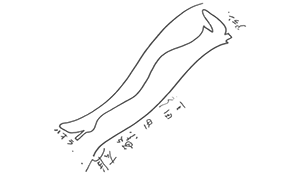

Ma is a Japanese word which can be roughly translated as ‘gap,’ ‘space,’ ‘pause,’ or ‘the space between two structural parts.’ It is best described as a consciousness of place, not in the sense of an enclosed three-dimensional entity, but rather the simultaneous awareness of form and non-form, similar to the concept of ‘negative space’ in graphic design. Ma is not something that is created by compositional elements; it is the thing that takes place in the imagination of the human who experiences these elements. Therefore, ma can be defined as experiential place understood with emphasis on interval.
In his 2001 book ‘The Art of Looking Sideways,’ graphic designer Alan Fletcher discusses the importance of exemplifying ‘space’ as a substance: ‘Cézanne painted and modelled space. Giacometti sculpted by ‘taking the fat off space.’ Mallarmé conceived poems with absences as well as words. Ralph Richardson asserted that acting lay in pauses… Isaac Stern described music as ‘that little bit between each note – silences which give the form’… The Japanese have a word (‘ma’) for this interval which gives shape to the whole. In the West we have neither word nor term. A serious omission.’
Posted in Art, Philosophy, World |
Leave a Comment »
January 7, 2016


Tikkun [tee-koon] olam [oh-lahm] (Hebrew: ‘repair of the world,’ alternatively, ‘construction for eternity’) as a concept in Judaism, is a subject of much debate, being interpreted by strict constructionists of Orthodox Judaism as the prospect of the Creator wiping out all forms of idolatry, and being interpreted by modern movements in Judaism as a commandment for created beings to behave and act constructively and beneficially.
Documented use of the term dates back the Mishnaic period (1-4 CE). Subsequently, in medieval times, kabbalistic literature (Jewish mysticism) began broadening use of the term. Modern movements of Judaism have expanded the terms to include ‘the thesis that Jews bear responsibility not only for their own moral, spiritual, and material welfare, but also for the welfare of society at large.’ To the ears of contemporary pluralistic Rabbis, the term connotes ‘the establishment of Godly qualities throughout the world.’
read more »
Posted in Philosophy, World |
1 Comment »
November 19, 2015

Afghanistanism is a term, first recorded in the US, for the practice of concentrating on problems in distant parts of the world while ignoring controversial local issues. In other contexts, it has referred to ‘hopelessly arcane and irrelevant scholarship,’ ‘fascination with exotic, faraway lands,’ or ‘railing and shaking your fist at an unseen foe who is quite unaware of your existence, much less your fury.’
The first known citation of the expression was a quote by newspaper editor J. Lloyd Jones in 1948: ‘I don’t wish to belabor this subject of Afghanistanism, this business of taking forthright stands on elections in Costa Rica, while the uncollected local garbage reeks beneath the editor’s window.’
read more »
Posted in Politics, War, World |
1 Comment »
November 12, 2015

Jugaad [joo-gard] is a colloquial Hindi and Punjabi word that can mean an innovative fix or a simple work-around, used for solutions that bend rules, or a resource that can be used as such, or a person who can solve a complicated issue. It is used as much to describe enterprising street mechanics as for political fixers. This meaning is often used to signify creativity to make existing things work or to create new things with meagre resources.
Jugaad is similar to the Western concepts of a ‘hack’ or ‘kludge,’ or to bodge or (‘British English’), but can be thought of more as a survival tactic than a mere workaround. But all such concepts express a need to do what needs to be done, without regard to what is conventionally supposed to be possible.
Posted in Money, Technology, World |
Leave a Comment »
October 21, 2015

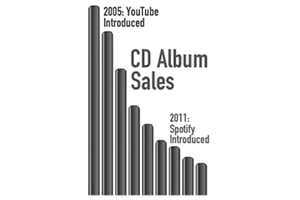
Tower Records was an American retail music chain that liquidated in 2006. The brand currently exists as an international franchise and an online music store. Tower.com was purchased by a separate entity and was not affected by the retail store closings.
Tower was founded in 1960 by Russell Solomon in Sacramento, California. The store was named after his father’s drugstore, which shared a building and name with the Tower Theater, where Solomon first started selling records. The first Tower Records store was opened in 1960 on Watt Avenue in Sacramento. By 1976, Solomon had opened Tower Books, Posters, and Plants at 1600 Broadway, next door to Tower Records. It was also one of the first retailers to move online in 1995 as Tower.com.
read more »
Posted in Art, Money, World |
Leave a Comment »
October 9, 2015


An alternative newspaper is a type of newspaper that eschews comprehensive coverage of general news in favor of stylized reporting, opinionated reviews and columns, investigations into edgy topics, and magazine-style feature stories highlighting local people and culture.
Its news coverage is more locally focused and their target audiences younger than those of daily newspapers. Typically, alternative newspapers are published in tabloid format and printed on newsprint. Most metropolitan areas of the United States and Canada are home to at least one alternative paper.
read more »
Posted in Art, Language, World |
1 Comment »
October 8, 2015

Massimo [ma-see-moh] Vignelli [veen-yell-ee] (1931 – 2014) was an Italian graphic and industrial designer who worked in a number of areas including product packaging, housewares, furniture, public signage, and showrooms. He was the co-founder of Vignelli Associates, with his wife, Lella. His ethos was, ‘If you can design one thing, you can design everything,’ and this was reflected in the broad range of his work. Vignelli worked firmly within the Modernist tradition, and focused on simplicity through the use of basic geometric forms in all his work.
His educational background was in architecture, which he studied at the Politecnico di Milano and later at the Università di Architettura, Venice. From 1957 to 1960, he visited America on a fellowship, and returned to New York in 1966 to start the New York branch of a new company, Unimark International, which quickly became, in scope and personnel, one of the largest design firms in the world.
read more »
Posted in Art, Money, World |
1 Comment »
October 2, 2015
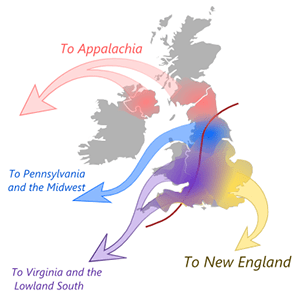
The traditional culture of the Southern United States has been called a ‘culture of honor,’ where people avoid intentionally offending others, and maintain a reputation for not accepting improper conduct by others. A prevalent theory as to why the American South had or may have this culture is an assumed regional belief in retribution to enforce one’s rights and deter predation against one’s family, home, and possessions.
Southern culture is thought to have its roots in the livelihoods of the early settlers who first inhabited the region. New England was mostly comprised of agriculturalist colonists from densely populated South East England and East Anglia, but the Southern United States was mostly settled by herders from Scotland, Northern Ireland, Northern England, and the West Country. Herds, unlike crops, are vulnerable to theft because they are mobile and there is little government wherewithal to enforce property rights of herd animals. A reputation for violent retribution against those who stole animals was a necessary deterrent at the time.
read more »
Posted in Politics, Science, World |
Leave a Comment »
September 29, 2015

A Short History of Progress is a nonfiction book and lecture series by Canadian author Ronald Wright about societal collapse. The lectures were delivered as a series of five speeches, each taking place in different cities across Canada as part of the 2004 ‘Massey Lectures’ (an annual series of lectures on a political, cultural or philosophical topic given in Canada by a noted scholar) which were broadcast on the CBC Radio program, ‘Ideas.’
Wright, an author of fiction and nonfiction works, uses the fallen civilizations of Easter Island, Sumeria, Rome, and Maya, as well as examples from the Stone Age, to see what conditions led to the downfall of those societies. He examines the meaning of progress and its implications for civilizations—past and present—arguing that the twentieth century was a time of runaway growth in human population, consumption, and technology that has now placed an unsustainable burden on all natural systems.
read more »
Posted in Language, Politics, World |
1 Comment »
September 24, 2015


Rent-seeking is attempting to take advantage of a pre-existing resource without improving it. According to Nobel Laureate economist Robert Shiller the classic example is that of a feudal lord who installs a chain across a river that flows through his land and then hires a collector to charge passing boats a fee (or rent of the section of the river for a few minutes) to lower the chain. There is nothing productive about the chain or the collector. The lord has made no improvements to the river and is helping nobody in any way, directly or indirectly, except himself. All he is doing is finding a way to make money from something that used to be free.
An example of rent-seeking in a modern economy is spending money on political lobbying for government benefits or subsidies in order to be given a share of wealth that has already been created, or to impose regulations on competitors, in order to increase market share.
read more »
Posted in Money, Politics, World |
1 Comment »
September 22, 2015

The X-Seed 4000 is the tallest building ever fully envisioned, meaning that the designs for construction have been completed. Developed by architect Peter Neville, its proposed 4-km height, 6-km wide sea-base, and 800-floor capacity could accommodate 500,000 to 1,000,000 inhabitants. Requiring over 3,000,000 tons of reinforced steel, the construction was estimated to cost US$300–900 billion, in 2006 dollars. It was designed for Tokyo by the Taisei Corporation in 1995 as a futuristic environment combining ultra-modern living and interaction with nature.
Unlike conventional skyscrapers, the X-Seed 4000 would be required to actively protect its occupants from considerable air pressure gradations and weather fluctuations along its massive elevation. Also, the proposed area is situated on the Pacific Ring of Fire, which is the most active volcano range in the world so the structure would be subject to tsunamis and earthquakes. The X-Seed 4000 ‘is never meant to be built,’ says Georges Binder, managing director of Buildings & Data, a firm which compiles data banks on buildings worldwide. ‘The purpose of the plan was to earn some recognition for the firm, and it worked.’
Posted in Technology, World |
Leave a Comment »


 The Daily Omnivore