December 15, 2014


Creolization [kree-uh-lahy-zey-shuhn] is the process of two or more cultures mixing, as happened in in the Americas between people of indigenous, African, and European descent. Creolization is traditionally used to refer to the Caribbean but can be extended to represent other diasporas. The mixing of populations creates a cultural melting pot which ultimately leads to the formation of new identities. Creolization also is the mixing of the ‘old’ and ‘traditional,’ with the ‘new’ and ‘modern.’
Furthermore, creolization occurs when participants actively select cultural elements that may become part of or inherited culture. Social scientist Robin Cohen states that Creolization is a condition in which ‘the formation of new identities and inherited culture evolve to become different from those they possessed in the original cultures,’ and then creatively merge these to create new varieties that supersede the prior forms.
read more »
Posted in Language, Politics, World |
1 Comment »
December 14, 2014

The pizza effect is a term used especially in religious studies and sociology for the phenomenon of elements of a nation or people’s culture being transformed or at least more fully embraced elsewhere, then re-imported back to their culture of origin, or the way in which a community’s self-understanding is influenced by (or imposed by, or imported from) foreign sources.
It is named after the idea that modern pizza was developed among Italian immigrants in the United States (rather than in native Italy where in its simpler form it was originally looked down upon), and was later exported back to Italy to be interpreted as a delicacy in Italian cuisine. Other culinary examples include chicken tikka masala, popularized in the UK before gaining prominence in India, and General Tso’s chicken, a dish unknown in China before it was introduced by chefs returning from the States.
read more »
Posted in Food, Philosophy, World |
Leave a Comment »
December 13, 2014

A fortune cookie is a folded wafer cookie with a piece of paper inside with words of wisdom, an aphorism, or a vague prophecy. The message may also include a Chinese phrase with translation or a list of lucky numbers used by some in lotteries (some of which have become actual winning numbers). Fortune cookies are often served as a dessert in Chinese restaurants in the United States and some other countries, but are absent in China.
The exact origin of fortune cookies is unclear, though various immigrant groups in California claim to have popularized them in the early 20th century, basing their recipe on a traditional Japanese cracker. Fortune cookies have been summarized as being ‘introduced by the Japanese, popularized by the Chinese, but ultimately … consumed by Americans.’ In 1992, Wonton Food of Brooklyn, NY attempted to expand its fortune cookie business into China, but gave up because the product was considered ‘too American.’
read more »
Posted in Food, World |
1 Comment »
December 13, 2014

An oyster pail is a folded, waxed, paper food container commonly used by American Chinese restaurants, traditionally with a handle made of solid wire (microwave-safe plastic handles are also available). In the US oyster pails are now available in standard sizes and can also serve as self-measuring containers, so that many take-out foods are sold in pints and quarts and packed into pails of the appropriate size. They can also be found in some European countries such as Germany and England, but are rarely seen in China. The container has the advantage of being inexpensive, durable, and fairly leakproof, as long as it is kept upright. The top usually includes a locking paperboard tab. The simple origami-like folded construction also allows for some escape of steam from hot food. If the sides are unfolded, the pail can also double as a makeshift plate, but it is more common to eat directly out of the container, a feat that the long reach of chopsticks makes possible.
The paperboard oyster pail was invented in the US around 1894, at a time when fresh oysters were more popular, more plentiful, and less expensive than they are at present. Since shucking oysters (removing the raw meat from the shell) can be difficult and dangerous, it was common to ask the oyster seller open them. The oyster pail provided an inexpensive and sanitary way to bring home shucked oysters. In the early 20th century oyster pails were also used to hold honey. In the mid-20th century, overfishing (and the subsequent rise in price) of oysters left manufacturers with a significant number of unsold oyster pails. However, in the US after World War II, there was a huge increase in sales of prepared foods that could be purchased from restaurants, and heated or finished at home. Chinese food proved to be a popular choice, since it was relatively inexpensive and traveled well. The oyster pail was quickly adopted for ‘Chinese takeout.’
Posted in Food, World |
Leave a Comment »
December 12, 2014

Knocking on wood, or to touch wood, refers to the apotropaic tradition (a ritual intended to ward off evil) of literally touching, tapping, or knocking on wood, or merely stating that you are doing or intend same, in order to avoid ‘tempting fate’ after making a favorable observation, a boast, or declaration concerning one’s own death or other situation beyond one’s control. The origin of this may be in Germanic folklore, wherein dryads (forest spirits) are thought to live in trees, and can be invoked for protection.
In Italy, ‘tocca ferro’ (‘touch iron’) is used, especially after seeing an undertaker or something related to death. In Iran, ‘bezan be takhteh’ (‘knock on the wood’) is said. The ‘evil eye,’ and being jinxed are common phobias and superstitions in Iranian culture. In old English folklore, ‘knocking on wood’ also referred to when people spoke of secrets – they went into the isolated woods to talk privately and ‘knocked’ on the trees when they were talking to hide their communication from evil spirits who would be unable to hear when they knocked. Another version holds that the act of knocking was to perk up the spirits to make them work in the requester’s favor. Yet another version holds that a sect of Monks who wore large wooden crosses around their necks would tap or ‘knock’ on them to ward away evil.
Posted in Language, Philosophy, World |
Leave a Comment »
December 5, 2014

Body worn video (BWV), including what is referred to as a body worn camera (BWC), is a video recording system that is typically utilized by law enforcement to record their interactions with the public, gather video evidence at crime scenes, and has been known to increase both officer and citizen accountability. BWCs are notable because their placement, often on the front of a shirt, provides for first person perspective and ultimately a more complete chain of evidence.
Body worn video was first adopted by British police in 2005, appearing in the form of small-scale tests conducted by the Devon and Cornwall Police. In 2006, the first significant deployments of BWV were undertaken as part of the Domestic Violence Enforcement Campaign. The basic command units equipped with the head cameras recorded everything that happened during an incident from the time of arrival which led to the ‘preservation of good-quality first disclosure evidence from the victim.’
read more »
Posted in Politics, Technology, World |
1 Comment »
December 3, 2014

Takako Konishi (1973 – 2001) was an office worker from Tokyo who was found dead in a field outside Detroit Lakes, Minnesota on November 15, 2001. Konishi had originally arrived in Minneapolis earlier that month, traveled to Bismarck, then to Fargo, and finally to Detroit Lakes, where she died. Her death was ruled a suicide, but it was insinuated by the media that she had died trying to locate the missing money hidden by Steve Buscemi’s character, Carl Showalter, in the 1996 film ‘Fargo,’ under the impression that the film was based on a true story. Investigations by American film writer/director Paul Berczeller discovered the entire ‘Fargo’ story had come about as the result of a misunderstanding between Konishi and one of the Bismarck police officers with whom she had been talking.
The story was then inflated by the media, leading to an urban legend. Instead, it was discovered, Konishi had been very depressed after losing her job at a Tokyo travel agency, and had come to Minneapolis because it was a place she had previously visited with her lover, a married American businessman. Depressed and lonely, Konishi had been wandering Detroit Lakes when she decided to commit suicide with an overdose of alcohol and sedatives. Her story was detailed in the 2003 documentary film ‘This Is a True Story,’ directed by Berczeller. In addition, the urban legend surrounding her death is the basis for the 2014 film ‘Kumiko, the Treasure Hunter.’
Posted in Death, World |
Leave a Comment »
November 29, 2014


Coffee culture describes a social atmosphere or series of associated social behaviors that depends heavily upon coffee, particularly as a social lubricant. The term also refers to the diffusion and adoption of coffee as a widely consumed stimulant by a culture. In the late 20th century, particularly in the Western world and urbanized centers on the globe, espresso has been an increasingly dominant form. Individuals that participate in cafe culture are sometimes referred to as ‘cafe au laiters’ and ‘espressonites.’
In many urban centers on the world, it is not unusual to see several espresso shops and stands within walking distance of each other or on opposite corners of the same intersection, typically with customers overflowing into parking lots. Thus, the term coffee culture is also used frequently in popular and business media to describe the deep impact of the market penetration of coffee-serving establishments.
read more »
Posted in Food, Politics, World |
1 Comment »
November 26, 2014


An aquiline [ak-wuh-lahyn] nose (also called a Roman nose or hook nose) is a human nose with a prominent bridge, giving it the appearance of being curved or slightly bent. The term is derived from the Latin word ‘aquilinus’ (‘eagle-like’) an allusion to the curved beak of an eagle. While some have ascribed the aquiline nose to specific ethnic, racial, or geographic groups, and in some cases associated it with other supposed non-physical characteristics (i.e. intelligence, status, personality, etc.), no scientific studies or evidence support any such linkage. As with many phenotypical expressions (i.e. ‘widow’s peak’, eye color, earwax type) it is found in many geographically diverse populations.
The aquiline nose was deemed a distinctive feature of some Native American tribes, members of which often took their names after their own characteristic physical attributes (i.e. The Hook Nose, or Chief Henry Roman Nose). In the depiction of Native Americans, for instance, an aquiline nose is one of the standard traits of the ‘noble warrior’ type. It is so important as a cultural marker, political scientist Renee Ann Cramer argued in ‘Cash, Color, and Colonialism’ (2005), that tribes without such characteristics have found it difficult to receive ‘federal recognition’ from the US government, resulting in failure to win benefits including tax-exempt status, reclamation rights, and (perhaps most significantly) the right to administer and profit from casinos.
read more »
Posted in Politics, Science, World |
1 Comment »
November 25, 2014

An origin myth is a myth that purports to describe the origin of some feature of the natural or social world. One type of origin myth is the cosmogonic myth, which describes the creation of the world. However, many cultures have stories set after the cosmogonic myth, which describe the origin of natural phenomena and human institutions within a preexisting universe. In Western classical scholarship, the terms ‘etiological myth’ and ‘aition’ (Ancient Greek: ’cause’) are sometimes used for a myth that explains an origin, particularly how an object or custom came into existence.
Every origin myth is a tale of creation describing how some new reality came into existence. In many cases, origin myths also justify the established order by explaining that it was established by sacred forces. The distinction between cosmogonic myths and origin myths is not clear-cut. A myth about the origin of some part of the world necessarily presupposes the existence of the world—which, for many cultures, presupposes a cosmogonic myth. In this sense, one can think of origin myths as building upon and extending their cultures’ cosmogonic myths. In fact, in traditional cultures, the recitation of an origin myth is often prefaced with the recitation of the cosmogonic myth.
read more »
Posted in Philosophy, Politics, World |
Leave a Comment »
November 21, 2014
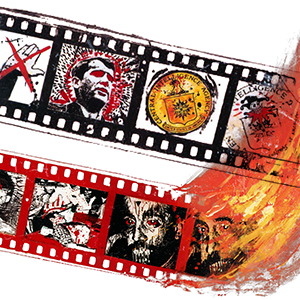
The Christic [kris-tik] Institute was a public interest law firm founded in 1980 by Daniel Sheehan, his wife, Sara Nelson and their partner, William J. Davis, a Jesuit priest, after the successful conclusion of their work on the Silkwood case. Karen Silkwood was an American chemical technician and labor union activist known for raising concerns about worker safety in a nuclear facility. She is most famous for her mysterious death, which was the subject of a victorious lawsuit against the chemical company Kerr-McGee.
Based on the ecumenical teachings of French philosopher and Jesuit Pierre Teilhard de Chardin, and on the lessons they learned from their experience in the Silkwood fight, the Christic Institute combined investigation, litigation, education and organizing into a unique model for social reform in the United States. Christic represented victims of the nuclear disaster at Three Mile Island; they prosecuted KKK members for killing civil rights demonstrators in the Greensboro Massacre, and they defended Catholic workers providing sanctuary to Salvadoran refugees (American Sanctuary Movement).
read more »
Posted in Politics, War, World |
Leave a Comment »
November 11, 2014

The Master suppression techniques (also known as domination techniques), articulated in 1945 by Norwegian psychologist and philosopher Ingjald Nissen, is an outline of ways to indirectly suppress and humiliate opponents. In the late 1970s the framework was popularized by Norwegian social psychologist Berit Ås, who reduced Nissen’s original nine means to five, and claimed this was a technique mostly used in the workplace by men against women. Master suppression techniques are defined as strategies of social manipulation by which a dominant group maintains such a position in a (established or unexposed) hierarchy. They are very prominent in Scandinavian scholarly and public debate.
The five master suppression techniques are: Making Invisible (silencing or otherwise marginalizing persons in opposition by ignoring them), Ridiculing (portraying opponents and their arguments as absurd and worthy of mocking), Withholding Information (excluding opponents from the decision making process, or limiting their access to information so as to make them less able to make an informed choice), Double Binding (punishing or otherwise belittling the actions of opponents, regardless of how they act), and Blaming and Shaming (embarrassing opponents by insinuating that they are themselves to blame for their position).
read more »
Posted in Language, Politics, World |
Leave a Comment »


 The Daily Omnivore