June 12, 2014
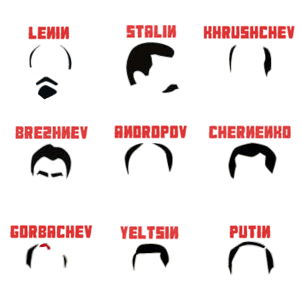
Bald–hairy is a common Russian joke that there is, apparently, a strict rule applying to the country’s politics for the latest two centuries: a bald (or balding) state leader is succeeded by a non-bald (‘hairy’) one, and vice versa. Whilst this pattern is most likely a coincidence, it has held true since 1825 (with the exception of Georgy Malenkov, who was Premier of the Soviet Union from 1953 to 1955), starting from Nicholas I. However, some videos of Joseph Stalin at the Potsdam Conference showed that he was balding.
Nicholas I’s son Alexander II formed the first ‘bald–hairy’ pair of the sequence with his father. The current pair of Russian rulers are the balding Vladimir Putin and the hairy Dmitry Medvedev. Putin was the president from 2000 until 2008, Medvedev held the post until 2012, and Putin became president again in 2012.
read more »
Posted in Humor, Politics, World |
1 Comment »
June 4, 2014
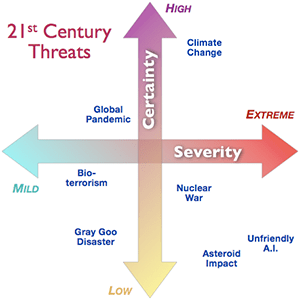

Ecophagy [ih-koh-fuh-jee] is a term coined by molecular engineering scientist Robert Freitas that means the literal consumption of an ecosystem. He wrote: ‘Perhaps the earliest-recognized and best-known danger of molecular nanotechnology is the risk that self-replicating nanorobots capable of functioning autonomously in the natural environment could quickly convert that natural environment (e.g., ‘biomass’) into replicas of themselves (e.g., ‘nanomass’) on a global basis, a scenario usually referred to as the ‘grey goo problem’ but perhaps more properly termed ‘global ecophagy.”
The term has since been used to describe several other world destroying events including nuclear war, catastrophic monoculture (lack of biodiversity in farming), and mass extinction due to climate change. Scholars suggest that these events might result in ecocide in that they would undermine the capacity of the Earth’s biological population to repair itself. Others suggest that more mundane and less spectacular events—the unrelenting growth of the human population, the steady transformation of the natural world by human beings—will eventually result in a planet that is considerably less vibrant, and one that is, apart from humans, essentially lifeless.
Posted in Death, Technology, World |
Leave a Comment »
June 1, 2014
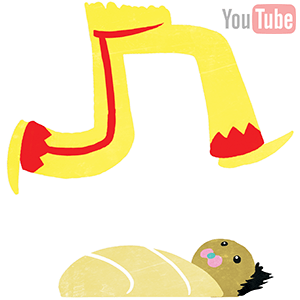
Baby jumping (‘El Colacho’) is a traditional Spanish holiday dating back to 1620 that takes place annually to celebrate the Catholic feast of Corpus Christi in the village of Castrillo de Murcia in northern Spain. During the act, known as ‘El Salto del Colacho’ (‘the devil’s jump’), men dressed as the Devil (the Colacho) jump over babies born during the previous twelve months of the year who lie on mattresses in the street. The Brotherhood of Santísimo Sacramento de Minerva organizes the week-long festivities which culminate on Sunday when the Colacho jumps over the babies on the mattresses placed on the procession route traversing the town.
The festival has been rated as one of the most dangerous in the world. The origins of the tradition are unknown but it is said to cleanse the babies of original sin, ensure them safe passage through life and guard against illness and evil spirits. In recent years, Pope Benedict has asked Spanish priests to distance themselves from El Colacho, and to downplay the tradition’s connection with Catholicism. The Church still teaches that it is baptism by water, not a giant leap by an airborne devil, which cleanses the soul of original sin.
Posted in Games, Philosophy, World |
Leave a Comment »
May 19, 2014

A cyanometer [sahy-uh-nom-i-ter] (from cyan and -meter) is an instrument for measuring ‘blueness,’ specifically the color intensity of blue sky. It is attributed to Swiss aristocrat, physicist, and mountaineer Horace-Bénédict de Saussure. It consists of squares of paper dyed in graduated shades of blue and arranged in a color circle or square that can be held up and compared to the color of the sky. The blueness of the atmosphere indicates transparency and the amount of water vapor.
De Saussure is credited with inventing a cyanometer in 1789 with 53 sections, ranging from white to varying shades of blue (dyed with Prussian blue) and then to black, arranged in a circle; he used the device to measure the color of the sky at Geneva, Chamonix and Mont Blanc. He concluded, correctly, that the color of the sky was dependent on the amount of suspended particles in the atmosphere.
Posted in Science, Technology, World |
Leave a Comment »
May 12, 2014


The Christ myth theory (also known as ‘Jesus mythicism’) is the proposition that Jesus of Nazareth as described in the New Testament was mythical, although others define it more strictly that Jesus never existed in any form. The thesis that Jesus was invented by the Christian community after 100 CE was first put forward in the late 18th century and then popularized in the 19th century by German philosopher Bruno Bauer who proposed a three-fold argument still used by many myth proponents today: the New Testament has no historical value, non-Christian writers of the first century failed to mention Jesus, and Christianity had pagan and mythical beginnings.
Despite the debate in popular culture and on the Internet, the position that Jesus did not exist is not held by most professional historians, nor the vast majority of New Testament scholars. Classical historian Michael Grant states that, ‘Modern critical methods fail to support the Christ myth theory…[It has] again and again been answered and annihilated by first rank scholars.’ Other scholars, mostly based in Europe, however, argue their colleagues should remain more open to this possibility and that the debate on the historicity of Jesus is not over.
read more »
Posted in Philosophy, World |
Leave a Comment »
May 9, 2014
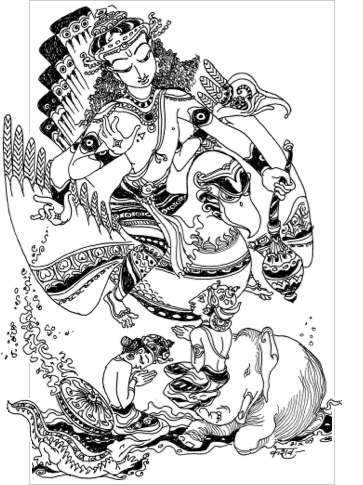
Moksha [mohk-shuh] (Sanskrit: ‘freedom’) is the ultimate goal of personal spiritual development in Hinduism. According to Vedanta (an orthodox school of Hindu philosophy), life is a endless cycle of birth, death, and rebirth into a physical universe that is actually an illusion. Hindu scriptures describe Moksha as the spiritual liberation from this cycle and the achievement of an eternal and blissful emptiness that transcends all of the joys, pain, and sorrow of the physical body or corporeal life. It is the goal of Hindu practitioners to achieve Moksha through the practice of Yoga (physical, mental, and spiritual disciplines), such as Jnana Yoga (knowledge), Karma Yoga (work), and Bhakti Yoga (reciting prayers and worshiping God).
Moksha is a Vedic term, dating to 1750-500 BCE, a period in Indian history during which the Indo-Aryans settled into northern India. Scholars disagree about the precise relationship between the Moksha of Vedanta Hinduism and the Nirvana of Buddhism, but there is agreement that they are closely related historically and philosophically. Similarities can be found between Moksha and some concepts found in the Upanishads, a collection of Vedic texts which contain the earliest emergence of some of the central religious concepts of Hinduism, Buddhism, and Jainism.
Posted in Philosophy, World |
Leave a Comment »
May 8, 2014

A supercentenarian [soo-per-sen-tn-air-ee-uhn] is someone who has lived to or passed his/her 110th birthday. This age is achieved by about one in 1,000 centenarians. Research on the morbidity of supercentenarians has found that they remain free of major age-related diseases (e.g., stroke, cardiovascular disease, dementia, cancer, Parkinson’s disease, and diabetes) until the very end of life when they die of exhaustion of organ reserve, which is the ability to return organ function to homeostasis. About 10% survive until the last 3 months of life without major age-related diseases as compared to only 4% of semisupercentenarians (age range 105–109 years) and 3% of centenarians.
There are estimated to be 200–350 living supercentenarians in the world, though only about 70 cases have been verified. A study conducted in 2010 showed that the countries with the most known supercentenarians (living and dead, in order of total) were the United States, Japan, the United Kingdom, France, and Italy. The first verified supercentenarians in human history died in the late 19th century. Until the 1980s, the oldest age attained by supercentenarians was 115, but this has now been surpassed. To date there are 30 verified cases of people who have lived to the age of 115 or more. Of these cases, ten individuals are known to have reached 116 years of age (or older).
Posted in Health, World |
Leave a Comment »
May 6, 2014

The Long Peace is a term for the historical period following the end of World War II in 1945. The ensuing half century was marked by the absence of major wars between the great powers of the period, the USA and the USSR, who were locked in a Cold War. Following the collapse of the Soviet Union in 1991 and the rise of China as a major power, there followed two decades of continued absence of direct conflict between major states, though lesser military conflicts occurred.
It is speculated that the obvious political errors leading to World War I and World War II with their consequent horrors and, thereafter, the acquisition of thermonuclear weapons by the opposing powers of the United States and the Soviet Union exerted a restraining influence on the leaderships of the major powers. A jockular expression in Europe to describe the strangely long stretch of peace is: ‘It has been 2,000 years since an army has not crossed the Rhine for so long a time.’
Posted in Politics, War, World |
Leave a Comment »
May 5, 2014

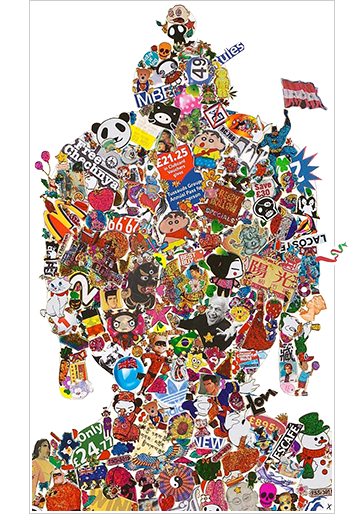
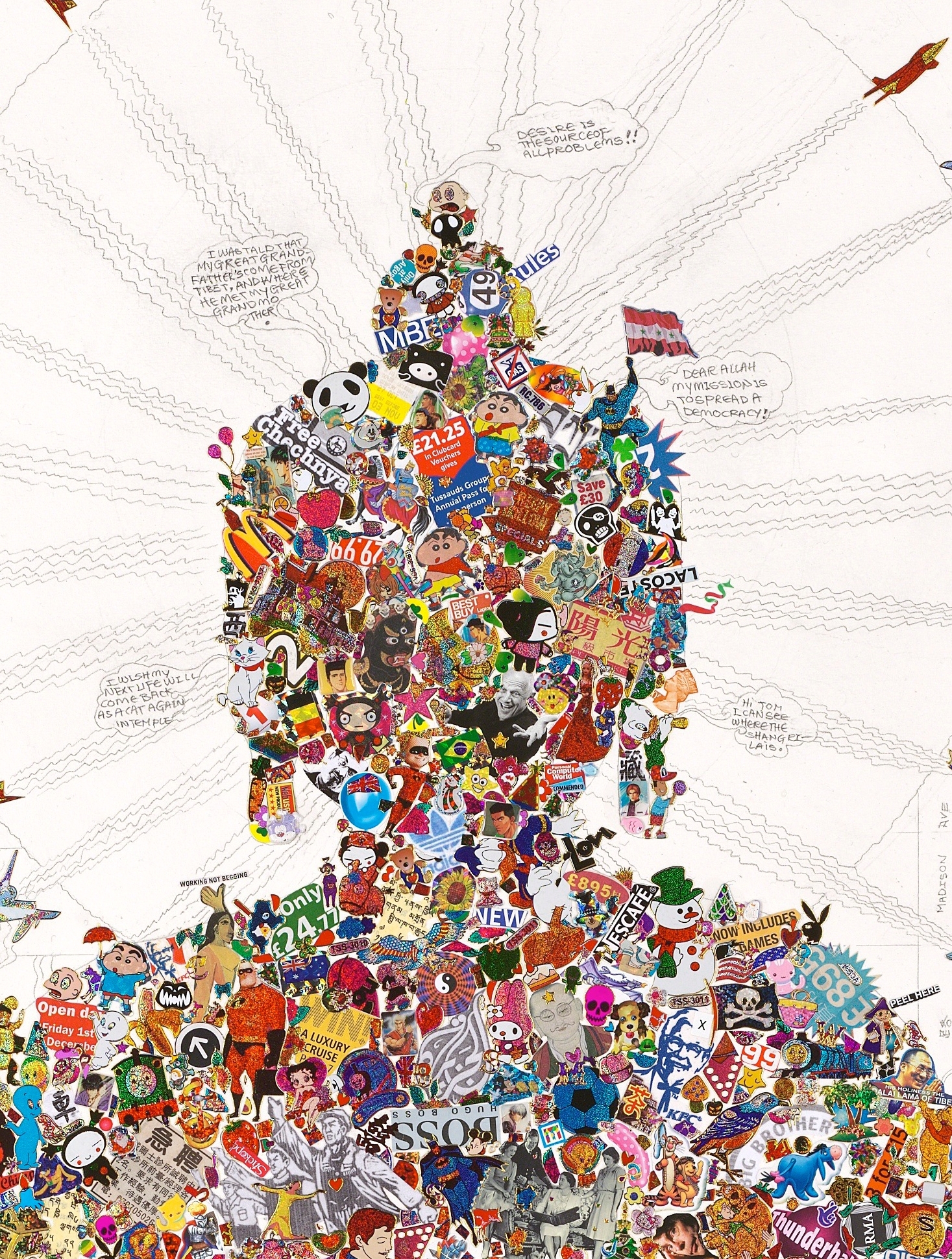
Secular Buddhism is a broad term for an emerging form of Buddhism that is based on humanist, naturalist, and/or agnostic values and pragmatism rather than religious – or more specifically supernatural – beliefs. Secular Buddhists interpret the teachings of the Buddha and the Buddhist texts in a rationalist and often evidentialist manner, considering the historical and cultural contexts of the times in which they were written and the period in which the Buddha lived.
Secular Buddhists eschew mythological and superstitious elements of traditional Buddhism such as supernatural beings (devas, bodhisattvas, nāgas, pretas, Buddhas), merit (an accumulation of good deeds which carries over to subsequent incarnations), supernatural karma (actions, both good and bad, come back to us in the future), rebirth, Buddhist cosmology (including the existence of pure lands and hells). Some of traditional Buddhism’s secular ethics have also been called into questions such as conservative stances on abortion and homosexuality
read more »
Posted in Philosophy, World |
Leave a Comment »
May 3, 2014


A cognitive radio is a transceiver that dynamically switches between optimal wireless channels in its vicinity. It automatically detects available channels, then accordingly changes its transmission or reception parameters to allow more concurrent wireless communications in a given spectrum band at one location. This process is a form of dynamic spectrum management.
The cognitive engine is capable of configuring waveform, protocol, operating frequency, and networking parameters. Units can exchange information about the environment with the networks it accesses and other cognitive radios (CRs). A CR ‘monitors its own performance continuously,’ in addition to ‘reading the radio’s outputs’; it then uses this information to ‘determine the RF environment, channel conditions, link performance, etc.’, and adjusts the ‘radio’s settings to deliver the required quality of service subject to an appropriate combination of user requirements, operational limitations, and regulatory constraints.’
read more »
Posted in Politics, Technology, World |
Leave a Comment »
April 29, 2014

An unconditional basic income (also called basic income, basic income guarantee, universal basic income, universal demogrant, or citizen’s income) is a proposed system of social security in which all citizens or residents of a country regularly receive an unconditional sum of money, either from a government or some other public institution, in addition to any income received from elsewhere.
A basic income is typically intended to be only enough for a person to survive on, so as to encourage people to engage in economic activity. A basic income of any amount less than the social minimum is sometimes referred to as a ‘partial basic income.’ On the other hand, it should be high enough so as to facilitate any socially useful activity someone could not afford to engage in if dependent on working for money to earn a living.
read more »
Posted in Money, Politics, World |
1 Comment »
April 28, 2014
A wealth tax is a levy based on the aggregate value of all household assets (e.g. owner-occupied housing; cash, bank deposits, money funds, and savings in insurance and pension plans; investment in real estate and unincorporated businesses; and corporate stock, financial securities, and personal trusts). A wealth tax is a tax on the accumulated stock of purchasing power, in contrast to income tax, which is a tax on the flow of assets (a change in stock).
Some governments require declaration of the taxpayer’s balance sheet (assets and liabilities), and from that ask for a tax on net worth (assets minus liabilities), as a percentage of the net worth, or a percentage of the net worth exceeding a certain level. The tax is in place for both natural persons and, in some cases, legal persons such as corporations. In France, the net worth tax on natural persons is called the ‘solidarity tax on wealth.’ In other places, the tax may be called a ‘capital tax,’ an ‘equity tax,’ a ‘net worth tax,’ a ‘net wealth tax,’ or just a ‘wealth tax.’
read more »
Posted in Money, Politics, World |
Leave a Comment »


 The Daily Omnivore