November 7, 2013

Hawala [ha-wah-lah] (Arabic: ‘transfer’) is an informal value transfer system based on the performance and honor of a huge network of money brokers, primarily located in the Middle East, North Africa, the Horn of Africa, and the Indian subcontinent, operating outside of, or parallel to, traditional banking, financial channels, and remittance systems.
The system is believed to have arisen in the financing of long-distance trade around the emerging capital trade centers in the early medieval period. In South Asia, it appears to have developed into a fully-fledged money market instrument, which was only gradually replaced by the instruments of the formal banking system in the first half of the 20th century. Today, hawala is probably used mostly for migrant workers’ remittances to their countries of origin.
read more »
Posted in Money, Philosophy, World |
Leave a Comment »
October 31, 2013

Seawise Giant, later ‘Happy Giant,’ ‘Jahre Viking,’ ‘Knock Nevis,’ ‘Oppama,’ and finally ‘Mont,’ was an Ultra Large Crude Carrier (ULCC) supertanker and the longest ship ever built. She possessed the greatest deadweight tonnage ever recorded.
Fully laden, her displacement was 724,239 tons, the heaviest ship of any kind, and with a draft of 81 ft (the distance between the waterline and the bottom of the hull), she was incapable of navigating the English Channel, the Suez Canal or the Panama Canal. Overall, she was generally considered the largest ship ever built, as well as the largest self-propelled human-made object ever built.
read more »
Posted in Money, Technology, World |
Leave a Comment »
October 30, 2013


Slow TV is a genre of live ‘marathon’ television coverage of an ordinary event in its complete length. Its name is derived both from the long endurance of the broadcast as well as from the natural slow pace of the television program’s progress. The concept is an modernization of artist Andy Warhol’s slow movie ‘Sleep’ from 1963, which showed poet John Giorno sleeping for six hours.
The concept was adapted to local TV broadcast in 1966 by WPIX in NYC for a Christmastime ‘yule log’ (a looped film of a log burning in a fireplace, accompanied by classic Christmas music, broadcast without commercial interruption).
read more »
Posted in Humor, World |
Leave a Comment »
October 26, 2013

The Kessler syndrome (proposed by the NASA scientist Donald J. Kessler in 1978) is a scenario in which the density of objects in low Earth orbit is high enough that collisions between objects could cause a cascade—each collision generating space debris which increases the likelihood of further collisions.
One implication is that the distribution of debris in orbit could render space exploration, and even the use of satellites, infeasible for many generations. Every satellite, space probe, and manned mission has the potential to create space debris. A cascading Kessler syndrome becomes more likely as satellites in orbit increase in number and old satellites become inoperative.
Posted in Technology, World |
Leave a Comment »
October 22, 2013


SCS Software is a Czech video game development company. It primarily produces simulation games, including the ’18 Wheels of Steel’ (based on truck driving in North America) and ‘Euro Truck Simulator’ series. Other titles include ‘Bus Driver,’ ‘Scania Truck Driving Simulator,’ as well as the ‘Hunting Unlimited’ series. SCS Software has also published several screensavers.
In 2013, SCS Software announced ‘World of Trucks’ with its official motto: ‘One Trucking Game to Rule them All.’ The expected map will feature over 150 countries and more than 600 cities, more than 20 truck brands, more than 70 cargo types, and more than 50 fictional or real companies.
Posted in Games, Humor, World |
Leave a Comment »
October 19, 2013
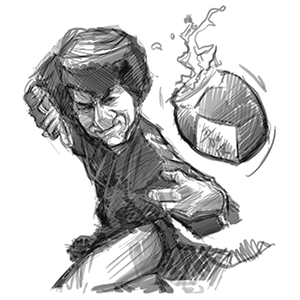
Zui quan is a concept in traditional Chinese martial arts literally meaning ‘drunken fist,’ the term is also commonly translated as drunken boxing.
Zui quan has the appearance of a drunkard’s movements. The postures are created by momentum and weight of the body, and imitation is generally through staggering and certain type of fluidity. It is considered to be among the most difficult wushu styles to learn due to the need for powerful joints and fingers. While in fiction practitioners of zui quan are often portrayed as being actually intoxicated, the actual practice is usually performed sober.
read more »
Posted in Drugs, World |
Leave a Comment »
October 17, 2013

La Sape, an abbreviation based on the phrase ‘Société des Ambianceurs et des Personnes Élégantes’ (‘The Society for the Advancement of Elegant People’) is a social movement centered in Brazzaville, the capital of the Republic of Congo. It embodies the elegance in style and manners of colonial predecessor dandies as a means of resistance.
A dandy is a man unduly concerned with his appearance in fashion and manners. The word ‘sape’ means ‘dress’ and it corresponds to the intransitive verb ‘se saper’ which mean ‘to dress fashionably.’ This term made its first appearance in French vocabulary in 1926 and referred to the Parisian socialites and the ‘fashion energy’ they displayed during the Roaring Twenties.
read more »
Posted in Money, Politics, World |
Leave a Comment »
October 16, 2013

‘The Fox (What Does the Fox Say?)’ is a 2013 electronic dance music song and viral video by Norwegian comedy duo Ylvis. Brothers Vegard and Bård Ylvisåker produced the song and music video to promote the upcoming season of their television talk show ‘Tonight with Ylvis.’ Vegard was initially skeptical about making a song about a fox, but soon relented, saying in an interview:
‘The way we work is we just sit around and talk about things and get ideas and take some notes. I guess we must have been talking about what sound a fox makes. And then we had a chance to work with Stargate, a production company in New York City… We actually did a favor for them and we asked them if they could produce a song for the new season in exchange.’
Posted in Art, Humor, World |
Leave a Comment »
October 15, 2013

Mothra is a kaiju, a type of fictional monster who first appeared in the serialized novel ‘The Luminous Fairies and Mothra.’ Since her film début in the 1961 film ‘Mothra,’ she has appeared in several Toho tokusatsu films. Mothra is a giant lepidopteran with characteristics both of butterflies and of moths.
She closely resembles an Inachis io, or a European Peacock Butterfly, but it is said that the Atlas moth is its inspiration. The name ‘Mothra’ is the suffixation of ‘-ra’ (a common last syllable in kaiju names (e.g. ‘Goji-ra’ [Godzilla]) to ‘moth’; since the Japanese language does not have dental fricatives, it is approximated ‘Mosura’ in Japanese.
read more »
Posted in Art, Humor, World |
1 Comment »
October 14, 2013
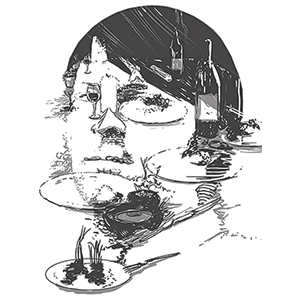
René Redzepi (b. 1977) is a Danish chef and co-owner of the two-Michelin star restaurant Noma in Copenhagen. Redzepi is noted for his work for the reinvention and refinement of a new Nordic cuisine and food that is characterized by inventiveness and clean flavors. He trained at Pierre André in Copenhagen, before visiting El Bulli in Spain as a guest in 1998 and subsequently working there during the following season.
Back in Copenhagen he started working at Kong Hans Kælder which had been one of the city’s leading gourmet restaurants since the mid-1970s. In 2001 he spent four months working at French Laundry in California but returned to Kong Hans Kælder. In 2002, Redzepi was contacted by Claus Meyer, who had been offered to operate a restaurant at the North Atlantic House, a former 18th century warehouse which was being turned into a cultural centre for the North Atlantic region. Noma was opened in 2004 with Redzepi as the head chef.
Posted in Food, World |
Leave a Comment »
October 8, 2013

Northern soul is a music and dance movement that emerged, initially in Northern England in the late 1960s, from the British mod scene (a youth subculture). Northern soul is devoted to American soul music based on the heavy beat and fast tempo of the mid-1960s Tamla Motown sound.
The movement, however, generally eschews Motown or Motown-influenced music that has met with significant mainstream success. The recordings most prized by enthusiasts of the genre are usually by lesser-known artists, and were initially released only in limited numbers, often by small regional United States labels such as Ric-Tic and Golden Records (Detroit), Mirwood (Los Angeles) and Shout and Okeh (New York/Chicago).
read more »
Posted in Art, World |
Leave a Comment »
September 29, 2013

Bridge and tunnel (B&T) is a pejorative term for people who travel to Manhattan Island from surrounding communities, a commute that requires passing over a bridge and/or through a tunnel. Though the term originates from the Triborough Bridge and Tunnel Authority, which services the five boroughs that comprise New York City, it has come to encompass all people who originate commute from outside of Manhattan, including the four other boroughs, Connecticut, Long Island, New Jersey, and northern counties, such as Orange, Rockland, and Westchester.
As the Oxford Dictionaries explains: a bridge-and-tunnel person is one who lives in the suburbs and is perceived as unsophisticated.
read more »
Posted in Language, Money, World |
Leave a Comment »


 The Daily Omnivore