June 3, 2013

Kintsugi (‘golden joinery’) or Kintsukuroi (golden repair) is the Japanese art of fixing broken pottery with a lacquer resin sprinkled with powdered gold. Kintsugi may have originated when shogun Ashikaga Yoshimasa sent a damaged Chinese tea bowl back to China for repairs in the late 15th century.
When it was returned repaired with ugly metal staples, it may have prompted Japanese craftsmen to look for a more aesthetic means of repair. Collectors became so enamored of the new art that some were accused of deliberately smashing valuable pottery so it could be repaired with the gold seams of kintsugi. Kintsugi became closely associated with the ceramic utensils used for Japanese tea ceremony.
Posted in Art, World |
Leave a Comment »
May 29, 2013

Wank Week was a controversial season of television programming that was due to be broadcast in the United Kingdom by Channel 4, expected to consist of a series of three documentary programs about masturbation. However, plans to broadcast it in 2007 came under public attack from senior television figures, and the planned broadcasts were pulled amid claims of declining editorial standards and controversy over the channel’s public service broadcasting credentials.
While ‘Wank Week’ itself has been cancelled, the films it was meant to showcase may yet be broadcast by the channel at a later date.
read more »
Posted in Politics, Sex, World |
Leave a Comment »
May 24, 2013


Star Wars, the popular science fantasy saga, and cultural touchstone, is acknowledged to have been inspired by many sources. These include Hinduism, Qigong (‘Life Energy Cultivation’), Greek philosophy, Greek mythology, Roman history, Roman mythology, parts of the Abrahamic religions, Confucianism, Shintō, and Taoism, not to mention countless cinematic precursors including Akira Kurosawa and Sergio Leone.
George Lucas has said that chivalry, knighthood, paladinism, and related institutions in feudal societies inspired some concepts in the Star Wars movies, most notably the Jedi Knights. The work of the mythologist Joseph Campbell, most notably his book ‘The Hero with a Thousand Faces,’ directly influenced Lucas, and was what drove him to create the ‘modern myth’ of ‘Star Wars.’ The supernatural flow of energy known as The Force is believed to have originated from the concept of prana, or ki/qi/chi, ‘the all-pervading vital energy of the universe.’
read more »
Posted in Art, War, World |
Leave a Comment »
May 24, 2013

The Hidden Fortress is a 1958 jidai-geki (period drama) film directed by Akira Kurosawa and starring Toshiro Mifune as General Makabe Rokurōta and Misa Uehara as Princess Yuki. The film begins with two bedraggled peasants, Tahei and Matashichi (Minoru Chiaki and Kamatari Fujiwara).
Through conversation, they reveal that they had intended to fight with the Yamana clan, but turned up too late, were taken for soldiers of the defeated Akizuki clan, and forced to bury dead. After quarreling and splitting up, the two are both captured again and forced to dig for gold in the Akizuki castle with other prisoners.
read more »
Posted in Art, World |
Leave a Comment »
May 24, 2013

Abenomics [ah-bey-nom-iks] refers to the economic policies advocated by Shinzō Abe, the current Prime Minister of Japan. It consists of monetary policy, fiscal policy, and economic growth strategies to encourage private investment.
The detailed policies includes inflation targeting at a 2% annual rate, correction of the excessive yen appreciation, setting negative interest rates, radical quantitative easing (printing money), expansion of public investment, buying operations of construction bonds by Bank of Japan (BOJ), and revision of the Bank of Japan Act.
read more »
Posted in Money, Politics, World |
Leave a Comment »
May 22, 2013

Transcreation is a term used chiefly by advertising and marketing professionals to refer to the process of adapting a message from one language to another, while maintaining its intent, style, tone and context. A successfully transcreated message evokes the same emotions and carries the same implications in the target language as it does in the source language.
Increasingly, transcreation is used in global marketing and advertising campaigns as advertisers seek to transcend the boundaries of culture and language. It also takes account of images which are used within a creative message, ensuring that they are suitable for the target local market.
read more »
Posted in Language, Money, World |
Leave a Comment »
May 20, 2013
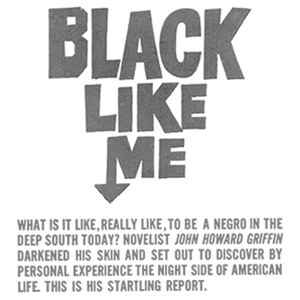
Racial passing refers to a person classified as a member of one racial group attempting to be accepted as a member of a different racial group.
The term was used especially in the U.S. to describe a person of mixed-race heritage assimilating into the white majority during times when legal and social conventions of hypodescent classified the person as a minority, subject to racial segregation and discrimination.
read more »
Posted in Politics, World |
Leave a Comment »
May 12, 2013

The word ‘tomato‘ may refer to the plant (Solanum lycopersicum) or the edible, typically red, fruit that it bears. Having originated in America, the tomato was spread around the world following the Spanish colonization of the Americas, and its many varieties are now widely grown, often in greenhouses in cooler climates.
The tomato is consumed in diverse ways, including raw, as an ingredient in many dishes and sauces, and in drinks. While it is botanically a fruit (a plant structure that contains its seeds), it is considered a vegetable for culinary purposes. The fruit is rich in lycopene (a carotene), which may have beneficial health effects.
read more »
Posted in Food, Language, World |
Leave a Comment »
May 2, 2013

Brooklyn has played a major role in various aspects of American culture including literature, cinema and theater as well as being home to the world renowned Brooklyn Academy of Music and to the second largest public art collection in the United States which is housed in the Brooklyn Museum. Walt Whitman wrote of the Brooklyn waterfront in his classic poem ‘Crossing Brooklyn Ferry.’ Harlem Renaissance playwright Eulalie Spence taught at Eastern District High School in Brooklyn from 1927 to 1938, a time during which she wrote her critically acclaimed plays ‘Fool’s Errand,’ and ‘Her.’
In 1930, poet Hart Crane published the epic poem ‘The Bridge,’ using the Brooklyn Bridge as central symbol and poetic starting point. The novels of Henry Miller include reflections on several of the ethnic German and Jewish neighborhoods of Brooklyn during the 1890s and early 20th century; his novels ‘Tropic of Capricorn’ and ‘The Rosy Crucifixion’ include long tracts describing his childhood and young adulthood spent in the Borough.
read more »
Posted in Art, Language, World |
1 Comment »
April 30, 2013

Cultural imperialism is defined as the cultural aspects of imperialism. Imperialism, here, is referring to the creation and maintenance of unequal relationships between civilizations favoring the more powerful civilization. Therefore, it can be defined as the practice of promoting and imposing a culture, usually of politically powerful nations over less potent societies. It is the cultural hegemony of those industrialized or economically influential countries, which determine general cultural values and standardize civilizations throughout the world.
Many scholars employ the term, especially those in the fields of history, cultural studies, and postcolonial theory. It is usually used in a pejorative sense, often in conjunction with a call to reject such influence. Cultural imperialism can take various forms, such as an attitude, a formal policy, military action, so long as it reinforces cultural hegemony.
read more »
Posted in Philosophy, Politics, World |
3 Comments »
April 30, 2013

Disneyfication is a term which describes the transformation of something, usually society at large, to resemble The Walt Disney Company’s theme parks.
The latter term appears in Sharon Zukin’s book, ‘The Cultures of Cities’ (1996), and was popularized by Alan Bryman (Professor of Organizational and Social Research at the University of Leicester) in a 2004 book, ‘The Disneyization of Society.’ Disneyfication of urban space is explored in sociologist Jeff Ferrell’s ‘Tearing Down the Streets: Adventures in Urban Anarchy.’
read more »
Posted in Money, World |
Leave a Comment »
April 30, 2013
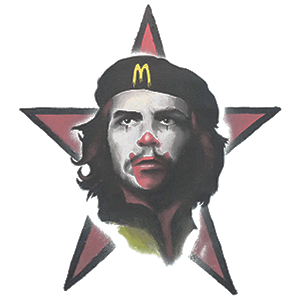
McDonaldization is a term used by sociologist George Ritzer in his book ‘The McDonaldization of Society’ (1993). He explains it occurs when a culture possesses the characteristics of a fast-food restaurant.
McDonaldization is a reconceptualization of rationalization (moving from an ad-hoc system into one that is based on a set of published rules). Where German political economist Max Weber used the model of the bureaucracy to represent the direction of this change in society, Ritzer sees the fast-food restaurant as having become a more representative contemporary paradigm.
read more »
Posted in Food, Money, World |
2 Comments »


 The Daily Omnivore