April 3, 2013
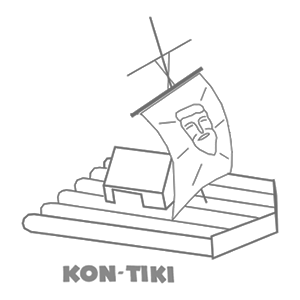
Experimental archaeology puts archaeological source material, like ancient structures or artifacts, to real world tests. It should not be confused with primitive technology which is not concerned with any archaeological or historical evidence. Living history and historical reenactment, which are generally undertaken as a hobby, are the lay person’s version of this academic discipline.
One of the main forms of experimental archaeology is the creation of copies of historical structures using only historically accurate technologies. This is sometimes known as reconstruction archaeology or reconstructional archaeology; however, reconstruction implies an exact replica of the past, when it is in fact just a construction of one person’s idea of the past; the more archaeologically correct term is a ‘working construction of the past.’
read more »
Posted in Science, Technology, World |
Leave a Comment »
April 3, 2013
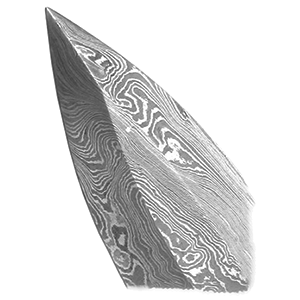
Damascus steel was a type of steel used in Middle Eastern swordmaking. Damascus steel was created from wootz steel, a steel developed in India around 300 BCE. These swords are characterized by distinctive patterns of banding and mottling reminiscent of flowing water.
Such blades were reputed to be tough, resistant to shattering and capable of being honed to a sharp, resilient edge. The original method of producing Damascus steel is not known. Recreating Damascus steel is a subfield of experimental archaeology. Many have attempted to discover or reverse-engineer the process by which it was made.
read more »
Posted in Technology, World |
Leave a Comment »
April 3, 2013
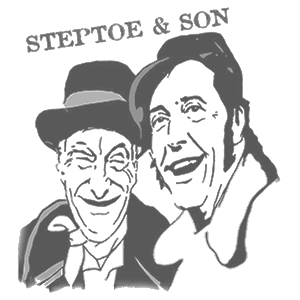
A rag-and-bone man collects unwanted household items and sells them to merchants. Traditionally this was a task performed on foot, with the scavenged materials (which included rags, bones and various metals) kept in a small bag slung over the shoulder.
Some wealthier rag-and-bone men used a cart, sometimes pulled by horse. 19th-century rag-and-bone men typically lived in penury, surviving on the proceeds of what they collected each day. Conditions improved following the Second World War, but the trade declined during the latter half of the 20th century. Lately, however, due in part to the soaring price of scrap metal, rag-and-bone men can once again be seen at work.
read more »
Posted in Money, World |
Leave a Comment »
April 2, 2013

The Zabbaleen (Egyptian Arabic: ‘Garbage people’) are teenagers and adults who have served as Cairo’s informal garbage collectors for the past 70 to 80 years. They are also known as ‘Zarraba’ (‘pig-pen operators’).
Spread out among seven different settlements scattered in the Greater Cairo Urban Region, the Zabbaleen population is between 50,000 and 70,000. The largest settlement is Mokattam village, nicknamed ‘Garbage City,’ located at the foot of the Mokattam Mountains, next to Manshiyat Naser, a slum settlement on the outskirts of Cairo. The Zabbaleen community in Mokattam Village has a population of around 20,000 to 30,000, over 90 percent of which are Coptic Christians.
read more »
Posted in Money, Politics, World |
Leave a Comment »
April 2, 2013
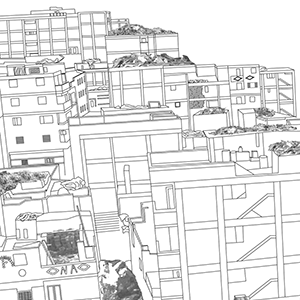
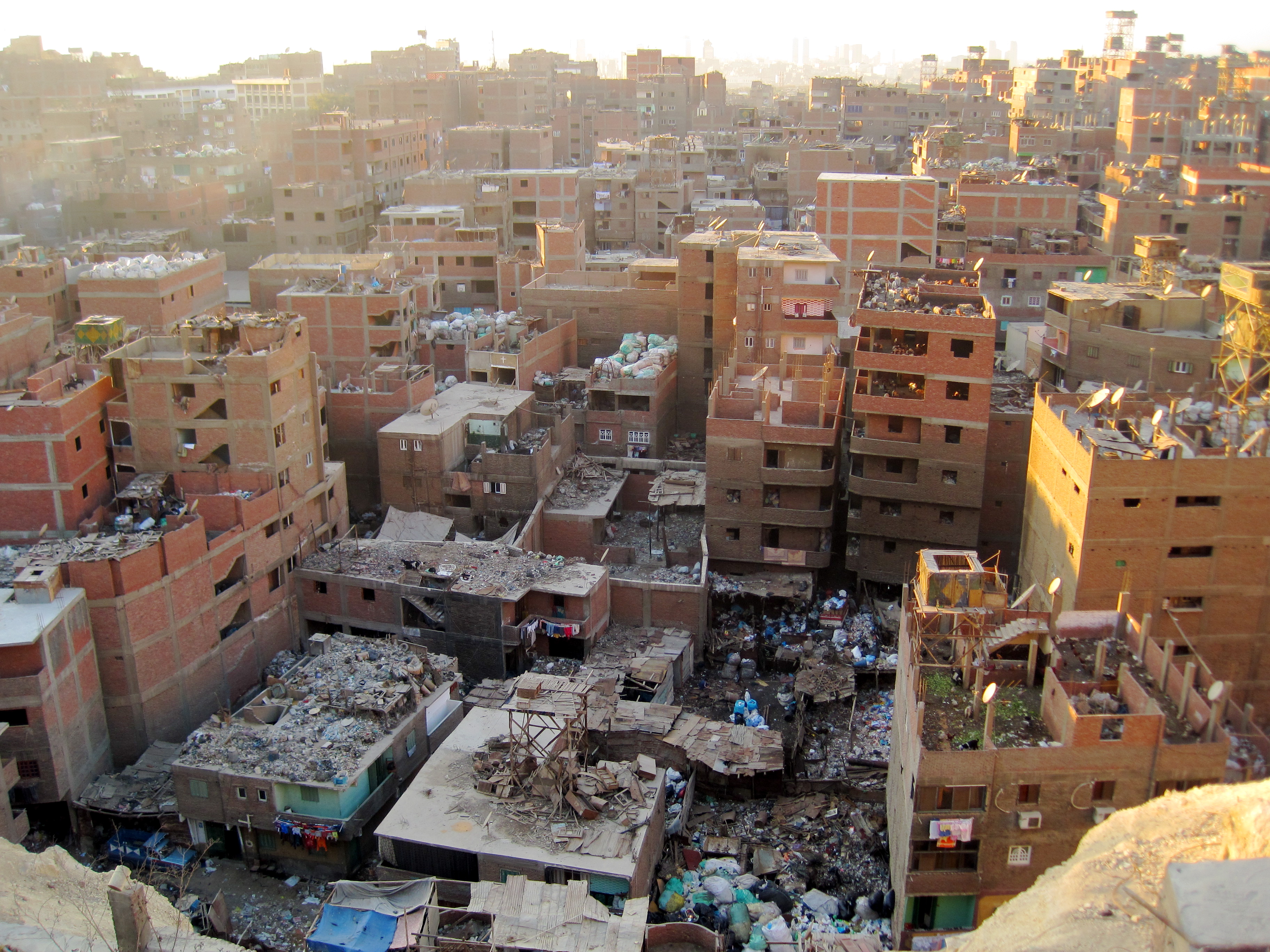
Manshiyat Naser, also known as Garbage City, is a slum settlement at the base of Mokattam Hill on the outskirts of Cairo.
Its economy revolves around the collection and recycling of the city’s garbage. Although the area has streets, shops, and apartments as other areas of the city, it lacks infrastructure and often has no running water, sewage, or electricity.
read more »
Posted in Health, Money, World |
Leave a Comment »
March 31, 2013

Nuit [new-ee] Blanche [blahnsh] (‘All-Nighter,’ literally ‘White Night,’ in French) is an annual all-night or night-time arts festival. A Nuit Blanche will typically have museums, private and public art galleries, and other cultural institutions open and free of charge, with the center of the city itself being turned into a temporary art gallery, providing space for art installations, performances (music, film, dance, performance art), themed social gatherings, and other activities.
The concept came from Jean Blaise, artistic director for special events, who founded the ‘Centre de recherche pour le développement culturel’ (‘Research Center for Cultural Development’) in Nantes, France, in 1984.
read more »
Posted in Art, World |
1 Comment »
March 29, 2013
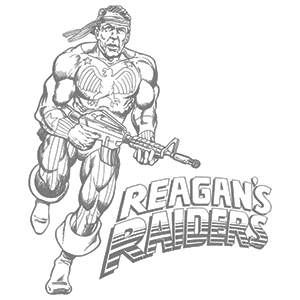
The American Monomyth is a 1977 book by Robert Jewett and John Shelton Lawrence arguing for the existence and cultural importance of an ‘American Monomyth,’ a variation on the classical monomyth (the hero’s journey, a theme found in narratives from around the world) as proposed by Joseph Campbell. The hero ventures from the normal world into a supernatural one, winning a decisive victory there and returning with a ‘boon.’
In contrast, Jewett and Lawrence define the American monomyth as: ‘A community in a harmonious paradise is threatened by evil; normal institutions fail to contend with this threat; a selfless superhero emerges to renounce temptations and carry out the redemptive task; aided by fate, his decisive victory restores the community to its paradisiacal condition; the superhero then recedes into obscurity.’
Posted in Language, Politics, World |
Leave a Comment »
March 29, 2013

The American way of life is an expression that refers to the lifestyle of people living in the United States of America. It is an example of a behavioral modality, developed from the 17th century until today.
It refers to a nationalist ethos that purports to adhere to principles of ‘life, liberty and the pursuit of happiness.’ It has some connection to the concept of American exceptionalism and the American Dream.
read more »
Posted in Language, Politics, World |
Leave a Comment »
March 29, 2013

How to Read Donald Duck (‘Para leer al Pato Donald’) is a political analysis by Chilean activists Ariel Dorfman and Armand Mattelart, published in 1972. It is a pioneering work on cultural imperialism. Written in the form of essay (or, in the authors’ words, a ‘decolonization manual’), the book is an analysis of mass literature, specifically the Disney comics published for the Latin American market.
It is one of the first social studies of entertainment and the leisure industry from a political-ideological angle, and the book deals extensively with the political role of children’s literature. The book’s thesis is that Disney comics are not only a reflection of the prevailing ideology at the time (capitalism), but that they are also aware of this, and are active agents in spreading the ideology.
read more »
Posted in Money, Politics, World |
Leave a Comment »
March 28, 2013
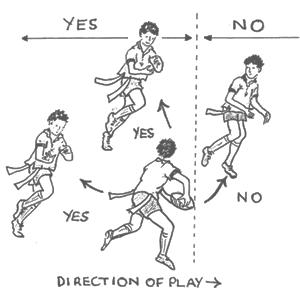
In American football, a lateral pass or lateral, officially backward pass (onside pass in Canadian football), occurs when the ball carrier throws the football to any teammate behind him or directly next to him (i.e. on or behind a line running through the ball and parallel to the line of scrimmage). A lateral pass is distinguished from a forward pass, in which the ball is thrown forward, towards the opposition’s end zone. In a lateral pass the ball is not advanced, but unlike a forward pass a lateral may be attempted from anywhere on the field by any player to any player at any time.
While the forward pass is an invention of the North American game, the lateral and backward pass is also a part of rugby union and rugby league, where such passes are much more common. Compared to its use in rugby, laterals and backward passes are less common in North American football, due to a much greater focus on ball control in American football strategy; they are most commonly used by the quarterback, after taking the snap, to quickly transfer (‘pitch’) the ball a short distance to a nearby running back (or, rarely, wide receiver) on a rushing play. Laterals are also often seen as part of a last-minute desperation strategy or as part of a trick play.
read more »
Posted in Games, World |
Leave a Comment »
March 28, 2013
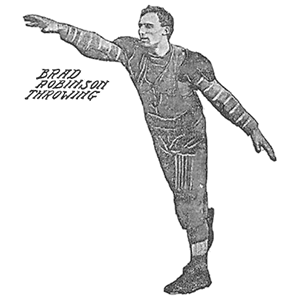
In several forms of football a forward pass is a throwing of the ball in the direction that the offensive team is trying to move, towards the defensive team’s goal line. The forward pass is one of main differences between gridiron football (American football and Canadian football) in which the play is legal and widespread, and rugby football (union and league) from which the North American games evolved, in which the play is illegal.
In some football codes, such as association football (soccer), the kicked forward pass is used so ubiquitously that it is not thought of as a distinct kind of play at all. In these sports, the concept of offside is used to regulate who can be in front of the play or be nearest to the goal. However, this has not always been the case. Some earlier incarnations of football allowed unlimited forward passing, while others had strict offside rules similar to rugby.
read more »
Posted in Games, World |
Leave a Comment »
March 25, 2013

A tontine [ton-teen] is an investment plan for raising capital, devised in the 17th century and relatively widespread in the 18th and 19th. It combines features of a group annuity (recurring payments) and a lottery. Each subscriber pays an agreed sum into the fund, and thereafter receives an annuity. As members die, their shares devolve to the other participants, and so the value of each annuity increases. On the death of the last member, the scheme is wound up. In a variant, which has provided the plot device for most fictional versions, on the death of the penultimate member the capital passes to the last survivor.
The investment plan is named after Neapolitan banker Lorenzo de Tonti, who is credited with inventing it in France in 1653, although it has been suggested that he merely modified existing Italian investment schemes. Tonti put his proposal to the French royal government, but after consideration it was rejected by the Parlement de Paris. The first true tontine was therefore organized in the city of Kampen in the Netherlands in 1670. The French finally established a state tontine in 1689 (though it was not described by that name because Tonti had died in disgrace, about five years earlier).
read more »
Posted in Money, World |
Leave a Comment »


 The Daily Omnivore