June 19, 2012

A Malthusian catastrophe [mal-thoo-zee-uhn] would be a forced return to subsistence-level conditions due to population growth outpacing agricultural production. Population and growth size has a negative impact on the environment. Later formulations consider economic growth limits as well. The term is also commonly used in discussions of oil depletion. Based on the work of political economist Thomas Malthus (1766–1834), theories of Malthusian catastrophe are very similar to the Iron Law of Wages (real wages always tend toward the minimum wage necessary to sustain the life of the worker).
The main difference is that the Malthusian theories predict what will happen over several generations or centuries, whereas the Iron Law of Wages predicts what will happen in a matter of years and decades. The Industrial Revolution enabled the modern world to break out of the Malthusian growth model, however, various limited resources which may soon limit human population growth because of a widespread belief in the importance of prosperity for every individual and the rising consumption trends of large developing nations such as China and India.
read more »
Posted in Food, Money, World |
Leave a Comment »
June 19, 2012

The Malthusian trap [mal-thoo-zee-uhn], named after political economist Thomas Robert Malthus, suggests that for most of human history, income was largely stagnant because technological advances and discoveries only resulted in more people, rather than improvements in the standard of living.
It is only with the onset of the Industrial Revolution in about 1800 that the income per person dramatically increased, and they broke out of the Trap; it has been shown, however, that the escape from the Malthusian trap can also generate serious political upheavals.
read more »
Posted in Money, Technology, World |
Leave a Comment »
June 18, 2012
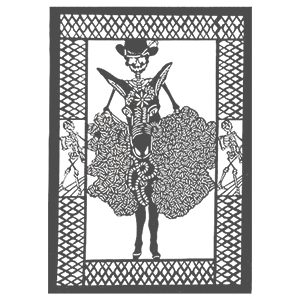
Papel picado (‘perforated paper’) is a decorative craft made out of paper cut into elaborate designs. Although it is a Mexican folk art, papel picado is used as a holiday decoration in many countries. The designs are commonly cut from tissue paper using a guide and small chisels, creating as many as forty banners at a time. Common themes includes birds, floral designs, and skeletons.
They are commonly displayed for both secular and religious occasions, such as Easter, Christmas, the Day of the Dead, as well as during weddings, quinceañeras, baptisms, and christenings. In Mexico, papel picado is especially incorporated into altars during the Day of the Dead.
read more »
Posted in Art, World |
Leave a Comment »
June 18, 2012
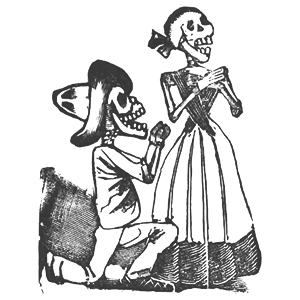
La Calavera Catrina (‘The Elegant Skull’) is a 1910 zinc etching by Mexican printmaker José Guadalupe Posada, part of his series of calaveras (humorous images of contemporary figures depicted as skeletons, which often were accompanied by a poem). The image has since become a staple of Mexican imagery, and often is incorporated into artistic manifestations of the Day of the Dead in November, such as altars and calavera costumes. Although these holy days have a long cultural history reaching into the prehistoric traditions of several European cultures, many aspects of the Mexican festival have indigenous origins in an Aztec festival dedicated to the goddess Mictecacihuatl. After the conquest of Mexico, the Spanish superimposed their cultural traditions upon the similar Aztec festival and a synthesis occurred.
‘La Catrina,’ as it is commonly known, was a popular print in Posada’s day, but soon faded from the popular memory. Along with the rest of Posada’s prints, it was revived by French artist and art historian Jean Charlot shortly after the Mexican Revolution in the 1920s. ‘La Catrina’ soon gained iconic status as a symbol of uniquely Mexican art and was reproduced en masse. The image was incorporated into Diego Rivera’s mural ‘Dream of a Sunday’in Alameda Park,’ which also includes images of his wife Frida Kahlo, Posada, and a self-portrait of Rivera. Notable paper cutter Marcelino Bautista Sifuentes has also recreated the famous ‘La Calavera Catrina’ in papel picado (a decorative craft made out of paper cut into elaborate designs).
Posted in Death, Philosophy, World |
Leave a Comment »
June 18, 2012

A calaca [kal-ah-kuh] (a colloquial Mexican Spanish name for skeleton) is a figure of a skull or skeleton (usually human) commonly used for decoration during the Mexican Day of the Dead festival, although they are made all year round. Tracing their origins from Aztec imagery, calacas are frequently shown with marigold flowers and foliage. As with other aspects of the Day of the Dead festival, calacas are generally depicted as joyous rather than mournful figures. They are often shown wearing festive clothing, dancing, and playing musical instruments to indicate a happy afterlife. This draws on the Mexican belief that no dead soul likes to be thought of sadly, and that death should be a joyous occasion. This goes back to Aztec beliefs, one of the few traditions to remain after the Spanish conquest.
Calacas used in the festival include carved skull masks worn by revelers, small figures made out of carved wood or fired clay, and sweet treats in the form of skulls or skeletons. Calacas are sometimes made of wood, stone, or even candy. A popular phrase among Mexicans and those Latinos that personally know some is ‘se lo (la) llevo la calaca’ after someone has died, literally meaning ‘the Calaca took him (her)’ or ‘death took him (her).’ In Guatemala, ‘calaca’ is understood as ‘death’ and implies fear of death. Thus, it is not depicted as a joyful image. Calaca-like figures can be seen in the Tim Burton films ‘The Nightmare Before Christmas’ and ‘Corpse Bride,’ the 2008 PlayStation 3 game ‘LittleBigPlanet,’ and the 1998 Tim Schafer computer game ‘Grim Fandango.’
Posted in Death, Philosophy, World |
Leave a Comment »
June 18, 2012

Transculturation [trans-kuhl-chuh-rey-shuhn] is a term coined by Cuban anthropologist Fernando Ortiz in 1940 to describe the phenomenon of merging and converging cultures. Transculturation encompasses more than transition from one culture to another; it does not consist merely of acquiring another culture (acculturation) or of losing or uprooting a previous culture (deculturation).
Rather, it merges these concepts and additionally carries the idea of the consequent creation of new cultural phenomena (neoculturation). Ortiz also referred to the devastating impact of Spanish colonialism on Cuba’s indigenous peoples as a ‘failed transculturation.’ Transculturation can often be the result of colonial conquest and subjugation, especially in a postcolonial era as native peoples struggle to regain their own sense of identity.
read more »
Posted in Philosophy, Politics, World |
Leave a Comment »
June 18, 2012
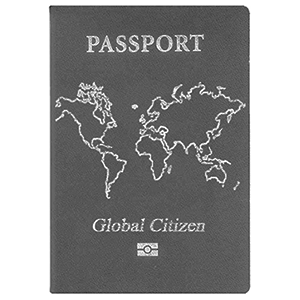
Cosmopolitanism [koz-muh-pol-i-tn-iz-uhm] is the ideology that all kinds of human ethnic groups belong to a single community based on a shared morality. This is contrasted with communitarianism, which emphasizes the need to balance individual rights and interests with that of the community as a whole, and argues that individual people are shaped by the cultures and values of their communities.
Cosmopolitanism may entail some sort of world government or it may simply refer to more inclusive moral, economic, and/or political relationships between nations or individuals of different nations. The word derives from Greek ‘cosmos’ (‘the Universe’) and ‘polis’ (‘city’).
read more »
Posted in Philosophy, Politics, World |
Leave a Comment »
June 15, 2012
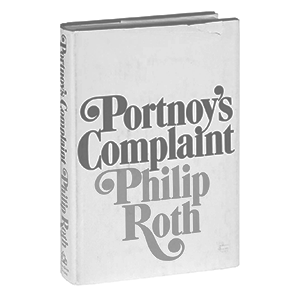
In cultural anthropology, a guilt society is the concept that the primary method of social control in a given society is the inculcation of feelings of guilt for behaviors that the individual believes to be undesirable. The US is a guilt society, in contrast to Japan, a shame society. A prominent feature of guilt societies is the provision of sanctioned releases from guilt for certain behaviors either before the fact, as when one condemns sexuality but permits it conditionally in the context of marriage, or after the fact. There is a clear opportunity in such cases for authority figures to derive power, monetary and/or other advantages, etc. by manipulating the conditions of guilt and the forgiveness of guilt.
Paul Hiebert characterizes the guilt society as follows: ‘Guilt is a feeling that arises when we violate the absolute standards of morality within us, when we violate our conscience. A person may suffer from guilt although no one else knows of his or her misdeed; this feeling of guilt is relieved by confessing the misdeed and making restitution. True guilt cultures rely on an internalized conviction of sin as the enforcer of good behavior, not, as shame cultures do, on external sanctions. Guilt cultures emphasize punishment and forgiveness as ways of restoring the moral order; shame cultures stress self-denial and humility as ways of restoring the social order.’
Posted in Health, Politics, World |
Leave a Comment »
June 14, 2012

In cultural anthropology, a shame society is the concept that, in a given society, the primary device for gaining control over children and maintaining social order is the inculcation of shame and the complementary threat of ostracism.
A shame society is contrasted with a guilt society in which control is maintained by creating and continually reinforcing the feeling of guilt (and the expectation of punishment now or in the hereafter) for certain condemned behaviors.
read more »
Posted in Health, Politics, World |
Leave a Comment »
June 14, 2012
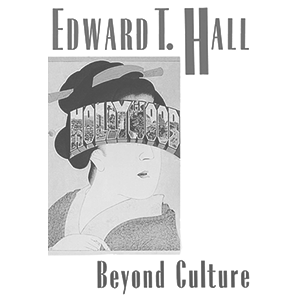
Beyond Culture is a 1976 book by American anthropologist Edward T. Hall where he describes a dichotomy between ‘high context cultures’ (focused upon in-groups) and ‘low context cultures’ (focused upon individuals). Low context cultures like the US don’t cater to ‘in-groups’ (a discrete group having similar experiences and expectations, from which, in turn, inferences are drawn), and there is less use of similar experiences and expectations to communicate. Much more is explained through words, instead of the context.
Conversely, high context cultures prefer high context messages over low context messages in routine communication. This choice of communication styles translates into a culture that will cater to in-groups. In a high context culture, many things are left unsaid, letting the culture explain. Words and word choice become very important in higher context communication, since a few words can communicate a complex message very effectively to an in-group (but less effectively outside that group), while in a lower context culture, the communicator needs to be much more explicit and the value of a single word is less important.
read more »
Posted in Language, Politics, World |
Leave a Comment »
June 14, 2012
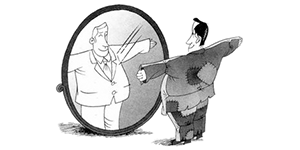

Face, idiomatically meaning dignity/prestige, is a fundamental concept in sociology, psychology, and political science. Chinese author and translator Lin Yutang (1895-1976) claimed ‘Face cannot be translated or defined.’ However, some definitions have been attempted: ‘The term face may be defined as the positive social value a person effectively claims for himself by the line others assume he has taken during a particular contact. Face is an image of self delineated in terms of approved social attributes.’
”Face is the respectability and/or deference which a person can claim for himself from others, by virtue of the relative position he occupies in his social network and the degree to which he is judged to have functioned adequately in that position as well as acceptably in his general conduct.’
read more »
Posted in Language, Politics, World |
1 Comment »
June 13, 2012
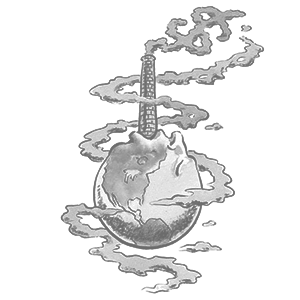
Carbon pricing is the generic term for placing a price on carbon through either subsidization, taxation, or emissions trading (‘cap-and-trade’). Release of carbon dioxide to the atmosphere causes climate change, according to the consensus theory of anthropogenic (produced by humans) global warming.
Greenhouse gas emissions result from fossil fuel-based electricity generation. As a means of avoiding dangerous climate change, associating an approximate cost to damage such as from increasing extreme weather, carbon pricing may incentivize a reduction of carbon emissions and the discovery or implementation of low-emission technologies.
read more »
Posted in Money, Politics, World |
Leave a Comment »



 The Daily Omnivore