June 7, 2012

A smile is a facial expression formed by flexing the muscles near both ends of the mouth. The smile can also be found around the eyes (‘Duchenne Smiling’). Among humans, it is an expression denoting pleasure, joy, happiness, or amusement, but can also be an involuntary expression of anxiety, in which case it is known as a grimace. Smiling is something that is understood by everyone despite culture, race, or religion; it is internationally known.
Cross-cultural studies have shown that smiling is a means of communicating emotions throughout the world. But there are large differences between different cultures. A smile can also be spontaneous or artificial. Many biologists think the smile originated as a sign of fear. Primalogist Signe Preuschoft traces the smile back over 30 million years of evolution to a ‘fear grin’ stemming from monkeys and apes who often used barely clenched teeth to portray to predators that they were harmless. Biologists believe the smile has evolved differently among species and especially among humans.
read more »
Posted in Science, World |
Leave a Comment »
June 7, 2012

A cultural universal is an element, pattern, trait, or institution that is common to all human cultures worldwide. Taken together, the whole body of cultural universals is known as the human condition. Evolutionary psychologists hold that behaviors or traits that occur universally in all cultures are good candidates for evolutionary adaptations. Some anthropological and sociological theorists that take a cultural relativist perspective may deny the existence of cultural universals: the extent to which these universals are ‘cultural’ in the narrow sense, or in fact biologically inherited behavior is an issue of ‘nature versus nurture.’
Anthropological universals include: Language and Cognition (e.g. language employed to manipulate others, language employed to misinform or mislead, binary cognitive distinctions, color terms for black and white, figurative speech and metaphors, taboo utterances, and units of time); Society (e.g. personal names, families, laws, moral sentiments, promises, prestige inequalities, statuses and roles, leaders, property, gender roles, male dominated public/political realm, males more aggressive and more prone to violence and theft, marriage, incest avoidance, rape prohibitions, etiquette, inheritance rules, gift giving, redress of wrongs, sexual jealousy, shame, territoriality, visiting, and trade); Myth and Ritual (e.g. magical thinking, dream interpretation, proverbs, poetry, medicine, rites of passage, music, dance, play, toys, mourning, feasting, body adornment, and hairstyles); and Technology (e.g. shelter, control of fire, tools, weapons, containers, cooking, levers, tying and weaving).
Posted in Language, Science, World |
Leave a Comment »
June 6, 2012
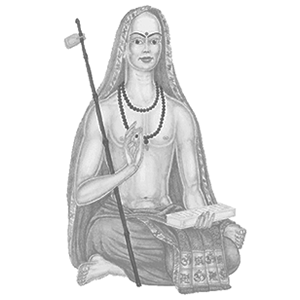
Vedanta [veh-dahn-ta] was originally used a synonym for the part of the Vedas (Hindu scripture) known as the Upanishads (the appendix to the Vedic hymns, which are passed down orally). ‘Vedanta’ is the end of the Vedas both literally and metaphorically: it bookends the Veda, but is also in some ways ‘the purpose or goal [end] of the Vedas.’ By the 8th century CE, the word also came to be used to describe a group of philosophical traditions concerned with the self-realization by which one understands the ultimate nature of reality (Brahman, the godhead, the divine source of being, through which all emanates).
Vedanta can also be used as a noun to describe one who has mastered all four of the original Vedas. The Vedanta is also called Uttara Mimamsa, or the ‘latter enquiry’ or ‘higher enquiry,’ and is often paired with Purva Mimamsa, the ‘former enquiry’ (usually simply called Mimamsa), which deals with explanations of the fire-sacrifices of the Vedic mantras and the Brahmanas (expositions of the Vedas).
read more »
Posted in Language, Philosophy, World |
Leave a Comment »
June 3, 2012

Alva Noto is a stage name of sound artist Carsten Nicolai who uses art and music as complementary tools to create microscopic views of creative processes.
He is a member of the music groups Signal (with Frank Bretschneider and Olaf Bender aka Byetone) and Cyclo (with Ryoji Ikeda).
read more »
Posted in Art, Technology, World |
Leave a Comment »
May 30, 2012

Big Dave is an infamous character created and written by Grant Morrison and Mark Millar, with artwork by Steve Parkhouse, for ‘2000 AD,’ a British science fiction comic. The character was created for ‘The Summer Offensive,’ an experiment in which the magazine was handed over to Millar, Morrison, and John Smith for eight weeks. Big Dave first appeared in prog (issue) 842 in his first story which featured Saddam Hussein trying to take over the world and turn everyone into ‘poofs’ with the aid of some scary aliens. Big Dave, ‘the hardest man in Manchester,’ manages to stop Saddam’s plan with the help of Terry Waite, English humanitarian. This story proved controversial, but the next story surpassed it.
It featured the British Royal Family as robots plus The Princess of Wales and The Duchess of York as a pair of horny drunks. The story ends with Dave in bed with both royals. A third had Dave leading a minibus full of disabled children to the football world cup final where they defeat a German team managed by Adolf Hitler. Both Morrison and Millar appeared happy with such controversy but the character did split ‘2000 AD’ fans’ opinion down the middle, with some praising it as the best series the comic had ever run, while others thought it was nothing more than puerile rubbish.
Posted in Humor, Language, World |
Leave a Comment »
May 28, 2012

Chromaroma is a London-based game using players’ public transport passes (Oyster cards and Barclays Cycle Hire accounts). Points are awarded depending on the stations and journeys users complete on the London Underground and London Buses, as well as using ‘Boris bikes.’
It is described by its creators, Mudlark, as ‘location-based top trumps,’ and encourages competition through leaderboards. (Top Trumps is a card game. Each card contains a list of numerical data, and the aim of the game is to compare these values in order to try to trump and win an opponent’s card. A wide variety of different packs of Top Trumps have been published).
Posted in Games, Technology, World |
Leave a Comment »
May 27, 2012

GPS Drawing combines art, travelling (walking, flying, and driving) and technology and is a method of drawing that uses GPS to create large-scale artwork. Global Positioning System receivers determine one’s position on the surface of the Earth by trilateration of microwave signals from satellites orbiting at an altitude of 20,200 km. Tracks of a journey can automatically be recorded into the GPS receiver’s memory and can be downloaded onto a computer as a basis for drawing, sculpture or animation. This journey may be on the surface (e.g. walking) or taken in 3D (e.g. while flying).
The idea was first implemented by artists Hugh Pryor and Jeremy Wood, who have drawn a 13-mile wide fish in Oxfordshire and spiders whose legs reach across cities. They have also provided an answer to the question ‘What is the world’s biggest ‘IF’? It happens to be a pair of letters, ‘I,’ which goes from Iffley in Oxford to Southampton and back, and ‘F” which traverses through the Ifield Road in London down to Iford in East Sussex, through Iford and back up through Ifold in West Sussex. The total length is 537 km, and the height of the drawing in typographic units is 319,334,400 points.
Posted in Art, Technology, World |
Leave a Comment »
May 27, 2012

A paperclip is an instrument used to hold sheets of paper together, usually made of steel wire bent to a looped shape. Most paper clips are variations of the Gem type introduced in the 1890s or earlier, characterized by the almost two full loops made by the wire. Common to paper clips proper is their utilization of torsion and elasticity in the wire, and friction between wire and paper.
When a moderate number of sheets are inserted between the two ‘tongues’ of the clip, the tongues will be forced apart and cause torsion in the bend of the wire to grip the sheets together. Too many sheets will cause the elastic limit of the material to be exceeded, resulting in permanent deformation. Paper clips usually have an oblong shape with straight sides, but may also be triangular or circular, or have more elaborate shapes. The most common material is steel, but molded plastic is also used. Some other kinds of paper clip use a two-piece clamping system. Recent innovations include multi-colored plastic-coated paper clips and spring-fastened binder clips.
read more »
Posted in Money, Technology, World |
Leave a Comment »
May 24, 2012

Cornershop is a British indie rock band formed in 1991 by Tjinder Singh, his brother Avtar, David Chambers, and Ben Ayres. The band name originated from a stereotype referring to British Asians often owning street corner stores. Their music is a fusion of Indian music, Britpop, and electronic dance music.
Their debut release, the ‘In The Days of Ford Cortina’ EP, pressed on ‘curry-colored vinyl,’ contained a blend of Indian-tinged noise pop. The sound mellowed somewhat with the release of debut album ‘Hold On It Hurts’ in 1994. The album impressed David Byrne sufficiently for him to sign the band to his Luaka Bop label. Although David Chambers left, replaced by Nick Simms, the band re-emerged in 1995.
read more »
Posted in Art, World |
1 Comment »
May 21, 2012

Magic realism is an aesthetic style or genre of fiction in which magical elements blend with the real world. The story explains these magical elements as real occurrences, presented in a straightforward manner that places the ‘real’ and the ‘fantastic’ in the same stream of thought. One example, is when a character in the story continues to be alive beyond the normal length of life and this is subtly depicted by the character being present throughout many generations.
On the surface the story has no clear magical attributes and everything is conveyed in a real setting, but such a character breaks the rules of our real world. The author may give precise details of the real world such as the date of birth of a reference character and the army recruitment age, but such facts help to define an age for the fantastic character of the story that would turn out to be an abnormal occurrence like someone living for two hundred years.
read more »
Posted in Art, Language, World |
Leave a Comment »
May 18, 2012

Selank is a nootropic (smart drug), anxiolytic (antianxiety) peptide (string of amino acids) based drug developed by the Institute of Molecular Genetics of the Russian academy of sciences. Selank is a synthetic analogue of the immunomodulatory peptide tuftsin; as such, it mimics many of its effects, strengthening the immune system.
It is has been shown to influence the concentration of monoamine neurotransmitters (e.g. dopamine, serotonin) and induce metabolism of serotonin. There is evidence that it may also modulate the expression of Brain-derived neurotropic factor (which is related to nerve growth) in rats.
read more »
Posted in Drugs, Health, World |
Leave a Comment »
May 17, 2012

The silent majority is an unspecified large majority of people in a country or group who do not express their opinions publicly. The term was popularized (though not first used) by U.S. President Richard Nixon in a 1969, speech in which he said, ‘And so tonight—to you, the great silent majority of my fellow Americans—I ask for your support.’
In this usage it referred to those Americans who did not join in the large demonstrations against the Vietnam War at the time, who did not join in the counterculture, and who did not participate in public discourse. Nixon along with many others saw this group of Middle Americans as being overshadowed in the media by the more vocal minority. The phrase was used in the 19th century as a euphemism referring to all the people who have died, and others have used it before and after Nixon to refer to groups of voters in various nations of the world.
read more »
Posted in Language, Politics, World |
Leave a Comment »


 The Daily Omnivore