May 17, 2012
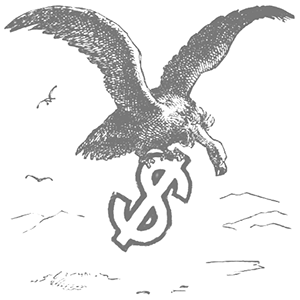
A vulture fund is a private equity or hedge fund that invests in debt issued by an entity that is considered to be very weak or dying, or whose debt is in imminent default. The name is a metaphor comparing these investors to vultures patiently circling, waiting to pick over the remains of a rapidly weakening company or, in the case of sovereign debt, debtor country. Market practitioners refer to them as distressed debt or special situations funds.
Vulture funds have sometimes had success in bringing actions against sovereign debtor governments, usually settling with them before forced sales. Settlements typically are made at a discount in hard or local currency or in the form of new debt issuance. A related term is ‘vulture investing,’ where certain stocks in near bankrupt companies are purchased upon anticipation of asset divestiture or successful reorganization. A prime example in the US is K-Mart, where the real estate held by the company was the anticipated payout for investors who bought stock during their bankruptcy proceedings.
Posted in Money, Politics, World |
Leave a Comment »
May 16, 2012

Mars to Stay missions propose astronauts sent to Mars for the first time should intend to stay, with their unused emergency return vehicles recycled into settlement construction as soon as the habitability of Mars becomes evident to the initial pioneers. Mars to Stay missions are advocated both to reduce cost and to ensure permanent settlement of Mars.
Among many notable Mars to Stay advocates, former Apollo astronaut Buzz Aldrin has been particularly outspoken, suggesting in numerous forums ‘Forget the Moon, Let’s Head to Mars!’ The Mars Underground, Mars Homestead Foundation, and Mars Artists Community have also adopted Mars to Stay policy initiatives. The earliest formal outline of a Mars to Stay mission architecture was given at the ‘Case for Mars VI Workshop’ in 1990, during a presentation by George Herbert titled ‘One Way to Mars.’
read more »
Posted in Money, Technology, World |
1 Comment »
May 14, 2012

Shigeru Miyamoto [she-gay-roo mee-yah-moe-toe] (b. 1952) is a Japanese game designer and creator of ‘Donkey Kong,’ ‘Mario,’ and ‘The Legend of Zelda’ series for Nintendo. He is one of the most famous game designers in the world and is often called the father of modern video gaming.
His games give players many ways to play and explore, which was unique at the time. Miyamoto started working with Nintendo in 1977 as an artist when it was still a toy and playing-card company. In 1980, he designed ‘Donkey Kong,’ which was a big success. Miyamoto was born and raised in Kyoto Prefecture; the natural surroundings of Kyoto inspired much of his later work. His other creations for Nintendo include ‘Star Fox,’ ‘F-Zero,’ and ‘Pikmin.’
read more »
Posted in Games, Money, World |
Leave a Comment »
May 14, 2012

Thief in law, a ‘thief who operates within the law’ or ‘a criminal who obeys The Thieves’ Code”) is a criminal who is respected, has authority and a high ranking status within the criminal underworld in the old Soviet Union, Russia and the republics that formed the former Soviet Union. Thieves in law are the elite of the Russian world of organized crime.
According to various Russian news sources there exist hundreds of organized units which retain independence in their actions. Estimates concerning the number of ‘Vory’ throughout the world range from several hundred to over 10,000. Many of thieves in law are no longer exclusively ethnic Russians but are drawn from other nationalities, including those living in other former Soviet states or former Warsaw pact nations such as Poland, the Czech Republic, and Bulgaria.
read more »
Posted in Death, Politics, World |
Leave a Comment »
May 14, 2012

Tattoos are commonly used among criminals to show gang membership and record the wearer’s personal history—such as his or her skills, specialties, accomplishments, and convictions. They are also used as a means of personal expression. Certain designs have developed recognized coded meanings. The code systems can be quite complex and because of the nature of what they encode, the tattoos are not widely recognized.
Tattooing is forbidden in most prisons. It is therefore done in secret, with makeshift equipment. For example, tattoos done in a Russian prison often have a distinct bluish color (due to being made with ink from a ballpoint pen) and usually appear somewhat blurred because of the lack of instruments to draw fine lines. The ink is often created from burning the heel of a shoe and mixing the soot with urine (for sterilization), and injected into the skin utilizing a sharpened guitar string attached to an electric shaver.
read more »
Posted in Art, Politics, World |
2 Comments »
May 14, 2012
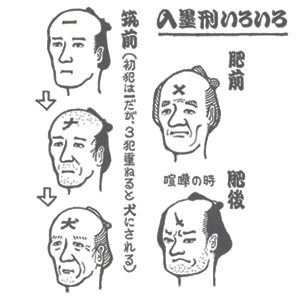
Irezumi [ee-reh-zoo-mee] (literally ‘insert ink’) refers to the insertion of ink under the skin to leave a permanent, usually decorative mark; a form of Japanese tattooing. Tattooing for spiritual and decorative purposes in Japan is thought to extend back to the paleolithic period (approximately 10,000 BCE). Some scholars have suggested that the distinctive cord-marked patterns observed on the faces and bodies of figures dated to that period represent tattoos, but this claim is controversial. There are similarities, however, between such markings and the tattoo traditions observed in other contemporaneous cultures.
In the following Yayoi period (c. 300 BCE–300) tattoo designs were observed and remarked upon by Chinese visitors. Such designs were thought to have spiritual significance as well as functioning as a status symbol. Starting in the Kofun period (300–600) tattoos began to assume negative connotations. Instead of being used for ritual or status purposes, tattooed marks began to be placed on criminals as a punishment (this was mirrored in ancient Rome, where slaves were known to have been tattooed with mottoes such as ‘I am a slave who has run away from his master’). The Ainu people, the indigenous people of Japan, are known to have used tattoos for decorative and social purposes, but there is no known relation to the development of irezumi.
read more »
Posted in Art, Politics, World |
Leave a Comment »
May 11, 2012

Infornography is a portmanteau of ‘information’ and ‘pornography’ used to define an addiction to or an obsession with acquiring, manipulating, and sharing information. People ‘suffering’ from infornography enjoy receiving, sending, exchanging, and digitizing information.
The definition (without explicitly using the term itself) is also greatly applied in many cyberpunk settings, where information can almost be considered a currency of its own, in a sense facilitating the development of an alternate world for ‘escapism.’ Megacorps, hackers, and other kinds of people use information to thrive; they can subtly be called infornographers.’
read more »
Posted in Language, Technology, World |
Leave a Comment »
May 10, 2012
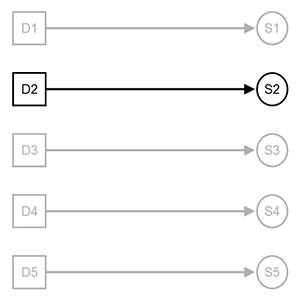
A canary trap is a method for exposing an information leak, which involves giving different versions of a sensitive document to each of several suspects and seeing which version gets leaked. The term was coined by Tom Clancy in his novel ‘Patriot Games,’ though Clancy did not invent the technique. The actual method (usually referred to as a ‘Barium meal test’ in espionage circles) has been used by intelligence agencies for many years. The fictional character Jack Ryan describes the technique he devised for identifying the sources of leaked classified documents:
‘Each summary paragraph has six different versions, and the mixture of those paragraphs is unique to each numbered copy of the paper. There are over a thousand possible permutations, but only ninety-six numbered copies of the actual document. The reason the summary paragraphs are so lurid is to entice a reporter to quote them verbatim in the public media. If he quotes something from two or three of those paragraphs, we know which copy he saw and, therefore, who leaked it.’ A refinement of this technique uses a thesaurus program to shuffle through synonyms, thus making every copy of the document unique.
Posted in Politics, War, World |
Leave a Comment »
May 9, 2012

The concept of geoengineering (or climate intervention) refers to the deliberate large-scale engineering and manipulation of the planetary environment to combat or counteract anthropogenic changes in atmospheric chemistry. The Intergovernmental Panel on Climate Change concluded in 2007 that geoengineering options, such as ocean fertilization to remove CO2 from the atmosphere, remained largely unproven. It was judged that reliable cost estimates for geoengineering had not yet been published.
Geoengineering accompanies Mitigation and Adaptation to form a three-stranded ‘MAG’ approach to tackling global warming, notably advocated by the Institution of Mechanical Engineers. Some geoengineering techniques are based on carbon dioxide removal (CDR), including direct methods (e.g. carbon dioxide air capture) and indirect methods (e.g. ocean iron fertilization). These techniques can be regarded as mitigation of global warming.
read more »
Posted in Science, Technology, World |
Leave a Comment »
May 9, 2012

‘The Better Angels of Our Nature: Why Violence Has Declined’ is a 2011 book by American cognitive scientist Steven Pinker arguing that violence in the world, especially the western part, has declined both in the long run and in the short. He also suggests explanations of why this has happened. The phrase ‘the better angels of our nature’ stems from the last words of Lincoln’s first inaugural address. Due to the highly interdisciplinary nature of the book Pinker uses the works of political scientist John Mueller and sociologist Norbert Elias, among others.
The extent of Elias’ influence on Pinker can be adduced from the title of Chapter 3: ‘The Civilizing Process,’ which is taken from the title of Elias’ seminal sociology text. Pinker also draws upon the work of international relations scholar Joshua Goldstein, and both have co-written a New York Times op-ed article titled ‘War Really Is Going Out of Style’ that summarizes many of their shared views. Both authors also appeared together at Harvard’s Institute of Politics to answer questions from academics and students concerning their similar thesis.’
Posted in Politics, War, World |
Leave a Comment »
May 8, 2012

The exorbitant privilege is a term coined in the 1960s by Valéry Giscard d’Estaing, then the French Minister of Finance. This quote is generally misattributed to Charles de Gaulle, who is said to have had somewhat similar views. The term refers to the benefit the United States had in its Dollar being the international reserve currency: the US would not face a balance of payments crisis, because it purchased imports in its own currency.
‘Exorbitant privilege’ as a concept cannot refer to currencies that have a regional reserve currency role, only global reserve currencies. Recent McKinsey Global Institute research questions whether the benefit that the US enjoys is really that exorbitant, highlighting the countervailing loss of trade competitiveness from the high dollar (that typically results from its reserve status, all else equal). The phrase became the title of a 2010 book by economist Barry Eichengreen, examining the future prospects for the US Dollar’s dominance in international trade.
Posted in Money, Politics, World |
Leave a Comment »
May 8, 2012
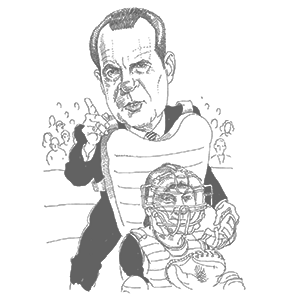
The Nixon Shock was a series of economic measures taken by U.S. President Richard Nixon in 1971 including unilaterally cancelling the direct convertibility of the United States dollar to gold that essentially ended the existing Bretton Woods system of international financial exchange.
The return to a gold standard is supported by followers of the Austrian School, largely because they object to the role of the government in issuing fiat currency through central banks. A number of gold standard advocates also call for a mandated end to fractional reserve banking.
read more »
Posted in Money, Politics, World |
1 Comment »


 The Daily Omnivore