May 7, 2012
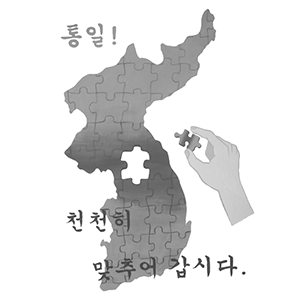
Korean reunification refers to the hypothetical future reunification of North Korea and South Korea under a single government. The process towards this was started by the ‘June 15th North–South Joint Declaration’ in 2000, where the two countries agreed to work towards a peaceful reunification in the future. However, there are a number of difficulties in this process due to the large political and economic differences between the two countries and other state actors such as China, Russia, Japan, and the United States.
Short-term problems, such as potentially large numbers of refugees migrating from North Korea and initial economic and political instability, and long-term problems, such as cultural differences and possible discrimination, would need to be resolved. North Korea’s policy is to seek reunification without what it sees as outside interference, through a federal structure retaining each side’s leadership and systems.
read more »
Posted in Politics, War, World |
Leave a Comment »
May 7, 2012
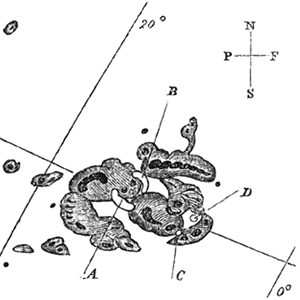
The solar storm of 1859 was the most powerful solar storm in recorded history, and the largest flare; it was observed by British astronomer Richard Carrington. From August 28 to September 2 numerous sunspots and solar flares were observed on the sun.
Just before noon on September 1, Carrington observed the largest flare, which caused a massive coronal mass ejection (CME) to travel directly toward Earth, taking 17 hours. This is remarkable because such a journey normally takes three to four days. This second CME moved so quickly because the first one had cleared the way of the ambient solar wind plasma. The impact resulted in the largest geomagnetic storm ever recorded.
read more »
Posted in Science, World |
Leave a Comment »
May 6, 2012

A parking chair is a chair that is used by a vehicle owner to informally mark a parking space as reserved for oneself. Other items are also used for this purpose, including trash cans, ladders, ironing boards, and other similar-sized objects that are commonly found in households. For curbside parking spaces, two or more items are normally used.
The practice of using parking chairs is common in inclement weather in urban residential areas of the United States where parking is scarce and vehicle owners do not wish to risk losing their vehicle’s previously occupied space in its absence. Other spaces may be scarce due to accumulation of plowed snow, and the owner of the vehicle may have invested considerable work in clearing the space, just to get the car out in the first place. This practice is considered especially common in the cities of Pittsburgh, Chicago, Philadelphia, and other cities in the Upper Midwest and Great Lakes regions.
read more »
Posted in Humor, World |
Leave a Comment »
May 3, 2012
Interlingua [in-ter-ling-gwuh] is a planned language using words that are found in most West-European languages. It was made by IALA – a group of people (the most known was Alexander Gode) that worked on it for more than 20 years, and they finished and published the first dictionary in 1951. Interlingua was created on the base of languages: English, French, Spanish, Portuguese, and Italian.
‘Inter’ means ‘between’ or ‘to each other’; ‘lingua’ means ‘language.’ The goal of the language was to enable people of different countries to talk to each other easily. Because Interlingua was made by people to be easy, it is easier than natural languages to learn. Many thousands of people know Interlingua, and Interlingua speakers say that millions can understand it (read texts in it and listen to someone talk in it) without having to learn it first.
read more »
Posted in Language, Science, World |
Leave a Comment »
May 3, 2012

Basic Color Terms: Their Universality and Evolution (1969) is a book by Brent Berlin and Paul Kay, who’s work proposed that the kinds of basic color terms a culture has, such as black, brown or red, are predictable by the number of color terms the culture has.
Berlin and Kay posit seven levels in which cultures fall, with Stage I languages having only the colors black (dark–cool) and white (light–warm). Languages in Stage VII have eight or more basic color terms. This includes English, which has eleven basic color terms.
read more »
Posted in Language, Science, World |
1 Comment »
May 3, 2012
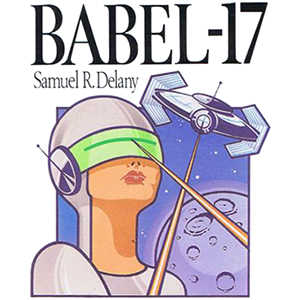
The principle of linguistic relativity holds that the structure of a language affects the ways in which its speakers are able to conceptualize their world, i.e. their world view. Popularly known as the Sapir–Whorf hypothesis, or Whorfianism, the principle is often defined as having two versions: Strong (language determines thought and that linguistic categories limit and determine cognitive categories) and Weak (linguistic categories and usage influence thought and certain kinds of non-linguistic behavior).
The term ‘Sapir-Whorf Hypothesis’ is a misnomer as the men never co-authored anything and never stated their ideas in terms of a hypothesis. The notion of ‘weak’ and ‘strong’ versions of Whorf’s principal of linguistic relativity is a misunderstanding of Whorf promulgated by Stuart Chase, whom Whorf considered ‘utterly incompetent by training and background to handle such a subject.’
read more »
Posted in Language, Science, World |
Leave a Comment »
May 2, 2012

Yo is an English slang interjection, commonly associated with American English. It was popularized by Italian and African Americans in Philadelphia in the 1970s. It is used to signify informality, close cultural understanding, and communal bonding. It remains very popular among Philadelphia Italian Americans, possibly arising from the Italian language word ‘io’ (meaning ‘I’). In Italian, first person statements are often preceded by io.
Although often used as a greeting, yo may come at the end of a sentence, often to direct focus onto a particular individual or group or to gain the attention of another individual or group. It may specify that a certain statement that was previously uttered is more important, or may just be an ‘attention grabber’ (e.g. ‘Listen up, yo!’). In the Japanese language, the sentence-final particle ‘yo’ is used to emphasize sentences as is often the case in English slang as above, but is etymologically unrelated. ‘YŌ’ is also used by Japanese teens as casual greetings between friends, but is pronounced with a more drawn-out tone.
Posted in Language, World |
Leave a Comment »
May 2, 2012
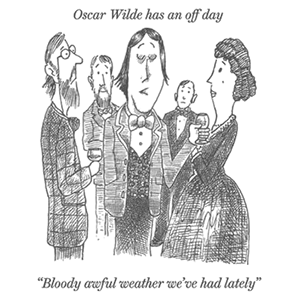
In linguistics, a phatic expression [fat-ik] is one whose only function is to perform a social task, as opposed to conveying information. The term was coined by anthropologist Bronisław Malinowski in the early 1900s from Greek ‘phanein’ (‘to show oneself,’ ‘appear’).
In Russian linguist Roman Jakobson’s work, ‘Phatic’ communication is that which concerns the channel of communication, for instance when one says ‘I can’t hear you, you’re breaking up’ in the middle of a cell phone conversation. In the modern context, this usage appears in online communities and more specifically on micro-blogging.
read more »
Posted in Language, World |
Leave a Comment »
May 2, 2012

Aizuchi [eye-zoo-chee] is the Japanese term for frequent interjections during a conversation that indicate the listener is paying attention and understanding the speaker. In linguistic terms, these are a form of phatic expression (one whose only function is to perform a social task, as opposed to conveying information).
Aizuchi are considered reassuring to the speaker, indicating that the listener is active and involved in the discussion. Aizuchi are frequently misinterpreted by non-native speakers as agreement on the part of the listener, because common aizuchi include: ‘hai,’ ‘ee,’, or ‘un’ (‘yes,’ with varying degrees of formality); ‘sō desu ne’ (‘I see’); ‘sō desu ka’ (‘is that so?’); ‘honma’ (‘really’); ‘naruhodo’ (‘I see, that’s right’); and nodding. These can be compared to English ‘yeah, yeah,’ ‘yeah, ok,’ ‘got it,’ ‘yep,’ ‘uhuh,’ or ‘go on,’ but are more pronounced and important in Japanese.
read more »
Posted in Language, World |
Leave a Comment »
April 29, 2012

Tehrangeles [te-ran-juh-luhs] is a portmanteau deriving from the combination of Tehran, the capital of Iran, and Los Angeles. It is used when referring to the large number (up to 800,000) of former Iranian nationals and their descendants residing in the Los Angeles metropolitan area; it is the largest such population outside of Iran. In common usage, it usually refers to the proportionally larger Persian-American subset of Iranian immigrants, many of whom are second generation citizens.
This area is now officially recognized by the City of Los Angeles as ‘Persian Square.’ The Persian community in the L.A. area originally centered in the Westwood neighborhood of west Los Angeles, often referred to as Little Persia or Persian Hills/Persian Square. Immigration to the area increased several-fold due to the events surrounding the 1979 Iranian Revolution. Westwood Boulevard became known for its many Persian shops and restaurants; and the Persian expatriate community of Los Angeles entered all forms of media including magazines, newspapers, radio and television stations.
Posted in Language, World |
Leave a Comment »
April 26, 2012

Foreign Accent Syndrome is a rare medically recognised condition which is a speech impediment that usually occurs as a resulting side effect of brain injury, such as a stroke or head trauma. As a result of the speech impediment those suffering from the Foreign Accent Syndrome pronounce their native language with an accent that to the ear of the listeners may be mistaken as foreign or dialectical.
It has many other impacts and effects, including poor memory and concentration span, as well as a feeling of loss of identity, potentially causing those affected to go through a bereavement process. Two cases have been reported of individuals with the condition as a development problem and one associated with severe migraine. Between 1941 and 2009 there have been sixty recorded cases.
read more »
Posted in Health, Language, World |
Leave a Comment »
April 26, 2012

Koro is a culture-specific syndrome from Southeast Asia in which the person has an overpowering belief that his penis (or other genitalia) is shrinking and will shortly disappear. Also known as shrinking penis, the syndrome is listed in the Diagnostic and Statistical Manual of Mental Disorders. In China, it is known as ‘shuk yang.’
For females, the belief focuses on the nipples retracting or shrinking. Though the syndrome is rooted in China and found mostly in Southeast Asia, rare and isolated cases of koro are found in people of non-Chinese ethnicity worldwide. Episodes of epidemics occurred in the endemic nations. In a different cultural setting, mass hysteria of genital-shrinkage have been reported in African nations.
read more »
Posted in Health, Sex, World |
Leave a Comment »


 The Daily Omnivore