April 3, 2012


The Deep Web (also called the Invisible Net, the Deep Web, Undernet, or the hidden Web) refers to World Wide Web content that is not part of the Surface Web, which is indexable by standard search engines. It should not be confused with the ‘dark Internet,’ the computers that can no longer be reached via Internet, or with the distributed filesharing network ‘Darknet,’ which could be classified as a smaller part of the Deep Web.
Mike Bergman, founder of ‘BrightPlanet,’ credited with coining the phrase, has said that searching on the Internet today can be compared to dragging a net across the surface of the ocean: a great deal may be caught in the net, but there is a wealth of information that is deep and therefore missed. Most of the Web’s information is buried far down on dynamically generated sites, and standard search engines do not find it. Traditional search engines cannot ‘see’ or retrieve content in the deep Web—those pages do not exist until they are created dynamically as the result of a specific search. The deep Web is several orders of magnitude larger than the surface Web.
read more »
Posted in Money, Technology, World |
1 Comment »
April 2, 2012

Seven generation sustainability is an ecological concept that urges the current generation of humans to live sustainably and work for the benefit of the seventh generation into the future.
It originated with the Iroquois – Great Law of the Iroquois – which holds appropriate to think seven generations ahead (a couple hundred years into the future) and decide whether the decisions they make today would benefit their children seven generations into the future. ‘In every deliberation, we must consider the impact on the seventh generation… even if it requires having skin as thick as the bark of a pine.’
Posted in Money, Politics, World |
Leave a Comment »
April 2, 2012

Syncretism [sing-kri-tiz-uhm] is the combining of different (often contradictory) beliefs, often while melding practices of various schools of thought. Syncretism may involve the merger and analogizing of several originally discrete traditions, especially in the theology and mythology of religion, thus asserting an underlying unity and allowing for an inclusive approach to other faiths. Syncretism also occurs commonly in expressions of arts and culture (known as eclecticism) as well as politics (syncretic politics).
The word entered the English language in 1618; it derives from Latin ‘syncretismus,’ drawing on Greek (‘synkretismos’), meaning ‘Cretan federation.’ The Greek word occurs in Plutarch’s (1st century) essay on ‘Fraternal Love’ in his ‘Moralia.’ He cites the example of the Cretans, who compromised and reconciled their differences and came together in alliance when faced with external dangers. ‘And that is their so-called Syncretism.’
read more »
Posted in Language, Philosophy, World |
2 Comments »
March 31, 2012
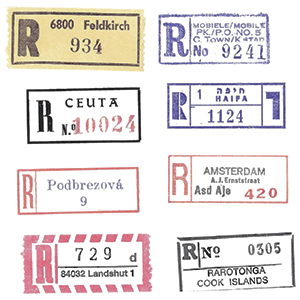
Poor mans copyright is a method of using registered dating by the postal service, a notary public or other highly trusted source to date intellectual property, thereby helping to establish that the material has been in one’s possession since a particular time. The concept is based on the notion that, in the event that such intellectual property were to be misused by a third party, the poor-man’s copyright would at least establish a legally recognized date of possession before any proof which a third party may possess.
The PMC was originally used by authors who sent copies of their own work to themselves through the mail without opening the envelopes in the hope that it would grant them legal protection by establishing a date at which the work was created. Use of this method may not hold up in a court as it is simple for individuals to pre-send envelopes which can then be used later by placing the materials inside.
Posted in Money, Politics, World |
Leave a Comment »
March 29, 2012
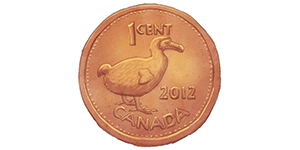

A debate exists within the United States government, and American society at large, over whether the one-cent coin, commonly known as the penny, should be eliminated as a unit of currency in the United States. Two bills introduced in the U.S. Congress would have ceased production of pennies, but neither bill was approved. Such a bill would leave the nickel, at five cents, as the lowest-value coin. The chief argument for its elimination is the fact that pennies are produced at a loss. In 2012, it costs about 2.4 cents to mint a penny. By 2007, even the price of the raw materials it is made of exceeded the face value, so there is a risk that coins are illegally melted down for raw materials.
Additionally, pennies are of limited utility; they are not accepted by all vending machines or many toll booths, and pennies are generally not accepted in bulk. In addition, people often do not use cents to pay at all; they may simply use larger denominations and get pennies in return. Pennies end up sitting in jars or are thrown away and are not in circulation. The purpose of the monetary system is to facilitate exchange, but… the penny no longer serves that purpose. Many countries outside the United States have chosen to remove low-value coins from circulation including Canada, Sweden, New Zealand, and Australia.
Posted in Money, Politics, World |
2 Comments »
March 27, 2012

Ai Weiwei (b. 1957) is a Chinese contemporary artist, active in sculpture, installation, architecture, curating, photography, film, and social, political and cultural criticism. Ai collaborated with Swiss architects Herzog & de Meuron as the artistic consultant on the Beijing National Stadium for the 2008 Olympics.
As a political activist, he has been highly and openly critical of the Chinese Government’s stance on democracy and human rights. He has investigated government corruption and cover-ups, in particular the Sichuan schools corruption scandal following the collapse of so-called ‘tofu-skin schools’ in the 2008 Sichuan earthquake. In 2011, following his arrest at Beijing airport, he was held for over two months without any official charges being filed; officials alluded to their allegations of ‘economic crimes’ (tax evasion).
read more »
Posted in Politics, World |
Leave a Comment »
March 27, 2012

The high rising terminal (HRT), also known as uptalk, upspeak, rising inflection, or high rising intonation, is a feature of some accents of English where statements have a rising intonation pattern in the final syllable or syllables of the utterance.
The origins of HRT remain uncertain. Geographically, anecdotal evidence places the conception of the American English variety on the West Coast – anywhere from Southern California to the Pacific Northwest. Others have suggested it originated in New Zealand, and it is unclear whether the American English varieties and the Oceanic varieties had any influence on each other regarding the spread of HRT.
read more »
Posted in Language, World |
Leave a Comment »
March 27, 2012

Vagina dentata is Latin for ‘toothed vagina.’ Various cultures have folk tales about women with toothed vaginas, frequently told as cautionary tales warning of the dangers of sex with strange women and to discourage the act of rape. Jung disciple Erich Neumann relays one such myth in which ‘a fish inhabits the vagina of the Terrible Mother; the hero is the man who overcomes the Terrible Mother, breaks the teeth out of her vagina, and so makes her into a woman.’ The legend also appears in the mythology of the Chaco and Guiana tribes.
In some versions, the hero leaves one tooth. An Ainu language (of Japan and Russia) tale containing this element was published as ‘The Island of Women’ by Basil Hall Chamberlain, where it was described as a well known Japanese tale by E. B. Tylor. In his book, ‘The Wimp Factor,’ Stephen J. Ducat expresses the view that these myths express the threat sexual intercourse poses for men who, although entering triumphantly, always leave diminished. The grain of truth in these stories is that dermoid cysts, which can occur anywhere in the body, often contain teeth. Although there are no documented sightings, it is theoretically possible for a tooth-containing dermoid cyst to develop in a woman’s vagina.
Posted in Politics, Sex, World |
Leave a Comment »
March 27, 2012
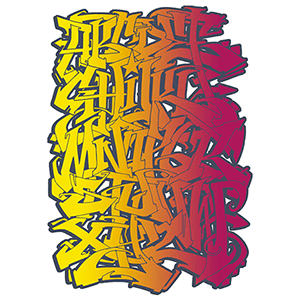
Inkie is a London based painter and street artist, originally from Bristol. He is cited as being part of Bristol’s graffiti heritage, along with Banksy, 3D and Nick Walker. Inkie began working as part of Crime Incorporated Crew (CIC) in 1983, along with Felix and Joe Braun. He was one of many arrested in 1989 during ‘Operation Anderson,’ the UK’s largest ever graffiti bust. He arranged 1998’s ‘Walls On Fire’ event with Banksy, on the site of the future At-Bristol center.
He has subsequently worked in the video game industry, including some time as head of creative design at Sega, where his work featured in ‘Jet Set Radio.’ Inkie was one artist present to do live painting at the launch of Banksy’s book ‘Bristol: Home Sweet Home.’ Inkie has likened the time spent training as a graffiti artist to that of classical musicians.
Posted in Art, Games, World |
Leave a Comment »
March 27, 2012
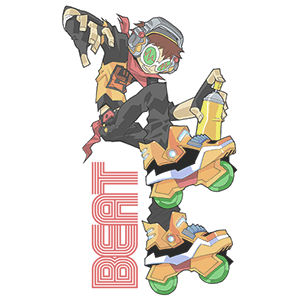
Jet Set Radio Future is a video game developed by Smilebit and the sequel to ‘Jet Set Radio’ (also known as ‘Jet Grind Radio’). It was published by Sega in 2002 in the US, near the beginning of the Xbox’s lifespan. Similar to the original, it depicts a future Tokyo where freedom of expression is outlawed. The user plays a character in the GG’s, a gang of in-line skating graffiti artists who skate around Tokyo covering up rival gangs’ graffiti, knocking over Rokkaku police, and dancing to the eclectic soundtrack.
The game uses a cel-shaded style of animation, and has been widely acclaimed for its unique music style, detailed art, and gameplay. The soundtrack introduces artists that are either foreign, not found mainstream, or work under gaming licenses such as Guitar Vader, BS 2000 (the side project of Adrock of the Beastie Boys), Hideki Naganuma, Scapegoat Wax, The Latch Brothers (including Mike D of the Beastie Boys, Richard Jacques, Chris ‘Wag’ Wagner and Kenny Tick Salcido), Cibo Matto, and The Prunes.
Posted in Art, Games, World |
Leave a Comment »
March 26, 2012

The World Pyro Olympics is an annual competition amongst the most prestigious fireworks companies in the world. The event is one of the largest and most intense international fireworks competitions of the world. The World Pyro Olympics runs through a period of five consecutive days allowing locals and tourists alike to experience the greatest fireworks display in the world.
Two countries fire each day; the last participant fires on the final evening of the event. The host of the event does not participate in the competition but performs a fireworks display on the last night. Awards, such as the People’s Choice, are given out after the exhibition. The crowning of the World Pyro Olympics Champion ends the event.
Posted in Games, Money, World |
Leave a Comment »
March 26, 2012

The World Fireworks Championship is one of the largest pyrotechnic competitions in the world. It takes place annually over three weeks in December and features separate fireworks displays from six international pyrotechnic production companies. Competitors come from all over the globe, with participating teams providing a 25 minute long ‘pyromusical’ show for the attending crowds.
At the end of each display, a score is awarded by a team of four international judges. By the tournament’s conclusion, the competitor with the highest score is presented with the Winner’s Trophy, which is made from solid gold. The design of the trophy is influenced by the host city taking part. As all of the firework displays are synchronized to music, each display is broadcast over the host city’s local radio stations. The host city does not take part in the displays but provides the setting for the closing ceremony and winner’s banquet.
Posted in Games, Money, World |
Leave a Comment »


 The Daily Omnivore