March 24, 2012
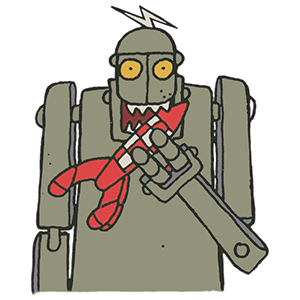
Métal Hurlant (literal translation: ‘Screaming Metal’) is a French comics anthology of science fiction and horror comics stories, created in December 1974 by comics artists Jean Giraud (better known as Moebius) and Philippe Druillet together with journalist-writer Jean-Pierre Dionnet and financial director Bernard Farkas. The four were collectively known as ‘Les Humanoïdes Associés’ (‘United Humanoids’), which became the name of the publishing house releasing ‘Métal Hurlant.’ It was published in the US by National Lampoon under the title ‘Heavy Metal.’
The magazine was originally released quarterly; it consisted of 68 pages, of which only 18 were in color. Contributors included Moebius and Druillet, and such characters Arzach and Lone Sloane. Later issues featured Richard Corben, Alejandro Jodorowsky, Enki Bilal, Caza, Serge Clerc, Alain Voss, Berni Wrightson, Milo Manara, Frank Margerin and many others. Apart from comics, the magazine contained articles about science fiction books and movies, as well as music and videogame reviews. ‘Metal Hurlant,’ emphasizing complex graphics, cinematic imagery and surreal storylines, was highly influential throughout the world as one of the first mature expressions of ‘adult’ comic book making. It ceased publication in 1987.
Posted in Art, World |
Leave a Comment »
March 24, 2012
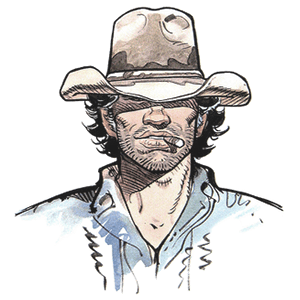
Blueberry is a Franco-Belgian comics western series created by the Belgian scriptwriter Jean-Michel Charlier and French comics artist Jean Moebius’ Giraud. It chronicles the adventures of Mike ‘Blueberry’ Donovan on his travels through the American Old West. Blueberry is an atypical western hero; he is not a wandering lawman who brings evil-doers to justice, nor a handsome cowboy who ‘rides into town, saves the ranch, becomes the new sheriff and marries the schoolmarm.’
He is accompanied in many tales by his hard-drinking deputy, Jimmy McClure, and later also by Red Woolley, a rugged pioneer. Donovan is the son of a rich Southern farmer and started as a dedicated racist. He was framed for a murder he did not commit, had to flee and was saved by an African-American. He became an enemy of discrimination of all kinds, fought against the Confederates (although he was a Southerner himself), and tried to protect the rights of Native Americans.
read more »
Posted in Art, Language, World |
Leave a Comment »
March 24, 2012
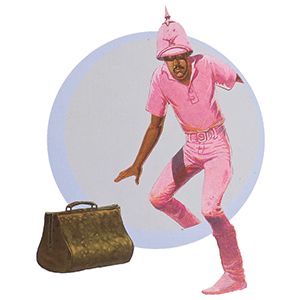
‘The Airtight Garage of Jerry Cornelius’ (‘Le Garage Hermétique de Jerry Cornelius’) is a lengthy comic strip work by the artist and writer Moebius (real name Jean Giraud). It first appeared in discrete two-to-four page episodes, in the French magazine ‘Metal Hurlant’ between 1976 and 1980, and later in the American version of the same magazine, ‘Heavy Metal,’ starting in 1977.
‘The Airtight Garage’ was followed by ‘L’Homme du Ciguri’ (‘The Man from the Ciguri’) in 1995. Some of the characters from these stories also show up in the 1974 comic ‘Le Bandard Fou’ (‘The Horny Goof’), which can be considered a prequel. The story is at times confusing, as Moebius was making it up as he went along. The ‘garage’ itself is actually an asteroid in the constellation Leo which houses a pocket universe. Major Grubert orbits the asteroid in his spaceship Ciguri, from which he oversees the development of the worlds contained within. Several entities, including Jerry Cornelius, seek to invade the garage.
Posted in Art, Language, World |
Leave a Comment »
March 24, 2012
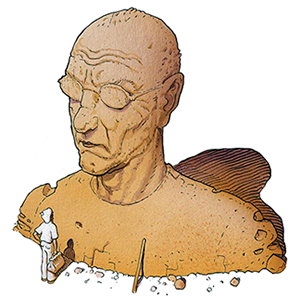
Jean Giraud (1938 – 2012) was a French comics artist, working in the French tradition of bandes dessinées (Franco-Belgian comics). Giraud earned worldwide fame, predominantly under the pseudonym ‘Moebius,’ and to a lesser extent ‘Gir,’ the latter appearing mostly in the form of a boxed signature at the bottom of the artist’s paintings. Esteemed by Federico Fellini, Stan Lee, and Hayao Miyazaki among others, he received international acclaim. He has been described as the most influential bandes dessinées artist after ‘Tintin’ creator Hergé.
Among Giraud’s most famous works are the Western comic series ‘Blueberry’ he co-created with writer Jean-Michel Charlier, one of the first Western anti-heroes to appear in comics. Under the pseudonym Moebius he created a wide range of science fiction and and fantasy comics in a highly imaginative and surreal almost abstract style, the most famous of which are ‘Arzach,’ the ‘Airtight Garage of Jerry Cornelius,’ and ‘The Incal.’
read more »
Posted in Art, World |
Leave a Comment »
March 24, 2012
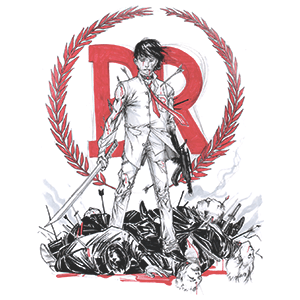
Battle Royale is a 2000 Japanese thriller film based on the novel of the same name by Koushun Takami. It was directed by Kinji Fukasaku. The film tells the story of a high-school student struggling with the death of his father who is forced by the government to compete in a deadly game, where the students must kill each other in order to win. The film aroused international controversy and was either banned or excluded from distribution in many countries, but was a domestic blockbuster, and is one of the 10-highest grossing films in Japan.
Kinji Fukasaku stated that he decided to direct the film because the novel it was adapted from reminded him of his time as a 15-year-old munitions factory worker during World War II. At that time, his class was made to work in a munitions factory. In July 1945, the factory came under artillery fire. The children could not escape so they dived under each other for cover. The surviving members of the class had to dispose of the corpses. At that point, Fukasaku realized that the Japanese government was lying about World War II, and he developed a burning hatred of adults in general that he maintained for a long time afterwards.
Posted in Art, Death, World |
1 Comment »
March 24, 2012
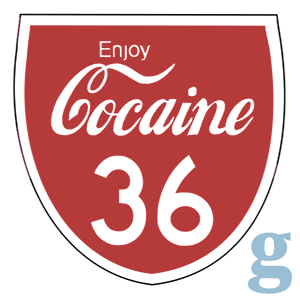
Route 36 is an illegal after-hours lounge in La Paz, Bolivia, and, according to ‘The Guardian,’ the world’s first cocaine bar. Although cocaine, an addictive stimulant derived from the coca plant, is illegal in Bolivia, political corruption and affordability of locally produced cocaine have resulted in Route 36 becoming a popular destination for thousands of drug tourists each year.
Many customers learn about the bar’s existence through travel websites and by word of mouth promotion. To avoid complaints from nearby business owners or residents, Route 36 does not operate in the same location for more than a few weeks at a time. Its location can only be found by word of mouth information.
Posted in Drugs, Money, World |
Leave a Comment »
March 23, 2012

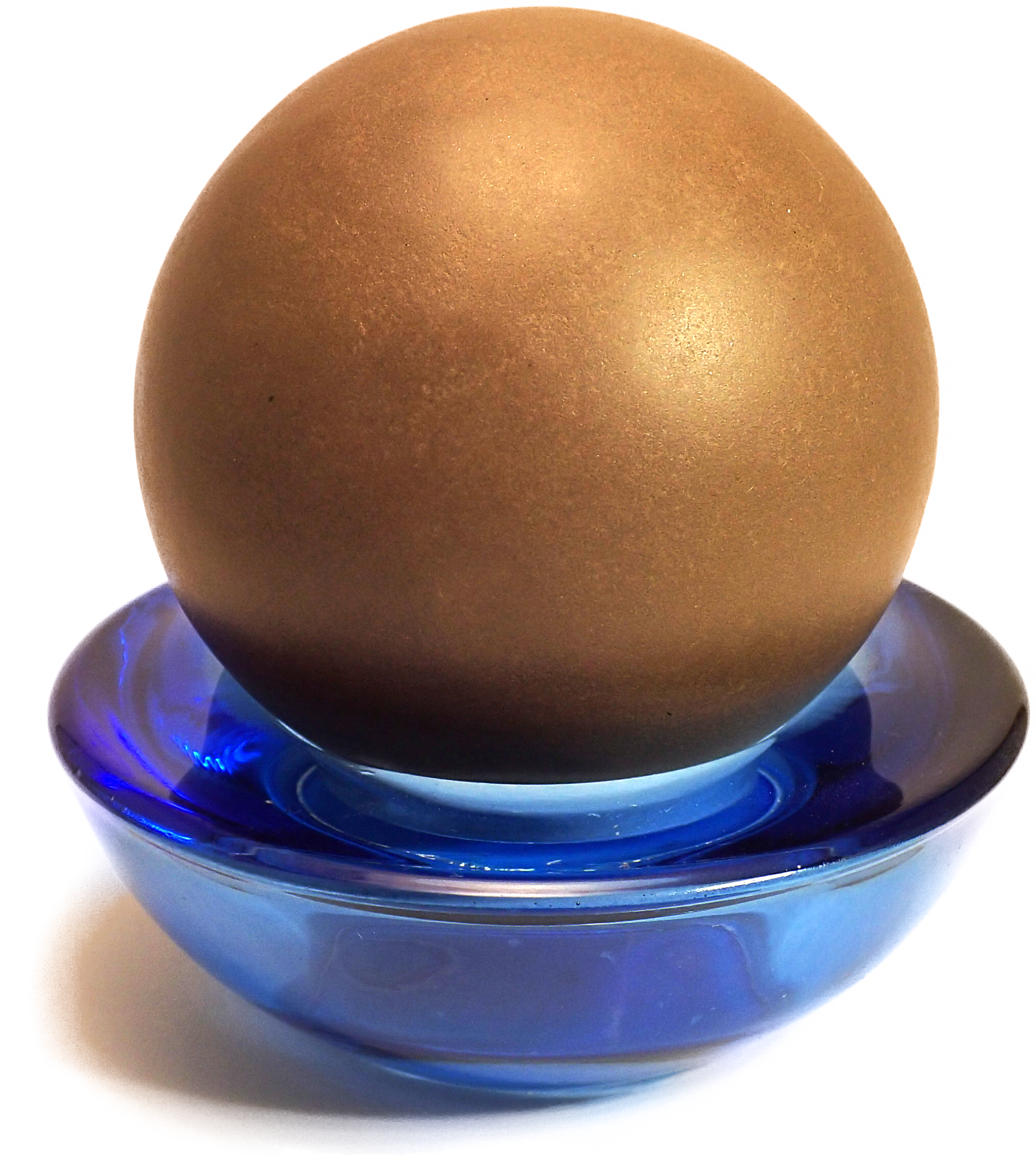
Dorodango is a Japanese art form in which earth and water are molded to create a delicate shiny sphere, resembling a marble or billiard ball. The phrase is derived from ‘doro’ (‘mud’) and ‘dango’ (a round dumpling, created from pressed rice flour). Making the basic dorodango is a traditional pastime for school children.
More recently the process has been refined into the art of the ‘hikaru’ (‘shining’) dorodango, which has a glossy or patterned surface. The core of the ball is made of basic mud, and further dusted with finer-grained soil before the water is drawn out through various methods- even sealing the ball inside a plastic bag and letting the water evaporate and then condense. Once the ball is fully tempered and hardened, it is polished by hand and displayed.
Posted in Art, Games, World |
Leave a Comment »
March 23, 2012
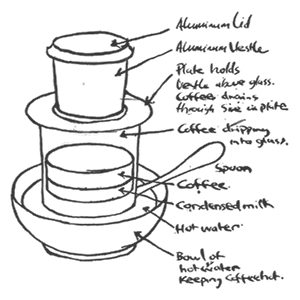
Vietnamese iced coffee is known as ‘Ca phe da.’ When milk is added it is called, ‘ca phe sua da.’ In northern Vietnam it is called ‘ca phe nau da’ (‘iced brown coffee). In its simplest preperation, Ca phe da is made with finely ground Vietnamese-grown dark roast coffee individually brewed with a small metal French drip filter (ca phe phin) into a cup containing about a quarter to a half as much sweetened condensed milk, stirred and poured over ice. Coffee was introduced into Vietnam by French colonists in the late 19th century. Vietnam quickly became a strong exporter of coffee with many plantations in the central highlands. The beverage was adopted with regional variations. Because of limitations on the availability of fresh milk, the French and Vietnamese began to use sweetened condensed milk with a dark roast coffee.
Vietnamese-Americans introduced the practice of adding chicory to coffee, and many Americans today believe that all true Vietnamese coffee contains chicory. One brand that uses chicory is Cafe du Monde, often cited as the coffee to use when brewing Vietnamese iced coffee. However, Cafe du Monde originated in New Orleans, and chicory coffee is an American phenomenon. In Vietnam, coffee is never served with chicory. Vietnamese brands such as Trung Nguyen or Indochine Coffee, both of which are headquartered in Vietnam and offer exclusively coffee grown in the central highlands.
Posted in Food, World |
Leave a Comment »
March 22, 2012
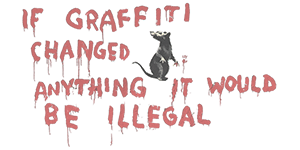
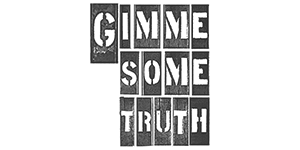
Street art is art, specifically visual art, developed in public spaces — that is, ‘in the streets’ — though the term usually refers to unsanctioned art, as opposed to government sponsored initiatives. The term can include traditional graffiti artwork, sculpture, stencil graffiti, sticker art, wheatpasting and street poster art, video projection, art intervention, guerrilla art, and street installations.
Typically, the term street art or the more specific post-graffiti is used to distinguish contemporary public-space artwork from territorial graffiti, vandalism, and corporate art. Artists have challenged art by situating it in non-art contexts. ‘Street’ artists do not aspire to change the definition of an artwork, but rather to question the existing environment with its own language. They attempt to have their work communicate with everyday people about socially relevant themes in ways that are informed by aesthetic values without being imprisoned by them. NYC based artist John Fekner defines street art as ‘all art on the street that’s not graffiti.’
read more »
Posted in Art, Politics, World |
Leave a Comment »
March 22, 2012

Giant Robot is a bi-monthly magazine of Asian and Asian American popular culture founded in 1994. It covers history, art, music, film, books, toys, technology, food and skateboarding. The publication grew from its original format—a small, photocopied zine, folded and stapled by hand—to its current full-color format. ‘Giant Robot’ was one of the earliest American publications to feature prominent Asian film stars such as Chow Yun-fat and Jet Li, as well as Asian musicians from indie and punk rock bands. Today, the coverage has expanded into art, design, Asian American issues, travel, and more.
In the late 1990s, Giant Robot expanded their endeavor to an online retail store selling artist goods, designer vinyl dolls, mini-figures, plush dolls, stationeries, art, t-shirts, and many creative goods. The success of the commercial website enabled the establishment of a brick-and-mortar retail store in 2001; first in Los Angeles and later in San Francisco. A third store, called GR2, was opened in Los Angeles, and features work by young contemporary artists. Giant Robot further expanded to a fourth store in New York City, and a fifth in Silverlake, as well as a restaurant called gr/eats, also in Los Angeles. The GR2, San Francisco, and New York locations feature monthly art exhibitions from up and coming and established artists.
Posted in Art, Language, World |
Leave a Comment »
March 21, 2012
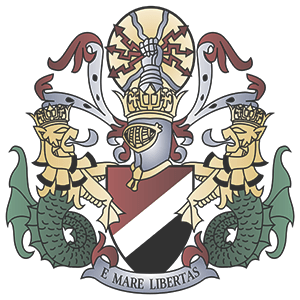
The Principality of Sealand is an unrecognized micronation, located on HM Fort Roughs, a former World War II Maunsell Sea Fort in the North Sea 10 km (six miles) off the coast of Suffolk, England. Since 1967, the facility has been occupied by the former British Major Paddy Roy Bates; his associates and family claim that it is an independent sovereign state.
While it has been described as the world’s smallest nation, or a micronation, Sealand is not currently officially recognized by any established sovereign state. Although Roy Bates claims it is de facto recognized by Germany as they have sent a diplomat to the micronation, and by the UK after an English court ruled it did not have jurisdiction over Sealand, neither action constitutes de jure recognition as far as the respective countries are concerned.
read more »
Posted in Money, Politics, World |
1 Comment »
March 19, 2012
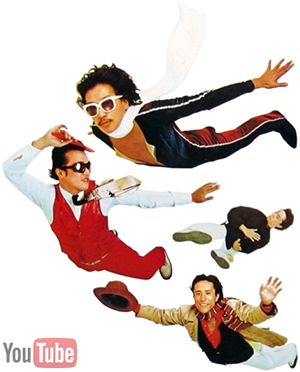
Sadistic Mika Band was a Japanese rock group formed in 1972. Its name is a parody of the ‘Plastic Ono Band.’ Produced by Masatoshi Hashiba on Toshiba-EMI Records (now EMI Music Japan), the band was led by the then husband and wife team of guitarist Kazuhiko Kato, and his wife, singer Mika Fukui. The word ‘sadistic’ is reported to be inspired by her insensitive sense of humor.
Kazuhiko Kato moved to London in 1972 and impressed by the burgeoning glam rock scene led by T. Rex and David Bowie, he set about forming a new group in Japan to emulate the style. Kato passed the album to Malcolm McLaren who at the time had a shop with Vivienne Westwood, and McLaren passed it on to Bryan Ferry, whose band Roxy Music would later support on a tour.
Posted in Art, Humor, World |
Leave a Comment »



 The Daily Omnivore