February 18, 2012

The Limits to Growth is a 1972 book modeling the consequences of a rapidly growing world population and finite resource supplies, commissioned by the Club of Rome (a global think tank) and firstly presented at the 3. St. Gallen Symposium (an annual conference taking place at the University of St. Gallen in Switzerland, aimed at fostering intergenerational and intercultural dialogue between the decision makers of today and tomorrow). The book echoes some of the concerns and predictions of the Reverend Thomas Robert Malthus in ‘An Essay on the Principle of Population’ (1798).
Its authors were Donella H. Meadows, Dennis L. Meadows, Jørgen Randers, and William W. Behrens III. The book used World3, a computer model to simulate the consequence of interactions between the Earth’s and human systems. Five variables were examined in the original model, on the assumptions that exponential growth accurately described their patterns of increase, and that the ability of technology to increase the availability of resources grows only linearly. These variables are: world population, industrialization, pollution, food production and resource depletion.
read more »
Posted in Politics, Technology, World |
Leave a Comment »
February 18, 2012


The Race of the Future theory states that due to the process of miscegenation, the mixing of different races, especially in marriage, cohabitation, or sexual relations, all the races are blending to become one single new race in the future. Count Richard Nikolaus von Coudenhove-Kalergi distinctly advocated race mixing in his 1925 book ‘Practical Idealism’: ‘The man of the future will be of mixed race. Today’s races and classes will gradually disappear owing to the vanishing of space, time, and prejudice. The Eurasian-Negroid race of the future, similar in its appearance to the Ancient Egyptians, will replace the diversity of peoples with a diversity of individuals.’
The same scenario had been envisaged, with rather less enthusiasm, by Madison Grant in his 1916 book ‘The Passing of the Great Race,’ calling for an eugenics program to prevent this development, and in a similar ideological context in Lothrop Stoddard’s ‘The Rising Tide of Color Against White World-Supremacy’ in 1920. In the United States, the proportion of Multiracial American children is growing. Interracial partnerships are rising, as are transracial adoptions.
Posted in Politics, Sex, World |
Leave a Comment »
February 18, 2012

The melting pot is a metaphor for a heterogeneous society becoming more homogeneous, the different elements ‘melting together’ into a harmonious whole with a common culture. It is particularly used to describe the assimilation of immigrants to the United States; the melting-together metaphor was in use by the 1780s.
After 1970 the desirability of assimilation and the melting pot model was challenged by proponents of multiculturalism, who assert that cultural differences within society are valuable and should be preserved, proposing the alternative metaphor of the mosaic or salad bowl – different cultures mix, but remain distinct.
read more »
Posted in Language, Politics, World |
Leave a Comment »
February 18, 2012

Feral pigeons are derived from domestic pigeons that have returned to the wild. The domestic pigeon was originally bred from the wild Rock dove, which naturally inhabits sea-cliffs and mountains. Feral pigeons find the ledges of buildings to be a substitute for sea cliffs, and have become adapted to urban life and are abundant in towns and cities throughout much of the world.
All pigeons are one species (columba livia). Pigeons breed when the food supply is good, which in cities can be any time of the year. Laying of eggs can take place up to six times per year. Pigeons mate for life, and are often found in pairs during the breeding season, but usually the pigeons are gregarious preferring to exist in flocks of from 50 to 500 birds.
read more »
Posted in Politics, Science, World |
Leave a Comment »
February 16, 2012

Kraftwerk (German: ‘power plant’ or ‘power station’) is an influential electronic music band from Germany. The group was formed by Ralf Hütter and Florian Schneider in 1970, and was fronted by them until Schneider’s departure in 2008. The signature Kraftwerk sound combines driving, repetitive rhythms with catchy melodies, mainly following a Western Classical style of harmony, with a minimalistic and strictly electronic instrumentation.
The group’s simplified lyrics are at times sung through a vocoder or generated by computer-speech software. Kraftwerk were one of the first groups to popularize electronic music and are considered pioneers in the field. In the 1970s and early 1980s, Kraftwerk’s distinctive sound was revolutionary, and has had a lasting effect across many genres of modern music.
read more »
Posted in Art, Technology, World |
Leave a Comment »
February 16, 2012

‘Trans-Europe Express‘ is the title track of Kraftwerk’s 1977 album of the same name, and released as a single at the time. The music was written by Ralf Hütter, and the lyrics by Hütter and Florian Schneider. The track is ostensibly about the Trans Europ Express rail system, with technology and transport both being common themes in Kraftwerk’s ouvre. The track has since found further influence, both in hip-hop by its interpolation by Afrika Bambaata (via Arthur Baker) on the seminal ‘Planet Rock’ and by modern experimental bands such as the electroclash bands of the early 2000s.
The musical elements of the suite have been described as having a haunting theme with ‘deadpan chanting of the title phrase’ which is ‘slowly layered over that rhythmic base in much the same way that the earlier ‘Autobahn’ was constructed.’ The song’s lyrics reference the album Station to Station and meeting with musicians Iggy Pop and David Bowie. Hütter and Schneider had previously met up with Bowie in Germany and were flattered with the attention they received from him. Ralf Hütter was interested in Bowie’s work as he had been working with Iggy Pop, who was the former lead singer of the Stooges; one of Hütter’s favorite groups.
Posted in Art, Technology, World |
Leave a Comment »
February 16, 2012

The Blip Festival is a festival that celebrates chiptune music with musical performances, workshops, and screenings of movies. It has been held annually since 2006 in New York City. In recent years, there have been international versions of Blip Festival held in Europe (Blip Festival Europe) and Asia (Blip Festival Tokyo).
The festival is curated and organized by 8bitpeoples, one of the foremost labels in the chiptune scene, as well as local arts organization The Tank. The New York festival (referred to simply as Blip Festival) has switched venues several times, beginning in 2006 at 15 Nassau Street in Manhattan, then moving to Eyebeam Art and Technology Center in 2007, and then being held in Brooklyn at the Bell House in 2008 and 2009.
Posted in Art, Technology, World |
Leave a Comment »
February 15, 2012

Justin is a humanoid robot developed by the German Aerospace Center (DLR) controlable through telepresence. Justin will be mounted on its own satellite and will be able to maneuver in orbit and fix other satellites.
The European Space Agency (ESA) plans to have astronauts aboard the International Space Station teleoperate Justin while he is on Earth.
Posted in Technology, World |
Leave a Comment »
February 15, 2012

The concept of Cool Japan, along with that of ‘Gross National Cool,’ was coined in 2002 as an expression of Japan’s emergent status as a cultural superpower. Gaining broad exposure in the media and academia, the brand of ‘Cool Japan’ has been adopted by the Japanese government as well as trade bodies seeking to exploit the commercial capital of the country’s culture industry. It has been described as a form of soft power, ‘the ability to indirectly influence behaviour or interests through cultural or ideological means.’
In a 2002 article in ‘Foreign Policy’ entitled ‘Japan’s Gross National Cool,’ Douglas McGray wrote of Japan ‘reinventing superpower’ as its cultural influence expanded internationally despite the economic and political problems of the ‘lost decade.’ Surveying youth culture and the role of manga, anime, fashion, film, consumer electronics, architecture, cuisine, J-pop, and phenomena of cuteness such as Hello Kitty, McGray highlighted Japan’s considerable soft power, posing the question of what message the country might project. He also argued that Japan’s recession may even have boosted its national cool, due to the partial discrediting of erstwhile rigid social hierarchies and big-business career paths.
Posted in Art, Money, World |
Leave a Comment »
February 15, 2012
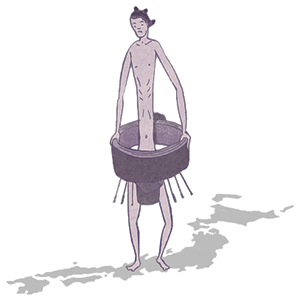
The Lost Decade is the time after the Japanese asset price bubble’s collapse within the Japanese economy, which occurred gradually rather than catastrophically. The term originally referred to the years 1991 to 2000, but recently the decade from 2001 to 2010 is also sometimes included, so that the whole period of the 1990s and 2000s is referred to as the Lost Decades or the Lost Years.
The strong economic growth of the 1980s ended abruptly at the start of the 1990s. In the late 1980s, abnormalities within the Japanese economic system had fueled a massive wave of speculation by Japanese companies, banks and securities companies. A combination of exceptionally high land values and exceptionally low interest rates briefly led to a position in which credit was both easily available and extremely cheap. This led to massive borrowing, the proceeds of which were invested mostly in domestic and foreign stocks and securities.
read more »
Posted in Money, Politics, World |
1 Comment »
February 14, 2012

Human Flesh Search (HFS) is a primarily Chinese internet phenomenon of massive researching using Internet media such as blogs and forums. It has generally been stigmatized as being for the purpose of identifying and exposing individuals to public humiliation, usually out of Chinese nationalistic sentiment, or conversely, to break the Internet censorship in China.
More recent analyses, however, have shown that it is also used for a number of other reasons, including exposing government corruption, identifying hit and run drivers, and outing scientific fraud, as well as for more entertainment related items such as identifying people seen in pictures. The system is based on massive human collaboration. The name refers both to the use of knowledge contributed by human beings through social networking, as well as the fact that the searches are usually dedicated to finding the identity of a human being who has committed some sort of offense or social breach online. People conducting such research are commonly referred to collectively as ‘Human Flesh Search Engines.’
read more »
Posted in Politics, Technology, World |
Leave a Comment »
February 13, 2012

Poshlost is a Russian word that has been defined as ‘petty evil or self-satisfied vulgarity,’ however there is no single English translation.
At more length, ‘Poshlost’ is the Russian version of banality, with a characteristic national flavoring of metaphysics and high morality, and a peculiar conjunction of the sexual and the spiritual. This one word encompasses triviality, vulgarity, sexual promiscuity, and a lack of spirituality. The war against poshlost’ was a cultural obsession of the Russian and Soviet intelligentsia from the 1860s to 1960s.’
read more »
Posted in Language, Sex, World |
Leave a Comment »



 The Daily Omnivore