January 16, 2012

Wakamaru is a Japanese domestic robot made by Mitsubishi Heavy Industries, primarily intended to provide companionship to elderly and disabled people. The robot is yellow, 1m tall, and weighs 30 kilograms. It has two arms and its flat, circular base has a diameter of 45 cm. The first hundred went on sale in 2005, for USD $14,000. Wakamaru runs a Linux operating system on multiple microprocessors.
It can connect to the Internet, and has limited speech (in both male and female voices) and speech recognition abilities. Functions include reminding the user to take medicine on time, and calling for help if it suspects something is wrong. Wakamaru was the childhood name of Minamoto no Yoshitsune, a 12th century Japanese general.
Posted in Health, Technology, World |
1 Comment »
January 16, 2012

Paro is a therapeutic robot baby harp seal, intended to be very cute and to have a calming effect on and elicit emotional responses in patients of hospitals and nursing homes, similar to Animal-Assisted Therapy. It was designed by Takanori Shibata of the Intelligent System Research Institute of Japan’s AIST beginning in 1993. It was first exhibited to the public in late 2001 and handmade versions have been sold commercially since 2004.
Paro is based on harp seals Shibata saw in Canada, where he also recorded their cries that Paro uses. The robot has tactile sensors and responds to petting by moving its tail and opening and closing its eyes. It also responds to sounds and can learn a name. It can show emotions such as surprise, happiness and anger. It produces sounds similar to a real baby seal and (unlike a real baby seal) is active during the day and goes to sleep at night.
Posted in Health, Technology, World |
Leave a Comment »
January 16, 2012

Dustbot is a robot that collects garbage from homes. It can be summoned by phone call or SMS, and uses GPS to automatically make its way to the customer, collect the rubbish, and take it to a dustbin. In addition, the Dustbots carry environmental sensors to monitor the pollution levels over, for example, a pedestrian area.
Prototypes have been tested in Italy and Sweden and Ireland. The Dustbot project is funded by the European Commission. The Dustbot system, consisting of the DustCart and the DustClean robots, is designed to work in tight urban areas where large trucks find it difficult to operate, such as old European cities.
Posted in Technology, World |
1 Comment »
January 16, 2012

The Happy Human is a secular icon and the official symbol of the International Humanist and Ethical Union (IHEU), a world body for Humanism, and has been adopted by many Humanist organisations and individuals worldwide. Its origin was a competition organized in 1965 by the British Humanist Association to find a symbol for itself.
The winning design was created by Denis Barrington. The trademark is still held by the British Humanist Association, which freely licenses use of the symbol by bona fide Humanist organizations worldwide. A great many Humanist organizations use the symbol or an adapted version of it.
Posted in Philosophy, Politics, World |
Leave a Comment »
January 15, 2012

A hoodie is a sweatshirt with a hood. They often include a muff sewn onto the lower front, and a drawstring to adjust the hood opening, and may have a vertical zipper down the center similar to a windbreaker style jacket.
The garment’s style and form can be traced back to Medieval Europe when the formal wear for monks included a long, decorative hood called cowl worn a tunic or robes. The modern clothing style was first produced by Champion in the 1930s and marketed to laborers who endured freezing temperatures in upstate New York.
read more »
Posted in Money, Politics, World |
Leave a Comment »
January 15, 2012

Preved is a term used in Russian Internet slang (Padonkaffsky jargon); it is a meme which developed out of a heavily-circulated picture, and consists of choosing alternative spellings for words for comic effect. The picture, a modified version of John Lurie’s watercolor ‘Bear Surprise,’ features a man and a woman having sex in the clearing of a forest, being surprised by a bear calling ‘Surprise!’ with its paws raised. In later Russian adaptations, the bear shouts ‘Preved!’ (a deliberate misspelling of ‘privet,’ ‘hi!’).
The word and the bear image have found their way into the mainstream mass media, such as a poster for the Russian edition of ‘Newsweek.’ In 2006 at an online conference, Vladimir Putin was asked: ‘PREVED, Vladimir Vladimirovich! How do you regard MEDVED?’ No answer was given, but the Associated Press, informing on the questions collection process, reportedly interpreted it as a reference to then-vice-prime-minister Dmitry Medvedev. It was the most popular question asked at the conference (the third most popular question was ‘How does one patch KDE2 under FreeBSD?’).
Posted in Humor, Sex, World |
Leave a Comment »
January 12, 2012


Generation X, commonly abbreviated to Gen X, is the generation born after the baby boom ended. While there is no universally agreed upon time frame, the term generally includes people born from the early 1960s through the early 1980s, usually no later than 1981 or 1982. The term had also been used in different times and places for various subcultures or countercultures since the 1950s.
The term Generation X was coined by the Magnum photographer Robert Capa in the early 1950s. He would use it later as a title for a photo-essay about young men and women growing up immediately after the Second World War. The project first appeared in ‘Picture Post’ (UK) and ‘Holiday’ (US) in 1953. Describing his intention, Capa said ‘We named this unknown generation, The Generation X, and even in our first enthusiasm we realized that we had something far bigger than our talents and pockets could cope with.’
read more »
Posted in Language, Politics, World |
Leave a Comment »
January 12, 2012
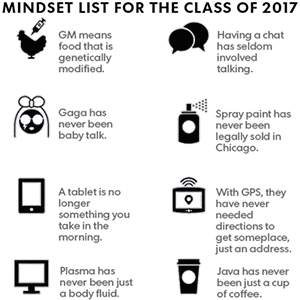
Generation Y, also known as Millennials, describes the demographic cohort following Generation X. While there is no universally agreed upon time frame, the term generally includes people born in the late 1980s, early to middle 1990s, or as late as the early 2000s. One segment of this age-group is often called the ‘eighties babies’ generation. Members of this generation are called Echo Boomers because many of them are children of baby boomers. The 20th century trend toward smaller families in developed countries continued, so the relative impact of the ‘baby boom echo’ was generally less pronounced than the original boom.
Characteristics of the generation vary by region, depending on social and economic conditions. However, it is generally marked by an increased use and familiarity with communications, media, and digital technologies. In most parts of the world its upbringing was marked by an increase in a neoliberal approach to politics and economics; the effects of this environment are disputed. Today, there are approximately 80 million Echo Boomers.
read more »
Posted in Politics, World |
Leave a Comment »
January 10, 2012

Fertility tourism or reproductive tourism is the practice of traveling to another country for fertility treatments. It may be regarded as a form of medical tourism. The main reasons for fertility tourism are legal regulation of the sought procedure in the home country, or lower price. In-vitro fertilization and donor insemination are major procedures involved. It has been proposed to be termed ‘reproductive exile’ to emphasis the difficulties and constraints faced by infertile patients, who are ‘forced’ to travel globally for reproductive procedures.
There is generally a demand for sperm donors who have no genetic problems in their family, 20/20 eyesight, a college degree, and sometimes a value on a certain height, age, eye color, hair texture, blood type and ethnicity. Anecdotal evidence suggests that the inventory of taller men who are blonde and blue eyed is most popular.
read more »
Posted in Politics, Sex, World |
Leave a Comment »
January 4, 2012
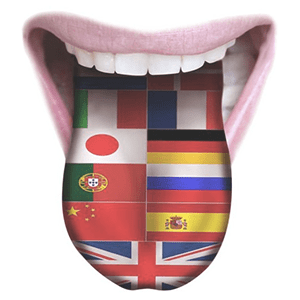
Harold Williams (1876 – 1928) was a New Zealand journalist, foreign editor of ‘The Times’ and is considered one of the most accomplished polyglots in history, said to have known over 58 languages and other related dialects. Like most youngsters his age, Harold wasn’t possessed by a voracious appetite for learning, but he recalled that, when he was about seven, ‘an explosion in his brain’ occurred and from that time his capacity to learn, in particular languages, grew to an extraordinary degree. He began with the study of Latin, one of the great root languages, and hungrily acquired others.
As a schoolboy he constructed a grammar and vocabulary of the New Guinea language Dobuan from a copy of St. Mark’s Gospel written in that language. Next he compiled a vocabulary of the dialect of Niue Island, again from the Gospel written in that language, and was published in the ‘Polynesian Journal.’
read more »
Posted in Language, Politics, World |
Leave a Comment »
January 2, 2012

A squeegee [skwee-jee] man is a person who, washcloth and squeegee in hand, wipes windshields of cars stopped in traffic and then solicits money from drivers. While squeegee men are a feature of life in many cities around the world, the phenomenon first became prevalent in New York City in the 1980s.
Although some merely provided a service, in other cases the windshield-washing would be carried out without asking, often perfunctorily, and with subsequent demands for payment, sometimes with added threats of smashing the car’s windshield if their demands were not met. Upon his election, mayor Rudy Giuliani famously embarked on a crusade against squeegee men as part of his quality-of-life campaign, claiming that their near-ubiquitous presence created an environment of disorder that encouraged more serious crime to flourish.
Posted in Money, Politics, World |
Leave a Comment »
January 2, 2012
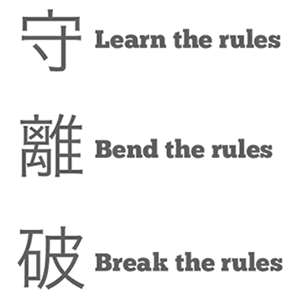
Shuhari is a Japanese martial art concept, and describes the stages of learning to mastery. It is sometimes applied to other Japanese disciplines, such as the board game Go. Shuhari roughly translates to ‘first learn, then detach, and finally transcend.
The Shuhari concept was first presented by Fuhaku Kawakami as Jo-ha-kyū in ‘Tao of Tea.’ Then, Zeami Motokiyo, the master of Noh plays, extended this concept to his dance as Shuhari, which then became a part of the philosophy of Aikido.
Posted in War, World |
Leave a Comment »


 The Daily Omnivore