December 1, 2011

An image club, is a type of brothel in Japan similar to ‘fashion health’ parlors (a form of massage parlor which circumvents Japanese anti-prostitution laws by offering a range of services that stop short of sexual intercourse).
They differ in that image clubs are themed along popular sexual fantasies such as a business office, a doctor’s office, a classroom, or a subway car. The prostitutes themselves, whose activities are usually limited to oral sex, wear exaggerated costumes appropriate to the setting and the desire of the customer.
Posted in Money, Sex, World |
Leave a Comment »
December 1, 2011

No-pan kissa (literally ‘no-panties cafe’) is a Japanese term for cafes where the waitresses wear short skirts with no underwear. The floors, or sections of the floor, are often mirrored. Customers order drinks and snacks and may look at, but not generally touch, the staff. The shops otherwise look like normal coffee shops, rather than sex establishments, although they charge around four times as much for coffee.
A later development in certain no-pan kissa was the creation of small private rooms where the staff provided sexual services like oral sex or masturbation. Eventually such coffee shops gave way to ‘fashion health’ clubs (a form of massage parlor which circumvents Japanese anti-prostitution laws by offering a range of services that stop short of sexual intercourse), and few, if any, remain. In addition to no-pan kissa, there have also been no-pan shabu-shabu, and no-pan yakiniku restaurants; and no-pan karaoke.
Posted in Money, Sex, World |
Leave a Comment »
December 1, 2011

Cyberculture is the culture that has emerged, or is emerging, from the use of computer networks for communication, entertainment and business. It is also the study of various social phenomena associated with the Internet and other new forms of network communication, such as online communities, online multi-player gaming, social media and texting.
Since the boundaries of cyberculture are difficult to define, the term is used flexibly, and its application to specific circumstances can be controversial. It generally refers at least to the cultures of virtual communities, but extends to a wide range of cultural issues relating to ‘cyber-topics,’ e.g. cybernetics. It can also embrace associated intellectual and cultural movements, such as cyborg theory in feminism and cyberpunk in literature. The term often incorporates an implicit anticipation of the future.
read more »
Posted in Language, Technology, World |
Leave a Comment »
December 1, 2011

Netnography is the branch of ethnography (the study and recording of human cultures) that analyzes the free behavior of individuals on the Internet that uses online marketing research techniques to provide useful insights.
The term was coined by market research expert Robert Kozinets. It provides information on the symbolism, meanings, and consumption patterns of online consumer groups.
read more »
Posted in Money, Technology, World |
Leave a Comment »
November 30, 2011
Nobukazu Takemura (b. 1968) is a Japanese musician whose style has run from jazz to house to drum and bass to chamber music to electronic glitch within less than a decade. Born in Osaka he became interested in punk and New Wave music when young. At high school, after a record store job that exposed him to Jazz and Hip hop, he had regular gigs as a battle DJ. In 1990, Takemura founded Audio Sports with Yamatsuka Eye (of The Boredoms) and Aki Onda. Their first album, ‘Era of Glittering Gas,’ was released in 1992 (after which Onda subsequently took control of the project), the same year as Takemura’s first solo album, under the name DJ Takemura. He has also released material with Spiritual Vibes (since 1993) and as Child’s View (since 1994). He is currently paired with Childisc vocalist/composer Aki Tsuyuko under the touring name of Assembler.
He founded the Lollop and Childisc labels; his voluminous releases, remixes, and collaborations make a comprehensive discography difficult, and his music often defies any easy categorization. He emerged in the US after the release of ‘Scope’ on the Thrill Jockey label in 1999, an album that features delicate melodies blossoming from oceans of white noise and staccato electronics. His unique and complex approach to melody and instrumentation has generated a catalog of collaborations with critically acclaimed artists including Issey Miyake, Zu, Steve Reich, DJ Spooky, Yo La Tengo, and Tortoise. Takemura was responsible for the sound design of Sony’s robotic dog AIBO.
Posted in Art, Technology, World |
Leave a Comment »
November 30, 2011


In telecommunications, 4G is the fourth generation of cellular wireless standards. It is a successor to the 3G and 2G families of standards. Speed requirements for 4G service is 100 Mbit/s for high mobility communication (such as from trains and cars) and 1 Gbit/s for low mobility communication (such as pedestrians and stationary users). By comparison, 3G’s speed requirement is 200 kbit/s (0.2 Mbit/s). The International Telecommunication Union (ITU), an agency within the UN sets requirements for what is marketed as 4G. ITU recognized that current versions of LTE, WiMax and other evolved 3G technologies that do not fulfill the requirements could nevertheless be considered ‘4G,’ provided they represent ‘a substantial level of improvement in performance and capabilities with respect to the initial third generation systems now deployed.’
The nomenclature of the generations generally refers to a change in the fundamental nature of the service, non-backwards compatible transmission technology, higher spectral bandwidth and new frequency bands. New generations have appeared about every ten years since the first move from 1981 analog (1G) to digital (2G) transmission in 1992. This was followed, in 2001, by 3G multi-media support, spread spectrum transmission and at least 200 kbit/s, in 2011 expected to be followed by 4G, which refers to all-IP packet-switched networks, gigabit speed, and multi-carrier transmission.
Posted in Money, Technology, World |
Leave a Comment »
November 28, 2011

A plug (sometimes earplug or earspool), in the context of body modification, is a short, cylindrical piece of jewellery commonly worn in larger-gauge body piercings.
Because of their size—which is often substantially thicker than a standard wire earring—plugs can be made out of almost any material (e.g. acrylic glass, metal, wood, bone, stone, horn, glass, silicone, and porcelain).
read more »
Posted in Art, World |
Leave a Comment »
November 28, 2011

A flesh tunnel is a type of body piercing jewelry. It is also sometimes referred to as a spool, fleshy, earlet, expander or eyelet. They are hollow tunnels, usually used in stretched or scalpelled piercings. Some choose to wear them instead of solid flesh plugs because they weigh less. Flesh tunnels may be worn with a captive bead ring or other object passed through them. Flesh tunnels can be made from many materials, including surgical steel, titanium, Pyrex, silicone, acrylic, and a variety of natural materials, including bone, horn, amber, bamboo, stone, and wood.
Flesh tunnels are often worn in the earlobe, but other soft-tissue areas that are pierced can be used such as the nasal septum and nipples. In these cases the length of the tunnel might be different. The actual origin of flesh tunnels, plug piercings, and body plates derived from the many tribal groups of the world. The flesh tunnels symbolize different roles in their societies, for different groups, however, during the ancient Egyptian New Kingdom, both sexes wore a variety of jewelry, including earplugs/tunnels.
Posted in Art, World |
1 Comment »
November 23, 2011


Idiom [id-ee-uhm] (Latin: idioma, ‘special property’) is an expression, word, or phrase that has a figurative meaning that is comprehended in regard to a common use of that expression that is separate from the literal meaning or definition of the words of which it is made. There are estimated to be at least 25,000 idiomatic expressions in the English language.
In linguistics, idioms are usually presumed to be figures of speech contradicting the principle of compositionality; yet the matter remains debated. Linguist John Saeed defines an ‘idiom’ as words collocated that became affixed to each other until metamorphosing into a fossilised term. This collocation—words commonly used in a group—redefines each component word in the word-group and becomes an idiomatic expression. The words develop a specialized meaning as an entity, as an idiom.
read more »
Posted in Language, World |
1 Comment »
November 23, 2011
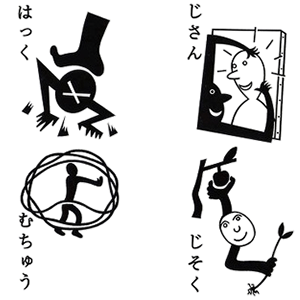
Chengyu are a type of traditional Chinese idiomatic expressions, most of which consist of four characters. Chengyu were widely used in Classical Chinese and are still common in vernacular Chinese writing and in the spoken language today. According to the most stringent definition, there are about 5,000 chengyu in the Chinese language, though some dictionaries list over 20,000. They are often referred to as Chinese idioms or four-character idioms; however, they are not the only idioms in Chinese.
Chengyu are mostly derived from ancient literature. The meaning of a chengyu usually surpasses the sum of the meanings carried by the four characters, as chengyu are often intimately linked with the myth, story or historical fact from which they were derived. As such, chengyu do not follow the usual grammatical structure and syntax of the modern Chinese spoken language, and are instead highly compact and synthetic.
read more »
Posted in Language, World |
Leave a Comment »
November 22, 2011

‘Three men make a tiger‘ is a Chinese proverb or chengyu (four-character idiom). Three men make a tiger refers to an individual’s tendency to accept absurd information as long as it is repeated by enough people. It refers to the idea that if an unfounded premise or urban legend is mentioned and repeated by many individuals, the premise will be erroneously accepted as the truth. This concept is analogous to communal reinforcement or the fallacy of argumentum ad populum.
The proverb came from the story of an alleged speech by Pang Cong, an official of the state of Wei in the Warring States Period (475 BCE – 221 BCE) in Chinese History. Before he left on a trip to the state of Zhao, Pang Cong asked the King of Wei whether he would hypothetically believe in one civilian’s report that a tiger was roaming the markets in the capital city, to which the King replied no. Pang Cong asked what the King thought if two people reported the same thing, and the King said he would begin to wonder. Pang Cong then asked, ‘what if three people all claimed to have seen a tiger?’ The King replied that he would believe in it. Pang Cong reminded the King that the notion of a live tiger in a crowded market was absurd, yet when repeated by numerous people, it seemed real. As a high-ranking official, Pang Cong had more than three opponents and critics; naturally, he urged the King to pay no attention to those who would spread rumors about him while he was away. ‘I understand,’ the King replied, and Pang Cong left for Zhao. Yet, slanderous talk took place. When Pang Cong returned to Wei, the King indeed stopped seeing him.
Posted in Language, World |
Leave a Comment »
November 21, 2011


Ilona Staller (b. 1951), also known by her stage name la Cicciolina, is a Hungarian-born Italian porn star, politician, and singer. She continued to make hardcore pornographic films while in office. She is famous for delivering political speeches with one breast exposed. In 1964 she began working for a Hungarian modeling agency; in her memoirs she claimed that she had provided Hungarian authorities with information on American diplomats staying at a Budapest luxury hotel where she worked as a maid in the late 1960s.
Staller married American sculptor Jeff Koons in 1991. Koons produced a series of sculptures and photographs of them having sex in many positions, settings and costumes, which were exhibited under the title ‘Made In Heaven.’ The marriage broke up in 1992, and their son Ludwig Maximillian was born shortly afterwards. Staller left the US with the child, and a lengthy custody battle ensued. Koons won custody in 1998 but Ludwig remains with Staller in Italy.
read more »
Posted in Politics, Sex, World |
Leave a Comment »



 The Daily Omnivore