November 21, 2011

Let’s trim our hair in accordance with the socialist lifestyle was part of a North Korean government propaganda campaign promulgating grooming and dress standards in 2004. It was broadcast on state-run Korean Central Television in the capital of Pyongyang and clips from the program were later rebroadcast on the BBC. The television program claimed that hair length can affect human intelligence, in part because of the deprivation to the rest of the body of nutrients required for hair to grow. It was one part of longstanding North Korean government restrictions on haircuts and fashions deemed at odds with ‘Socialist values.’
Such dress and hair standards have long been a fixture of North Korean society. Kim Jong-Il was known for his so called ‘Speed Battle Cut’ crew cut when he first came to prominence in the early 1980s, though he later reverted to the short sided bouffant favored by his father. After Kim Jong-Il succeeded his father, some of the state’s restrictions on Western fashion were relaxed. Women were allowed permanent waves, men could grow slightly longer hair, and even public dancing was allowed. Despite such slight concessions during the early years of Kim Jong-Il’s rule, obvious emblems of Western fashion such as jeans continued to be entirely banned, and long hair on men could lead to arrest and forced haircuts.
read more »
Posted in Humor, Politics, World |
Leave a Comment »
November 21, 2011
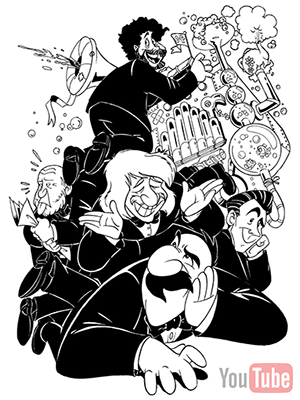
Les Luthiers [loo-tee-ers] is an Argentine comedy-musical group, very popular also in several other Spanish-speaking countries. They were formed in 1967 by Gerardo Masana, during the height of a period of very intense Choral Music activity in Argentina’s state universities.
Their outstanding characteristic is the home-made musical instruments (hence the name luthiers, French for ‘musical instrument maker’), some of them extremely sophisticated, which they skillfully employ in their recitals to produce music and texts full of high class and refined humor.
read more »
Posted in Art, Humor, World |
1 Comment »
November 20, 2011
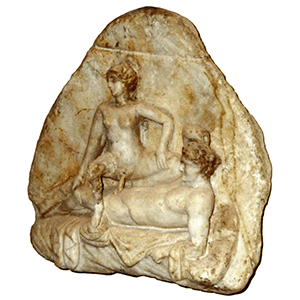
The term Secret Museum (Gabinetto Segreto) principally refers to the collection of erotic or sexually explicit finds from Pompeii, held in separate galleries in the Naples National Archaeological Museum, the former Museo Borbonico. The British Museum also contained secret rooms containing erotica. Throughout ancient Pompeii, erotic frescoes, depictions of the god Priapus, sexually explicit symbols, inscriptions, and even household items (such as phallic oil lamps) were found.
Ancient Roman culture had a different sense of shame for sexuality, and viewed sexually explicit material very differently to most present-day cultures. Ideas about obscenity developed from the 18th century to the present day into a modern concept of pornography.
read more »
Posted in Art, Sex, World |
Leave a Comment »
November 19, 2011
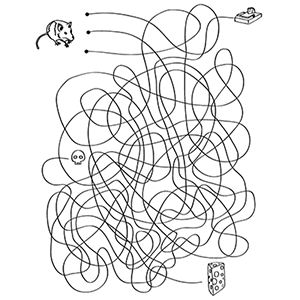
Rat running or cut-through driving refers to the use of secondary roads or residential side streets instead of the intended main roads in urban or suburban areas in order to avoid heavy traffic, lengthy traffic signals, or other obstacles lengthening a journey, even though traffic calming measures may be in place to discourage them and there may be laws against taking certain routes. Rat runs are frequently taken by motorists who are familiar with the local geography. They will often take such short cuts to avoid busy main roads and junctions (intersections).
The associations with ‘beating the crowd,’ the rush hour, and the rat race may have given rise to the term, or perhaps similarities were observed between the patterns of rat running driving routes and a rat running a maze.
read more »
Posted in Humor, Language, World |
Leave a Comment »
November 19, 2011

The term shunpiking comes from the word shun, meaning ‘to avoid,’ and pike, a term referring to turnpikes, which are roads that require payment of a toll to travel on them. People who often avoid toll roads sometimes call themselves shunpikers. Shunpiking has also come to mean an avoidance of major highways (regardless of tolls) in preference for bucolic and scenic interludes along lightly traveled country roads.
The word ‘shunpike’ may have its origins in post-colonial New Hampshire: When the ‘Turnpike’ was built, around 1810 or so, by the Hampton Causeway Turnpike Corporation, a toll was charged to cross it at Taylor’s River. Not content with the payment of a toll, some of the residents got together and built a slight bridge called the ‘Shunpike’ across the River, some distance west of the Turnpike bridge, where travelers and teamsters could cross without charge. This continued on until 1826, when the toll on the Turnpike was discontinued and has remained a free road to this day
read more »
Posted in Language, Money, World |
Leave a Comment »
November 19, 2011
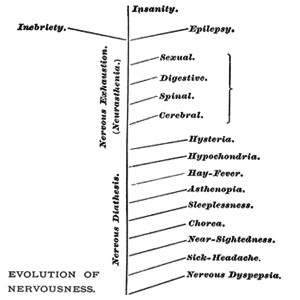
Neurasthenia [noor-uhs-thee-nee-uh] is a psycho-pathological term first used by American neurologist George Miller Beard in 1869 to denote a condition with symptoms of fatigue, anxiety, headache, neuralgia (pain of the nerves) and depressed mood. It is currently a diagnosis in the World Health Organization’s International Classification of Diseases (and in the Chinese Classification of Mental Disorders).
However, it is no longer included as a diagnosis in the American Psychiatric Association’s Diagnostic and Statistical Manual of Mental Disorders. Americans were supposed to be particularly prone to neurasthenia, which resulted in the nickname ‘Americanitis’ (popularized by American psychologist William James). Today, the condition is still commonly diagnosed in Asia.
read more »
Posted in Drugs, Health, World |
Leave a Comment »
November 19, 2011
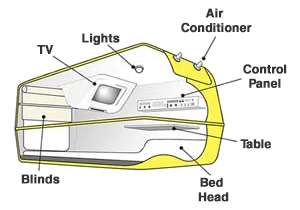

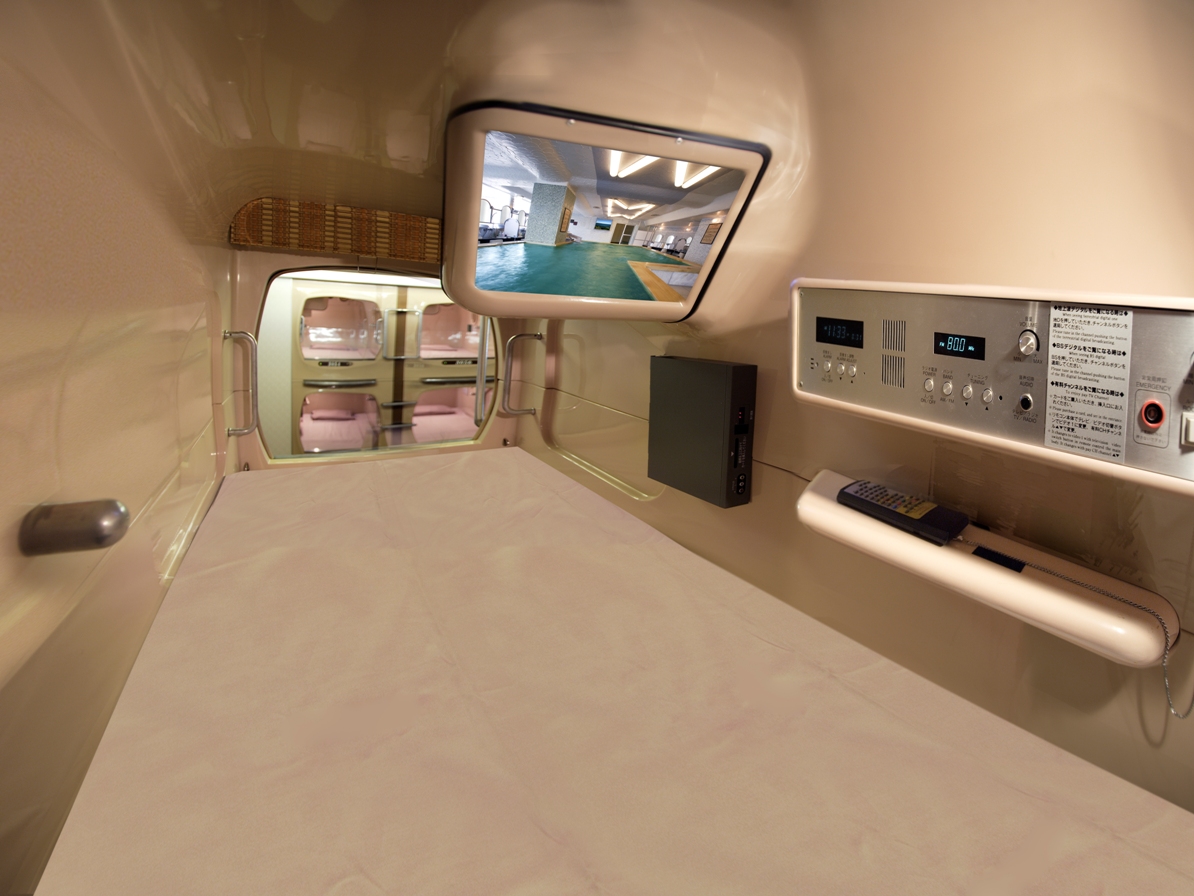
A capsule hotel is a type of hotel with a large number of extremely small ‘rooms’ (capsules) intended to provide cheap and basic overnight accommodation for guests not requiring the services offered by more conventional hotels. The guest space is reduced in size to a modular plastic or fiberglass block roughly 2 m by 1 m by 1.25 m. Most include a television, an electronic console, and wireless internet connection. Capsules are stacked side by side and two units top to bottom, with steps providing access to the second level rooms. Luggage is stored in a locker. Privacy is ensured by a curtain or a fiberglass door at the open end of the capsule. Washrooms are communal and some hotels include restaurants (or at least vending machines), pools, and other entertainment facilities.
This style of hotel accommodation was developed in Japan and has not gained popularity outside of the country, although Western variants known as ‘Pod hotels’ with larger accommodations and often private baths are being developed. Guests are asked not to smoke or eat in the capsules. Capsule hotels vary widely in size, some having only fifty or so capsules and others over 700. Many are used primarily by men. There are also capsule hotels with separate male and female sleeping quarters. Clothes and shoes are sometimes exchanged for a yukata (a casual summer kimono) and slippers on entry. A towel may also be provided. The benefit of these hotels is convenience and price, usually around ¥2000-4000 (US$26–52) a night.
Posted in Money, Technology, World |
Leave a Comment »
November 19, 2011
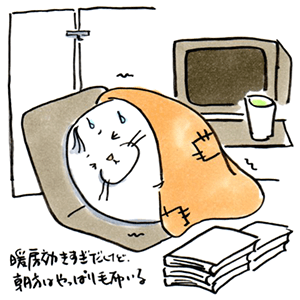
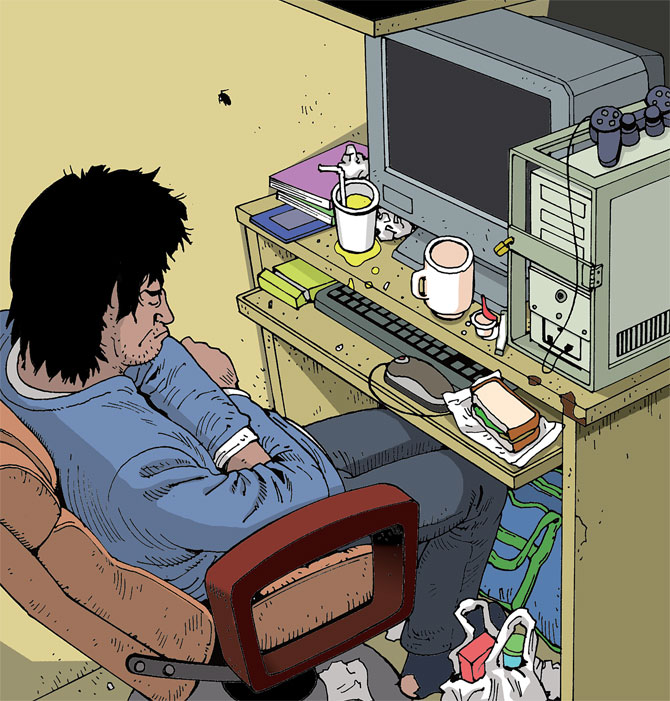
Net cafe refugees, also known as cyber-homeless, is a term for a growing class of people in Japan who do not own or rent a residence and thus have no permanent address and sleep in 24 hour Internet or manga cafés. Goods and services offered at these establishments has grown to include food, undergarments and other personal items, and showers. They are often used by commuters who miss the last train, but a growing number of people use net cafes as a temporary shelter. The fee of 1400-2400 yen (US $18-31) for a night—which may include free soft drinks, TV, comics and internet access—is less than for capsule hotels. Some cyber-homeless may also be freeters, a Japanese expression for people between the ages of 15 and 34 who lack full time employment or are unemployed, excluding housewives and students.
According to a Japanese government survey, those staying have little interest in manga or the Internet, and are instead using the place because of the low price relative to any of the competition for temporary housing, business hotels, capsule hotels, hostels, or any other option besides sleeping on the street. It was also estimated that about half of those staying have no job, while the other half work in low-paid temporary jobs, which paid around 100,000 yen ($1000) per month – lower than what is needed to rent an apartment and pay for transportation in a city like Tokyo.
Posted in Money, Technology, World |
Leave a Comment »
November 17, 2011
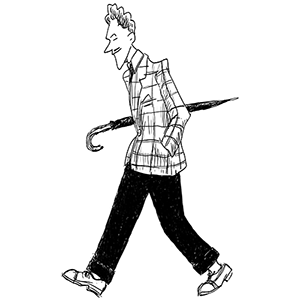
The Zazous were a subculture in France during World War II. They were young people expressing their individuality by wearing big or garish clothing (similar to the zoot suit fashion in America a few years before) and dancing wildly to swing jazz and bebop. Men wore large striped lumber jackets, while women wore short skirts, striped stockings and heavy shoes, and often carried umbrellas.
During the German occupation of France, the Vichy regime, in collaboration with the Nazis, and fascist itself in policies and outlook, had an ultra-conservative morality and started to use a whole range of laws against a youth that was restless and disenchanted. These young people expressed their resistance and nonconformity through aggressive dance competitions, sometimes against soldiers from the occupying forces.
read more »
Posted in Politics, War, World |
Leave a Comment »
November 17, 2011

Pocho [poh-choh] is a term used by native-born Mexicans to describe Chicanos who are perceived to have forgotten or rejected their Mexican heritage to some degree. Typically, pochos speak English and lack fluency in Spanish.
Among some pochos, the term has been embraced to express pride in having both a Mexican and an American heritage asserting their place in the diverse American culture. The word derives from the Spanish word ‘pocho,’ used to describe fruit that has become rotten or discolored.
read more »
Posted in Language, Politics, World |
Leave a Comment »
November 17, 2011
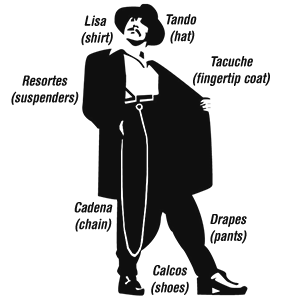
Pachucos [puh-choo-koh] are Chicano youths who developed their own subculture during the 1930s and 1940s in the Southwestern United States. They wore distinctive clothing (such as zoot suits) and spoke their own dialect of Mexican Spanish, called Caló or Pachuco. Due to their double marginalization stemming from their youth and ethnicity, there has always been a close association and cultural cross-pollination between the Pachuco subculture and gang subculture.
The Pachuco style originated in El Paso, Texas, and Ciudad Juárez, Mexico, and moved westward, following the line of migration of Mexican railroad workers (‘traqueros’) into Los Angeles, where it developed further. The word ‘pachuco’ originated, probably early in the 20th century, in a Mexican Spanish slang term for a resident of the cities of El Paso and Juárez. Even today, El Paso and Juárez are the ‘El Chuco’ or ‘El Pasiente’ by some.
read more »
Posted in Language, Politics, World |
1 Comment »
November 17, 2011

Allophilia [al-oh-fil-ee-u] is having a positive attitude for a group that is not one’s own. The term derived from Greek words meaning ‘liking or love of the other.’ It is a framework for understanding effective intergroup leadership and is conceptualized as a measurable state of mind with tangible consequences. The term was coined by Harvard sociologist Todd L. Pittinsky in 2006, after he was unable to find an antonym for prejudice in any dictionary. Studied by social scientists, allophilia is the antonym of negative prejudices and the antonym of a host of ‘–isms’ (e.g. ageism, sexism, racism), ‘-phobias’ (e.g. homophobia, islamophobia, xenophobia), and ‘anti-s’ (e.g. anti-communism, anti-intellectualism).
Allophilia has five statistical factors: affection, comfort, engagement, enthusiasm, kinship. The Allophilia Scale measures each of these factors. The typical remedy for prejudice is to bring conflicting groups into a state of tolerance. However, tolerance is not the logical antithesis of prejudice, but rather is the midpoint between negative feelings and positive feelings toward others. Allophilia enhancement should serve as complement to prejudice reduction. In one study, symhedonia (empathic joy) has been shown to be more closely associated with allophilia, while sympathy (empathic sorrow) has been shown to be more strongly associated with prejudice.
Posted in Philosophy, Politics, World |
Leave a Comment »


 The Daily Omnivore