November 16, 2011
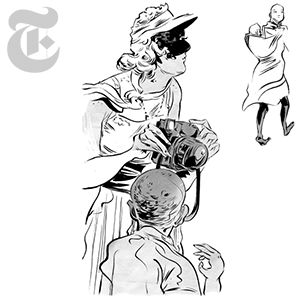
Slum tourism is a type of tourism that involves visiting impoverished areas, which has become increasingly prominent in several developing countries like India, Brazil, Kenya, and Indonesia. The Oxford English Dictionary found the first use of the word ‘slumming’ in 1884. In London, people visited neighborhoods such as Whitechapel or Shoreditch to see how the poor lived. In 1884 the concept moved to New York City to the Bowery and the Five Points area of the Lower East Side were visited to see ‘how the other half lives.’ In the 1980s in South Africa ‘township tours’ were organized to educate local governments on how the black population lived. It then attracted international tourists that wanted to support and learn more about apartheid. Prior to the release of ‘Slumdog Millionaire’ in 2008, Mumbai was a slum tourist destination.
Critics say slum tourism, like poorism, is likened to a kind of voyeurism, exploiting people less fortunate, snapping pictures and leaving nothing in return. Some tours do use portions of the profits to help out however. They have also courted controversy because of disputes about their safety, and fears that they misrepresent local culture.
Posted in Money, Politics, World |
Leave a Comment »
November 16, 2011

No true Scotsman is an informal logical fallacy, an ad hoc attempt to retain an unreasoned assertion. When faced with a counterexample to a universal claim, rather than denying the counterexample or rejecting the original universal claim, this fallacy modifies the subject of the assertion to exclude the specific case or others like it by rhetoric, without reference to any specific objective rule. The term was advanced by philosopher Antony Flew in his 1975 book ‘Thinking About Thinking: Do I sincerely want to be right?’ Imagine Hamish McDonald, a Scotsman, sitting down with his ‘Glasgow Morning Herald’ and seeing an article about how the ‘Brighton Sex Maniac Strikes Again.’ Hamish is shocked and declares that ‘No Scotsman would do such a thing.’ The next day he sits down to read his paper again and this time finds an article about an Aberdeen man whose brutal actions make the Brighton sex maniac seem almost gentlemanly. This fact shows that Hamish was wrong in his opinion but is he going to admit this? Not likely. This time he says, ‘No true Scotsman would do such a thing.’
An example of a political application of the fallacy could be in asserting that ‘no democracy starts a war,’ then distinguishing between mature or ‘true’ democracies, which never start wars, and ’emerging democracies,’ which may start them. At issue is whether or not something labeled as an ’emerging democracy’ is actually a democracy or something in a different conceptual category.
Posted in Language, Philosophy, World |
1 Comment »
November 16, 2011


Wigger [wig-er] is a pejorative slang term for a white person who emulates mannerisms, language, and fashions associated with African-American culture, particularly hip hop in the United States or the Grime/Garage scene in Britain. The term is a portmanteau of either wannabe or white and n****r. The term is considered derogatory, reflecting stereotypes of African-American or Black British culture, and can be used pejoratively, because of its connotations of cultural appropriation. It is also often used in a racist manner, not only belittling the person perceived as acting black, but also demeaning black people and culture by proxy. Some, however, use the term neutrally, or as a light joke, without any racism intended.
The phenomenon of white people adopting stereotypical black mannerisms, speech, and apparel – which in the general case is called allophilia – has appeared in several generations since slavery was abolished in the western world. The concept has been documented in the United States, Canada, United Kingdom, Australia and other white-majority countries. An early form of this was the ‘white negro’ in the jazz and swing music scenes of the 1920s and 1930s; as examined in the 1957 Norman Mailer essay, ‘The White Negro.’ It was later seen in the Zoot suiter of the 1930s and 1940s; the hipster of the 1940s; and the beatnik and rock and roller of the 1950s.
Posted in Language, Politics, World |
1 Comment »
November 16, 2011

Plastic Paddy is a slang term used to describe some members of the Irish diaspora, or those with no ancestral connection to Ireland, who appropriate (often stereotypical) Irish customs and identity. A Plastic Paddy may know little of actual Irish culture, but nevertheless assert an Irish identity. The term is pejoratively used to refer to people on the basis of their perceived lack of authenticity as Irish.
People who were not born in Ireland, and who did not grow up in Ireland, but nonetheless possess Irish citizenship and an Irish passport are often labelled as Plastic Paddies. The term came into common use in the 1980s when it was frequently employed as a term of abuse by recently-arrived middle class Irish migrants to London. It ‘became a means of distancing themselves from established Irish communities.’ And the use was a part of the process by which the second-generation Irish are positioned as inauthentic within the two identities, of Englishness and Irishness.
read more »
Posted in Language, Politics, World |
Leave a Comment »
November 16, 2011
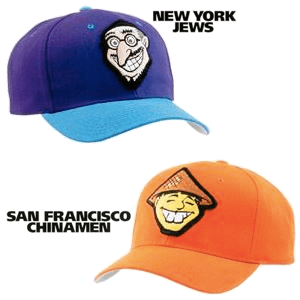
Cultural appropriation is the adoption of some specific elements of one culture by a different cultural group. It describes acculturation, the exchange of cultural features that results when different cultures come into continuous first hand contact; or assimilation, the process of integration where members of an ethno-cultural group, typically immigrants, or other minority groups, are ‘absorbed’ into an established, generally larger community.
It can include the introduction of forms of dress or personal adornment, music and art, religion, language, or social behavior. These elements, once removed from their indigenous cultural contexts, can take on meanings that are significantly divergent from, or merely less nuanced than, those they originally held.
read more »
Posted in Language, Politics, World |
Leave a Comment »
November 10, 2011

Weibo is the Chinese word for ‘microblog.’ It usually refers to one or all of the Twitter-like, China-based microblogging services, or one’s account at these services. Among the weibo services, Sina Weibo is the most visited one. Sina has used the domain name weibo.com for the service since 2011. Sometimes, the own published news of Sina.com and some other media use directly ‘Weibo’ to refer to Sina Weibo. However generally, when mentioning ‘Weibo,’ it may refer to one or all of the China-based microblogging services. After the 2009 Urumqi riots, China shut down most of the domestic weibo services, and many popular non China-based microblogging services like Twitter, Facebook, and Plurk have been blocked since then.
This led to the creation of services like Sina Weibo, operated by large Chinese Internet companies under the government’s control. Due to the Internet censorship in China, all of the China-based weibo services today is now controlled by various self-censorship policies and methods. They usually have blacklisted keywords list to be automatically checked, sometimes administrators check manually. Posts on sensitive topics forbidden in China (e.g. Human right, Liu Xiaobo) will be deleted and the user’s account may be blocked. However, compared to other Chinese media formats, weibo services are considered freer. Weibos are thought as influential tools that impact and change China. Some scandals and controversies such as Li Gang incident are made known to the public through weibos.
Posted in Politics, Technology, World |
Leave a Comment »
November 9, 2011

The term ‘Super Tuscan‘ describes any Tuscan red wine that does not adhere to traditional blending laws for the region. For example, Chianti Classico wines are made from a blend of grapes with Sangiovese as the dominant variety in the blend. Super Tuscans often use other grapes, especially cabernet sauvignon, making them ineligible for classification under the traditional rules.
In 1968 Azienda Agricola San Felice produced the first ever ‘Super Tuscan’ called Vigorello, and in the 1970s Piero Antinori, whose family had been making wine for more than 600 years, also decided to make a richer wine by eliminating the white grapes from the Chianti blend, and instead adding Bordeaux varietals (namely, Cabernet Sauvignon and Merlot).
read more »
Posted in Food, Money, World |
Leave a Comment »
November 8, 2011

Comfort food is food prepared traditionally that may have a nostalgic or sentimental appeal. Many comfort foods are flavorful and easily eaten, having soft consistencies. American comfort foods include apple pie, chicken soup, chili, chocolate chip cookies, fried chicken, macaroni & cheese, mashed potatoes, meatloaf, and potato salad. Australian comfort foods include vegemite, meat pies, fish and chips, chiko rolls, dim sims, and potato cakes.
In Chinese culture the comfort foods might differ between each households. Nevertheless the common theme is usually invoked nostalgic sentiments of home and family. Chinese comfort foods usually served warm, have soft texture and it might be soupy. Some of common Chinese comfort foods are: baozi, rice congee, chinese noodles, and dim sum.
read more »
Posted in Food, Language, World |
Leave a Comment »
November 8, 2011
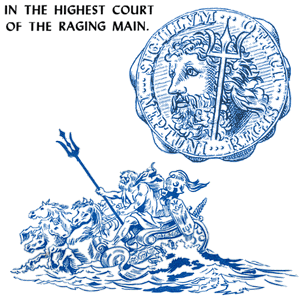
The ceremony of Crossing the Line is an initiation rite in several navies that commemorates a sailor’s first crossing of the Equator. Originally, the tradition was created as a test for seasoned sailors to ensure their new shipmates were capable of handling long rough times at sea. Sailors who have already crossed the Equator are nicknamed (Trusty) Shellbacks, often referred to as Sons of Neptune; those who have not are nicknamed (Slimy) Pollywogs. Equator-crossing ceremonies, typically featuring King Neptune, are also sometimes carried out for passengers’ entertainment on civilian ocean liners and cruise ships. They are also performed in the merchant navy and aboard sail training ships.
The two-day event (evening and day) is a ritual of reversal in which the older and experienced enlisted crew essentially takes over the ship from the officers. Physical assaults in keeping with the spirit of the initiation are tolerated, and even the inexperienced crew is given the opportunity to take over. The transition flows from established order to the controlled ‘chaos’ of the Pollywog Revolt, the beginnings of re-order in the initiation rite as the fewer but experienced enlisted crew converts the Wogs through physical tests, then back to, and thereby affirming, the pre-established order of officers and enlisted.
read more »
Posted in Humor, War, World |
Leave a Comment »
October 31, 2011

Carlos Slim (b. 1940) is a Mexican businessman, and the richest person in the world, worth more than US$60 billion. He owns the Mexican phone company Telmex, which provides a telephone service to most Mexicans. After graduating, Slim expanded on his father’s ownings of real estate in Mexico City. By age 26, he was worth $40 million. During the 1980s and 1990s, Slim bought several companies that were bankrupt or being privatized. Slim owns about 7% of the New York Times.
The Mexican magnate’s growing fortune has caused a controversy because it has been amassed in a developing country where per capita income does not surpass $14,500 a year, and nearly 17% of the population lives in poverty. Critics claim that Slim is a monopolist, pointing to Telmex’s control of 90% of the Mexican landline telephone market. Slim’s wealth is the equivalent of roughly 5% of Mexico’s annual economic output. Telmex, of which 49.1% is owned by Slim and his family, charges among the highest usage fees in the world, according to the Organisation for Economic Co-operation and Development.
read more »
Posted in Money, Technology, World |
Leave a Comment »
October 29, 2011
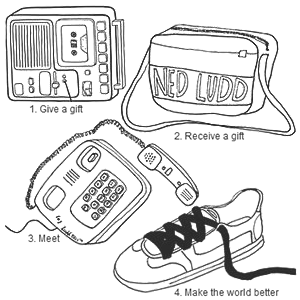
DaruDar is an international community where people give away things, their skills and time to each other for absolutely free requiring nothing in return. The community is based on principles of self-organization. Main condition of participation is following the rules of gift giving and communication set on the site. The global mission of DaruDar is to create a widespread social practice of gift-giving, to make it a daily and routine act. Words like ‘lot,’ ‘exchange,’ ‘freebie,’ ‘junk,’ or ‘crap’ are considered obscene on DaruDar. The service was launched in Russian in 2008. It was created by four friends who had worked with Habrahabr project earlier, a collaborative blog. They were inspired by flashmobs, Russian philosopher Peter Kropotkin and Gandhi.
Darudar users call themselves comembers (‘community members’). DaruDar gift is a thing, skill or service of a comember that he/she wants to give away to someone. In order to offer a gift a comember creates a publication describing what he gives. Other comembers can wish it. Later the gift giver chooses someone to promise their gift. Every gift can be commented, wished, promised and thanked. Only those offers which simultaneously satisfy all three of the following conditions and cannot exist without them should be considered gifts on Darudar: It can be wished; It can be promised; and It can be given.
Posted in Money, Technology, World |
Leave a Comment »
October 29, 2011

CouchSurfing is a corporation based in San Francisco that offer its users hospitality exchange and social networking services. It recently suffered significant criticism from thousands of users after becoming a for-profit corporation after having been been a non-profit for many years. Couchsurfing is a neologism referring to the practice of moving from one friend’s house to another, sleeping in whatever spare space is available, floor or couch, generally staying a few days before moving on to the next house.
The CouchSurfing project was conceived by Casey Fenton in 1999. According to Fenton’s account, the idea arose after finding an inexpensive flight from Boston to Iceland. Fenton randomly e-mailed 1,500 students from the University of Iceland asking if he could stay. He ultimately received more than 50 offers of accommodation. On the return flight to Boston, he began to develop the ideas that would underpin the CouchSurfing project.
read more »
Posted in Money, Technology, World |
Leave a Comment »


 The Daily Omnivore