October 29, 2011
Mickey Hart (b. 1943), real name Michael Steven Hartman, is an American percussionist and musicologist. He is best known as one of the two drummers of the rock band the Grateful Dead. He and fellow Dead drummer Bill Kreutzmann earned the nickname ‘the rhythm devils.’ Before joining the Grateful Dead, Hart and his father, Leonard Hart, a champion rudimental drummer, owned and operated Hart Music, selling drums and musical instruments in San Carlos, California. Hart joined the Grateful Dead in 1967, and left in 1971 when he extricated himself from the band, due to conflict between band management and Mickey’s father. During his sabbatical, in 1972, he recorded the album ‘Rolling Thunder.’ He returned to the Dead in 1974, and remained with the group until their official dissolution in 1995. Collaboration with the remaining members of the Grateful Dead continues, under the band name The Dead.
Alongside his work with the Grateful Dead, Mickey Hart has flourished as a solo artist, percussionist, and the author of several books. In these endeavors he has pursued a lifelong interest in ethnomusicology and in world music. His travels and his interest in all things percussion-related led him to collect percussion instruments, and to collaborate with percussion masters the world over.
read more »
Posted in Art, Health, World |
1 Comment »
October 27, 2011

Cocacolonization is a term that refers to globalization or cultural colonization. It is a portmanteau of the name of the multinational soft drink maker Coca-Cola and the word colonization. The term is used to imply either: the importation of Western (particularly American) goods; or, an invasion by Western and especially American cultural values that threatens local culture. While it is possible to use the term benignly, it has been used pejoratively to liken globalization to Westernization or Americanization.
In explaining the role of Coca-Cola as a universal influence of the ‘American way’ in the Cold War period, scholar Richard Kuisel states, ‘Perhaps no commercial product is more thoroughly identified with the United States… Coca Cola was fast becoming a universal drink.’ The dangers of cocacolonization were evoked after World War II by the French press, which regarded Coca-Cola as an American affront to the French culture. A typical cold war joke stated that, following the moon landing, the USSR leapfrogged the U.S. by painting the moon red, whilst the U.S. retaliated by going back and writing Coca-Cola in white on the red background. Seen as ‘too American’ for Communists, Pepsi was the main exported soft drink to Europe for much of the Cold War.
read more »
Posted in Food, Money, World |
Leave a Comment »
October 27, 2011

The evil empire is a term which was used by the US president Ronald Reagan to describe the Soviet Empire in 1983, which consisted of the republics of the Soviet Union and the Council for Mutual Economic Assistance (Comecon). Members of this council were satellite states, which where formally independent, but were steered by the Soviet Union with military pressure, if they considered it as necessary.
Reagan, took an aggressive, hard-line stance that favored matching and exceeding the Soviet Union’s strategic and global military capabilities, in calling for a rollback strategy that would, in his words, write the final pages of the history of the Soviet Union. The characterization demeaned the Soviet Union and angered Soviet leaders; it represented the rhetorical side of the escalation of the Cold War.
read more »
Posted in Politics, War, World |
Leave a Comment »
October 25, 2011

The Salon des Refusés, French for ‘exhibition of rejects,’ is generally an exhibition of works rejected by the jury of the official Paris Salon, but the term is most famously used to refer to the Salon des Refusés of 1863. During this time, Paris was a breeding ground for artists of all forms, poets, painters, and sculptors. Paris was the place to be and the capital of the art world.
Any artist who wanted to be recognized, at that time, was required to have exhibited in a Salon, or to have gone to school in France. Being accepted into these Salons was a matter of survival for some artists; reputations and careers could be started or broken, based solely upon acceptance into these exhibits. Today by extension, salon des refusés refers to any exhibition of works rejected from a juried art show.
read more »
Posted in Art, World |
1 Comment »
October 23, 2011


Secularism [sek-yuh-luh-riz-uhm] is the idea of something being not religious or not connected to a church. An example in government is the First Amendment (which guarantees, among other things, Separation of Church and State). This means that anyone can choose to practice or not practice any religion they want, and the government cannot make them be a part of a religion.
In one sense, secularism may assert the right to be free from religious rule and teachings, and the right to freedom from governmental imposition of religion upon the people within a state that is neutral on matters of belief. In another sense, it refers to the view that human activities and decisions, especially political ones, should be unbiased by religious influence.
read more »
Posted in Philosophy, Politics, World |
Leave a Comment »
October 19, 2011

Joshua Milton Blahyi (b. 1971), better known by his nom de guerre General Butt Naked, is a former leader for the Liberian warlord Roosevelt Johnson in the First Liberian Civil War known for his fierce, violent and eccentric measures in the first half of the 1990s. He was originally a tribal priest, and has returned to preaching after the war. Blahyi’s nom de guerre was appropriated for comical effect by the creators of the Broadway musical ‘The Book of Mormon’ as their fictional Ugandan warlord ‘General Butt Fucking Naked.’
Blahyi got his nickname, ‘General Butt Naked,’ from his nakedness which was supposedly demanded by the Devil. In his account of a typical battle Blahyi claimed, ‘So, before leading my troops into battle, we would get drunk and drugged up, sacrifice a local teenager, drink their blood, then strip down to our shoes and go into battle wearing colorful wigs and carrying dainty purses we’d looted from civilians. We’d slaughter anyone we saw, chop their heads off and use them as soccer balls. We were nude, fearless, drunk and homicidal. We killed hundreds of people – so many I lost count.’ Blahyi also purported that during that period he had ‘magical powers that made him invisible’ and a ‘special power’ to capture a town singlehandedly, then call in his troops afterwards to ‘clean up.’
read more »
Posted in Death, War, World |
1 Comment »
October 15, 2011


The ring of steel is the popular name for the security and surveillance cordon surrounding the City of London, installed to deter the IRA and other threats. The term was borrowed from an earlier stage of the Troubles when the centre of Belfast was fortified against attacks, the perimeter of which was known as the ring of steel. Roads entering the City are narrowed and have small chicanes to force drivers to slow down and be recorded by CCTV cameras. These roads typically have a concrete median with a sentry box where police can stand guard and monitor traffic. City planners call these types of precautions ‘fortress urbanism.’
Initially the ring of steel consisted of plastic cones and on duty policemen which the locals described as the ‘ring of plastic.’ It served the purpose of providing a visible sign to the public that the City authorities were taking the threats of more attacks by the IRA seriously. This was replaced by more permanent structures consisting of concrete barriers, checkpoints and thousands of video cameras. Following IRA ceasefires the police presence was curtailed. However, following the September 11 attacks, and a reported increased terrorist threat to the United Kingdom, security was stepped up again somewhat, with occasional spot checks on vehicles entering the cordon, although not to previous levels.
Posted in Politics, Technology, World |
Leave a Comment »
October 15, 2011

Violent crime in New York City has decreased in the last fifteen years, and the murder rate in 2007 was at its lowest since at least 1963 when reliable statistics were first kept. Crime rates spiked in the 1980s and early 1990s as the crack epidemic hit the city. During the 1990s the NYPD adopted CompStat, broken windows policing and other strategies in a major effort to reduce crime. The city’s dramatic drop in crime has been attributed by criminologists to these policing tactics, the end of the crack epidemic and demographic changes. Most of the crime remaining occurs in poor areas, which tend to be outlying.
Organized crime has long been associated with New York City, beginning with the Forty Thieves and the Roach Guards in the Five Points in the 1820s. The 20th century saw a rise in the Mafia dominated by the Five Families. Gangs including the Black Spades and Supreme Team also grew in the late 20th century. Numerous major riots have occurred in New York City since the mid 19th century, including the Draft Riots in 1863, the Stonewall riots, multiple riots at Tompkins Square Park, and in Harlem. The serial killings by the ‘Son of Sam,’ which began in 1976 and terrorized the city for the next year.
read more »
Posted in Politics, World |
Leave a Comment »
September 22, 2011

Michelada [mee-cha-lah-dah] is a cerveza preparada, a Mexican term for beer mixed with tomato juice, hot sauce, or salsa. In English-speaking countries, it would be considered a variety of shandy (a beer mixed with soda, carbonated lemonade, or cider. The Michelada is made with beer, tomato juice (or Clamato), lime juice, and assorted sauces, spices, and peppers. It is served in a chilled, salt-rimmed glass.
In Mexico, Micheladas are considered a good remedy for hangovers.There are different types of variations of Micheladas; for example in Mexico City, the most common form of a Michelada is prepared with beer, lime, salt, and hot sauce/or chili. Some add slices of orange.
read more »
Posted in Food, World |
2 Comments »
September 21, 2011

Transparency International (TI) is a non-governmental organization that monitors and publicizes corporate and political corruption in international development. It publishes an annual Corruption Perceptions Index, a comparative listing of corruption worldwide. The headquarters is located in Berlin, Germany but operates through more than 70 national chapters around the world.
TI was founded in 1993 through the initiative of Peter Eigen, a former regional director for the World Bank. In 1995, TI developed the Corruption Perceptions Index (CPI). The CPI ranked nations on the prevalence of corruption within each country, based upon surveys of business people. The CPI was subsequently published annually. It was criticized for poor methodology and unfair treatment of developing nations, while also being praised for highlighting corruption and embarrassing governments.
read more »
Posted in Money, Politics, World |
Leave a Comment »
September 13, 2011

Steatopygia [stee-at-uh-pahy-jee-uh] is a high degree of fat accumulation in and around the buttocks. The deposit of fat is not confined to the gluteal regions, but extends to the outside and front of the thighs, forming a thick layer reaching sometimes to the knee. This development constitutes a genetic characteristic of the Khoisan, an African ethnic group, where it is regarded as a sign of feminine beauty: it begins in infancy and is fully developed by the time of the first pregnancy. It is often accompanied by the formation known as elongated labia (labia minora that may extend as much as 4 inches outside the vulva). This was historically known as the ‘hottentot apron’ — now deemed a very offensive term.
It has been suggested that this feature was once more widespread. Paleolithic Venus figurines, sometimes referred to as ‘steatopygian Venus’ figures, discovered from Europe to Siberia and presenting a remarkable development of the thighs, and even the prolongation of the labia minora, have been used to support this theory. Whether these were intended to be lifelike or exaggeratory, even idealistic, is unclear. However, these figures do not strictly qualify as steatopygian, since they exhibit an angle of approximately 120 degrees between the back and the buttocks, while steatopygia is diagnosed at an angle of about 90 degrees only.
Posted in Health, Sex, World |
Leave a Comment »
September 13, 2011
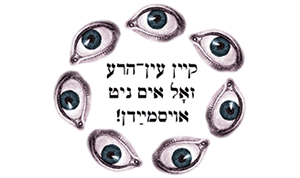

Apotropaic [ap-uh-truh-pey-ik] magic is the use of rituals to ward off harmful influences like the ‘evil eye’ or invidia (jealous or hostile gazes). This can be a long ritual, or it can take the form of simply wearing an amulet or other token, against bad luck, or gestures such as fingers crossed or knocking on wood. When faced with a bad omen the Greeks made offerings to the Averting Gods, underworld deities and heroes who might offer them protection Apotropaic rituals were practiced throughout the ancient Near East and Egypt. Fearsome deities were invoked to ward away evil spirits.
In ancient Egypt, these household rituals were embodied by the deity who personified magic itself, Heka. Other gods invoked include the hippopotamus-like fertility goddess, Taweret, and the lion-demon, Bes (who developed from the early apotropaic dwarf demon-god, Aha, literally meaning ‘fighter’). In the region today, symbol of an eye is common to represent apotropaic intentions. A Turkish airline has adopted the symbol (known as ‘Nazar bonjuk’) as a motif for its planes. The Yiddish expression, ‘Kain ein horeh’ is apotropaic in nature, and literally translates to ‘no evil eye,’ somewhat equivalent to the expression, ‘Knock on wood.’
read more »
Posted in Philosophy, World |
Leave a Comment »


 The Daily Omnivore