September 13, 2011

Venus figurines is an umbrella term for a number of prehistoric statuettes of women portrayed with similar physical attributes from the Upper Palaeolithic (between 40,000 and 10,000 years ago), mostly found in Europe, but with finds as far east as Siberia, extending their distribution to much of Eurasia.
These figurines were carved from soft stone (such as steatite, calcite or limestone), bone or ivory, or formed of clay and fired. The latter are among the oldest ceramics known. In total, over a hundred such figurines are known; virtually all of modest size, between 4 cm and 25 cm in height. They are some of the earliest works of prehistoric art.
read more »
Posted in Art, Sex, World |
Leave a Comment »
September 12, 2011

American cheese is a processed cheese, mild in flavor, with a medium-firm consistency, which melts easily. It was originally only white in color, but is usually now darkened to yellow or orange, typically with annatto, a natural food coloring.
At one time it was made from a blend of cheeses, most often Colby and Cheddar, but today’s American cheese is typically manufactured from raw ingredients, such as milk, whey, milkfat, milk protein concentrate, whey protein concentrate, and salt. In many jurisdictions, it does not meet the legal definition of cheese and must be labeled as ‘cheese analogue,’ ‘cheese product,’ ‘processed cheese,’ or similar and is commonly referred to as ‘plastic cheese’ or ‘burger cheese’ in the UK.
read more »
Posted in Food, Money, World |
1 Comment »
September 11, 2011

Jeju Loveland is an outdoor sculpture park which opened in 2004 on Jeju Island in South Korea. The park is focused on a theme of sex, running sex education films, and featuring 140 sculptures representing humans in various sexual positions. It also has other elements such as large phallus statues, stone labia, and hands-on exhibits such as a ‘masturbation-cycle.’ The park’s website describes the location as ‘a place where love oriented art and eroticism meet.’ In 2002, graduates of Seoul’s Hongik University began creating sculptures for the park. Encompassing an area the size of two soccer fields, all of the sculptures can be viewed in approximately one hour, and there is an additional monthly rotating exhibit featuring works by different Korean artists. Visitors are required to be at least 18 years old, and a separate play area is available for minors while adults visit.
After the Korean War, the island became a popular honeymoon destination for Korean couples, due to the island’s warm climate. Many of the couples had wed because of arranged marriages, and the island also became known for being a center of sex education. According to an article in Germany’s ‘Der Spiegel’ magazine, in the late 1980s journalist and travel writer Simon Winchester reported that some hotel employees on the island performed as ‘professional icebreakers.’ In the evenings, the hotel would offer an entertainment program featuring erotic elements, to help newlyweds relax.
Posted in Art, Sex, World |
Leave a Comment »
September 9, 2011


Freeter is a Japanese expression for people between the ages of 15 and 34 who lack full time employment or are unemployed, excluding housewives and students. The term originally included young people who deliberately chose not to become salary-men, even though jobs were available at the time. Freeters may also be described as underemployed or freelance workers.
These people do not start a career after high school or university, but instead earn money from low skilled and low paid jobs. The low income makes it difficult for freeters to start a family, and the lack of qualifications makes it difficult to start a career at a later point in life. Freeters have sometimes been glamorized as people pursuing their dreams and trying to live life to the fullest.
read more »
Posted in Language, Money, World |
1 Comment »
September 8, 2011
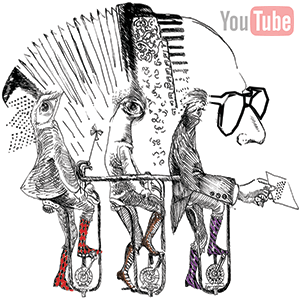
Motion Trio is a Polish accordion trio founded in 1996 by Janusz Wojtarowicz. The group has worked with such artists as Bobby McFerrin and Michał Urbaniak.
Its members consist of accordionists Janusz Wojtarowicz, Paweł Baranek, and Marcin Gałażyn.
Posted in Art, World |
Leave a Comment »
September 7, 2011

Kingdom Tower is a supertall skyscraper approved for construction in Jeddah, Saudi Arabia at a preliminary cost of US$1.23 billion. It will be the centerpiece and first phase of a US$20 billion proposed development known as Kingdom City that will be located along the Red Sea on the north side of Jeddah. If completed as planned, the tower will reach unprecedented heights, becoming the tallest building in the world, as well as the first structure to reach the one-kilometer mark. The design, created by American architect Adrian Smith, incorporates many unique structural and aesthetic features.
The creator and leader of the project is Saudi Arabian Prince Al-Waleed bin Talal, the wealthiest Arab in the Middle East, and nephew of King Abdullah. Talal is the chairman of Kingdom Holding Company (KHC), the largest company in Saudi Arabia, which owns the project, and a partner in Jeddah Economic Company (JEC), which was formed in 2009 for the development of Kingdom Tower and City. Reception of the proposal has been highly polarized, receiving high praise from some as a culturally significant icon that will symbolize the nation’s wealth and power, while others question its socioeconomic motives, and forecast that it will actually have negative financial consequences.
Posted in Money, Technology, World |
1 Comment »
September 7, 2011

The cherimoya [cher-uh-moi-uh] is a species of Annona (also known as a sugar-apple) native to the Andean-highland valleys of Peru, Ecuador, Colombia, Chile, Bolivia, and Argentina. The fruit is oval, often slightly oblate, with a smooth or slightly tuberculated skin. The fruit flesh is white and creamy, and has numerous dark brown seeds embedded in it. Mark Twain called the cherimoya ‘the most delicious fruit known to men.’
The Moche culture of Peru had a fascination with agriculture and represented fruits and vegetables in their art. Cherimoyas were often depicted in their ceramics. The name originates from the Quechua word chirimuya, which means ‘cold seeds,’ because the plant grows at high altitudes. The tree thrives throughout the tropics at altitudes of 1,300 to 2,600 m (4,300 to 8,500 ft). Though sensitive to frost, it must have periods of cool temperatures or the tree will gradually go dormant. The indigenous inhabitants of the Andes say that although the cherimoya cannot stand snow, it does like to see it in the distance.
read more »
Posted in Food, World |
1 Comment »
September 6, 2011

Slip-Slop-Slap is the name of a health campaign in Australia exhorting people to ‘slip on a shirt, slop on sunscreen, and slap on a hat’ when they go out into the sun, in order to protect themselves against an increased risk of skin cancer. ‘Seek shade’ and ‘Slide on some sunglasses’ was added a year later. It is probably Australia’s most recognizable health message. The campaign started in 1981; its mascot is a seagull called Sid. It is also used in New Zealand, where the mascot is a lobster, and some Canadian cities have also started their own Slip-Slop-Slap campaigns.
Since the campaign was introduced along with advertisements and a jingle, the incidence of the two most common forms of skin cancer (basal and squamous cell carcinoma) in Australia has decreased. However, the incidence of melanoma – the most lethal form of skin cancer – has increased. An epidimological study published in 2002 concluded that skin cancer increases could not be associated with the use of sun creams, and recommended continued use of the current campaigns as a means to reduce melanoma risk. Vitamin D deficiency has also greatly increased (which can lead to cancers, since sunblock also prevents vitamin D production in the skin. Doctors recommend spending small amounts of time in the sun without sun protection to ensure adequate production of vitamin D.
Posted in Health, Politics, World |
Leave a Comment »
August 26, 2011
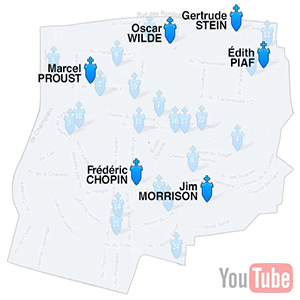
Père Lachaise Cemetery [peyr /luh-shez] is the largest cemetery in the city of Paris, France, and is reputed to be the world’s most-visited cemetery, attracting hundreds of thousands of visitors annually to the graves of those who have enhanced French life over the past 200 years. It is also the site of three World War I memorials. Notable residents include Georges Bizet, Maria Callas, Frédéric Chopin, Marcel Marceau, Jim Morrison, Marcel Proust, and Oscar Wilde.
The cemetery is on Boulevard de Ménilmontant. The Paris Métro station Philippe Auguste is next to the main entrance, while the station called Père Lachaise, on line 3, is 500 meters away near a side entrance. Many tourists prefer the Gambetta station as it allows them to enter near the tomb of Oscar Wilde and then walk downhill to visit the rest of the cemetery.
read more »
Posted in Death, World |
Leave a Comment »
August 16, 2011

Toasting, chatting, or deejaying is the act of talking or chanting, usually in a monotone melody, over a rhythm or beat by a deejay. The lyrics can be either improvised or pre-written. Toasting has been used in various African traditions, such as griots (storytellers) chanting over a drum beat, as well as in Jamaican music forms, such as dancehall, reggae, ska, dub, and lovers rock. The combination of singing and toasting is known as singjaying.
In the late 1950s deejay toasting was developed by Count Machuki. He conceived the idea from listening to disc jockeys on American radio stations. He would do American jive over the music while selecting and playing R&B music. Deejays like Count Machuki working for producers would play the latest hits on traveling sound systems at parties and add their toasts or vocals to the music. These toasts consisted of comedy, boastful commentaries, chants, half-sung rhymes, rhythmic chants, squeals, screams, and rhymed storytelling.
read more »
Posted in Art, Language, World |
1 Comment »
August 16, 2011

Riddim is the Jamaican Patois pronunciation of the English word ‘rhythm,’ but in dancehall/reggae parlance it refers to the instrumental accompaniment to a song. Thus, a dancehall song consists of the riddim plus the ‘voicing’ (vocal part) sung by the deejay (not to be confused with disc jockeys who select and play music, and are called selectors in Jamaica). The resulting song structure may be taken for granted by dancehall fans, but is in many ways unique. A given riddim, if popular, may be used in dozens—or even hundreds—of songs, not only in recordings, but also in live performances. Some ‘classic’ riddims, such as ‘Nanny Goat’ and ‘Real Rock’ are essentially the accompaniment tracks to the original 1960s reggae songs with those names.
Since the 1980s, however, riddims started to be originally composed by producers/beatmakers, who give the riddims original names and, typically, contract artists to ‘voice’ over them. Thus, for example, ‘Diwali’ is the name not of a song, but of a riddim created by Lenky Marsden, subsequently used as the basis for several songs, such as Sean Paul’s ‘Get Busy’ and Bounty Killer’s ‘Sufferer.’ Riddims are the primary musical building blocks of Jamaican popular songs. At any given time, ten to fifteen riddims are widely used in dancehall recordings, but only two or three of these are the now ‘ting’ (the latest riddims that everyone must record over if they want to get them played in the dance or on radio). In dancehall performing, those whose timing is right on top of the rhythm are said to be ‘ridding di riddim.’
read more »
Posted in Art, Language, World |
Leave a Comment »
August 16, 2011
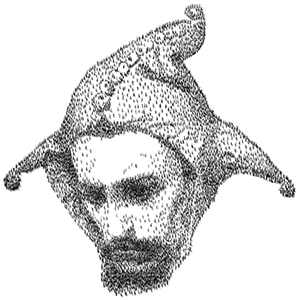
Stańczyk (c. 1480–1560) was the most famous court jester in Polish history. He is remembered as a man of great intelligence and a political philosopher gifted with formidable insight into Poland’s current and future situation. He used his job to criticize and warn his contemporaries through satire. His witty jokes often pertained to current political or court matters.
The best known anecdote about Stańczyk is that of a hunting incident. In 1533 King Sigismund the Old had a huge bear brought for him from Lithuania. The bear was released in the forest of Niepołomice near Kraków so that the king could hunt it. During the hunt, the animal charged at the king, the queen and their courtiers which caused panic and mayhem. Queen Bona fell from her horse which resulted in her miscarriage. Later, the king criticized Stańczyk for having run away instead of attacking the bear. The jester is said to have replied that ‘it is a greater folly to let out a bear that was locked in a cage.’ This remark is often interpreted as an allusion to the king’s policy toward Prussia which was defeated by Poland but not fully incorporated into the Crown.
Posted in Humor, Politics, World |
Leave a Comment »




 The Daily Omnivore