May 23, 2011

Nyotaimori often referred to as ‘body sushi,’ is the practice of serving sashimi or sushi from the body of a woman, typically naked. Nantaimori refers to the same practice using a male model. This subdivision of food play is originally an obscure Japanese practice that has attracted considerable international media attention. Promoters, eating participants, and proponents of the practice often say that nyotaimori is a form of art. This argument is rejected by some feminists, who argue that it objectifies the woman or the man doing the serving.
Before becoming a living sushi platter, the person is trained to lie down for hours without moving. She or he must also be able to withstand the prolonged exposure to the cold food. Before service, the individual is supposed to have taken a bath using a special fragrance-free soap and then finished off with a splash of cold water to cool the body down somewhat for the sushi. In some parts of the world, in order to comply with sanitation laws, there must be a layer of plastic or other material between the sushi and the body of the woman or man.
Posted in Food, Sex, World |
Leave a Comment »
May 20, 2011
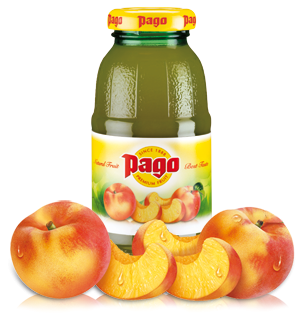
Nectars are a type of non-carbonated soft drink made with fruit juice. In some countries, the beverage industry distinguishes nectars from drinks labeled as juice. In the United States and the United Kingdom, the term ‘fruit juice’ is restricted to beverages that are 100% pure juice.
Nectar is generally accepted in the U.S. and in international trade for a diluted juice to denote a beverage that contains fruit juice and fruit puree. A juice or nectar including concentrate must state that it does. A blend of fruit juice(s) with other ingredients, such as high-fructose corn syrup, is called a juice cocktail or juice drink.
Posted in Food, Language, World |
Leave a Comment »
May 20, 2011

Squash (also called ‘cordial’) is a concentrated fruit-based syrup made from fruit juice, water, and sugar (or other sweetener). Modern squashes may also contain flavoring and coloring. Some traditional cordials also contain herbal extracts, most notably elderflower. Squash must be mixed with a certain amount of water or club soda before drinking.
Citrus fruits (particularly orange and lemon) or a blend of fruits and berries are commonly used as the base of squash. Popular blends are apple with blackcurrant, raspberry with pomegranate, and orange or peach with mango. Less popular single-fruit squashes are also produced, such as lime, pineapple, pomegranate, raspberry, and strawberry.
read more »
Posted in Food, World |
Leave a Comment »
May 18, 2011

The North American Currency Union is a theoretical economic and monetary union of three North American countries: Canada, the United States and Mexico. The hypothetical currency for the union is most often referred to as the amero. Conspiracy theorists contend that the governments of the United States, Canada, and Mexico are already taking steps to implement such a currency, as part of a ‘North American Union (NAU).’
In 2007, rumors and conspiracy theories began circulating across the Internet regarding alleged United States Treasury-issued amero coins. The inspiration behind these rumors may have been the posting of images of medallions created by coin designer Daniel Carr. Carr, who designed the New York and Rhode Island 2001 statehood quarters, sells medals and tokens of his own design on his commercial website, ‘Designs Computed.’ Among his designs are a series of gold, silver and copper fantasy issues of amero coins ranging in denomination from one to one thousand.
Posted in Money, Politics, World |
Leave a Comment »
May 18, 2011

In the field of law and economics, the American rule is a rule controlling assessment of attorneys’ fees arising out of litigation. The American rule provides that each party is responsible for paying its own attorney’s fees, unless specified otherwise by statute or contract. It contrasts with the English rule, under which the losing party pays the prevailing party’s attorneys’ fees. The rationale for the American rule is that people should not be discouraged from seeking redress for perceived wrongs in court or from trying to extend coverage of the law. The rationale continues that society would suffer if a person was unwilling to pursue a meritorious claim merely because that person would have to pay the defendant’s expenses if they lost.
The American rule is merely a default rule, not the blanket rule in the United States. Numerous statutes at both the federal and state levels allow the winner to recover reasonable attorney’s fees, and there are two major exceptions in federal case law as well. Many states also have exceptions to the American rule in both statutes and case law. For example, in California, the Consumers Legal Remedies Act allows plaintiffs to recover attorney’s fees, and in insurance bad faith cases, a policyholder may be able to recover attorney’s fees as a separate component of damages.
Posted in Money, Politics, World |
Leave a Comment »
May 18, 2011

The chupacabra (literally ‘goat sucker’) is a legendary cryptid rumored to inhabit parts of the Americas. The name comes from the animal’s reported habit of attacking and drinking the blood of livestock, especially goats.
The most common description of chupacabras is a reptile-like being, appearing to have leathery or scaly greenish-gray skin and sharp spines or quills running down its back. Approximately 3 to 4 feet (1 to 1.2 m) high, it stands and hops in a similar fashion to a kangaroo.
Posted in Humor, Language, World |
Leave a Comment »
May 18, 2011

Tartanry [tahr-tn-ree] is a word used to describe the kitsch elements of Scottish culture that have been overemphasized or superimposed on the country first by the emergent Scottish tourist industry in the 18th and 19th centuries, and later by an American film industry. The earliest use of the word ‘tartanry’ itself is said to have been in 1976.
It refers to often misrepresented or invented aspects of Scotland such as clan tartans, kilts, bagpipes, Scottish Gaelic and Highland culture more generally.
Posted in Language, Money, World |
Leave a Comment »
May 18, 2011


Tartan [tahr-tn] is a pattern consisting of criss-crossed horizontal and vertical bands in multiple colors that originated in Scotland. Scottish kilts almost always have tartan patterns. Tartan is also known as ‘plaid’ in North America, but in Scotland, a plaid is a tartan cloth slung over the shoulder, or a blanket. The Dress Act of 1746 attempted to bring the warrior clans under government control by banning the tartan and other aspects of Gaelic culture. When the law was repealed in 1782, it was no longer ordinary Highland dress, but was adopted instead as the symbolic national dress of Scotland. It is generally stated that the most popular tartans today are the Black Watch (also known as Old Campbell, Grant Hunting, Universal, Government) and Royal Stewart.
Tartan is made with alternating bands of colored (pre-dyed) threads woven as both warp and weft at right angles to each other. The weft is woven in a simple twill, two over – two under the warp, advancing one thread each pass. This forms visible diagonal lines where different colors cross, which give the appearance of new colors blended from the original ones. The resulting blocks of color repeat vertically and horizontally in a distinctive pattern of squares and lines known as a sett.
Posted in Art, Language, World |
Leave a Comment »
May 17, 2011


Barbecue [bahr-bi-kyoo] (BBQ; ‘barbie’ in Australia and New Zealand; ‘braai’ in South Africa) is a special type of grill. It is also a way to prepare meat which is then cooked with that instrument. Barbecue cooking means to cook very slowly. It is not as hot or fast as standard grilling. Some meats must be cooked slowly to be tender, and easy to chew. Sometimes, meat may be slowly cooked for 8 to 24 hours in a barbecue. People in the United States barbecue chicken, beef and pork, depending on the part of the country.
Barbecuing is very popular in the Central and Southern U.S., especially in Texas with beef and Kansas City with pork. In the United States barbecued meat is usually covered in barbecue sauce, a type of thick, dark red sauce that often contains spices, tomatoes, and honey. Very often, American barbecue grills get heat from hickory wood. In California, it was common to barbecue beef in a hole in the ground rather than a grill. This is called a ‘pit barbecue.’
read more »
Posted in Food, Language, World |
Leave a Comment »
May 17, 2011
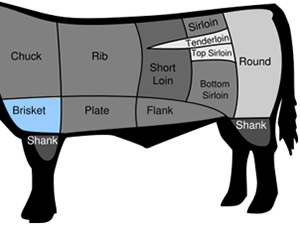

Brisket [bris-kit] is a cut of meat from the breast or lower chest of a cow. The beef brisket is one of the eight beef primal cuts. The brisket muscles include the superficial and deep pectorals. As cattle do not have collar bones, these muscles support about 60% of the body weight of standing/moving cattle. This requires a significant amount of connective tissue, so the resulting meat must be cooked thoroughly to tenderize the connective tissue.
The term derives from Old Norse ‘brjósk,’ meaning cartilage. The cut overlies the sternum, ribs and connecting costal cartilages. Popular brisket recipes in the Southern United States include rubbing with a spice rub or marinating the meat, then cooking slowly over indirect heat from charcoal or wood. This is a form of smoking the meat. Additional basting of the meat is often done during the cooking process.
read more »
Posted in Food, Language, World |
1 Comment »
May 12, 2011

Congo Square is an open space within Louis Armstrong Park, which is located in the Tremé neighborhood of New Orleans, just across Rampart Street north of the French Quarter. The Tremé neighborhood is famous for its history of African American music. In Louisiana’s French and Spanish colonial era of the 18th century, slaves were commonly allowed Sundays off from their work. They were allowed to gather in the ‘Place de Negres,’ or informally ‘Place Congo’ at the back of town (across Rampart Street from the French Quarter), where the slaves would set up a market, sing, dance, and play music.
The tradition continued after the city became part of the United States with the Louisiana Purchase. As African music had been suppressed in the Protestant colonies and states, the weekly gatherings at Congo Square became a famous site for visitors from elsewhere in the U.S. In addition, because of the immigration of refugees (some bringing slaves) from the Haitian Revolution, New Orleans received thousands of additional Africans and Creoles in the early years of 19th century. They reinforced African traditions in the city, in music as in other areas. Many visitors were amazed at the African-style dancing and music.
read more »
Posted in Art, World |
1 Comment »
May 10, 2011

The Montreux Jazz Festival is the best-known music festival in Switzerland and one of the most prestigious in Europe; it is held annually in early July in Montreux on the shores of Lake Geneva. It is the second largest annual music festival in the world after Canada’s Montreal International Jazz Festival. The festival was founded in 1967 by Claude Nobs (who still organizes the event); the first one lasted for three days and featured almost exclusively jazz artists.
The highlights of this era were Keith Jarrett, Jack DeJohnette, Bill Evans, Soft Machine, Weather Report, Nina Simone, Jan Garbarek, and Ella Fitzgerald. Originally a pure jazz festival, it opened up in the 1970s and today presents artists of nearly every imaginable style, though jazz remains an important component. Today’s festival lasts about two weeks and attracts an audience of more than 200,000 people.
read more »
Posted in Art, World |
Leave a Comment »





 The Daily Omnivore