April 11, 2011

Amigurumi [ah-mee-goo-roo-mee] is the Japanese art of knitting or crocheting small stuffed animals and anthropomorphic creatures. The word is derived from a combination of the Japanese words ‘ami,’ meaning crocheted or knitted, and ‘nuigurumi,’ meaning stuffed doll. The pervading aesthetic of amigurumi is cuteness. To this end, typical amigurumi animals have an over-sized spherical head on a cylindrical body with undersized extremities.
Amigurumi are usually crocheted out of yarn using the single crochet stitch. They can also be knit. Typically, crochet hooks or knitting needles that are slightly smaller than normal are used, in order to achieve a tight gauge that retains stuffing. Stuffing is usually standard polyester or cotton craft stuffing, but may be improvised from other materials. Plastic pellets may be inserted beneath stuffing in order to distribute weight at the bottom of the figure. They are usually worked in sections and then joined, except for some amigurumi which have no limbs, only a head and torso which are worked as one piece.
Posted in Art, Games, World |
2 Comments »
April 8, 2011

Necklacing is the practice of summary execution carried out by forcing a rubber tire, filled with petrol, around a victim’s chest and arms, and setting it on fire. The victim may take up to 20 minutes to die, suffering severe burns in the process.
read more »
Posted in Death, War, World |
1 Comment »
April 7, 2011
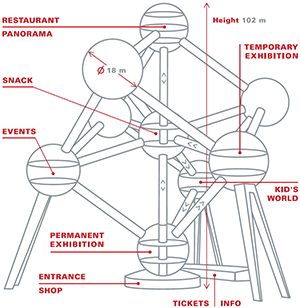
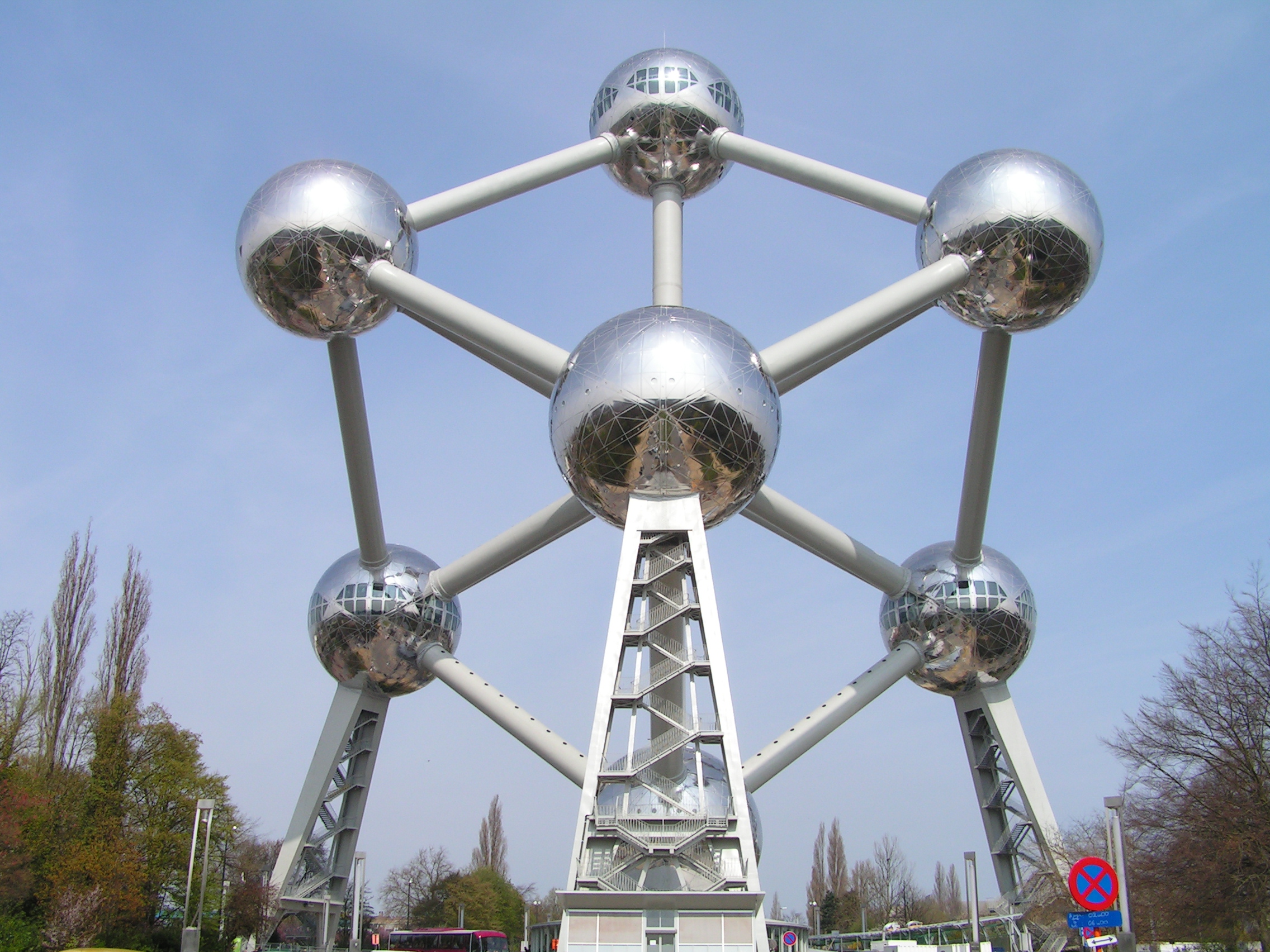
The Atomium is a monument in Brussels, originally built for Expo ’58, the 1958 Brussels World’s Fair. Designed by Belgian engineer, André Waterkeyn, it stands 102-metres (335 ft) tall. It has nine steel spheres connected so that the whole forms the shape of a unit cell of an iron crystal magnified 165 billion times. Tubes connect the spheres along the 12 edges of the cube and all eight vertices to the center. They enclose escalators connecting the spheres containing exhibit halls and other public spaces. The top sphere provides a panoramic view of Brussels. Each sphere is 18 meters in diameter.
Three of the four uppermost spheres lack vertical support and hence are not open to the public for safety reasons, although the sphere at the pinnacle is open to the public. The original design called for no supports; the structure was simply to rest on the spheres. Wind tunnel tests proved that the structure would have toppled in an 80 km/h wind. Support columns were added to achieve enough resistance against overturning.
Posted in Art, Technology, World |
1 Comment »
April 3, 2011
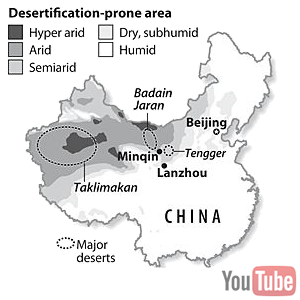
The Green Wall of China is a series of human-planted forest strips in the People’s Republic of China, designed to hold back the expansion of the Gobi Desert.
The project was begun in 1978, and is planned to be completed around 2074, at which point it is planned to be 2,800 miles (4,500 km) long. 1,390 square miles of Chinese grassland are overtaken every year by the Gobi Desert.
read more »
Posted in Money, Science, World |
Leave a Comment »
April 1, 2011

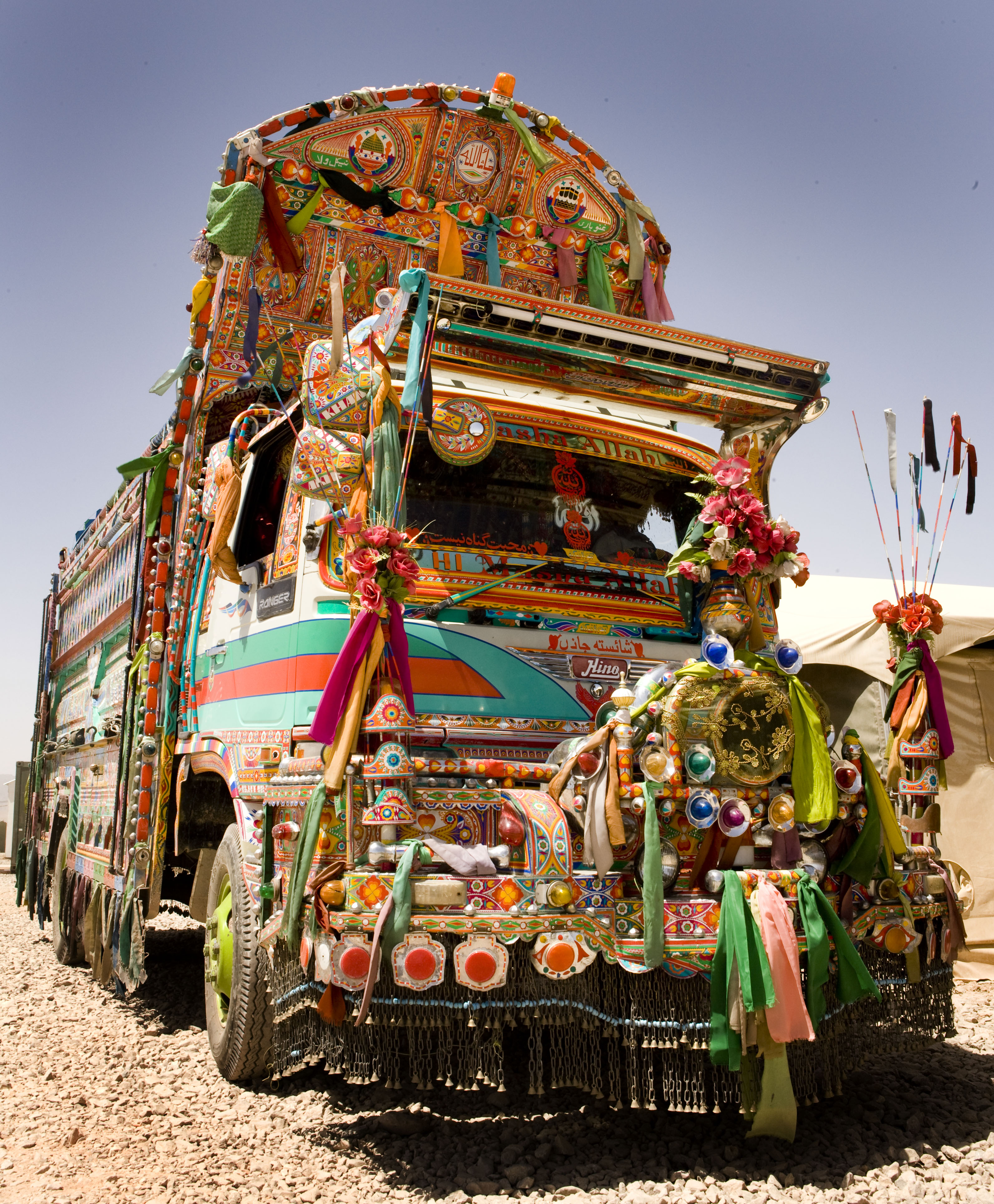
Jingle truck is US Military slang for colorfully decorated trucks, typically in central Asia. It is a slang term for the customised trucks and buses common throughout the region, including Afghanistan, Pakistan, and India. The name refers to a’ jingling’ sound made by chains hanging from the bumpers of the vehicles.
Posted in Art, Language, World |
1 Comment »
March 31, 2011

Joe Wong is a Chinese American comedian. He grew up in Jilin Province, China, and came to study chemistry at Rice University in Texas in 1994. He moved to Boston in 2001 and began to perform his comedy.
Posted in Humor, Politics, World |
Leave a Comment »
March 31, 2011

Francis Galton (1822 – 1911) was an English Victorian polymath: anthropologist, eugenicist, tropical explorer, geographer, inventor, meteorologist, and statistician. Galton had a prolific intellect, and produced over 340 papers and books throughout his lifetime. He also created the statistical concept of correlation. He was the first to apply statistical methods to the study of human differences and inheritance of intelligence, and introduced the use of questionnaires and surveys for collecting data on human communities.
He was a pioneer in eugenics, coining the term itself and the phrase ‘nature versus nurture.’ As the initiator of scientific meteorology, he devised the first weather map. He also invented the Dog Whistle for testing differential hearing ability.
Posted in Science, Technology, World |
Leave a Comment »
March 30, 2011

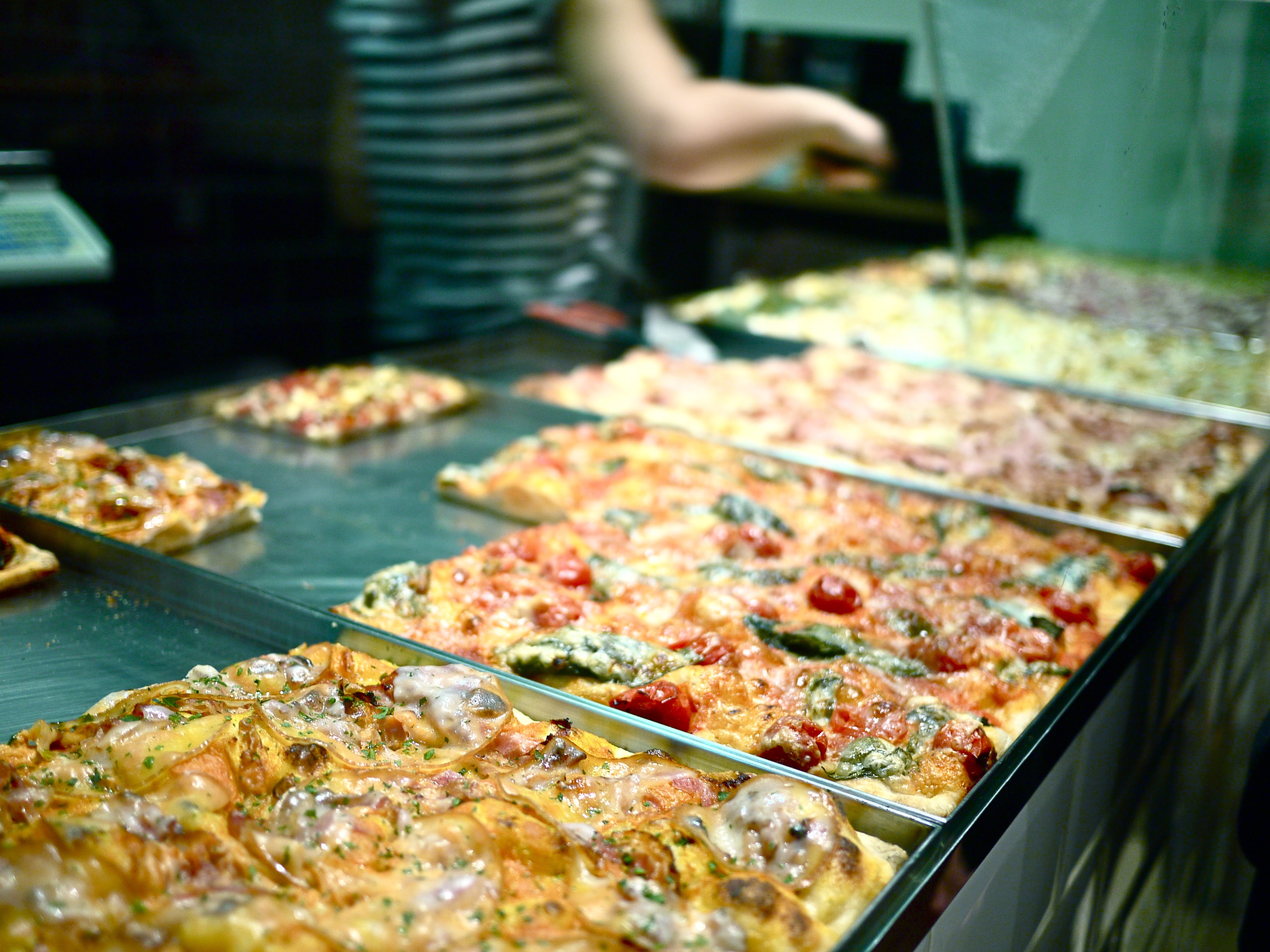
In Italy, pizza al taglio (‘by the cut’) is a variety of pizza baked in large rectangular trays, and generally sold in rectangular slices by weight, with prices marked per kilogram. The simplest varieties include Pizza Margherita (tomato sauce and cheese), Pizza bianca (olive oil & salt), and Pizza rossa (tomato sauce only). Other typical toppings include artichokes, asparagus, eggplant, ground meat and onions, potatoes, prosciutto, salami, sausage, ground truffles, zucchini, olive oil sundried tomatoes, rocket, gorgonzola, anchovies, and black olives.
Posted in Food, Money, World |
Leave a Comment »
March 30, 2011

Velotype is the old trademark for a type of keyboard for typing text known as a syllabic chord keyboard, an invention of the Dutchmen Nico Berkelmans and Marius den Outer. The current tradename is Veyboard. Contrary to traditional QWERTY type keyboards, on which a typist usually presses one key at a time to create one character at a time, a Veyboard requires the user to press several keys simultaneously, producing syllables rather than letters.
A practiced ‘veyboarder’ can produce more text than on a traditional keyboard, as much as 200 words per minute, double the rate of a fast traditional typist. Because of this, Veyboards are often used for live applications, such as subtitling for television and for the hearing impaired. The keyboard is an orthographic chord keyboard, very different from chorded phonetic keyboards used for verbatim transcription, like the Stenotype.
Posted in Money, Technology, World |
Leave a Comment »
March 29, 2011

AKIRA is a manga series by Katsuhiro Otomo. Set in a post-apocalyptic Neo-Tokyo, the work uses conventions of the cyberpunk genre to detail a saga of turmoil. Initially serialized in the pages of Young Magazine from 1982 until 1990, the work was collected in six volumes by Japanese publisher Kodansha. Otomo’s art on the series is considered outstanding, and the work is a breakthrough for both Otomo and the manga form.
An identically titled anime film adaptation was released in 1988, shortening the plot, but with its structure and scenes heavily informed by the manga and its serial origins. The manga takes place in a vastly larger time frame than the film and involves a far wider array of characters and subplots. Through the breadth of the work, Otomo explicates themes of social isolation, corruption and power.
read more »
Posted in Art, Technology, World |
Leave a Comment »
March 29, 2011
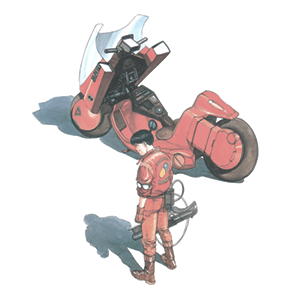
Akira is a 1988 Japanese animated science fiction film set in a futuristic and post-war city, Neo-Tokyo, in 2019. It was written and directed by Katsuhiro Otomo, who based it on his manga of the same name. The film explores a number of psychological and philosophical themes, such as the nature of corruption, the will to power, and the growth from childhood to maturity both in individuals and the human race itself. Elements of Buddhist and Christian symbolism are also present in the film. Other notable themes include youth culture, cyberpunk, delinquency, psychic awareness, social unrest and revolution, the world’s reaction toward a nuclear holocaust and Japan’s post-war economic revival.
The film’s plot focuses on Shotaro Kaneda, a biker gang member, as he tries to stop Tetsuo Shima from releasing Akira, the eponymous, principal subject of the story, a young boy who developed transcendent psionic, god-like abilities when serving as a test subject for secret government ESP experiments in the 1980s. He subsequently lost control of this power and the ensuing blast completely annihilated Tokyo in a horrifying explosion in 1988. After the apocalyptic event, Akira was recovered and sealed within a cryonic chamber underneath the Neo-Tokyo Olympic Stadium.
Posted in Art, Technology, World |
Leave a Comment »
March 29, 2011

Schadenfreude [shahd-n-froi-duh] is a German loanword meaning ‘pleasure derived from the misfortunes of others.’ The corresponding German adjective is ‘schadenfroh.’ The word derives from ‘Schaden’ (‘adversity,’ ‘harm’) and ‘Freude’ (‘joy’). An English expression with a similar meaning is ‘Roman holiday,’ a metaphor taken from the poem ‘Childe Harold’s Pilgrimage’ by Lord Byron, where a gladiator in Ancient Rome expects to be ‘butcher’d to make a Roman holiday’ while the audience would take pleasure from watching his suffering. The term suggests debauchery and disorder in addition to sadistic enjoyment.
Another phrase with a meaning is ‘morose delectation’ (‘delectatio morosa’ in Latin), meaning ‘the habit of dwelling with enjoyment on evil thoughts.’ ‘Gloating’ is a related English word where ‘gloat’ is defined as ‘to observe or think about something with triumphant and often malicious satisfaction, gratification, or delight’ (‘gloat over an enemy’s misfortune’). The Buddhist concept of ‘mudita,’ ‘sympathetic joy’ or ‘happiness in another’s good fortune,’ is cited as an example of the opposite of schadenfreude. Alternatively, envy, which is unhappiness in another’s good fortune, could be considered the counterpart of schadenfreude. Completing the quartet is unhappiness at another’s misfortune, which may be termed empathy, pity, or compassion.
Posted in Language, Philosophy, World |
1 Comment »




 The Daily Omnivore