March 23, 2011
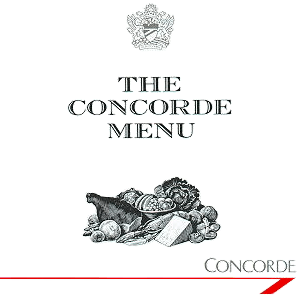
Nouvelle cuisine (‘new cuisine’) is an approach to cooking and food presentation used in French cuisine. By contrast with ‘cuisine classique,’ an older form of French ‘haute cuisine,’ nouvelle cuisine is characterized by lighter, more delicate dishes and an increased emphasis on presentation.
The modern usage can be attributed to author Henri Gault, who used it to describe the cooking of Paul Bocuse and Fernand Point. Bocuse claims that Gault first used the term to describe food prepared for the maiden flight of the Concorde airliner in 1969.
read more »
Posted in Art, Food, World |
Leave a Comment »
March 19, 2011

Operation Odyssey Dawn is the codename for the United States participation in a Libyan no-fly zone. The United Kingdom counterpart to this is Operation Ellamy, the French Opération Harmattan. The no-fly zone was proposed during the 2011 Libyan uprising to prevent government forces loyal to Muammar Gaddafi from carrying out air attacks on rebel forces.
Allied operations began with surveillance operations, air attacks and missiles aimed at Libyan military targets. It was reported by the Pentagon that the first strike involved the launch of over 100 Tomahawk cruise missile against shoreline air defenses of the Gaddafi regime.
Posted in Politics, War, World |
Leave a Comment »
March 17, 2011

Tuángòu [twangoo], which loosely translates as ‘team buying’ or ‘group buying’ (also known as store mobbing), is a recently developed shopping strategy originating in the People’s Republic of China.
Several people – sometimes friends, but possibly strangers connected over the internet – agree to approach a vendor of a specific product in order to haggle with the proprietor as a group in order to get discounts. The entire group agrees to purchase the same item. The shoppers benefit by paying less, and the business benefits by selling multiple items at once.
Posted in Money, Technology, World |
Leave a Comment »
March 17, 2011
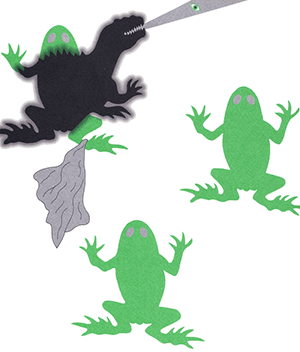
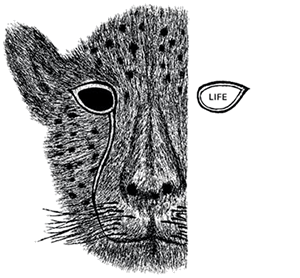
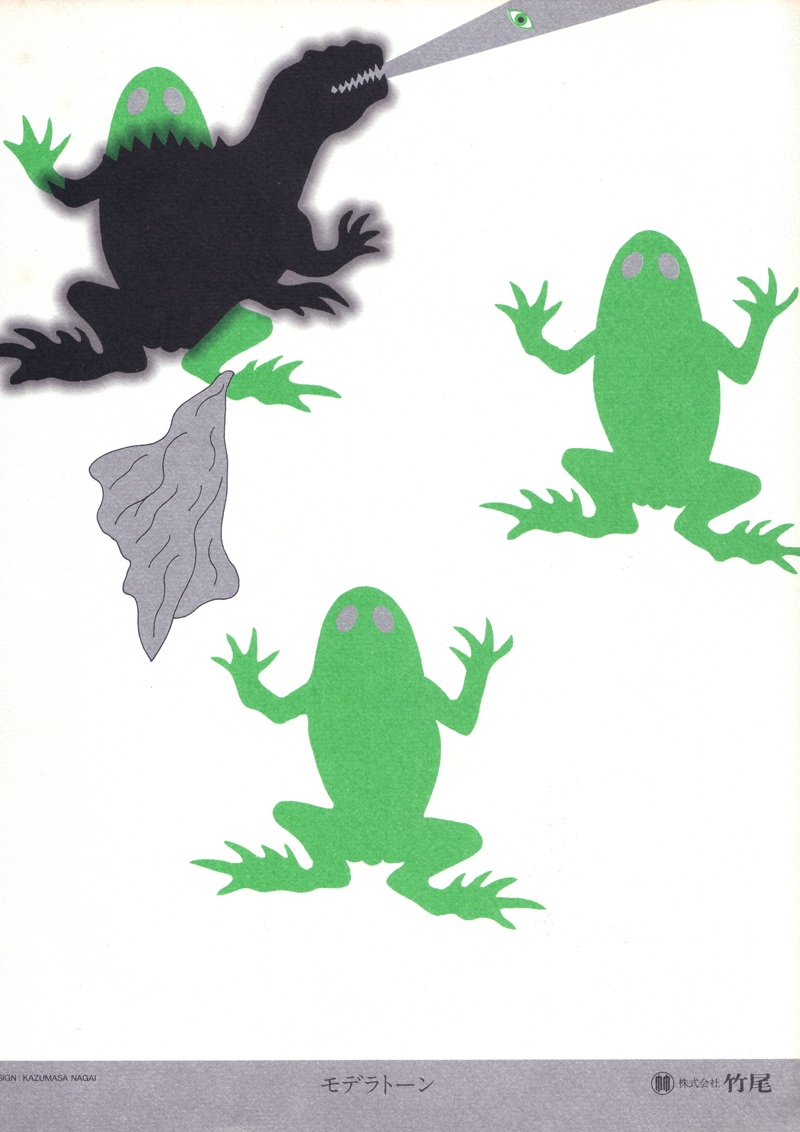
Kazumasa Nagai (b. 1929) is a Japanese graphic artist and poster designer. He co-founded the Nippon Design Center in Tokyo in 1960.
Posted in Art, Money, World |
Leave a Comment »
March 17, 2011


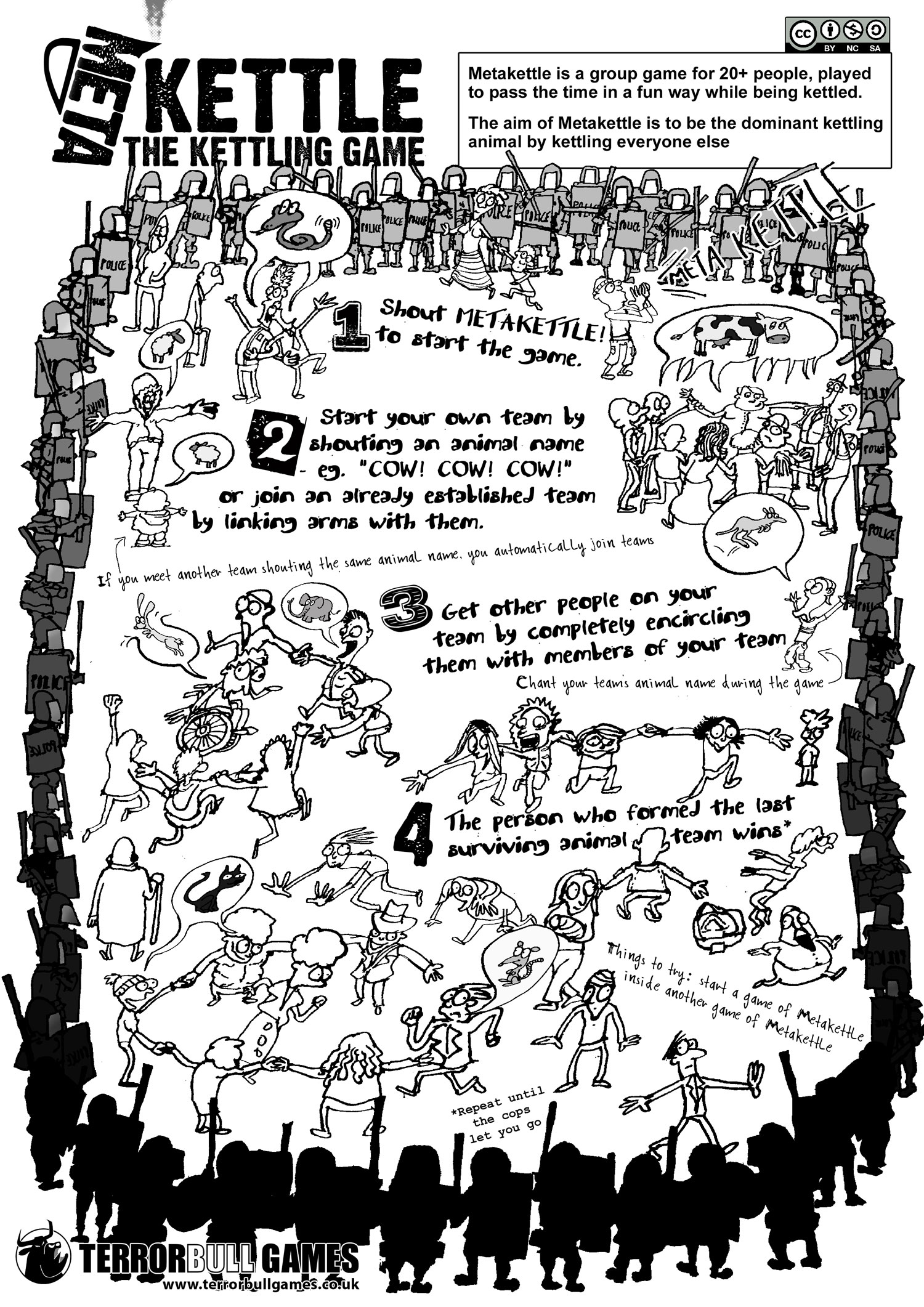
Kettling, also known as containment or corralling, is a police tactic for the management of large crowds during demonstrations or protests. It involves the formation of large cordons of police officers who then move to contain a crowd within a limited area. Protesters are left only one choice of exit, determined by the police, or are completely prevented from leaving. The term ‘kettle’ is a metaphor, likening the containment of violence to the containment of heat and steam within a domestic kettle.
The tactic prevents large groups from breaking into smaller splinters that have to be individually chased down, thus requiring the policing to break into multiple small battles. Kettling has been criticized for being an indiscriminate tactic which leads to the detention of law-abiding citizens and innocent bystanders, as well as for denying detainees access to food, water and toilets (for long periods of time in some cases). Critics also allege that kettling has been used to foment disorder with the aim of changing the focus of public debate.
Posted in Politics, War, World |
Leave a Comment »
March 16, 2011

Barbarella is a fictional heroine in the French science fiction comic book created by Jean-Claude Forest. He created the character for serialisation in the French V-Magazine in spring 1962, and in 1964 Eric Losfeld later published these strips as a stand-alone book, under the title Barbarella. The stand-alone version caused a scandal and became known as the first ‘adult’ comic-book, despite its eroticism being slight and the existence of the Tijuana bibles (pornographic comic books) well before this date.
Barbarella is a young woman who travels from planet to planet and has numerous adventures, often involving sex (the aliens she meets often seduce her, and she also experiments with a ‘machine excessive’ or ‘orgasmotron’). The original comic book version of Barbarella was probably modelled on Brigitte Bardot, who was once married to the director of the 1968 film, Roger Vadim. Vadim’s third wife, Jane Fonda, starred as Barbarella in the 1968 movie based on the character. For her creator, the character embodied the modern woman in the era of sexual liberation.
Posted in Art, Sex, World |
Leave a Comment »
March 16, 2011
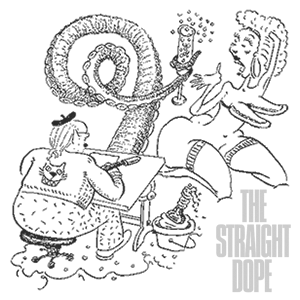
Tentacle rape, or shokushu goukan, is a concept found in some horror hentai titles (pornographic comics and animation), where various tentacled creatures (usually fictional monsters) rape or otherwise penetrate women, anthropomorphous creatures, Futanari (hermaphrodites) and, less commonly, men.
The genre is quite popular in Japanese erotica, and is even the subject of much parody. For Western audiences, tentacle erotica often symbolizes hentai as a phenomenon. Tentacled creatures appeared in Japanese erotica long before animated pornography.
read more »
Posted in Art, Sex, World |
Leave a Comment »
March 16, 2011

Hentai is a Japanese word that literally means ‘strange appearance,’ but is also used to mean ‘perverted.’ Hentai, because of this, is a word used by countries outside of Japan to show pornographic and sex-related anime, manga, and video games. The word is not used to mean this in Japan. In Japan, terms such as ‘ecchi’ are used. Since hentai is anime, the performers are not bound by physical laws. Makers of hentai often use this in very creative ways.
Censorship is practiced differently in Japan and in the US. Japanese law discourages showing of genitals in hentai, while the United States is more concerned about forbidding the display of sex acts involving people under 18. Hence, there are censoring mosaics in Japan, and scene removals and different ages of characters in America.
read more »
Posted in Language, Sex, World |
2 Comments »
March 15, 2011
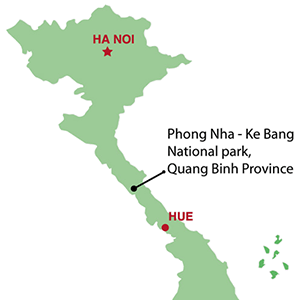
Phong Nha – Ke Bang is a national park in north-central Vietnam, about 500 km south of the nation’s capital, Hanoi. The park was created to protect one of the world’s two largest karst regions (landscapes shaped by the dissolution of a layer soluble bedrock) with 300 caves and grottoes and also protects the ecosystem of limestone forest of the Annamite Range region in north central coast of Vietnam.
Phong Nha-Ke Bang area is noted for its cave and grotto systems as it is composed of 300 caves and grottos with a total length of about 126 km, of which only 20 have been surveyed by Vietnamese and British scientists; 17 of these are in located in the Phong Nha area and three in the Ke Bang area. Before discovery of the nearby, Son Doong Cave in 2009, Phong Nha was the largest cave in the world.
Posted in Science, World |
Leave a Comment »
March 13, 2011
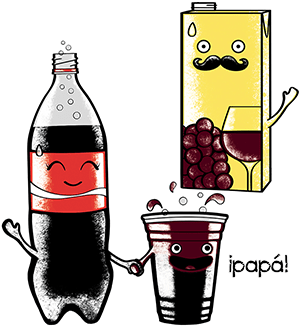
Kalimotxo [kal-ee-moht-cho] is a drink consisting of approximately 50% red wine and 50% cola-based soft drink.
read more »
Posted in Drugs, Food, World |
2 Comments »
March 13, 2011

Silicon Fen (sometimes the Cambridge Cluster) is the name given to the region around Cambridge, England, which is home to a number of high-tech businesses, especially those related to software, electronics, and biotechnology. Many of these have connections with the University of Cambridge, and the area is now one of the most important technology centers in Europe. It is called ‘Silicon Fen’ by analogy with Silicon Valley in California, because it lies at the south of Fenland.
The so-called Cambridge phenomenon, giving rise to start-up companies in a town previously only having a little light industry in the electrical sector, is usually dated to the founding of the Cambridge Science Park in 1970 (an initiative of Trinity College that moved away from a traditional low-development policy for Cambridge). The area is known for a high degree of ‘networking,’ enabling people across the region to find partners, jobs, funding, and know-how. Organisations have sprung up to facilitate this process, for example the Cambridge Network.
Posted in Money, Technology, World |
Leave a Comment »
March 13, 2011

The Kōreisha mark is a statutory sign in Japan which indicates ‘aged person at the wheel.’ The law decrees that when a person who is aged 70 and over drives a car and if his/her old age could affect the driving, he/she should endeavor to display this mark on both the front and rear of the car. Drivers aged 75 and over are obliged to display the mark.
Conversely, the green and yellow shoshinsha mark or wakaba mark denotes new drivers. Both marks are designed to warn other drivers that the marked driver is not very skilled, either due to inexperience or old age.
Posted in Politics, Technology, World |
Leave a Comment »






 The Daily Omnivore