February 8, 2011
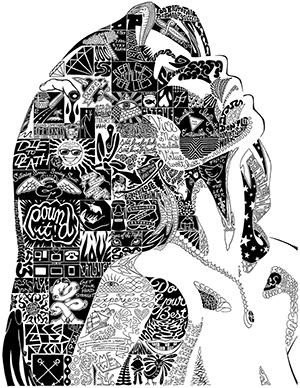
La petite mort, French for ‘the little death,’ is a metaphor for orgasm. More widely, it can refer to the spiritual release that comes with orgasm or to a short period of melancholy or transcendence as a result of the expenditure of the ‘life force,’ the feeling whereof is caused by the release of oxytocin in the brain after the occurrence of the orgasm. The term does not only apply to sexual experiences.
Literary critic Roland Barthes spoke of la petite mort as the chief objective of reading literature. He metaphorically used the concept to describe the feeling one should get when experiencing any great literature. It can also be used when some undesired thing has happened to a person and has affected them so much that ‘a part of them dies inside.’
Posted in Language, Sex, World |
Leave a Comment »
February 8, 2011
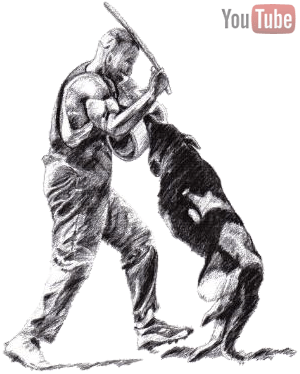
Schutzhund (German for protection dog) is a dog sport that was developed in Germany in the early 1900s to test whether German Shepherd Dogs exhibit the traits necessary for police-type work, rather than simply evaluating a dog’s appearance. Today, many breeds other than German Shepherds can compete in Schutzhund, but it is a demanding test for any dog and few are able to pass successfully.
Posted in Games, Language, World |
Leave a Comment »
February 7, 2011

Doha [doh-hah] (Arabic for ‘the big tree’ or ‘the sticky tree’) is the capital city of the state of Qatar. Located on the Persian Gulf, it has a population of around one million. Doha is Qatar’s largest city, with over 80% of the nation’s population residing in the city or its surrounding suburbs, and is also the economic center of the country.
Much of Qatar’s oil and natural gas wealth is visible in Doha, which is home to the headquarters of the country’s largest oil and gas companies. Doha’s economy is built on the revenue the country has made from its oil and natural gas industries, and the Qatari government is rapidly trying to diversify the Qatari economy in order to move away from this dependence on oil. As a result, Doha is currently experiencing a very large boom, with the city developing very rapidly.
Posted in Money, Technology, World |
Leave a Comment »
February 7, 2011

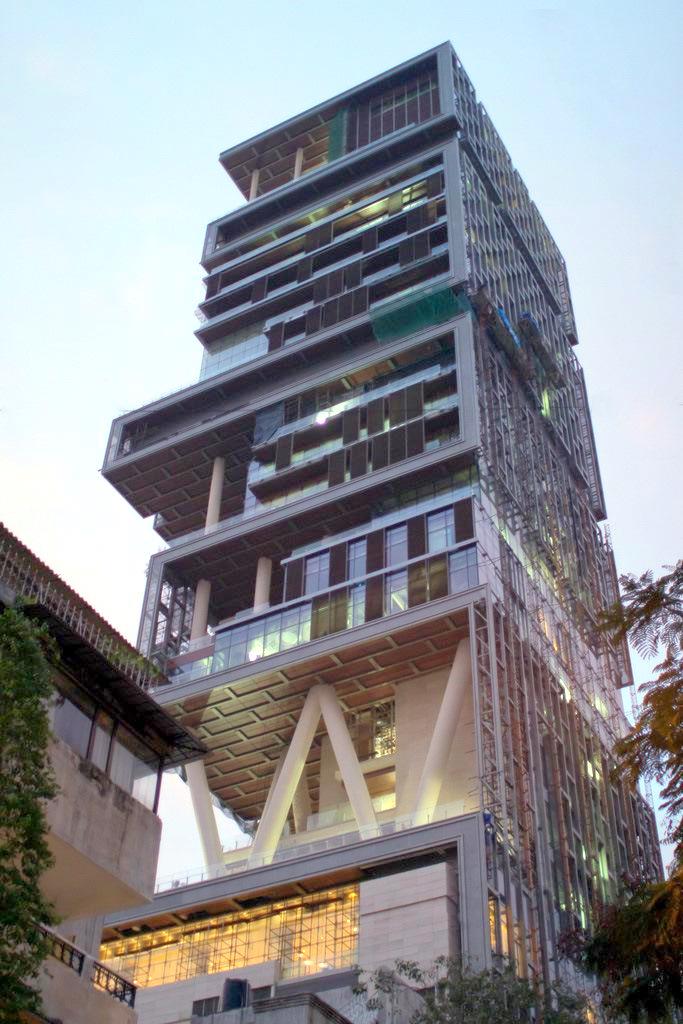
Antilia is the name of a twenty-seven floor personal home in South Mumbai belonging to India’s richest man, Mukesh Ambani, the billionaire Chairman of Reliance Industries (India’s largest private sector conglomerate). The home is staffed by 600 full time employees and houses Ambani, his wife Nita, their three children, and Ambani’s mother. Indian media frequently reported that Antilia is the world’s most expensive home costing US$1 billion. It is named after a mythical island in the Atlantic Ocean. The building is situated on a 4,532 m2 (48,780 sq ft) plot at Altamont Road on the famed Cumballa Hill South Mumbai, where land prices are upward of US$10,000 per square meter.
The structure was designed by U.S. architects using principles of Vaastu, Indian traditional geomancy akin to Chinese feng shui, to maximize ‘positive energy.’ No two floor plans are alike, and the materials used in each level vary widely. The home includes: 400,000 square feet (37,000 m2) of living space; parking space for 168 cars; a one-floor vehicle maintenance facility; 9 elevators in the lobby; 3 helipads and an air traffic control facility; a health spa; a theater with a seating for 50; multiple swimming pools, three floors of hanging gardens, and a ballroom.
Posted in Money, Technology, World |
Leave a Comment »
February 7, 2011
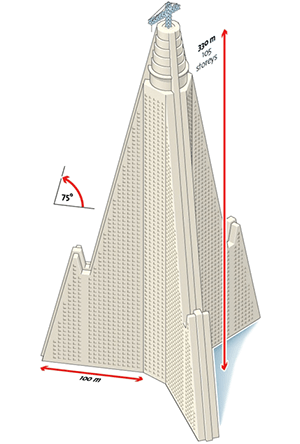
The Ryugyong Hotel is a 105-floor skyscraper under construction in Pyongyang, North Korea. Construction began in 1987, but was halted in 1992 due to the economic disruptions that afflicted the country following the fall of the Soviet Union.
The hotel stood topped out but without windows or interior fittings for the next sixteen years. Construction resumed in April 2008, under the supervision of the Orascom Group of Egypt, which has invested heavily in the North Korean mobile telephony and construction industries.
Posted in Money, Technology, World |
Leave a Comment »
February 7, 2011

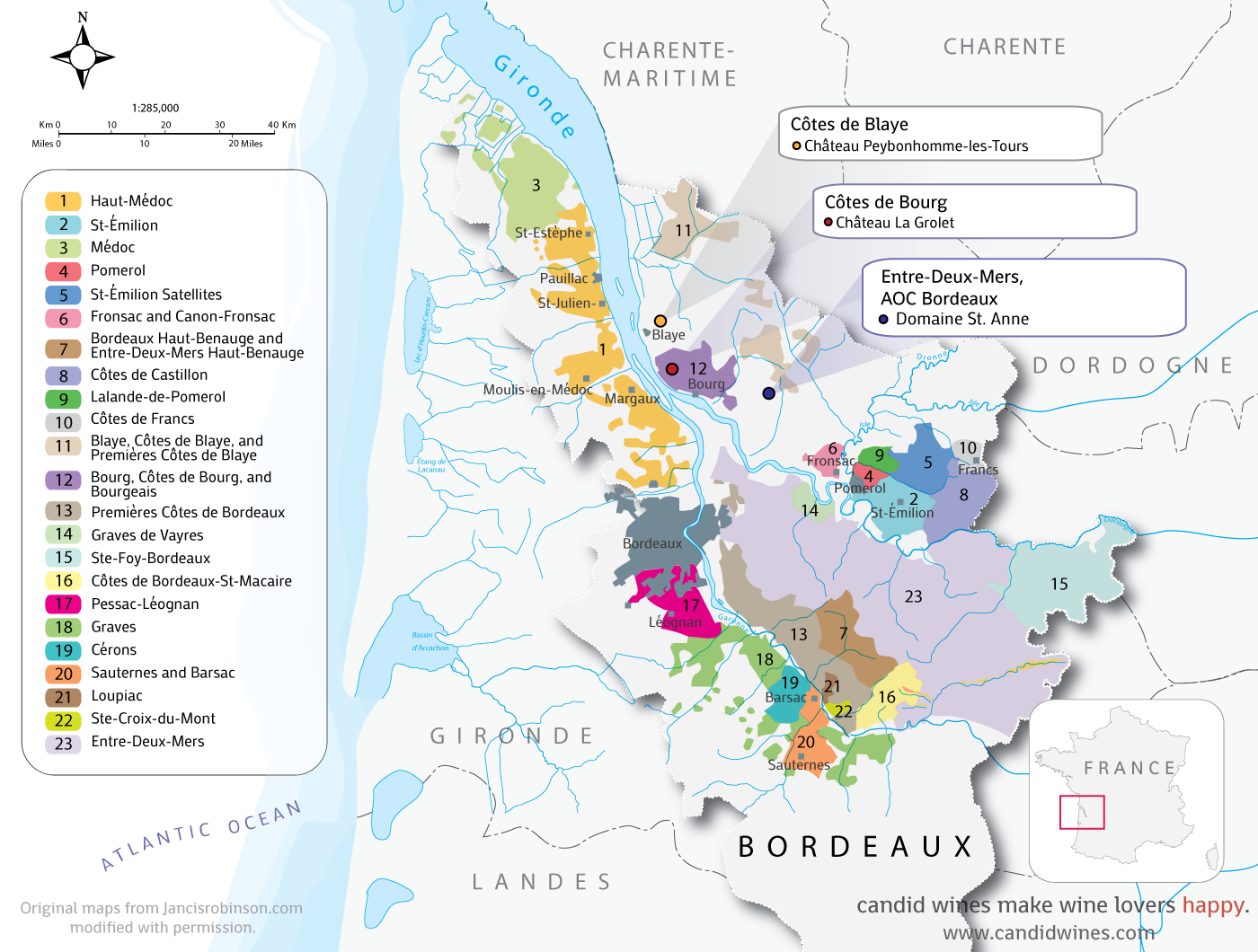
A Bordeaux [bawr-doh] wine is any wine produced in the Bordeaux region of south eastern, France. Average vintages produce over 700 million bottles of Bordeaux wine, ranging from large quantities of everyday table wine, to some of the most expensive and prestigious wines in the world. 89% of wine produced in Bordeaux is red (called ‘claret’ in Britain), with notable sweet white wines such as Chateau d’Yquem, dry whites, rosé and sparkling wines (Crémant de Bordeaux) all making up the remainder.
read more »
Posted in Food, Money, World |
Leave a Comment »
February 6, 2011

Terra (The Trade Reference Currency, TRC) is the name of a theorized ‘world currency.’ The concept is currently proposed by Belgian economist Bernard A. Lietaer and is designed to resist currency inflation. The currency is meant to be based on a basket of the 9-12 most important commodities (according to their importance in world wide trade). For example: 100 Terra = 1 barrel of oil + 10 bushels of wheat + 20 kg of copper, etc. The basic principle emerged from early concepts presented in an article in the French newspaper ‘Le Fédériste’ in 1933.
Posted in Money, World |
Leave a Comment »
February 3, 2011

Eigengrau [eye-gen-graw] (German for ‘intrinsic gray’), also called eigenlicht (‘intrinsic light’), dark light, or brain gray, is the color seen by the eye in perfect darkness. Even in the absence of light, some action potentials are still sent along the optic nerve, causing the sensation of a uniform dark gray color. Eigengrau is perceived as lighter than a black object in normal lighting conditions, because contrast is more important to the visual system than absolute brightness. For example, the night sky looks darker than eigengrau because of the contrast provided by the stars.
Posted in Language, Science, World |
Leave a Comment »
February 3, 2011

The I Ching [ee jing], also known as the Book of Changes and Zhouyi, is one of the oldest of the Chinese classic texts. The book contains a divination system comparable to Western geomancy or the West African Ifá system; in Western cultures and modern East Asia, it is still widely used for this purpose. The earliest extant version of the text, written on bamboo slips, albeit incomplete, is the Chujian Zhouyi, and dates to the mid 4th to early 3rd century BC. It centers on the ideas of the dynamic balance of opposites, the evolution of events as a process, and acceptance of the inevitability of change.
Posted in Philosophy, World |
Leave a Comment »
January 31, 2011

Spaghetti Western, also known as Italo-western, is a nickname for a broad sub-genre of Western film that emerged in the mid-1960s, so named because most were produced and directed by Italians. The typical team was made up of an Italian director, Italo-Spanish technical staff, and a cast of Italian and Spanish actors, sometimes a fading Hollywood star and sometimes a rising one like the young Clint Eastwood in three of Sergio Leone’s films. The films were typically shot in inexpensive locales resembling the American Southwest, primarily the Andalusia region of Spain, Almería, Sardinia, and Abruzzo.
Because of the desert setting and the readily available low-cost southern Spanish or southern Italian extras, typical themes in spaghetti westerns include the Mexican Revolution, Mexican bandits, and the border region shared by Mexico and the United States. Originally, spaghetti westerns were characterized by their production in the Italian language, low budgets, and a recognizable highly fluid and minimalist cinematography which eschewed many of the conventions of earlier Westerns. This was partly intentional and partly the context of a different cultural background.
Posted in Art, Money, World |
Leave a Comment »
January 30, 2011
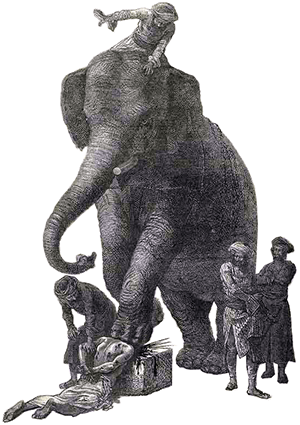
Execution by elephant was, for thousands of years, a common method of capital punishment in South and Southeast Asia, and particularly in India. Asian Elephants were used to crush, dismember, or torture captives in public executions. The animals were trained and versatile, both able to kill victims immediately or to torture them slowly over a prolonged period. Employed by royalty, the elephants were used to signify both the ruler’s absolute power and his ability to control wild animals.
The sight of elephants executing captives attracted the interest of usually horrified European travellers, and was recorded in numerous contemporary journals and accounts of life in Asia. The practice was eventually suppressed by the European empires that colonised the region in the 18th and 19th centuries. While primarily confined to Asia, the practice was occasionally adopted by Western powers, such as Rome and Carthage, particularly to deal with mutinous soldiers.
Posted in Death, War, World |
Leave a Comment »
January 25, 2011

A chav is a stereotype of certain people in the United Kingdom. Also known as a charver in Yorkshire and North East England, ‘chavs’ are said to be aggressive teenagers, of white working class background, who repeatedly engage in antisocial behaviour such as street drinking, drug abuse and rowdiness, or other forms of juvenile delinquency. The derivative Chavette has been used to refer to females.
Chav probably has its origins in the Romani word ‘chavi,’ meaning ‘child’ (or ‘chavo,’ meaning ‘boy,’ or ‘chavvy,’, meaning ‘youth’). This word may have entered the English language through the Geordie dialect word charva, meaning a rough child. This is similar to the colloquial Spanish word chaval, meaning ‘kid’ or ‘guy.’ In Italy, chavs are termed as coatto, which basically means ‘working class’ and vulgar.
read more »
Posted in Language, Money, World |
Leave a Comment »





 The Daily Omnivore