January 25, 2011

A robot jockey is commonly used on camels in camel racing. Early designs confused or frightened the camels, so the robots were modified to include more human-like features, including a mannequin-like face, sunglasses, hats, racing silks and even traditional perfumes used by human jockeys. Developed since 2004, the robotic jockeys are slowly phasing out the use of human jockeys, which, in the case of camel racing in the Middle East, often employs small children who reportedly suffer repeated systemic human rights abuses. In response to international condemnation of such abuses, the nations of Qatar and the UAE have banned the use of human jockeys in favor of robots.
Camel racing has been around for thousands of years. ‘The Sport of Sheiks’ almost exclusively utilized small children, usually boys around the age of four, to ride and direct the camels. Often, the boys would be starved to be as light as possible. Many of the boys used for the races were often sold to race organizers or camel owners, and there was an active child slave trade for camel jockeys, involving victims of kidnapping or the children of destitute families who sold them into servitude.
Posted in Politics, Technology, World |
Leave a Comment »
January 24, 2011
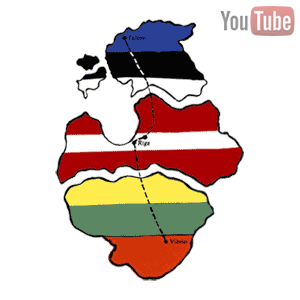
The Baltic Way was a peaceful political demonstration that occurred on August 23, 1989. Approximately two million people joined their hands to form a human chain spanning over 600 kilometres (370 mi) across the three Baltic states – Estonian SSR, Latvian SSR, and Lithuanian SSR, republics of the Soviet Union. It marked the 50th anniversary of the Molotov–Ribbentrop Pact between the Soviet Union and Nazi Germany. The pact and its secret protocols divided Eastern Europe into spheres of influence and led to the occupation of the Baltic states in 1940.
The event was organised by Baltic pro-independence movements: Rahvarinne of Estonia, Popular Front of Latvia, and Sąjūdis of Lithuania. The protest was designed to draw global attention by demonstrating a popular desire for independence for each of the entities. It also illustrated solidarity among the three nations. Within six months from the protest, Lithuania became the first of the Republics of the Soviet Union to declare independence.
Posted in Politics, World |
Leave a Comment »
January 24, 2011

A forest kindergarten is a type of preschool education for children between the ages of three and six that is held almost exclusively outdoors. Whatever the weather, children are encouraged to play, explore and learn in a forest or natural environment. The adult supervision is meant to assist rather than lead. It is also known as Waldkindergarten (in German), outdoor nursery, nature kindergarten, or nature preschool.
read more »
Posted in Education, World |
Leave a Comment »
January 21, 2011

An Urban chicken or backyard chicken is a chicken kept in a city. The primary reasons for keeping chickens are the food and income made by selling the eggs and meat. Other reasons include use in ceremonies and as gifts or even as pets. Keeping chickens in an urban environment is associated with the ‘Urban Agriculture Movement,’ which is the growing practice of cultivating, processing and distributing food in cities.
read more »
Posted in Food, Health, World |
Leave a Comment »
January 20, 2011

The French Paradox is the observation that French people suffer a relatively low incidence of coronary heart disease, despite having a diet relatively rich in saturated fats. The term French Paradox was coined by Dr. Serge Renaud, a scientist from Bordeaux University in France. It has been suggested that France’s high red wine consumption is a primary factor in the trend.
This hypothesis was expounded in a 60 Minutes broadcast in 1991. It is believed that one of the components of red wine potentially related to this effect is resveratrol. Statistics collected by the WHO from 1990–2000 show that the incidence of heart disease in France may have been underestimated, and may in fact be similar to that of neighboring countries.
Posted in Food, Health, World |
Leave a Comment »
January 20, 2011

Whisky production in Japan began around 1870, but the first commercial production was in 1924 upon the opening of the country’s first distillery, Yamazaki. Broadly speaking the style of Japanese whisky is more similar to that of Scotch whisky than Irish whiskey, and thus the spelling typically follows the Scottish convention (omitting the letter ‘e’).
There are several companies producing whisky in Japan. Perhaps the two most well known are Suntory and Nikka. Both produce blended as well as single malt whiskies.
Posted in Food, World |
Leave a Comment »
January 18, 2011

The YikeBike mini-farthing is a folding electric bicycle. It weighs 9.8 kilograms (22 lb) and when folded, it is small enough to fit in a backpack. The YikeBike was invented by Grant Ryan and designed by a team in New Zealand over 5 years. It is the smallest and lightest electric folding bicycle in the world and retails for $3595 US.
The vehicle has no chain pedal, gear box, mechanical brake, cables or levers. These functions are provided by a 1.2 kW electric motor and controller. The YikeBike has electronic anti-skid brakes. There are also built-in lights, indicators and brake lights for safety. Top speed is 15 miles per hour, and the bike can travel about six miles per charge.
Posted in Money, Technology, World |
Leave a Comment »
January 18, 2011

Daiwa House is Japans largest homebuilder, specializing in prefabricated houses. It was founded in 1955 in Osaka. The Emergency Disaster Vehicle o1 (EDV-01) is a Daiwa concept habitat. It is an easily transported, self-contained shelter and amenities to be deployed during a disaster.
Once in place, the top portion of the EDV expands, doubling the space. This second level is a living area with beds and a desk. The first floor is contains the necessities: a water-free toilet, functional kitchen, refrigerator, and a bathroom with shower. The unit is completely self-sufficient, using roof-mounted solar panels, ambient water-vapor condensers, and fuel cells to provide a livable space. The EDV-01 also generates its own fuel, hydrogen, through electrolysis.
Posted in Money, Technology, World |
Leave a Comment »
January 18, 2011

Sokushinbutsu were Buddhist monks or priests who caused their own deaths in a way that resulted in their mummification. This practice took place almost exclusively in northern Japan around the Yamagata Prefecture. It is believed that many hundreds of monks tried, but only between 16 and 24 such mummifications have been discovered to date. The practice is not advocated or practiced today by any Buddhist sect.
read more »
Posted in Death, Philosophy, World |
Leave a Comment »
January 17, 2011

The EURion constellation is a pattern of symbols found on a number of banknote designs worldwide since about 1996. It is added to help software detect the presence of a banknote in a digital image. Such software can then block the user from reproducing banknotes to prevent counterfeiting using color photocopiers. The system is employed on Euros, U.S., dollars, Japanese Yen, and British pounds sterling.
The name ‘EURion constellation’ was coined by German computer scientist, Markus Kuhn, who uncovered the pattern in early 2002 while experimenting with a Xerox photocopier that refused to reproduce banknotes. Technical details regarding the EURion constellation are kept secret by its inventors and users. A patent application suggests that the pattern and detection algorithm were designed at OMRON Corporation, a Japanese electronics company.
Posted in Money, Technology, World |
Leave a Comment »
January 17, 2011
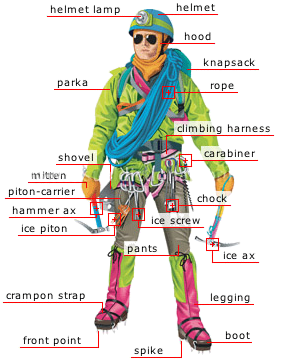
The Explorers Grand Slam is a challenge to reach the North Pole, the South Pole and all of the Seven Summits (the highest mountains of each of the seven continents). Only a dozen people have completed the Explorers Grand Slam. British mountaineer, David Hempleman-Adams became the first to complete this challenge in 1998. In 2005, Park Young Seok of South Korea completed a ‘true Adventurers Grand Slam,’ which additionally includes ascending all 14 peaks above 8,000 meters.
Young-Seok holds the world’s second fastest time (behind Jerzy Kukuczka of Poland) for ascending the 14 Eight-thousanders, the Guinness World Record for climbing six of the 8,000-meter Himalayan peaks within one year, and another record for reaching the South Pole on foot in 44 days, self-sufficient and without any food re-supplies.
Posted in Games, World |
Leave a Comment »
January 11, 2011

Coconut water is the clear liquid inside young coconuts. As the fruit matures, the coconut water gradually is replaced by the coconut meat and air. A very young coconut has very little meat, and the meat is very tender, almost a gel. Coconut water has long been a popular drink in the tropics, especially in Southeast Asia, the Pacific Islands, such as Hawaii, and the Caribbean, where it is available fresh, canned or bottled. It is naturally fat-free and low calorie.
read more »
Posted in Food, Health, World |
Leave a Comment »




 The Daily Omnivore