January 4, 2011

Ganguro (‘Black Face’) is an alternative fashion trend of blonde or orange hair and tanned skin among young Japanese women that appeared in the early 1990s and peaked in popularity around the year 2000. The Shibuya and Ikebukuro districts of Tokyo were the centers of the trend. Ganguro falls into the larger subculture of ‘gyaru’ (from English ‘gal’), a slang term used for various groups of young women, usually referring to overly childish or rebellious girls.
In ganguro fashion, a deep tan is combined with hair dyed in shades of orange to blonde, or a silver grey known as ‘high bleached.’ Black ink is used as eyeliner and white concealer is used as lipstick and eyeshadow. False eyelashes, plastic facial gems, and pearl powder are often added. Platform shoes and brightly-colored outfits complete the look. Also typical of ganguro fashion are tie-dyed sarongs, miniskirts, stickers on the face, and many bracelets, rings, and necklaces.
Posted in Art, World |
Leave a Comment »
January 4, 2011

Harajuku is the common name for the area around Harajuku Station in the Shibuya ward of Tokyo, Japan. It is a fashion capital of the world, renowned for its unique street fashion. Every Sunday, young people dressed in a variety of styles including gothic lolita, visual kei, and decora, as well as cosplayers spend the day in Harajuku socializing. The term ‘Harajuku Girls’ has been used by English-language media to describe teenagers dressed in any fashion style who are in the area of Harajuku.
Posted in Art, World |
Leave a Comment »
January 4, 2011

The Skoptsy [skopt-see] were a secret sect in imperial Russia best known for practicing castration of men and the mastectomy of women in accordance with their teachings against sexual lust. They were persecuted by the imperial government and later by the Soviet Union, but enjoyed substantial growth before fading into obscurity by the mid-twentieth century. The name ‘Skoptsy’ is a plural of ‘skopets,’ an archaic word meaning ‘castrated one’ in the Russian language.
As their title indicates, the main feature of the sect was castration. They believed that after the expulsion from the Garden of Eden, Adam and Eve had the halves of the forbidden fruit grafted onto their bodies forming testicles and breasts. Thus, the removal of these sexual organs restored the Skoptsy to the pristine state before the Original Sin. Men who had underwent the ‘greater seal’ (removal of the penis and testicles) used a cow-horn when urinating.
Posted in Philosophy, Sex, World |
Leave a Comment »
January 4, 2011

Derby’s dose was a form of torture used in Jamaica to punish slaves who attempted to escape. The runaway would be beaten, and salt pickle, lime juice, and bird pepper would be rubbed into his or her open wounds. Another slave would defecate into the mouth of the miscreant, who would then be gagged for four to five hours. The punishment was invented by Thomas Thistlewood, a plantation owner, and named for the slave, Derby, who was made to defecate on the victim.
Posted in Politics, World |
2 Comments »
January 4, 2011
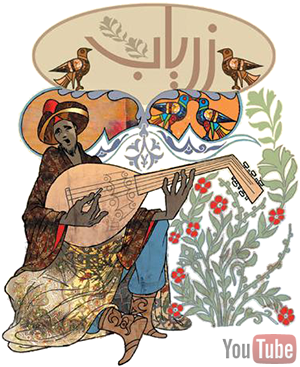
Abu l-Hasan (789–857), nicknamed Ziryab, was a Persian or Kurdish polymath: a poet, musician, courtesan, astronomer, botanist and geographer born in Baghdad and active in Córdoba, Spain. According to some sources, he was a former slave, possibly of East African descent. The name ‘Ziryab’ (Blackbird) was given to him for his dark complexion, eloquence, and melodious voice.
Ziryab introduced musical instruments to Iberia, notably the Persian lute that became the Spanish guitar, as well as passionate songs and dances of Persia and Mesopotamia that later, mixed with Gypsy influence, evolved into the famed Spanish flamenco. He is also credited with inventing and popularizing an early form of toothpaste.
Posted in Art, World |
Leave a Comment »
January 3, 2011

Masdar (Arabic for ‘source’) is a project in Abu Dhabi, in the United Arab Emirates. Its core is a planned city, designed by the British architectural firm Foster + Partners. Masdar City will rely entirely on solar energy and other renewable energy sources, with a sustainable, zero-carbon, zero-waste ecology, and is designated as a car-free zone.
It is being built by the Abu Dhabi Future Energy Company, a subsidiary of Mubadala Development Company, with the majority of seed capital provided by the government of Abu Dhabi. Construction is underway 11 mi east-south-east of the city of Abu Dhabi, beside Abu Dhabi International Airport. Skeptics are concerned that the city will be only symbolic for Abu Dhabi, and that it may become just a luxury development for the wealthy, a city sized gated community.
read more »
Posted in Money, Technology, World |
Leave a Comment »
January 2, 2011

Fantastic Planet is a 1973 animated science fiction film directed by René Laloux, production designed by Roland Topor, written by both of them and animated at Jiří Trnka Studio. The film was an international production between France and Czechoslovakia and was distributed in the United States by Roger Corman. The story is based on the novel ‘Oms en série,’ by the French writer Stefan Wul. The film is chiefly noted for Topor’s surreal imagery.
The film depicts a future in which human beings, known as ‘Oms’ (a play on the French word ‘hommes,’ meaning ‘men’), have been brought by the giant Draags to the Draag home world, where they are kept as pets (with collars). Most Oms are domesticated as pets, but others run wild, and are periodically exterminated. The Draags’ treatment of the Oms is ironically contrasted with their high level of technological and spiritual development. The Draag practice of meditation, whereby they commune psychically with each other and with different species, is shown in transformations of their shape and color.
Posted in Art, World |
Leave a Comment »
January 1, 2011

TED (Technology Entertainment and Design) is a global set of conferences curated by the American private non-profit Sapling Foundation, formed to disseminate ‘ideas worth spreading.’ over 700 talks are available free online. TED was founded in 1984, and the conference was held annually from 1990 in Monterey, California. The speakers are given a maximum of 18 minutes to present their ideas in the most innovative and engaging ways they can
Past presenters include Bill Clinton, Jane Goodall, Malcolm Gladwell, Al Gore, Richard Dawkins, Bill Gates, and Larry Page and Sergey Brin. TED’s current curator is the British former computer journalist and magazine publisher Chris Anderson. TED’s early emphasis was largely technology and design, consistent with a Silicon Valley center of gravity. The events are now held in Long Beach and Palm Springs in the U.S. as well as in Europe and Asia, offering live streaming of the talks. They address an increasingly wide range of topics within the research and practice of science and culture.
Posted in Politics, Technology, World |
Leave a Comment »
January 1, 2011
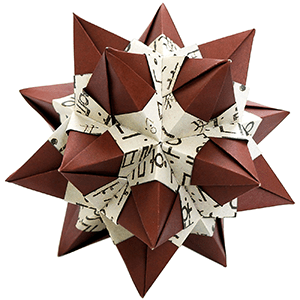

The Japanese kusudama (literally ‘medicine ball’) is a paper model that is usually (although not always) created by sewing or gluing multiple identical pyramidal units (usually stylized flowers folded from square paper) together through their points to form a spherical shape. Occasionally, a tassel is attached to the bottom for decoration.
Kusudama originate from ancient Japanese culture, where they were used for incense and potpourri; possibly originally being actual bunches of flowers or herbs. They are now typically used as decorations, or as gifts. It is a precursor to modular origami, a paper folding technique which uses multiple sheets of paper to create a larger and more complex structure than possible using single-piece origami techniques.
Posted in Art, World |
Leave a Comment »
December 24, 2010


In Jamaican popular culture, a sound system is a group of disc jockeys, engineers and MCs playing ska, rocksteady or reggae music. The sound system scene is generally regarded as an important part of Jamaican cultural history and as being responsible for the rise of several modern Jamaican musical genres.
The sound system concept first became popular in the 1950s, in the ghettos of Kingston. DJs would load up a truck with a generator, turntables, and huge speakers and set up street parties. In the beginning, the DJs played American rhythm and blues music, but as time progressed the sound migrated to a local flavor.
read more »
Posted in Art, World |
Leave a Comment »
December 20, 2010

The V sign is a hand gesture in which the first and second fingers are raised and parted, whilst the thumb and remaining fingers are clenched. With palm inwards, in the United Kingdom and some other English speaking countries, it is an obscene insulting gesture of defiance. During World War II, Winston Churchill popularized its use as a ‘Victory’ sign (for V as in victory) initially with palm inwards and, later in the war, palm outwards.
In the United States, with the palm outwards, and more recently inward, it is also used to mean ‘Peace,’ a meaning that became popular during the peace movement of the 1960s. In East Asia the gesture is commonly used with the palm outward, connoting positive meaning. According to a popular legend the two-fingers salute derives from the gestures of longbowmen fighting in the English army at the Battle of Agincourt (1415) during the Hundred Years’ War. The French claimed that they would cut off the arrow-shooting fingers of all the English and Welsh longbowmen after they had won the battle at Agincourt. But the English came out victorious and showed off their two fingers, still intact.
Posted in Language, War, World |
Leave a Comment »
December 20, 2010
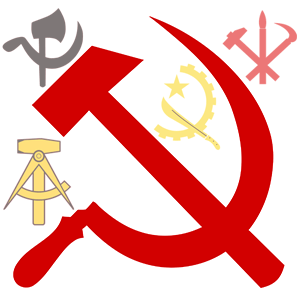
The hammer and sickle is a part of communist symbolism and its usage indicates an association with Communism, a Communist party, or a Communist state. It features a hammer and a sickle overlapping each other. The two tools are symbols of the industrial proletariat and the peasantry; placing them together symbolizes the unity between industrial and agricultural workers. This emblem was conceived during the Bolshevik Revolution. It is best known from having been incorporated into the red flag of the Soviet Union, along with the Red Star.
read more »
Posted in Money, Politics, World |
Leave a Comment »





 The Daily Omnivore