October 19, 2010

Cymande [sah-mahn-day] were an electric funk band who released several albums throughout the early 1970s. The group was formed in 1971 in London, England by musicians from Guyana and Jamaica. The name Cymande is derived from a Calypso word for Dove, which symbolizes peace and love. The group developed a subtle and complex, deep funk style influenced by calypso rhythms, jazz, African music, American soul and UK rock of the time. Cymande can now be seen as one of the most sophisticated of the funk acts that evolved in the early 1970s.
By the mid-70s the band members were going their separate ways and the group was disbanded in 1974. It wasn’t until 20 years later that they reaped any financial rewards, as their music became a popular source for samplers. Cymande’s original albums are still widely sought-after by DJs and funk aficionados. Perhaps the band’s best known recording is the soulful dancefloor filler called ‘Bra,’ which was later sampled by the American hip-hop group De La Soul and used as a breakbeat record by the godfathers of hip-hop Kool Herc and Grandmaster Flash.
Posted in Art, World |
Leave a Comment »
October 14, 2010
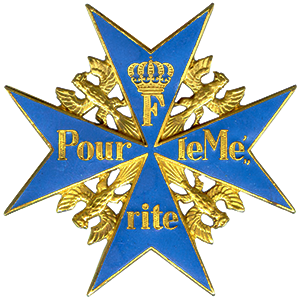
The Pour le Mérite, known informally during World War I as the Blue Max, was the Kingdom of Prussia’s highest military order for German soldiers until the end of World War I. The award was a blue-enameled Maltese Cross with eagles between the arms based on the symbol of the Johanniter Order, the Prussian royal cypher, and the French legend Pour le Mérite (‘for Merit’) arranged on the arms of the cross. A civil version of the order, for accomplishments in the arts and sciences, still exists in the Federal Republic of Germany.
Posted in Politics, War, World |
Leave a Comment »
October 13, 2010

A sizable number of Indian immigrants to the United States came in the 1960s and 1970s, when the motel and hotel industry was booming. Many of them bought up undervalued and dilapidated properties and turned them into businesses, including motels and hotels. It was estimated in 2007 that 60% of the mid-sized motels and hotels in the United States were owned by Indians. Nearly one-third of those Indians were called Patel (and came from Gujarat), with the result that, apparently, many people believe Patel is an Indian word meaning ‘hotel.’
Patel, originally meaning ‘headman’ or ‘village chief” derives from Patlikh, the record keeper named by princely rulers in Gujarat to keep track of the crops, pat being a parcel of land. Traditionally, the Patels or Patils assist the Talati or Kulkarni in collection or revenue in rural areas. Patels in northern Gujarat were very prominent farmers as well. Within the United Kingdom, it is the twenty-fourth most common surname nationally, and the third most common in the Greater London region. In the US, the surname ‘Patel’ ranks 174 among the top 500 list of most common last names.
Posted in Language, Money, World |
Leave a Comment »
October 13, 2010

A minuet [min-yoo-et] is a social dance of French origin for two people, usually in 3/4 time. The word was adapted from Italian minuetto and French menuet, meaning small, pretty, delicate, a diminutive of menu, from the Latin minutus. At the period when it was most fashionable it was slow, soft, ceremonious, and graceful. The name is also given to a musical composition written in the same time and rhythm, but when not accompanying an actual dance the pace was quicker. As the other dances that made up a Baroque suite dropped out of use, the minuet retained its popularity.
Posted in Art, Language, World |
Leave a Comment »
October 11, 2010


Kush [koosh] refers to a subset of strains of indica cannabis. The origins of Kush cannabis are from landrace plants mainly in Afghanistan, but are also from Iran, Pakistan, and Northern India. The name derives from the Hindu Kush mountain range. Kush strains of cannabis were brought to the United States in the mid-to-late 1970s and continue to be available. Kush strains were among those cultivated by the British firm GW Pharmaceuticals for its legally licensed commercial trial of medicinal cannabis.
Congressman Mark Kirk, a Republican member of the House of Representatives from Illinois, introduced legislation to increase the penalties for selling kush: The High-Potency Marijuana Sentencing Enhancement Act of 2009 (H.R. 2848). Kirk said that as kush may sell for up to $600 per ounce increases penalties are justified, saying that ‘if you can make as much money selling pot as cocaine, you should face the same penalties.’
Posted in Drugs, World |
Leave a Comment »
October 10, 2010

Ital or I-tal is the dietary system associated with the Rastafari movement. The word derives from the English word ‘vital,’ with the initial syllable replaced by i. This is done to many words in the Rastafari vocabulary to signify the unity of the speaker with all of nature. Rastafarians derive their beliefs and morality from intense personal meditations and prayer, and therefore there is no single dogma of Rastafarian belief. Due to this emphasis on individual personal meditation in Rastafari, the expression of Ital eating varies widely from Rasta to Rasta, and there are few universal ‘rules’ of Ital living.
read more »
Posted in Food, Philosophy, World |
Leave a Comment »
October 10, 2010

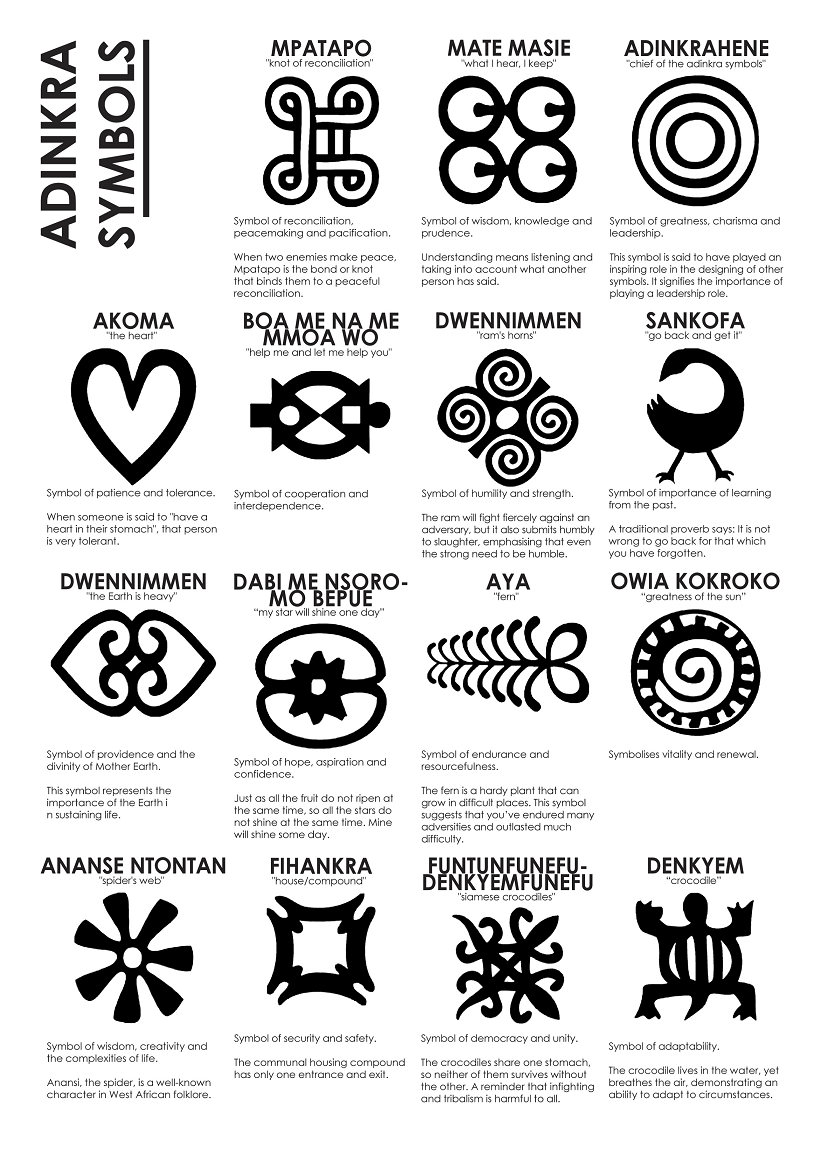
Adinkra [oon-din-krah] are visual symbols, originally created by the Akan of Ghana and the Gyaman of Cote d’Ivoire in West Africa, that represent concepts or aphorisms.
Adinkra are used on fabric, walls, in pottery, woodcarvings and logos. Fabric adinkra are often made by woodcut sign writing as well as screen printing. They also can be used to communicate evocative messages that represent parts of their life or those around them.
Posted in Art, Philosophy, World |
3 Comments »
October 10, 2010
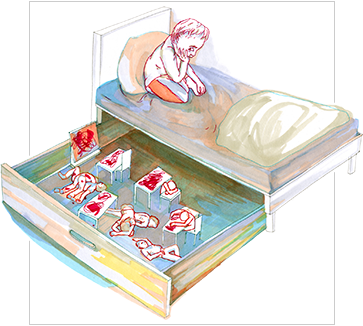
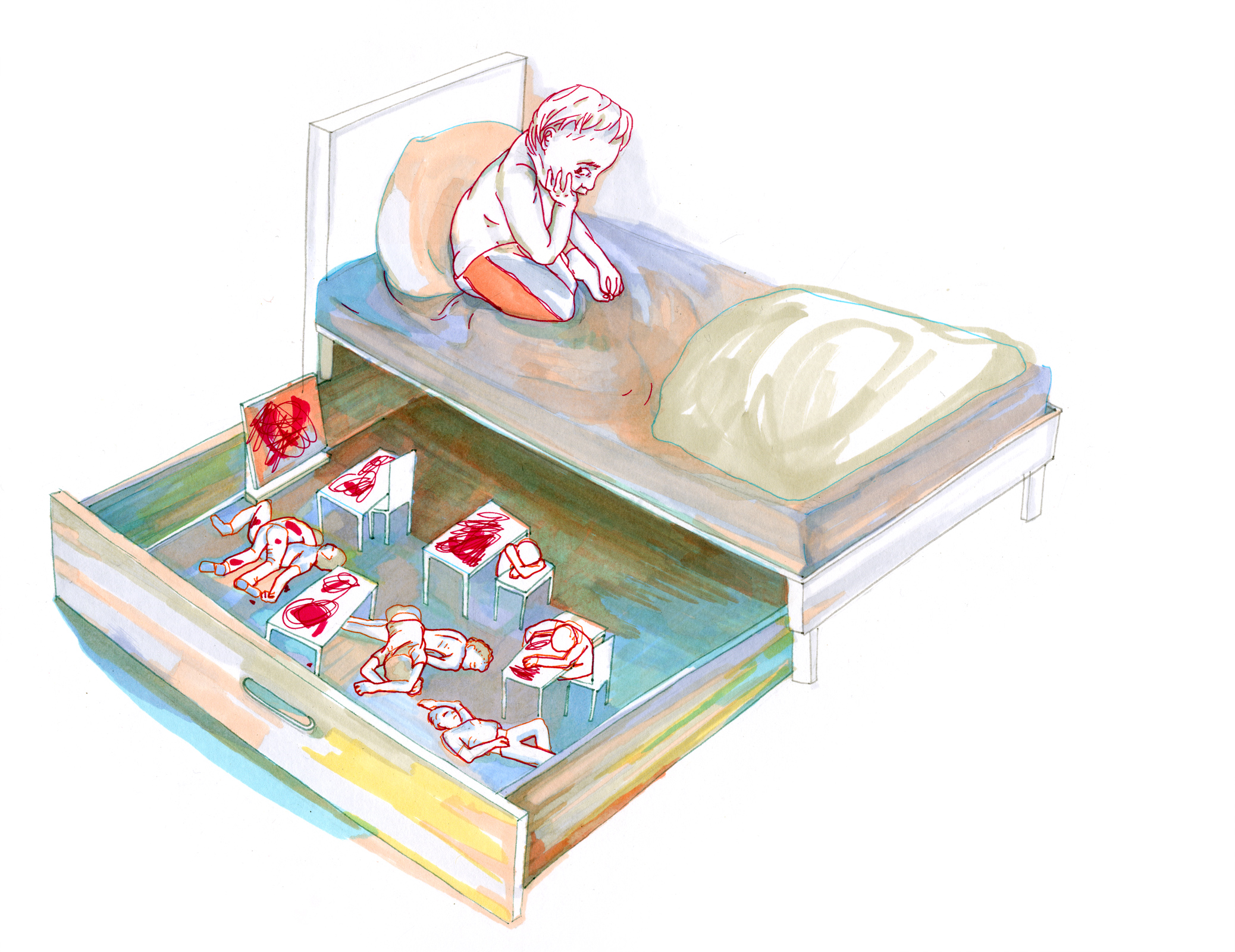
Hikikomori (literally ‘pulling away,’ being confined’) is a Japanese term to refer to the phenomenon of reclusive people who have chosen to withdraw from social life, often seeking extreme degrees of isolation and confinement because of various personal and social factors in their lives.
The term hikikomori refers to both the sociological phenomenon in general as well as to people belonging to this societal group. In Western terminology this group may include individuals suffering from social phobia or social anxiety problems. This could also be due to agoraphobia, avoidant personality disorder or painful or extreme shyness.
Posted in Health, Language, World |
Leave a Comment »
October 9, 2010

Celebratory gunfire is the shooting of a firearm into the air in celebration. It is culturally accepted in the Balkans, the Middle East, the South Asian regions of Northern India as well as Pakistan and Afghanistan and Latin American regions such as Puerto Rico as well as some areas of the United States. The practice may result in random death and injury from stray bullets. Property damage is sometimes another result of celebratory gunfire; shattered windows and damaged roofs are often found after such celebrations. People are injured, sometimes fatally, when bullets discharged into the air fall back down. In Puerto Rico about two people die and about 25 more are injured each year from celebratory gunfire on New Year’s Eve.
The mortality rate among those struck by falling bullets is about 32%, compared with about 2% to 6% normally associated with gunshot wounds. The higher mortality is related to the higher incidence of head wounds from falling bullets. Between the years 1985 and 1992, doctors at the King/Drew Medical Center in Los Angeles, California, treated some 118 people for random falling-bullet injuries. Thirty-eight of them died. Kuwaitis celebrating in 1991 at the end of the Gulf War by firing weapons into the air caused 20 deaths from falling bullets.
Posted in Death, Games, World |
Leave a Comment »
October 9, 2010

A Roman dodecahedron [doh-dek-uh-hee-druhn] is a small hollow object made of bronze or stone, with twelve flat pentagonal faces, each having a circular hole in the middle which connects to the hollowed-out center. Roman dodecahedra date from the 2nd or 3rd centuries CE. About a hundred have been found from England to Hungary and to the east of Italy, with most found in Germany and France. Ranging from 4cm to 11cm in size, they also vary in terms of textures.
The function or use of the dodecahedra remains a mystery; no mention of them has been found in contemporary accounts or pictures of the time. Speculated uses include candlesticks (wax was found inside one example); dice; survey instruments; a tool for calibrating water pipes; and parts of a military standard. It has also been suggested that they may have been religious artifacts of some kind.
Posted in World |
4 Comments »
October 9, 2010
In Ireland, the Great Famine was a period of mass starvation, disease and emigration between 1845 and 1852. It is also known, mostly outside of Ireland, as the Irish Potato Famine. In the Irish language it is called ‘An Gorta Mór‘ (The Great Hunger) or ‘An Drochshaol’ (The Bad Times). During the Famine, Ireland’s population fell by between 20 and 25 percent. Approximately one million people died and a million more emigrated from Ireland. The proximate cause of famine was a plant disease commonly known as potato blight. The blight ravanged much of Europe but hit Ireland particularly hard due to a number of political, social and economic factors which remain the subject of historical debate.
For example, views of the Irish as racially inferior, and for this reason significantly responsible for their circumstances, gained purchase in Great Britain during and immediately after the famine. Discussion of the British government’s response to the failure of the potato crop in Ireland and the subsequent large-scale starvation, and whether or not this constituted genocide, remains a politically-charged issue in Ireland.
Posted in Death, Politics, World |
Leave a Comment »
October 9, 2010

Abelardo is a green, full-bodied Muppet parrot who appears on Plaza Sésamo, the Mexican co-production of Sesame Street. He joined the cast in 1981 and soon became the show’s most recognizable figure. Abelardo also guest starred on the American Sesame Street on May 5, 1997 as part of the Cinco de Mayo celebration. On the Mexican show, he occasionally keeps contact with his cousin Big Bird via letters and video-chatting.
His character was originally a a tall orange-and-yellow scaled dragon which had a soft, gentle voice and a very particular way of talking, making pauses after every sentence. His favorite treat were pumpkin seeds or ‘semillas de calabaza’ which in Mexico are a very popular snack, also known as ‘Pepitas.’ In later seasons Abelardo the Dragon was replaced by Serapio Montoya, a large parrot-like character with a strong resemblance to Big Bird, of whom he is a cousin. However, children and others continued to refer to Serapio as ‘Abelardo’ and therefore his name was later changed to Abelardo Montoya. The reason the dragon character was dismissed when the series was re-launched in 1982, remains unexplained.
Posted in Education, World |
Leave a Comment »




 The Daily Omnivore