August 12, 2010

Formosa [fawr-moh-suh] is the name given to Taiwan (Ilha Formosa, ‘Beautiful Isle’) by passing Portuguese mariners in 1544. It is now also the name of a province of Argentina, a city in Brazil, a small island off the northwest coast of Africa, and the language of Taiwanese aborigines.
Posted in Language, World |
Leave a Comment »
August 11, 2010

A police box is a British telephone kiosk or callbox located in a public place for the use of members of the police, or for members of the public to contact the police. Unlike an ordinary callbox, its telephone is located behind a hinged door so it can be used from the outside, and the interior of the box is, in effect, a miniature police station for use by police officers. Police boxes pre-date the era of mobile telecommunications; now police officers, in many countries, carry two-way radios and/or mobile phones rather than relying on fixed kiosks. Many boxes are now disused or have been withdrawn from service.
British police boxes were usually blue, except in Glasgow, where they were red until the late sixties. In addition to a telephone, they contained equipment such as an incident book and a first aid kit. Today the image of the blue police box is a trademark of the BBC as it is widely associated with the science fiction television programme Doctor Who, in which the protagonist’s time machine, a TARDIS, is in the shape of a 1960s British police box.
Posted in World |
Leave a Comment »
August 10, 2010


The custom of drinking beer from a boot-shaped glass is common in German themed bars, beer gardens, and the like. Machine pressed beer boots range in size from a shot glass up to 1 litre. The more popular mouth blown beer boots are typically 1 and 2 litres in size.
There are several different origin stories for the boot of beer. One tradition holds that a Prussian general swore to his troops that he would drink beer from his boot dependent on the successful outcome in a coming battle. When victorious, the general ordered a glass fashioned in the shape of a boot to fulfill his promise without, ‘having to taste his own feet.’ Another tradition holds that the boot began when German soldiers during World War I having nothing else to drink from instead passed around an actual leather boot of beer before heading into battle. They would flick the boot before drinking from it for good luck and again after drinking to wish the next soldier good luck.
Posted in Food, Humor, World |
Leave a Comment »
August 9, 2010

Kefir [kuh-feer] is a fermented milk drink that originated with shepherds of the Caucasus region, who discovered that fresh milk carried in leather pouches would occasionally ferment into an effervescent beverage.
It is prepared by inoculating cow, goat, or sheep’s milk with kefir grains (a combination of bacteria and yeasts in a matrix of proteins, lipids, and sugars). Traditional kefir was made in skin bags that were hung near a doorway; the bag would be knocked by anyone passing through the doorway to help keep the milk and kefir grains well mixed. Dairy-free alternatives are available, such as coconut milk kefir and soy milk kefir.
Posted in Food, World |
Leave a Comment »
August 9, 2010

Zen is a school of Mahāyāna Buddhism (the larger of the two major traditions of Buddhism existing today, the other being Theravāda). The Japanese word zen is derived from the Chinese word chán, which in turn is derived from the Sanskrit word dhyāna, which means ‘meditation’ or ‘meditative state.’ Zen aims at enlightenment by direct intuition through meditation.
The emergence of Zen as a distinct school of Buddhism was first documented in China in the 7th century CE. From China, Zen spread south to Vietnam, and east to Korea and Japan. As a matter of tradition, the establishment of Zen is credited to the South Indian prince-turned-monk Bodhidharma, who came to China to teach a ‘special transmission outside scriptures, not founded on words or letters.’
Posted in Philosophy, World |
Leave a Comment »
August 9, 2010
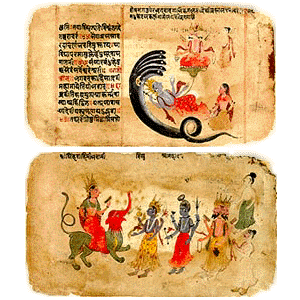
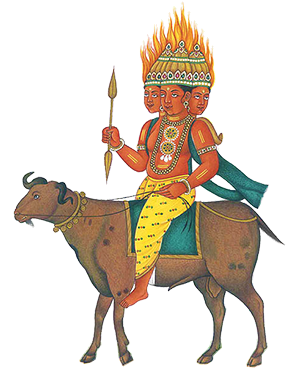
The Vedas [vey-duhs] (Sanskrit for ‘knowledge’) are a large body of texts originating in ancient India, which constitute the oldest Sanskrit literature (1500–1000 BCE) and the oldest scriptures of Hinduism. The texts are aggregated around the four canonical Vedas:.Rig Veda, Sama Veda, Yajur Veda, and Atharva Veda. Together they make up a sacred collection of hymns, incantations, and liturgical rites. The Atharva Veda is less predominant than other Vedas and is little used in solemn ritual. According to Hindu tradition, the Vedas are, ‘not of human agency.’ The individual verses contained in these compilations are known as mantras. Some selected Vedic mantras are still recited at prayers, religious functions and other auspicious occasions in contemporary Hinduism.
The various Indian philosophies and sects have taken differing positions on the Vedas. Schools of Indian philosophy which cite them as their scriptural authority are classified as orthodox. Other traditions, notably Buddhism, Sikhism, and Jainism, which did not regard the Vedas as authorities are referred to by traditional Hindu texts as heterodox schools.
Posted in Language, Philosophy, World |
Leave a Comment »
August 7, 2010
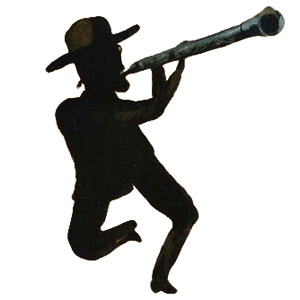
Klezmer [klez-mer] is a musical tradition of the Ashkenazic Jews of Eastern Europe. Played by professional musicians called klezmorim, the genre consists largely of dance tunes and instrumental display pieces for weddings and other celebrations. Although the genre has its origins in Eastern Europe, the particular form now known as klezmer developed in the United States in the milieu of Yiddish-speaking Jewish immigrants who arrived between 1880 and 1924.
Of all the musical styles which influenced the traditional Klezmer musicians, the Romanian influence seems to be the strongest and most enduring. Traditional Romanian music was heard, adopted and adapted by Klezmer musicians. This fact is reflected in the dance forms found throughout the entire surviving Klezmer music repertoire (e.g., Horas).
Posted in Art, World |
Leave a Comment »
August 7, 2010

Playing for Change is a multimedia music project created by the American producer and sound engineer Mark Johnson with his Timeless Media Group, that seeks to bring together musicians from around the world. Playing For Change also created a separate non-profit organization called the Playing For Change Foundation which builds music schools for children around the world.
The creators of the project, Mark Johnson and Enzo Buono, traveled around the world to places such as New Orleans, Barcelona, South Africa, India, Nepal, the Middle East and Ireland. Using a mobile recording equipment, the duo recorded local musicians performing the same song, interpreted into their own style.
Posted in Art, World |
Leave a Comment »
August 5, 2010

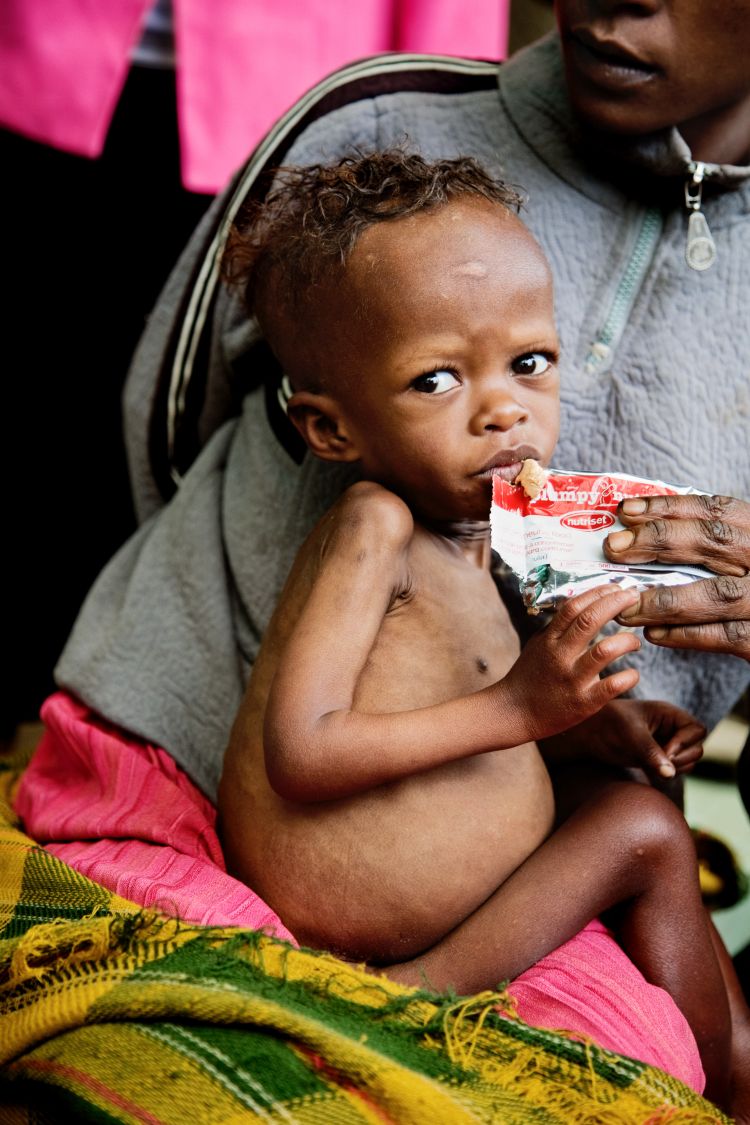
Plumpy’nut is a peanut-based food for use in famine relief which was formulated in 1999 by André Briend, a French paediatric nutritionist. The product is a high protein and high energy peanut-based paste in a foil wrapper. It tastes slightly sweeter than peanut butter. It is categorized by the WHO as a Ready-to-Use Therapeutic Food (RUTF). Plumpy’nut requires no water preparation or refrigeration and has a 2 year shelf life making it easy to deploy in difficult conditions to treat severe acute malnutrition. It can be used as a replacement for infant formula for children who are at least 6 months old.
Plumpy‘nut was first used during the crisis in Darfur in western Sudan. There, it was fed to some 30,000 children and aid officials there say it has helped cut malnutrition rates in half. It has since been used by the UN and humanitarian organizations in Niger, Haiti, and many other countries.
Posted in Food, Health, World |
Leave a Comment »
August 3, 2010

Yantra is the Sanskrit word for ‘instrument’ or ‘machine.’ Much like the word instrument itself, it can stand for symbols, processes, automata, machinery or anything that has structure and organization, depending on context. One usage popular in the West is as symbols or geometric figures. Traditionally such symbols are used in Eastern mysticism to balance the mind or focus it on spiritual concepts. The act of wearing, depicting, enacting and/or concentrating on a yantra is held to have spiritual or astrological or magical benefits in the Tantric traditions of the Indian religions.
Posted in World |
Leave a Comment »
August 3, 2010

Anchor baby is a term used by immigration reductionists in the United States to describe a child born in the U.S. to illegal aliens. It is generally used as a derogatory reference to the supposed role of the child, who as a U.S. citizen through the legal principle of jus soli, may facilitate immigration for relatives through family reunification.
Family reunification, or family-based immigration, in the USA is a lengthy process and limited to categories prescribed by provisions of the Immigration and Nationality Act of 1965, which attempts to balance the right of a family to live together, or the right of a person to marry whomever he chooses, with the country’s right to control immigration. A sub-case of family reunification is marriage migration, where one spouse immigrates to the country of the other spouse. Marriage migration can take place before marriage, in which case it falls under its own special category, or it can take place after marriage, in which case it falls under family reunification laws.
Posted in Politics, World |
Leave a Comment »
August 3, 2010

The Five Tibetan Rites is a system of exercises reported to be more than 2,500 years old which were first publicized by Peter Kelder in a 1939 publication entitled The Eye of Revelation. Kelder claims to have met, in southern California, a retired British army colonel who shared with him stories of travel and the subsequent discovery of the Rites. Although the Rites have circulated amongst yogis for decades, skeptics say that Tibetans have never recognized them as being authentic Tibetan practices.
Posted in Health, World |
Leave a Comment »





 The Daily Omnivore