September 30, 2013

‘The Design of Business: Why Design Thinking is the Next Competitive Advantage’ is a book published in 2009 by Roger Martin, Dean of the University of Toronto’s Rotman School of Management. The book describes the concept of design thinking, and how companies can incorporate it into their organizational structure for long term innovation and results.
Martin introduces the ‘knowledge funnel’ as the process followed by leading businesses to innovate more consistently and successfully by eliminating mysteries and developing heuristics (shortcuts and workarounds) and eventually algorithms (forumas). The mystery stage comprises the exploration of the problem, this transitions to the rule of thumb (heuristic) stage, where a rule of thumb is generated to narrow work to a manageable size. In the algorithm stage the general heuristic is converted to a fixed formula, taking the problem from complexity to simplicity.
Continue reading →
Posted in Money |
1 Comment »
September 30, 2013

Logical reasoning is the process of using evidence and reason to arrive at a conclusion. Broadly there are two main types of logical reasoning, deductive (general to specific) and inductive (specific to general).
In deduction, a general rule is applied to a particular case: ‘When it rains, things outside get wet. The grass is outside, therefore: when it rains, the grass gets wet.’ Mathematical logic and philosophical logic are commonly associated with this style of reasoning. Continue reading →
Posted in Language, Philosophy |
Leave a Comment »
September 29, 2013

Bridge and tunnel (B&T) is a pejorative term for people who travel to Manhattan Island from surrounding communities, a commute that requires passing over a bridge and/or through a tunnel. Though the term originates from the Triborough Bridge and Tunnel Authority, which services the five boroughs that comprise New York City, it has come to encompass all people who originate commute from outside of Manhattan, including the four other boroughs, Connecticut, Long Island, New Jersey, and northern counties, such as Orange, Rockland, and Westchester.
As the Oxford Dictionaries explains: a bridge-and-tunnel person is one who lives in the suburbs and is perceived as unsophisticated.
Continue reading →
Posted in Language, Money, World |
Leave a Comment »
September 29, 2013

Kwangmyong (lit. ‘Bright’) is a North Korean ‘walled garden’ national intranet opened in 2000. It may be accessed by web browsers, incorporates email services, news groups, and an internal web search engine. In North Korea, only a small number of government-authorized persons are allowed to use the global Internet, so Kwangmyong is the only computer network available to common people. It is a free service for public use.
Given that there is no direct connection to the outside Internet, unwanted information cannot enter the network. Information is filtered and processed by government agencies before being hosted on the North Korean Intranet. Cuba and Myanmar also use a similar network system that is separated from the rest of the Internet, and Iran has been reported as having future plans to implement such a network.
Posted in Politics, Technology, World |
Leave a Comment »
September 29, 2013

Formula E is a class of auto racing sanctioned by the Fédération Internationale de l’Automobile (FIA). The ‘formula,’ designated in the name, refers to a set of rules with which all participants’ cars must comply. Formula E is intended to be the highest class of competition for one-make, single-seat, electrically-powered racing cars. The inaugural championship is planned for 2014. Forty-two cars were ordered in 2012, with Formula One team McLaren providing the motor, transmission and electronics that all cars will use.
Racing circuits will be held in cities, and will be approximately 2.5 km to 3 km long; Cars will accelerate from 0 km/h to 100 km/h in 3 seconds, with a maximum speed of 220 km/h; and Noise decibel levels will be approximately -80dB (ordinary car – 70dB; bus – 90dB; Formula One track – 130dB). Pit stops will involve a change of car: when the battery runs out, the driver will make a pit stop, then will run 100 meters to climb into a recharged car.
Posted in Games, Technology |
Leave a Comment »
September 28, 2013
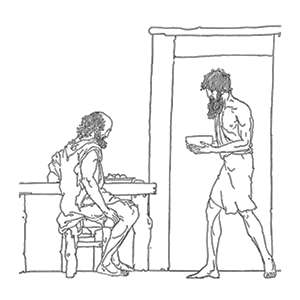
Xenia [zee-nee-uh] (Greek: ‘guest-friendship’) is the ancient Greek concept of hospitality, the generosity and courtesy shown to those who are far from home and/or associates of the person bestowing guest-friendship. The rituals of hospitality created and expressed a reciprocal relationship between guest and host expressed in both material benefits (such as the giving of gifts to each party) as well as non-material ones (such as protection, shelter, favors, or certain normative rights).
The Greek god Zeus is sometimes called Zeus Xenios in his role as a protector of travelers. He thus embodied the religious obligation to be hospitable to travelers. Theoxeny or theoxenia is a theme in Greek mythology in which humans demonstrate their virtue or piety by extending hospitality to a humble stranger (xenos), who turns out to be a disguised deity (theos) with the capacity to bestow rewards. These stories caution mortals that any guest should be treated as if potentially a disguised divinity and help establish the idea of xenia as a fundamental Greek custom.
Continue reading →
Posted in Philosophy, World |
Leave a Comment »
September 27, 2013

Precision guided firearms (PGFs) are long-range rifle systems designed to improve the accuracy of shooting at targets at extended ranges through target tracking, heads-up display, and advanced fire control.
Inspired by missile lock-on and fighter jet technology, the application of PGF technology to small arms mitigates multiple sources of marksman error including mis-aim, trigger jerk and shot setup miscalculation. PGFs can significantly increase first shot success probability (FSSP) out to extreme ranges of 1,200 yards or more. PGFs are fully integrated systems consisting of a standard caliber bolt action or semi-automatic rifles combined with a networked tracking scope and a guided trigger.
Posted in Technology, War |
Leave a Comment »
September 27, 2013

Ding zui [ding zoo-ee] is the Chinese practice of hiring impostors or body doubles to stand trial and receive punishment in one’s place. The term translates as ‘substitute criminal,’ and is reported to be a relatively common practice among China’s wealthy elite.
Accusations of ding zui surfaced in 2012 during the trial of Gu Kailai. The term ‘body double’ quickly became popular on Chinese Internet fora, and Chinese authorities attempted to censor related messages. Similar allegations had arisen in 2009 after the trial Hu Bin.
Posted in Money, Politics, World |
1 Comment »
September 26, 2013

‘The Adventures of Pete & Pete‘ was an American children’s television series produced by Wellsville Pictures and broadcast by Nickelodeon than ran from 1993 to 1996. The show featured humorous and surreal elements in its narrative, and many recurring themes centered on two brothers both named Pete Wrigley, and their various interactions with family, friends, and enemies.
The show was created by Will McRobb and Chris Viscardi and began as minute-long shorts in 1989 that aired in between regular programs. Owing to the popularity of the shorts, five half-hour specials were made, followed by a regular half-hour series.
Continue reading →
Posted in Art, Humor |
1 Comment »
September 26, 2013

Danny Tamberelli (b. 1982) is an American actor, comedian and musician. Tamberelli played Jackie Rodowsky on the television series ‘The Baby-Sitters Club’ shortly before more notably playing Little Pete on the Nickelodeon television show ‘The Adventures of Pete & Pete’ and provided the voice for Arnold in ‘The Magic School Bus,’ as well as appearing in the films ‘Igby Goes Down’ and ‘The Mighty Ducks.’ Many may also know him for his work on Nickelodeon’s ‘All That,’ as well as ‘Figure It Out’ (and his famed ‘head flip,’ where he would flip his head back after getting slimed to cover the audience in slime).
Tamberelli was born in Wyckoff, New Jersey. He is a graduate of Hampshire College, where he earned a bachelor’s degree in Interdisciplinary Arts focusing on music performance and booking management. He is the bassist and vocalist for the rock band Jounce, formed in Northern New Jersey. They released an eponymous debut album in 2006, followed by their sophomore effort, ‘These Things’ in 2009. Tamberelli is also a member of the sketch comedy group ‘Man Boobs Comedy’ with co-creators Brendan O’Rourke and Jeremy Balon. Tamberelli appears in the 2013 video game ‘Grand Theft Auto V’ as Jimmy De Santa.
Posted in Humor |
Leave a Comment »
September 25, 2013
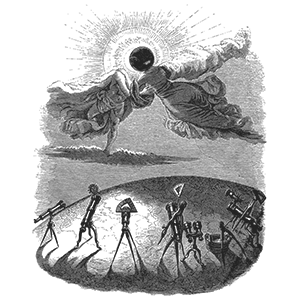
Ronald Dworkin (1931 – 2013) was an American philosopher and scholar of constitutional law. His theory of law as integrity, in which judges interpret the law in terms of consistent and communal moral principles, especially justice and fairness, is among the most influential contemporary theories about the nature of law.
Dworkin advocated a ‘moral reading’ of the United States Constitution, and an interpretivist approach to law and morality. He was a frequent commentator on contemporary political and legal issues, particularly those concerning the Supreme Court of the United States, often in the pages of ‘The New York Review of Books.’
Continue reading →
Posted in Philosophy, Politics |
Leave a Comment »
September 24, 2013

‘Thought for Food‘ is The Books’ first album. It contains all the characteristic elements of their sound: rich and varied sampling from a variety of mundane and instrumental sources combined into songs. In 2000, The Books started work on what would become their début album.
Guitarist and vocalist Nick Zammuto and cellist Paul de Jong moved locations constantly during this time, recording in New York, Los Angeles, Boston, and finally in the basement of a hostel in North Carolina where Zammuto worked for a while after hiking the Appalachian Trail. The album was released in 2002 and was praised by critics for its distinctive sound: extensive sampling from obscure sources coupled with acoustic instrumentation.
Posted in Art |
Leave a Comment »



