February 3, 2023

The Hawking Index (HI) is a mock mathematical measure of how far people will read through a book before giving up. The index is named after physicist Stephen Hawking’s ‘A Brief History of Time,’ which was dubbed ‘the most unread book of all time.’ It was invented by American mathematician Jordan Ellenberg, who created it in a blog for the ‘Wall Street Journal’ in 2014.
Ellenberg relied on data from Kindle users for his model. ‘A Brief History of Time’ scored 6.6% on the HI, meaning Ellenberg estimated that only 6.6% of readers finished the book. Continue reading →
Posted in Humor, Language, Science |
1 Comment »
January 12, 2023

El Paquete Semanal (‘The Weekly Package’) or ‘El Paquete’ is a one terabyte collection of digital material distributed since around 2008 on the underground market in Cuba as a substitute for broadband Internet. Since 2015, it has been the primary source of entertainment for millions of Cubans, as Internet in Cuba has been suppressed for many years. El Paquete Semanal has its own page that is running in the United States, where one could view its contents and is consistently updated every week.
The Cuban Government has also been investing in more internet access for the people, with the use of ETECSA, a service that the citizens could pay 1 CUC (equivalent to an American Dollar) for one hour of internet use. This has become the most popular method for people to become connected to the internet, mainly used to connect to social media, such as Facebook. Continue reading →
Posted in Politics, Technology, World |
1 Comment »
January 3, 2023

Libs of TikTok is a far-right anti-LGBT Twitter account owned by Chaya Raichik, a former real estate agent, that reposts social media content created by left-wing and LGBT people with hostile, mocking, or derogatory commentary. The account has over 1.5 million followers and has become influential among American conservatives and the political right.
The account harasses teachers, medical providers, and children’s hospitals. It spreads false claims and hateful commentary, especially relating to medical care of transgender children. Libs of TikTok regularly slurs LGBT people, as well as those who provide mental health services to LGBT youth and LGBT sex education to students, as ‘groomers.’ Raichik’s social media accounts have received several temporary suspensions and a permanent suspension from TikTok. Continue reading →
Posted in Politics, Sex, Technology |
3 Comments »
January 2, 2023

Tobias Schneebaum (1922 – 2005) was an American artist, anthropologist, and AIDS activist. He is best known for his experiences living and traveling among the Harakmbut people of Peru, and the Asmat people of Papua, Indonesia.
Schneebaum was born into a family of Jewish emigres from Poland in New York City. Schneebaum’s father Jacob (known as Yankle) emigrated to America from Poland just before World War I, in which he served in order to get U.S. citizenship. His mother, Riftcha, emigrated in 1913. He was born as Toivele Schneebaum on Manhattan’s Lower East Side and grew up in Brooklyn. A school official later changed this to Theodore Schneebaum, by which he was known by friends and family throughout his childhood. (He later changed his name legally to Tobias.) Continue reading →
Posted in Art, Science, World |
Leave a Comment »
January 1, 2023

In theater, dance, and live musical performances, a rider is a set of requests or demands that a performer sets as criteria for performance, which are typically fulfilled by the hosting venue. Some rider requirements are attempts to avoid specific problems from previous shows. Some venues cut corners to save expense, leaving the touring crew with inedible food, etc. ‘Unreasonable requests’ (if legal) can be contractual obligations. Failure to meet such terms can compel performance fees to be paid without a performance.
Riders typically include hospitality and technical sections. Since the 2010s, inclusion riders, which provide for certain levels of diversity in casting and production staff, are used in the film and television industry. Continue reading →
Posted in Art, Money, Politics |
1 Comment »
December 21, 2022

Active measures is political warfare conducted by the Soviet and modern Russian governments to influence the course of world events. It includes offensive programs such as espionage, propaganda, sabotage, and assassination.
Retired KGB Major General Oleg Kalugin, former head of Foreign Counter Intelligence for the KGB, described active measures as ‘the heart and soul of the Soviet intelligence’: ‘Not intelligence collection, but subversion: active measures to weaken the West, to drive wedges in the Western community alliances of all sorts, particularly NATO, to sow discord among allies, to weaken the United States in the eyes of the people of Europe, Asia, Africa, Latin America, and thus to prepare ground in case the war really occurs.’ Continue reading →
Posted in Politics, War, World |
Leave a Comment »
December 18, 2022

A mumpsimus [muhmp-suh-muhs] is a ‘traditional custom obstinately adhered to however unreasonable it may be,’ or ‘someone who obstinately clings to an error, bad habit or prejudice, even after the foible has been exposed and the person humiliated; also, any error, bad habit, or prejudice clung to in this fashion.’
The term originates in the story of a priest using the nonsense Latin word ‘mumpsimus’ instead of ‘sumpsimus’ (lit. ‘we have taken’) when giving mass, and refusing to be corrected on the matter. The word may refer to either the speaker or their habit. Continue reading →
Posted in Language, Philosophy |
Leave a Comment »
December 13, 2022

Acoustic Kitty is a project launched by the C.I.A. Directorate of Science & Technology in the 1960s, which intended to use cats to spy on the Kremlin and Soviet embassies.
In an hour-long procedure, a veterinary surgeon implanted a microphone in the cat’s ear canal, a small radio transmitter at the base of its skull, and a thin wire into its fur. This would allow the cat to innocuously record and transmit sound from its surroundings. Due to problems with distraction, the cat’s sense of hunger had to be addressed in another operation. Victor Marchetti, a former CIA officer, said Project Acoustic Kitty cost about $20 million. Continue reading →
Posted in Technology, War, World |
Leave a Comment »
December 6, 2022

The Ghost Army was a United States Army tactical deception unit during World War II officially known as the 23rd Headquarters Special Troops. The 1100-man unit was given a unique mission: to deceive Hitler’s forces and mislead them as to the size and location of Allied forces, while giving the actual units elsewhere time to maneuver.
Activated on January 20, 1944, the Ghost Army arrived in Europe in May shortly before D-Day, putting on a “traveling road show” utilizing inflatable tanks, sound trucks, fake radio transmissions, scripts and pretense. Their story was kept a secret for more than 50 years after the war, until it was declassified in 1996. In February 2022, members of the Ghost Army were awarded the Congressional Gold Medal, citing their unique and highly distinguished service. Continue reading →
Posted in War, World |
Leave a Comment »
November 16, 2022

A fatberg is a rock-like mass of waste matter in a sewer system formed by the combination of flushed non-biodegradable solids, such as wet wipes, and fat, oil and grease (FOG) deposits. The handling of FOG waste and the buildup of its deposits are a long-standing problem in waste management, with ‘fatberg’ a more recent neologism.
Giant fatbergs have blocked sewers in London, New York, Denver, Valencia, and Melbourne and are becoming more prevalent with the rise in usage of disposable (so-called ‘flushable’) cloths. Several prominent examples were discovered in the 2010s in Great Britain, their formation accelerated by aging Victorian sewers. Fatbergs are costly to remove, and have given rise to public awareness campaigns about flushable waste. Continue reading →
Posted in Technology, World |
Leave a Comment »
November 13, 2022

Tafheet (also known as hajwalah or Saudi drifting) is an Arab street racing subculture that involves repeatedly sliding around on a straight road at high speed, drifting sideways, and recovering with opposite lock, often with little or no concern for safety. It began in Saudi Arabia and United Arab Emirates in the 1970s. The cars are generally non-modifiedand are sometimes stolen or rented cars.
The technique does not involve recognized motorsport skills such as high-speed cornering using power slides. Many videos and compilations of the minor and horrific accidents that result are posted online. Continue reading →
Posted in Death, Games, World |
1 Comment »
November 8, 2022
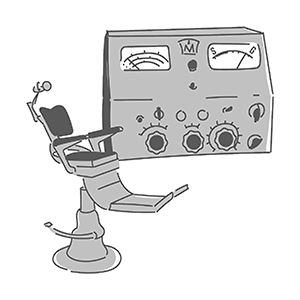
The fruit machine was a device developed in Canada by Frank Robert Wake, a Carleton University psychology professor in the 1950s, that was supposed to be able to identify gay men (derogatorily referred to as ‘fruits’). The subjects were made to view pornography; the device then measured the diameter of the pupils of the eyes (pupillary response test), perspiration, and pulse for a supposed erotic response.
The machine was employed in Canada in the 1950s and 1960s during a campaign to eliminate all gay men from the civil service, the Royal Canadian Mounted Police (RCMP), and the military. A substantial number of workers did lose their jobs. Although funding for the project was cut off in the late 1960s, the investigations continued, and the RCMP collected files on 9,000 people who had been investigated. Continue reading →
Posted in Politics, Sex, Technology |
Leave a Comment »


 The Daily Omnivore