July 8, 2013

‘Darmok‘ is the 102nd episode of the science fiction television series ‘Star Trek: The Next Generation,’ the second episode of the fifth season. The episode features Paul Winfield, who previously played Captain Terrell in ‘Star Trek II: The Wrath of Khan.’
The senior crew discuss their latest mission: to make contact with the Tamarian race who have been transmitting signals toward Federation space for weeks. The Enterprise makes contact with a Tamarian ship in orbit around the planet El-Adrel. Though the universal translator can translate their words, the Tamarians only communicate through metaphor which baffles the Enterprise crew. Likewise, the Tamarians cannot understand Picard’s straightforward use of language. Continue reading →
Posted in Art, Language |
Leave a Comment »
July 3, 2013

An open secret is a concept or idea that is ‘officially’ secret or restricted in knowledge but is actually widely known; or it refers to something that is widely known to be true but which none of the people most intimately concerned is willing to categorically acknowledge in public.
The existence of the British Secret Intelligence Service (MI6) was widely known for several decades before the government’s official acknowledgement of the organization in 1994. Likewise, Delta Force, the elite US Army unit, can be considered an open secret, since its existence has been denied in the past by the government. Israel is widely acknowledged to possess nuclear weapons. This can be considered an open secret, because the Israeli government has never explicitly stated whether or not it possesses a nuclear stockpile, officially maintaining a policy of deliberate ambiguity. Continue reading →
Posted in Language, Politics, World |
1 Comment »
July 2, 2013

‘My Cousin Vinny‘ is a 1992 American comedy film written by Dale Launer (‘Dirty Rotten Scoundrels,’ ‘Ruthless People’), directed by Jonathan Lynn (‘Clue,’ ‘The Whole Nine Yards’), and starring Joe Pesci, Ralph Macchio, Marisa Tomei, and Fred Gwynne (best known for playing Herman Munster; the film was Gwynne’s final role before his death the following year).
‘My Cousin Vinny’ is the story of two young New Yorkers traveling through rural Alabama who are put on trial for a murder they did not commit, and the comic attempts of a cousin, Vincent Gambini, a newly minted lawyer, to defend them. Much of the humor comes from the contrasting personalities of the brash Italian-American New Yorkers, Vinny and his fiancée Mona Lisa Vito, and the more reserved Southern townspeople. Continue reading →
Posted in Art, Humor, Politics |
6 Comments »
July 1, 2013
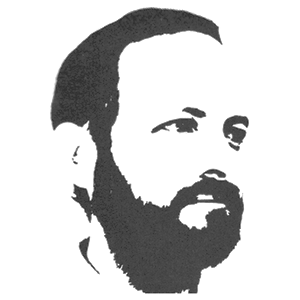
‘A Deepness in the Sky‘ is a novel by mathematician and science fiction author Vernor Vinge. Published in 1999, the novel is a loose prequel (set twenty thousand years earlier) to his 1992 novel ‘A Fire Upon the Deep’ (set thousands of years into the future). The title is coined by one of the story’s main characters in a debate, in a reference to the hibernating habits of his species and to the vastness of space.
The plot begins with the discovery of an intelligent alien species on a planet orbiting an anomalous star, dubbed ‘On/Off’ because for 215 of every 250 years it is dormant, releasing almost no energy. During this period, the planet freezes and its fauna go into hibernation. Continue reading →
Posted in Language, Science |
Leave a Comment »
June 27, 2013

Pseudorationalism [soo-doh-rash-uh-nl-iz-uhm] was the label given by economist and philosopher Otto Neurath to a school of thought that he was heavily critical of, throughout many of his writings but primarily in his 1913 paper ‘The lost wanderers of Descartes and the auxiliary motive’ and later to a lesser extent in his 1935 ‘Pseudorationalismus der Falsifikation,’ a review of and attack on philosopher of science Karl Popper’s first book, ‘Logik der Forschung’ (‘The Logic of Scientific Discovery’), contrasting this approach with his own view of what rationalism should properly be.
Neurath aimed his criticism at a Cartesian belief that all actions can be subject to rational analysis, saying that: ‘Once reason has gained a certain influence, people generally show a tendency to regard all their actions as reasonable. Ways of action which depend on dark instincts receive reinterpretation or obfuscation.’
Continue reading →
Posted in Money, Philosophy, Science |
Leave a Comment »
June 26, 2013
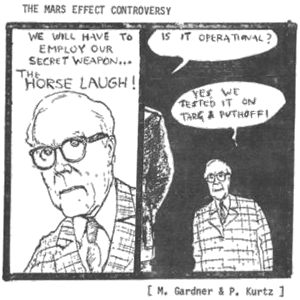
Pseudoskepticism [soo-doh-skep-tuh-siz-uhm] refers to a philosophical or scientific position which appears to be that of skepticism or scientific skepticism but which in reality fails to be so, for whatever reason.
The term is usually used pejoratively. Continue reading →
Posted in Language, Philosophy, Science |
Leave a Comment »
June 20, 2013
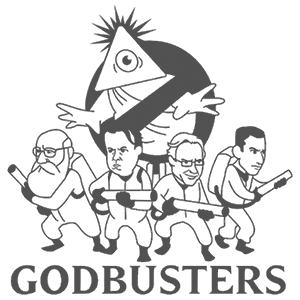
New Atheism is a social and political movement that began in the early 2000s by a collection of modern atheist writers who have advocated the view that ‘religion should not simply be tolerated but should be countered, criticized, and exposed by rational argument wherever its influence arises.’ During ‘The God Debate’ in 2010 featuring Christopher Hitchens and Dinesh D’Souza four outspoken atheists (Richard Dawkins, Christopher Hitchens, Sam Harris, and Daniel Dennett) were referred to as the ‘Four Horsemen of the Non-Apocalypse,’ a cheeky counterpart to the figures in the Book of Revelation.
Harris is a neuroscientist and the author of, ‘The End of Faith,’ ‘Letter to a Christian Nation,’ and ‘The Moral Landscape.’ Biologist Richard Dawkins is the author of ‘The God Delusion,’ which was preceded by a British television documentary titled ‘The Root of all Evil?’ Philosopher Daniel Dennett, author of ‘Darwin’s Dangerous Idea,’ ‘Breaking the Spell,’ and many others, has also been a vocal supporter of ‘The Clergy Project,’ an organization which provides support for clergy in the US who no longer believe in God, and cannot fully participate in their communities any longer. Journalist Christopher Hitchens was the author of ‘God Is Not Great’ and served on the advisory board of the Secular Coalition for America.
Posted in Humor, Philosophy |
1 Comment »
June 19, 2013
The Committee for Skeptical Inquiry (CSI), formerly known as the Committee for the Scientific Investigation of Claims of the Paranormal (CSICOP), is a program within the U.S. non-profit organization Center for Inquiry (CFI), whose stated purpose is to ‘encourage the critical investigation of paranormal and fringe-science claims from a responsible, scientific point of view and disseminate factual information about the results of such inquiries to the scientific community and the public.’
CSI was founded in 1976 by skeptic and secular humanist Paul Kurtz to counter what he regarded as an uncritical acceptance of, and support for, paranormal claims by both the media and society in general. Its philosophical position is one of scientific skepticism. CSI’s fellows have included many notable scientists, Nobel laureates, philosophers, educators, authors, and celebrities. It is headquartered in Amherst, New York.
Continue reading →
Posted in Education, Philosophy, Science |
Leave a Comment »
June 18, 2013

Bill Nye (b. 1955) is an American science educator, comedian, television host, actor, writer, and scientist who began his career as a mechanical engineer at Boeing. He is best known as the host of the Disney/PBS children’s science show ‘Bill Nye the Science Guy’ and for his many subsequent appearances in popular media as a science educator.
Nye was born in Washington, D.C., to Jacqueline Nye, a codebreaker during World War II, and Edwin Darby Nye, also a World War II veteran, whose experience in a Japanese prisoner of war camp led him to become a sundial enthusiast. Bill is a former fourth-generation Washington resident through his father’s side of the family. He studied mechanical engineering at Cornell University (where one of his professors was Carl Sagan). Continue reading →
Posted in Education, Humor, Science |
5 Comments »
June 17, 2013


Joey Skaggs (b. 1945) is an American prankster who has organized numerous successful media pranks, hoaxes, and other presentations. He is considered one of the originators of the phenomenon known as ‘culture jamming’ (subverting media culture).
Skaggs has numerous aliases including: Kim Yung Soo, Joe Bones, Joseph Bonuso, Giuseppe Scaggioli, Dr. Joseph Gregor, and the Rev. Anthony Joseph. When not pranking the media, Skaggs earns his living by painting, making sculptures and lecturing.
Continue reading →
Posted in Humor |
Leave a Comment »
June 17, 2013
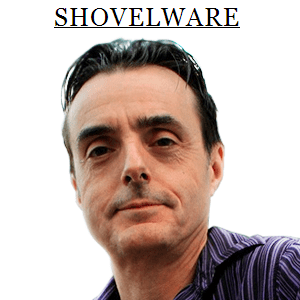
Mark Dery (b. 1959) is an American author, lecturer and cultural critic. He writes about ‘media, the visual landscape, fringe trends, and unpopular culture.’ From 2001 to 2009, he taught media criticism and literary journalism in the Department of Journalism at New York University. In 2000, he was appointed Chancellor’s Distinguished Fellow at the University of California, Irvine. In 2009, he was awarded a scholar-in-residence position at the American Academy in Rome.
He identifies his politics as ‘unrepentantly leftist’ and his religion as the parodic Church of the SubGenius. Dery’s books include ‘The Pyrotechnic Insanitarium: American Culture on the Brink’ and ‘Escape Velocity: Cyberculture at the End of the Century.’ He edited the anthology ‘Flame Wars: The Discourse of Cyberculture’ and wrote the monograph ‘Culture Jamming: Hacking, Slashing, and Sniping in the Empire of Signs.’ His essay collection ‘I Must Not Think Bad Thoughts: Drive-By Essays on American Dread, American Dreams’ was published in 2012.
Continue reading →
Posted in Language, Technology |
Leave a Comment »
June 17, 2013
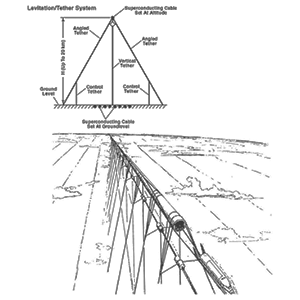
StarTram is a proposal for a maglev space launch system. The initial Generation 1 facility would be cargo only, launching from a mountain peak at 3 to 7 km (1.9 to 4.3 mi) altitude with an evacuated tube staying at local surface level; it has been claimed that about 150,000 tons could be lifted to orbit annually. More advanced technology would be required for the Generation 2 system for passengers, with a longer track instead gradually curving up at its end to the thinner air at 22 km (14 mi) altitude, supported by magnetic levitation, reducing g-forces when each capsule transitions from the vacuum tube to the atmosphere.
American physicist James R. Powell invented the superconducting maglev concept in the 1960s with a colleague, Gordon Danby, also at Brookhaven National Laboratory, which was subsequently developed into modern maglev trains. Later, Powell co-founded StarTram, Inc. with Dr. George Maise, an aerospace engineer was at Brookhaven from 1974 to 1997, with particular expertise in reentry heating and hypersonic vehicle design.
Continue reading →
Posted in Technology, World |
1 Comment »



