December 18, 2022

A mumpsimus [muhmp-suh-muhs] is a ‘traditional custom obstinately adhered to however unreasonable it may be,’ or ‘someone who obstinately clings to an error, bad habit or prejudice, even after the foible has been exposed and the person humiliated; also, any error, bad habit, or prejudice clung to in this fashion.’
The term originates in the story of a priest using the nonsense Latin word ‘mumpsimus’ instead of ‘sumpsimus’ (lit. ‘we have taken’) when giving mass, and refusing to be corrected on the matter. The word may refer to either the speaker or their habit. Continue reading →
Posted in Language, Philosophy |
Leave a Comment »
December 13, 2022

Acoustic Kitty is a project launched by the C.I.A. Directorate of Science & Technology in the 1960s, which intended to use cats to spy on the Kremlin and Soviet embassies.
In an hour-long procedure, a veterinary surgeon implanted a microphone in the cat’s ear canal, a small radio transmitter at the base of its skull, and a thin wire into its fur. This would allow the cat to innocuously record and transmit sound from its surroundings. Due to problems with distraction, the cat’s sense of hunger had to be addressed in another operation. Victor Marchetti, a former CIA officer, said Project Acoustic Kitty cost about $20 million. Continue reading →
Posted in Technology, War, World |
Leave a Comment »
December 6, 2022

The Ghost Army was a United States Army tactical deception unit during World War II officially known as the 23rd Headquarters Special Troops. The 1100-man unit was given a unique mission: to deceive Hitler’s forces and mislead them as to the size and location of Allied forces, while giving the actual units elsewhere time to maneuver.
Activated on January 20, 1944, the Ghost Army arrived in Europe in May shortly before D-Day, putting on a “traveling road show” utilizing inflatable tanks, sound trucks, fake radio transmissions, scripts and pretense. Their story was kept a secret for more than 50 years after the war, until it was declassified in 1996. In February 2022, members of the Ghost Army were awarded the Congressional Gold Medal, citing their unique and highly distinguished service. Continue reading →
Posted in War, World |
Leave a Comment »
November 16, 2022

A fatberg is a rock-like mass of waste matter in a sewer system formed by the combination of flushed non-biodegradable solids, such as wet wipes, and fat, oil and grease (FOG) deposits. The handling of FOG waste and the buildup of its deposits are a long-standing problem in waste management, with ‘fatberg’ a more recent neologism.
Giant fatbergs have blocked sewers in London, New York, Denver, Valencia, and Melbourne and are becoming more prevalent with the rise in usage of disposable (so-called ‘flushable’) cloths. Several prominent examples were discovered in the 2010s in Great Britain, their formation accelerated by aging Victorian sewers. Fatbergs are costly to remove, and have given rise to public awareness campaigns about flushable waste. Continue reading →
Posted in Technology, World |
Leave a Comment »
November 13, 2022

Tafheet (also known as hajwalah or Saudi drifting) is an Arab street racing subculture that involves repeatedly sliding around on a straight road at high speed, drifting sideways, and recovering with opposite lock, often with little or no concern for safety. It began in Saudi Arabia and United Arab Emirates in the 1970s. The cars are generally non-modifiedand are sometimes stolen or rented cars.
The technique does not involve recognized motorsport skills such as high-speed cornering using power slides. Many videos and compilations of the minor and horrific accidents that result are posted online. Continue reading →
Posted in Death, Games, World |
1 Comment »
November 8, 2022
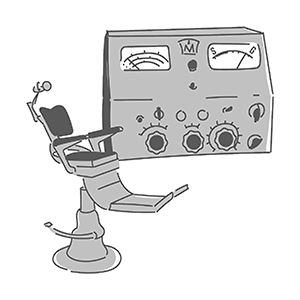
The fruit machine was a device developed in Canada by Frank Robert Wake, a Carleton University psychology professor in the 1950s, that was supposed to be able to identify gay men (derogatorily referred to as ‘fruits’). The subjects were made to view pornography; the device then measured the diameter of the pupils of the eyes (pupillary response test), perspiration, and pulse for a supposed erotic response.
The machine was employed in Canada in the 1950s and 1960s during a campaign to eliminate all gay men from the civil service, the Royal Canadian Mounted Police (RCMP), and the military. A substantial number of workers did lose their jobs. Although funding for the project was cut off in the late 1960s, the investigations continued, and the RCMP collected files on 9,000 people who had been investigated. Continue reading →
Posted in Politics, Sex, Technology |
Leave a Comment »
November 6, 2022

The fediverse (a portmanteau of ‘federation’ and ‘universe’) is an ensemble of federated (i.e. interconnected) servers that are used for web publishing (i.e. social networking, microblogging, blogging, or websites) and file hosting, but which, while independently hosted, can communicate with each other.
Their are federated alternatives to many mainstream websites: PeerTube (YouTube); Funkwhale (SoundCloud); Mastodon, Hubzilla, and pump.io (Twitter); Frendica (Facebook); Drupal (WordPress); Pixelfed (Instagram); and Lemmy (Reddit). Continue reading →
Posted in Technology |
1 Comment »
October 19, 2022

Let’s Go Brandon is a political slogan and Internet meme, used as a substitute for the phrase ‘Fuck Joe Biden’ in reference to Joe Biden, the 46th president of the United States.
Chants of ‘Fuck Joe Biden’ began during sporting events in early September 2021. On October 2, 2021, during a televised interview of the Sparks 300 race winner Brandon Brown at Talladega Superspeedway, NBC Sports reporter Kelli Stavast incorrectly described the chant in the background as ‘Let’s Go Brandon,’ which sparked the meme. The slogan has become well known through use by Republican politicians and critics of Biden. The phrase quickly spread to popular culture. Continue reading →
Posted in Humor, Politics |
Leave a Comment »
October 17, 2022
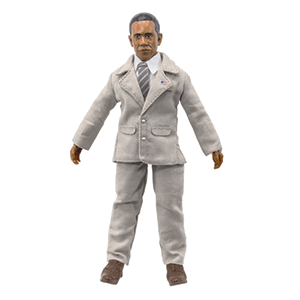
The Obama tan suit controversy refers to a live, televised press conference on August 28, 2014 where U.S. President Barack Obama announced he was increasing the military response against the Islamic State (ISIS) in Syria while wearing a tan suit. His suit choice sparked significant attention and led to media and social media criticism. The issue remained prominent in the media for several days with the issue being particularly widely discussed on talk shows.
A light-colored suit is considered casual summer wear and such attire was seen by conservative media outlet Fox News as inappropriate due to the gravitas of the subject matter. The controversy was seen in the context of the slow news season before the run-up to the 2014 election campaign. The suit received mixed reviews from a fashion perspective. Continue reading →
Posted in Humor, Politics |
Leave a Comment »
October 16, 2022

Deflategate was a National Football League (NFL) controversy involving the allegation that New England Patriots quarterback Tom Brady ordered the deliberate deflation of footballs used in the Patriots’ victory against the Indianapolis Colts during the 2014 AFC Championship Game on January 18, 2015. The controversy resulted in Brady being suspended for four games, while the team was fined $1 million and forfeited two draft selections in 2016.
Brady appealed but eventually agreed to sit out the first four games of the 2016 season, which concluded with the Patriots winning Super Bowl LI and Brady being named MVP. The season also saw the NFL change the procedure for monitoring football pressure. Continue reading →
Posted in Games, Politics |
Leave a Comment »
October 4, 2022

Everesting is an activity in which cyclists or runners ascend and descend a given hill multiple times, in order to have cumulatively climbed 8,848 meters (29,029 ft) (the elevation of Mount Everest).
The first event described as ‘Everesting’ was by George Mallory, grandson of George Mallory, who disappeared on Everest in 1924. The younger Mallory ascended Mount Donna Buang in 1994, having ridden eight ‘laps’ of the 1,069-meter hill. The format and rules were cemented by cyclist Andy van Bergen, inspired by the story of Mallory’s effort. In the first official group effort, van Bergen organized 65 riders, 40 of whom finished the Everesting attempt. Continue reading →
Posted in Games, Health |
Leave a Comment »
September 29, 2022

Pepsi Number Fever, also known as the 349 incident, was a promotion held by PepsiCo in the Philippines in 1992, which led to riots and the deaths of at least five people.
In February 1992, Pepsi Philippines (PCPPI) announced that they would print numbers, ranging from 001 to 999, inside the caps (crowns) of Pepsi, 7-Up, Mountain Dew, and Mirinda bottles. Certain numbers could be redeemed for prizes, which ranged from 100 pesos (about US$4) to 1 million pesos for a grand prize (roughly US$40,000 in 1992), equivalent to 611 times the average monthly salary in the Philippines at the time. Pepsi allocated a total of US$2 million for prizes. Marketing specialist Pedro Vergara based Pepsi Number Fever on similar, moderately successful promotions that had been held previously in Vergara’s geographic area of expertise, Latin America. Continue reading →
Posted in Death, Games, Money |
3 Comments »


 The Daily Omnivore