March 31, 2013

The fotdella was an instrument invented and constructed by Jesse ‘The Lone Cat’ Fuller, an American one-man band musician, who needed an accompaniment instrument beyond the usual high-hat (foot-operated cymbal) or bass drum favored by street musicians. Dreaming it up in the early 1950s, while lying in bed, he set about constructing a foot-operated bass instrument. It ended up as a large upright box with a rounded top, vaguely shaped like the top of a double bass, with a short neck on top. Six bass strings were attached to the neck and stretched over the body.
To play the instrument, there was a homemade set of foot pedals, each one bringing a padded hammer to strike a string when depressed, like the action of a piano. With these six bass notes, Fuller could accompany himself on the 12-string guitar in several keys. The name ‘fotdella’ was given to the instrument by Fuller’s wife, who took to calling it a ‘foot-diller’ (as in the then-current expression, ‘killer-diller,’ meaning ‘exceedingly good’); later, it became shortened to just fotdella.
Posted in Art, Humor |
Leave a Comment »
March 31, 2013
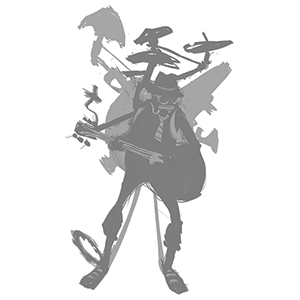
A one-man band is a musician who plays a number of musical instruments simultaneously using their hands, feet, limbs, and various mechanical contraptions. The simplest type of ‘one-man band’ — a singer accompanying themselves on acoustic guitar and harmonica mounted in a metal ‘harp rack’ below the mouth — is often used by buskers.
More complicated setups may include wind instruments strapped around the neck, a large bass drum mounted on the musician’s back with a beater which is connected to a foot pedal, cymbals strapped between the knees or triggered by a pedal mechanism, tambourines and maracas tied to the limbs, and a stringed instrument strapped over the shoulders (e.g., a banjo, ukulele or guitar). Since the development of Musical Instrument Digital Interface (MIDI) in the 1980s, musicians have also incorporated chest-mounted MIDI drum pads, foot-mounted electronic drum triggers, and electronic pedal keyboards into their set-ups.
Continue reading →
Posted in Art, Humor, Technology |
1 Comment »
March 31, 2013


Demolition Man is a 1993 American science fiction action film directed by Marco Brambilla, and starring Sylvester Stallone and Wesley Snipes (co-starring Sandra Bullock and Denis Leary). The film tells the story of two men—one, an evil crime lord; the other, a risk-taking police officer—who are cryogenically frozen in the year 1996 and reawakened in 2032.
Following a massive earthquake in 2010 that destroyed much of Los Angeles, the city merged with San Diego to form a planned city called San Angeles in which all crime has seemingly been eliminated from mainstream society. Sandra Bullock replaced original actress Lori Petty in the role of Lenina Huxley after a few days filming. Her character’s name is a reference to Aldous Huxley, the author of ‘Brave New World,’ and Lenina Crowne, a character in the dystopian novel. Continue reading →
Posted in Art |
Leave a Comment »
March 31, 2013

Nuit [new-ee] Blanche [blahnsh] (‘All-Nighter,’ literally ‘White Night,’ in French) is an annual all-night or night-time arts festival. A Nuit Blanche will typically have museums, private and public art galleries, and other cultural institutions open and free of charge, with the center of the city itself being turned into a temporary art gallery, providing space for art installations, performances (music, film, dance, performance art), themed social gatherings, and other activities.
The concept came from Jean Blaise, artistic director for special events, who founded the ‘Centre de recherche pour le développement culturel’ (‘Research Center for Cultural Development’) in Nantes, France, in 1984. Continue reading →
Posted in Art, World |
1 Comment »
March 31, 2013

‘Fully Flared‘ is a street skateboarding video by the Lakai footwear company, featuring video parts from its team riders. The film is directed by Ty Evans, Spike Jonze, and Cory Weincheque. The introduction features the skateboarders performing tricks in a vacant urban space, consisting of obstacles, blocks, and stair sets, while explosions occur. Presented in slow motion, the introduction feature is accompanied by a soundtrack from electronic music group, M83. Originally, Evans, Jonze, and Howard played with different ideas that were significantly more dangerous than what was eventually featured.
The main group filming was Aaron Meza and Chris Ray. In Europe, an Italian filmmaker named Fedrico Vitetta – who’d been living with Oliver Barton in Spain for a year – took on the role. Then was conceptual help from Rick Howard and Spike Jonze. Finally, Johannes Gamble helped with all the effects work.
Posted in Art, Money |
Leave a Comment »
March 31, 2013

‘Pirates and Emperors, Old and New: International Terrorism in the Real World’ is a book by political theorist Noam Chomsky, titled after an observation by St. Augustine in ‘City of God,’ proposing that what governments coin as ‘terrorism’ in the small simply reflects what governments utilize as ‘warfare’ in the large. Yet, governments coerce their populations to denounce the former while embracing the latter.
In the ‘City of God,’ St. Augustine tells the story of a pirate captured by Alexander the Great, who asked him ‘how dare he molest the sea.’ ‘How dare you molest the whole world’ the pirate replied. ‘Because I do it with a little ship only, I am called a thief; you, doing it with a great navy, are called an emperor.’ The book inspired a humorous short web animation titled ‘Pirates & Emperors (or, Size Does Matter),’ illustrating Chomsky’s thesis.
Posted in Money, Politics, War |
Leave a Comment »
March 31, 2013

Patrice O’Neal (1969 – 2011) was an American stand-up comedian, radio personality, and actor. He was born in New York City and grew up in the Roxbury neighborhood of Boston. His mother named him after Patrice Lumumba, the leader of the Congolese independence movement. He was raised by his mother and never met his father. At the age of 17, Oneal was convicted of statutory rape of a 15 year old girl and sentenced to 60 days in prison, served during his summer break, so as not to disrupt his schooling.
The act, which occurred when Oneal was still 16, would have been legal in most states, but Massachusetts lacks a close-in-age exception, and has an age of consent of 16. Oneal said his humor helped him to negotiate the harsh realities of prison. Oneal was a star football player at West Roxbury High School, ending his career with 3 letters in varsity football and a state championship his senior year. He turned down football scholarships in order to attend Northeastern University on a public housing grant, majoring in Performing Arts. Continue reading →
Posted in Humor |
1 Comment »
March 29, 2013
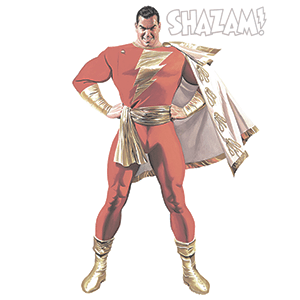
Captain Marvel, also known as ‘Shazam,’ is a fictional comic book superhero, originally published by Fawcett Comics and later by DC. Created in 1939 by artist C. C. Beck and writer Bill Parker, the character first appeared in 1940 in ‘Whiz Comics’ #2. With a premise that taps adolescent fantasy, Captain Marvel is the alter ego of Billy Batson, a youth who works as a radio news reporter and was chosen to be a champion of good by the wizard Shazam.
Whenever Billy speaks the wizard’s name, he is struck by a magic lightning bolt that transforms him into an adult superhero empowered with the abilities of six archetypal, historical figures. Several friends and family members, most notably Marvel Family cohorts Mary Marvel and Captain Marvel Jr., can share Billy’s power and become ‘Marvels’ themselves. Continue reading →
Posted in Art, Money |
1 Comment »
March 29, 2013

Marvels is a four-issue limited series comic book written by Kurt Busiek, painted by Alex Ross and edited by Marcus McLaurin, and published by Marvel Comics in 1994. Set from 1939 to 1974; the series examines the Marvel Universe, the collective setting of most of Marvel’s superhero series, from the perspective of an Everyman character: news photographer Phil Sheldon.
The street-level series portrayed ordinary life in a world full of costumed supermen, with each issue featuring events well known to readers of Marvel comics as well as a variety of minute details and retelling the most famous events in the Marvel universe. Busiek and Ross returned to the ‘everyday life in a superhero universe’ theme in the Homage Comics series ‘Astro City.’ Continue reading →
Posted in Art, Language |
1 Comment »
March 29, 2013
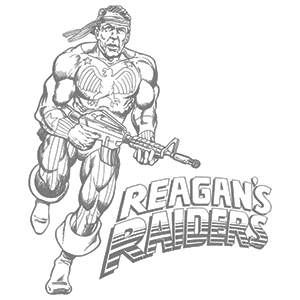
The American Monomyth is a 1977 book by Robert Jewett and John Shelton Lawrence arguing for the existence and cultural importance of an ‘American Monomyth,’ a variation on the classical monomyth (the hero’s journey, a theme found in narratives from around the world) as proposed by Joseph Campbell. The hero ventures from the normal world into a supernatural one, winning a decisive victory there and returning with a ‘boon.’
In contrast, Jewett and Lawrence define the American monomyth as: ‘A community in a harmonious paradise is threatened by evil; normal institutions fail to contend with this threat; a selfless superhero emerges to renounce temptations and carry out the redemptive task; aided by fate, his decisive victory restores the community to its paradisiacal condition; the superhero then recedes into obscurity.’
Posted in Language, Politics, World |
Leave a Comment »
March 29, 2013

The American way of life is an expression that refers to the lifestyle of people living in the United States of America. It is an example of a behavioral modality, developed from the 17th century until today.
It refers to a nationalist ethos that purports to adhere to principles of ‘life, liberty and the pursuit of happiness.’ It has some connection to the concept of American exceptionalism and the American Dream. Continue reading →
Posted in Language, Politics, World |
Leave a Comment »
March 29, 2013

How to Read Donald Duck (‘Para leer al Pato Donald’) is a political analysis by Chilean activists Ariel Dorfman and Armand Mattelart, published in 1972. It is a pioneering work on cultural imperialism. Written in the form of essay (or, in the authors’ words, a ‘decolonization manual’), the book is an analysis of mass literature, specifically the Disney comics published for the Latin American market.
It is one of the first social studies of entertainment and the leisure industry from a political-ideological angle, and the book deals extensively with the political role of children’s literature. The book’s thesis is that Disney comics are not only a reflection of the prevailing ideology at the time (capitalism), but that they are also aware of this, and are active agents in spreading the ideology. Continue reading →
Posted in Money, Politics, World |
Leave a Comment »



